
Someone who genuinely cares about their walls is one of the hardest people to shop for. They already know what they own. They've thought about scale, finish, and how the light hits things at four in the afternoon. A generic clock from a department store gets noticed once and forgotten. A clock that fits their unique wall clock gift for home decor lover wish list gets commented on every time someone visits.
This is a guide for picking that second kind of clock. Not "any nice clock," but a clock that earns its place on a wall that someone has already spent real energy on.
⭐ Key takeaways
- Match the clock's material and finish to the room's existing palette before anything else.
- Size matters more than style: a clock that's too small reads as an afterthought, not a gift.
- Silent quartz movements are non-negotiable for anyone who works or sleeps near the clock.
- The most distinctive gifts reference a specific design language (Kintsugi, Bauhaus, Black Forest) rather than trying to please everyone.
- When you're unsure, a gift card or a collection browse solves the "wrong color" problem completely.
Why a Clock Works as a Statement Gift (When You Choose It Right)
A wall clock combines constant visibility with real design intent, which is exactly why it works so well as a gift for someone who takes interior styling seriously. Unlike a vase or a throw pillow that migrates around the house, a wall clock stays exactly where it's hung. It anchors the wall. It becomes part of the room's permanent character.
The challenge is that decorating-minded people are particular. They've already curated what's around them. So the job isn't to find "a nice clock." It's to find one that slips into their world so naturally it feels like it was always supposed to be there, or one so intentional and distinctive that it becomes a new focal point they'd never have bought themselves.
Both approaches work. They just require different information.

What to Know About the Person Before You Buy
Three questions cut through most of the guesswork.
- What's already on their walls? Metal and exposed brick lean industrial. Light wood, linen, and white walls lean Scandinavian. Warm plaster, terracotta, and vintage prints lean Mediterranean or eclectic.
- How big is the wall they'd put it on? A 30 cm clock looks fine above a desk. On a 3-meter living room wall, it disappears. The sweet spot for a true statement piece starts at 50 cm.
- Do they work or sleep near where the clock would go? If yes, a silent sweep quartz movement isn't optional. The audible tick of a standard movement is genuinely annoying at 2 a.m. or during a focused work session.
Get those three things right and you've already narrowed the field significantly. The rest is style.
Matching Clock Styles to Real Interior Aesthetics
Every strong interior has a design language, and the best clock gift reinforces that language rather than competing with it. Here's how the most common home aesthetics translate into clock choices.
Scandinavian and Minimalist Interiors
These rooms favor natural materials, negative space, and objects that don't shout. A bamboo wall clock with a Japanese Zen influence fits here naturally. The grain is visible, the lines are clean, and there's nothing decorative for the sake of decoration. A Nordic-style bamboo design in black or natural wood tones reads as intentional rather than fussy.
One thing to avoid: clocks with heavy ornamental detailing or gold flourishes. In a minimal room, those details become noise. Customers who've gifted these in Scandinavian-style homes often mention that the recipient's first reaction is "how did you know exactly what I'd have picked?"


Industrial and Loft-Style Spaces
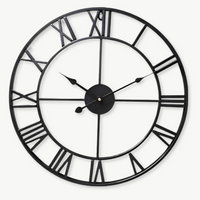
Exposed pipes, brick walls, and dark metal fixtures create rooms that reward bold, utilitarian-looking pieces. A large aged wrought iron wall clock with Arabic numerals in a distressed finish speaks the same visual language. The worn patina doesn't look cheap here; it looks right. Size matters a lot in these spaces. A 60 cm diameter piece reads as confident, not oversized.
What to avoid: anything that looks delicate or ornamental. Baroque detailing and lace-like metalwork feel out of place in a room built around raw materials.

Contemporary and Art-Forward Interiors
Rooms with gallery walls, sculptural furniture, and carefully chosen accent pieces need something that holds its own aesthetically. The Kintsugi-inspired black and gold metal clock is a strong answer here. Kintsugi is the Japanese practice of repairing broken pottery with gold lacquer, treating the cracks as part of the object's history rather than flaws to hide. A clock that references that philosophy brings genuine cultural weight to a wall.
Similarly, an Art Deco number-free dial in a large format (60 to 80 cm) reads as wall art first and timepiece second, which is exactly the right balance for someone who approaches their walls the way a curator approaches a gallery.
💡 Did you know?
The Kintsugi technique dates to 15th-century Japan. The philosophy behind it, that repair and history add value rather than diminish it, is called wabi-sabi, a Japanese aesthetic that finds beauty in imperfection and transience. Clocks referencing this tradition carry that idea into daily life: every glance at the time becomes a small reminder that the broken and mended things are often the most interesting ones.
Eclectic and Vintage-Inspired Spaces
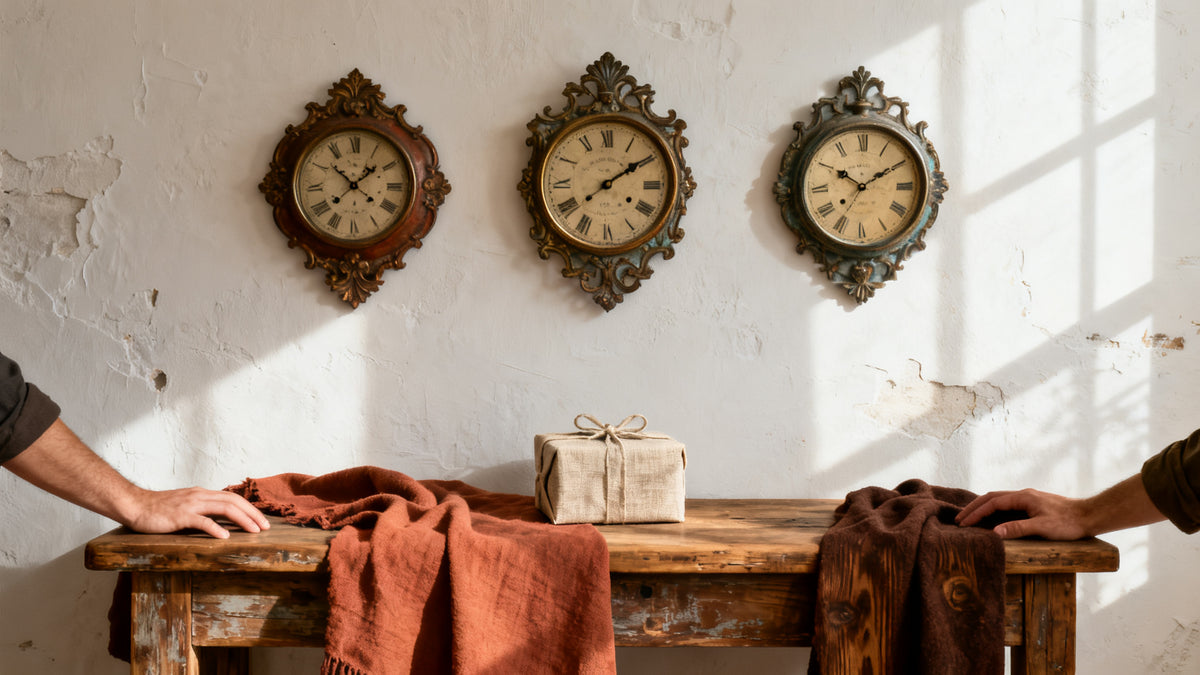
These rooms collect objects across eras and styles. The common thread is usually a warm, lived-in quality. A Baroque-style antique metal clock works here because it looks like something that was found rather than purchased, even when it's brand new. The ornate metalwork and aged surface finish add to that sense of provenance.
Cuckoo clocks also land particularly well in eclectic interiors. They carry enough personality to become a conversation piece without needing anything else around them. A Black Forest-style cuckoo clock made from eco resin (which captures the hand-carved wood aesthetic without the fragility) is a genuinely distinctive gift that most people wouldn't buy for themselves.
The Size Conversation Nobody Has Until After the Gift Is Opened
Getting the size wrong is the most common clock gift mistake. The fix is a single rule: when in doubt, go bigger than your instinct tells you to. Most people buying a gift default to something in the 30 to 40 cm range because it feels "safe." For a bedroom side wall or a small kitchen corner, that's fine. But for a living room, a hallway, or above a dining table, those dimensions make the clock look like it wandered in from another room.
| Room / Wall | Minimum diameter | Statement diameter |
|---|---|---|
| Bedroom side wall | 28 cm (11 in) | 40 cm (16 in) |
| Kitchen focal wall | 40 cm (16 in) | 50 cm (20 in) |
| Living room main wall | 50 cm (20 in) | 60 cm (24 in) |
| Open-plan or loft space | 60 cm (24 in) | 80 cm+ (31 in+) |
| Hallway or entryway | 40 cm (16 in) | 50 cm (20 in) |
The numbers above assume the clock is the primary wall element. If it's being placed next to a large piece of art or above a substantial piece of furniture, add 10 cm to the minimum.
Movement Types: The Practical Detail That Changes Daily Life
A silent sweep movement versus a standard ticking quartz is the difference between a clock that becomes invisible in the best way, and one that becomes a low-level irritant within a week. Standard quartz movements tick once per second with a small audible click. In a noisy room you never notice it. In a bedroom at night or a home office during concentrated work, it's remarkably noticeable. Most people who care about their home environment have already encountered this problem with at least one clock they own.
Silent quartz sweep movements, by contrast, have a continuous rotating hand with no step between seconds. No tick. No click. The clock runs but you only know it by looking at it.
For a gift that someone will put near where they sleep, read, or work, specifying a silent movement isn't a bonus feature. It's a baseline requirement. The full silent wall clock collection covers every style and size with this detail built in. One customer who gifted the bamboo Zen model to her sister put it this way: "She texted me two days later just to say she couldn't hear it. That was the whole review."
Materials That Tell a Story (and Why They Matter to Decorators)
Someone who cares about aesthetics notices what objects are actually made from, not just what they look like in a photo. A clock described as "wood effect" and a clock built from real bamboo are not the same thing to this person. Getting the material right signals that the gift was chosen thoughtfully.
Metal Clocks: From Wrought Iron to Forged Steel
Metal clocks carry significant visual weight even at modest sizes. Forged iron and wrought iron finishes are well suited to industrial and vintage aesthetics. Brushed steel reads as more contemporary and pairs well with modern interiors. The 9 mm body profile now common in well-designed metal clocks means the visual presence is entirely in the dial, not in a thick frame that dominates the wall.
A 60 cm metal clock weighs between 2,000 and 2,500 grams, which requires a solid wall anchor rather than a simple adhesive hook. A quick note in the gift message about this detail means the hanging experience starts well rather than with a surprised moment on a step ladder.
Natural Wood and Bamboo
Bamboo is technically a grass, not a timber, which makes it one of the fastest-renewing materials in furniture and home goods. A bamboo clock in a home where sustainability is a value scores points on both aesthetics and principle. The grain pattern on a natural bamboo face is unique to each piece, which matters to people who dislike owning the same objects as everyone else.
Birch and other light woods share the natural grain appeal with a slightly warmer, more Scandinavian feel. They work in rooms where the palette already includes raw linen, unbleached cotton, and natural stone.

Resin and Eco Resin
Eco resin produces some of the most convincingly "vintage" clocks available today. It captures the textural detail of carved wood or aged stone without the weight, brittleness, or cost. The antique cuckoo clock category leans heavily on this material, and the result is a clock that reads as genuinely old even when it's brand new from the box.
The practical upside for gifting: resin clocks are significantly lighter and more durable than their ceramic or stone-look counterparts, which means they ship better and hang more easily.
Unusual Clock Formats Worth Knowing About
Beyond the standard round wall clock, surprising formats exist that tend to produce the most enthusiastic reactions from decorating-minded recipients. These are the pieces most people genuinely haven't seen before, which makes them memorable as gifts.
3D Sculptural Wall Clocks
These are clocks where the numerals or design elements project away from the wall, creating depth and shadow that changes with the light throughout the day. Designer wall clocks in this format work particularly well on plain light walls where the shadow play becomes part of the design. The effect is very different at noon versus late afternoon, which makes the clock feel alive rather than static.
A 3D sticker clock with sculptural metal hands and floating numerals at 70 cm or 100 cm is the kind of object most people stop in front of and genuinely haven't seen before. That reaction is what makes a gift memorable.
Mirror-Face Clocks
A plexiglass mirror dial at 58 cm reflects light in a way that makes a room feel larger. This is a genuinely useful property in a smaller apartment or a hallway. The black and gold framing version reads as glamorous without being maximalist: the mirror face does the work, and the metalwork gives it structure. For a home where the person is working with limited natural light, this is a thoughtful choice that goes beyond aesthetics into actual function.
Nixie Tube and Retro Display Clocks
For the home that leans toward the eclectic, the collector, or the design-curious, a Nixie tube clock sits in a category of its own. Nixie tubes are glass vacuum tubes filled with neon gas, with shaped metal cathodes inside that glow amber-orange when energized. The technology peaked in the 1950s and 60s, was replaced by digital LED displays, and has since become sought after as a design object. A Wi-Fi connected Nixie tube clock that syncs automatically reads as both deeply retro and effortlessly modern at the same time.
💡 Did you know?
The name "Nixie" comes from "Numeric Indicator eXperimental No. 1," a Burroughs Corporation trademark from 1955. The tubes were standard instrumentation in labs and control rooms for about two decades before digital displays took over. Today, working Nixie tubes are manufactured in small batches in Eastern Europe specifically for the collector and design market.
Pendulum Clocks
A pendulum in motion catches the eye every time it passes through the peripheral vision. That rhythmic movement adds something a static clock can't: a sense that the room is alive. For a hallway or living room corner that feels a bit flat, a pendulum clock introduces movement without requiring more furniture or art. The pendulum clock collection spans 21 models, from Black Forest-style carved pieces to contemporary acrylic designs with a marble-pattern finish.
"A house is not a home until it has a clock that makes you notice time passing in a good way."
Old German clockmaker's saying, Black Forest region
When You're Not Sure: Gifting Strategies That Work
When you don't know the space well enough, either narrow down aggressively by one clear aesthetic signal, or give them the choice directly with a gift card. Both strategies work. The wrong move is picking something vague that could belong to any room.
Narrowing down aggressively means picking one clear aesthetic signal from their home (the word a friend used to describe it, the color of their sofa, whether they own plants) and committing to a clock that speaks that language. A gift chosen with that level of intentionality usually lands well, even if the specific piece wasn't exactly what they'd have picked themselves. The thought reads through the selection.
The gift card route works best when you know the person is particular but you don't know their walls. A CasaClock gift card lets them browse 200+ clocks across every style, size, and finish, with no expiry pressure. It's honest about the fact that you wanted them to have something from here, and it gives them the pleasure of the actual choosing.
Designer Wall Clock
If you know they care about how a room is styled, start here: 139 pieces where the design does more than just show the time.
139 products
Browse the collection →Five Decorative Wall Clock Gifts That Genuinely Surprise People
These designs consistently earn a "wait, what is that?" reaction from recipients. They feel like a find rather than a purchase, which is the difference between a gift that gets a polite thank-you and one that gets photographed and posted.
- The Kintsugi black and gold metal clock (50 or 60 cm). The abstract gold-on-black spray pattern references a cultural philosophy most people find genuinely interesting when they hear it explained. It becomes a clock with a story, which is worth more than a clock with just good looks.
- The antique cuckoo clock in Black Forest style. Almost no one buys themselves a cuckoo clock as an adult. The assumption is that they're kitschy or for children. A well-designed eco resin version built on a quartz movement (so the cuckoo appears on the hour without mechanical complexity) changes that assumption completely.
- A large Art Deco number-free dial in 80 cm. No numbers at all, just hands on a metal face. The person who reads time intuitively, and most people do after a few days, finds this genuinely cleaner than a numbered face. For someone who treats their walls as an art collection, a number-free dial at 80 cm reads as wall art with a function.
- A Nixie tube Wi-Fi desk clock. For the home office or the shelf where someone has already been careful about what they put. The amber glow of real Nixie tubes at night is unlike anything an LED display produces. This is a desk clock that people lean over to look at, not just glance at.
- A Japanese Zen bamboo wall clock in one of the six traditional printed designs. At 40 cm, it's not trying to anchor a large wall. It's a considered accent piece, the kind that goes above a reading chair or beside a bedroom door. For someone whose aesthetic runs toward the quiet and the natural, this is a decorative wall clock gift that shows you paid attention.
Wrapping Up a Clock Gift: Small Details That Complete the Gesture
Include batteries and a three-sentence note explaining your choice. Those two additions turn a good gift into one the recipient actually remembers. Most wall clocks run on one or two AA batteries. Including them matters more than it sounds: the first thing someone wants to do with a new clock is set it and hear (or not hear) it run. Having to go find batteries first breaks the moment.
The note that explains the choice is worth three sentences: what you noticed about their space that led you to this particular clock, what you like about it, and what you hope it adds to the room. That specificity is what makes a decorating-minded person feel genuinely seen rather than gifted at.
Gifting a unique wall clock to a home decor enthusiast works because it's the rare object that sits permanently in view, that changes the character of a room, and that carries the intention of the giver every time the recipient checks the time. That's a lot for a single object to do. When the choice is right, it does all of it.
Frequently asked questions
What size clock should I get as a gift for a living room?+
For most living rooms, start at 50 cm (20 inches) if the clock is sharing wall space with other objects. If it's the only thing on the wall or going above a main sofa, 60 cm (24 inches) is a safer baseline. Anything smaller than 40 cm risks looking like it wandered in from a smaller room.
What does "silent sweep" actually mean on a wall clock?+
A standard quartz movement moves the second hand in discrete steps, one per second, each with a small audible click. A silent sweep movement drives the hand continuously without steps, so there's no tick at all. You genuinely can't hear it in a quiet room. For bedrooms, home offices, and anywhere you spend focused time, it's the detail that separates a clock you enjoy from one that starts to irritate you.
Is a heavy metal clock safe to give as a gift if I don't know their wall type?+
Worth a brief note in the gift message. A 60 cm metal clock weighing around 2,500 g needs a wall anchor rated for that weight, not just a small adhesive hook. Most people with solid plaster or drywall can handle this with a standard screw anchor. It's worth mentioning so the hanging experience starts on the right foot rather than with a surprised moment on a step ladder.
What's a good clock gift for someone with a Scandinavian or minimalist interior?+
Natural materials with clean lines. Bamboo wall clocks, light wood Nordic designs, or a number-free metal dial in a slim profile all fit without competing with the room's existing restraint. Avoid anything with heavy ornamental detailing or gold filigree work. The goal is a clock that looks like it always belonged there.
What if I genuinely don't know enough about their space to pick one specific clock?+
A gift card is an honest and generous answer. The person who cares deeply about their walls will appreciate having the actual choice. A digital gift card from a shop with a strong range lets them spend real time browsing on their own terms, which for a true decorating enthusiast is half the pleasure of getting something new for their home.
Which clock materials work best for a home decor gift?+
It depends on the recipient's aesthetic. Bamboo and light wood suit Scandinavian and minimalist interiors. Aged or forged iron suits industrial and loft spaces. Eco resin suits eclectic and vintage-inspired rooms because it reproduces the texture of carved wood or aged stone at a lighter weight. The most reliable approach: match the material to what's already in the room rather than choosing what you personally find attractive.