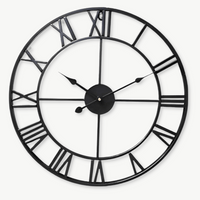


Most people don't think twice about the clock in their laundry room. They grab whatever's spare, nail it above the dryer, and move on. But here's what happens: you're mid-cycle, hands damp, wondering if you have enough time to fold before school pickup, and you squint at a clock face that's too small, too dark, or too far away to read. The whole point of having a clock in there gets defeated.
A wall clock for laundry room practical decor isn't just a nice idea. It's a functional tool that also happens to be on your wall all day, every day. So it might as well look like it belongs. Here's what to actually think about before you buy one, and which styles genuinely hold up in that environment.
⭐ À retenir
- Laundry rooms run warm and humid: material choice matters more here than in any other room.
- Readability beats style if you have to choose, but the good news is you rarely have to.
- Silent quartz movements are a must, unless you enjoy the tick amplified by tile walls.
- Size sweet spot for most laundry rooms: 10 to 14 inches (25-35 cm) in diameter.
- Placement above eye level, not directly above steam sources, keeps the clock readable and protected.
Why the Laundry Room Is Trickier Than You'd Expect
The laundry room is harder on a clock than almost any other room in the house: repeated humidity spikes, steam from the dryer, and condensation on cold days mean that material choice and placement are decisions that actually matter here. Steam from the dryer, splashes near the sink, condensation on cold days. The laundry room is one of the few spaces in a home that genuinely cycles through temperature and humidity shifts multiple times a day. That's not an exaggeration: a standard tumble dryer can raise the ambient humidity in a small utility room noticeably within a single cycle if ventilation isn't perfect.
What does that mean for a clock? Wood warps if it's unsealed or thin. Cheap paper dials blister and peel. Metal bezels with no protective coating rust at the seams. And electronics, especially anything with a battery compartment that's exposed, can corrode faster than you'd expect. None of this is dramatic, it just means the wrong clock starts looking rough within a year.
The good news: a few smart material choices fix all of this, and they don't require spending a fortune or compromising on how the clock looks. This is exactly the kind of decision where knowing your materials makes you a smarter shopper, so let's get specific.

Materials That Hold Up vs. Materials That Don't
For a laundry room clock, sealed hardwood, bamboo, powder-coated metal, and acrylic or glass dial faces all hold up well; MDF, raw wood, and paper dials are the materials to actively avoid. Let's be concrete about this, because vague advice like "choose durable materials" doesn't actually help you shop. Here's the honest breakdown by material type, so you know exactly what to look for on a product listing.
| Material | Laundry Room Verdict | Notes |
|---|---|---|
| Sealed hardwood or bamboo | Good | Needs lacquer or oil finish; raw wood absorbs moisture |
| Plastic (ABS, acrylic) | Excellent | Moisture-proof by nature; choose quality over cheap moulding |
| Metal (powder-coated) | Good | Raw or brushed metal without coating will rust at seams |
| Glass dial face | Good | Easy to wipe clean; check that the frame matches in durability |
| MDF or chipboard | Avoid | Swells and warps quickly with repeated humidity exposure |
| Paper or cardboard dial | Avoid | Blisters and peels; often found in very cheap clocks |
| Thin raw plywood | Avoid | Delaminates over months; fine for dry rooms, not here |
The sweet spot for most laundry rooms is a clock with a sealed wood or bamboo frame paired with a printed or glass dial face. You get warmth and character without sacrificing longevity. Acrylic-faced wooden clocks are another strong option, popular in Japanese wabi-sabi minimalist design for exactly this reason: the hard acrylic protects the dial while the wood frame brings texture and depth. It's one of those solutions that looks considered precisely because it is.
Silent Quartz: Non-Negotiable in a Small Tiled Room
A silent sweep quartz movement is the single most important mechanical spec for a laundry room clock: tile and hard surfaces amplify every tick, turning a barely noticeable sound into a genuine irritation within days. Tile and hard surfaces amplify sound. What you barely notice in a carpeted bedroom becomes genuinely annoying when bounced off ceramic walls. The classic tick-tock of a cheap quartz movement is one of those sounds that you don't consciously register until someone mentions it, and then you can never un-hear it.
Silent sweep quartz movements replace the stepping motion (one click per second) with a continuous, near-silent sweep of the second hand. No tick. No amplified echo off the backsplash. If you already have a laundry room that's noisy enough with a spinning drum and pump, you don't need the clock adding to the soundtrack.
The practical upside is real too. Silent movements tend to be more accurate over time because they're not subject to the same mechanical stress accumulation that stepping motors experience. Most run on a single AA battery for 12 to 18 months. When you're shopping, look for the phrases "silent sweep," "sweep quartz," or "non-ticking" on the product listing. If it's not mentioned anywhere, assume it ticks.
💡 Le savais-tu ?
The sweep movement was actually developed in the 1970s as a response to hospital environments, where the constant ticking of wall clocks in quiet wards was found to increase patient stress. What worked in operating theatres works just as well above a washing machine.

Getting the Size Right for a Laundry Room
For most laundry rooms, a clock between 10 and 14 inches (25-35 cm) in diameter hits the sweet spot: large enough to read at a glance from the doorway, small enough not to overwhelm a compact utility space. Laundry rooms come in three basic formats: the closet-style stacked setup (narrow, usually no more than 5 feet wide), the side-by-side utility room (wider, sometimes with a countertop), and the larger basement or garage laundry space. Each reads differently from across the room. Here's what works in practice, room by room.
- Closet or compact stacked laundry: 10-inch (25 cm) diameter is the ceiling. Anything larger and the clock starts competing with the door frame or shelf edge. Go bold on contrast instead, black dial on white wall, or white dial on a dark accent wall.
- Standard side-by-side utility room: 10 to 14 inches (25-35 cm) is the sweet spot. You can read it from the doorway, it doesn't overwhelm the space, and there's enough face area for clear numeral markings.
- Larger laundry or basement utility room: Up to 16 inches (40 cm) works well, especially if you're also using the space as a mudroom or folding area. A clock this size starts to function as actual wall decor, not just a utility tool.
One thing that surprises people: a clock that's too small reads as unfinished, not minimal. If it looks like you forgot to choose, you may as well not have one. A 10-inch clock placed deliberately, centered above the machines or anchored to a shelf wall, reads as intentional. Shoved in a corner at 6 inches, it just looks lost.

Placement: Where Not to Hang It (and Where It Shines)
The best placement for a laundry room clock is a side wall at or just above eye level, well away from the dryer vent and sink, where steam and splashes concentrate and do the most damage over time. Above the machines is the obvious choice, but it's not always the best one. If your dryer vents internally (into a condensation tank rather than an external duct), the wall directly above it gets significantly warmer and damper than the rest of the room. A clock hung right there is taking the full brunt of moisture output.
Here's what works better:
- Side wall, at eye level or just above: You can read it without craning your neck, and it stays away from the worst humidity zones. Works especially well in narrow utility rooms where there's a blank side wall next to the door.
- Above a shelving unit or cabinet: The shelf acts as a visual anchor. The clock reads as part of a composed vignette rather than a floating afterthought.
- Opposite the machines, facing the door: If your laundry room has enough depth, placing the clock on the wall you face when you walk in means you catch the time naturally every time you enter, which is often exactly when you need it.
Where to avoid: directly above the sink (splashes and steam), inside a low alcove or cabinet recess (you can't read it at a glance), or on a wall that gets direct sunlight through a window all afternoon (fades the dial faster and can affect the movement in cheap clocks).
Style Directions That Actually Work in a Laundry Room
The three styles that consistently work in a laundry room are farmhouse vintage, Scandinavian minimalist, and industrial: each one leans into the utilitarian character of the space rather than fighting it, and all three are easy to find in humidity-resistant materials. The laundry room has graduated from purely functional space to one that homeowners genuinely invest in aesthetically. It makes sense: if you spend 20-30 minutes in there several times a week, the environment matters. A wall clock for laundry room decor is often the one object with a real reason to exist in that space, which makes it weirdly high-leverage for shifting the whole feel of the room.
Here are the styles that hold up both visually and practically:
Farmhouse and Vintage
This is the most popular direction for laundry room clocks, and it works because it matches the utilitarian character of the space without trying too hard. Think Roman numerals, distressed wood frames with a waxed or lacquered finish, aged cream or blue-and-white dials. A French-inspired wooden clock with sweeping hands brings quiet charm without demanding attention. It looks like it's always been there, in the best possible way.
Scandinavian Minimalist
Clean white or pale birch wood frame, simple Arabic numerals or bare hour markers, zero ornamentation. This works beautifully in modern laundry rooms with white subway tile or pale grey grout, where you want the clock to register as part of the calm rather than a visual interruption. The key here is scale: go slightly larger than you think you need, because minimalist clocks disappear on busy tile backgrounds if they're too small. A 12-inch Scandi clock in pale ash or painted white is almost always the right call for this aesthetic.
Industrial
Powder-coated black metal frames, exposed gear or rivet details, Roman numerals in aged gold or gunmetal. Works brilliantly in laundry rooms with dark grout, exposed brick, or raw utility shelving. This style leans into the working nature of the room rather than trying to soften it, and the result can look genuinely considered. A matte black metal frame with a dark walnut-stained insert is a particularly strong combination for this direction.


Analog vs. Digital: Which Reads Better in a Laundry Room?
Analog wins in any laundry room with decent lighting; digital earns its place only in windowless utility rooms where a backlit display eliminates all ambiguity at a glance from across the room. Honest answer: it depends on your lighting situation more than your personal preference. Let's settle this properly.
If your laundry room has a single overhead fluorescent or LED strip and no natural light, a digital clock with a backlit display reads instantly from any angle, even when your hands are full of folded sheets. There's no ambiguity at 6:47 on a digital face. That practical edge is real, and it's worth acknowledging.
But if your laundry room has even a small window, or decent overhead lighting, an analog wall clock for laundry room use reads just as fast once your eye is trained to it, and it brings something a digital display simply can't: a visual presence that feels warm and considered rather than functional and temporary. Most people who choose analog don't regret it. The one variable that matters most is numeral clarity, not format.
One compromise that works well: an analog clock with high-contrast numerals (black on white, or white on dark wood) in a 12-inch format. You get the legibility of digital with the warmth of analog. The silent wall clock collection has plenty of options across both styles if you want to compare at a glance.
"The laundry room clock is the one I check when I'm racing against the end of a wash cycle. It needs to be readable in half a second, from across the room, with my glasses off."
A common theme from customers who've re-bought after their first pick let them down on readability.
Making the Clock Part of the Room, Not Just an Object on a Wall
A laundry room clock integrates naturally when its frame finish echoes at least one other material in the room, its dial color repeats a tone from your textiles, and it anchors a small composed vignette rather than sitting alone on a bare wall. The laundry room is one of those spaces where a single well-placed object can shift the whole feel of the room. It's small enough that one decision matters. Here's what ties a clock into the space rather than leaving it floating:
- Match the frame finish to at least one other element: If you have brushed nickel cabinet pulls, a metal-accented clock frame picks that up. If your shelving is warm oak, a bamboo or walnut clock face continues the material story.
- Repeat a color from your textiles: A clock with a blue-and-white dial sits differently in a room with blue storage bins or navy towels than it does in a room with zero blue. This isn't complicated, it's just noticing what's already there.
- Let the clock anchor a small vignette: A clock above a floating shelf with a small plant and a linen basket reads as a composed corner. The same clock alone on a bare wall reads as functional at best. Context changes everything.
If your laundry room has a particular aesthetic direction, the vintage wall clock collection covers the farmhouse and retro-utility range particularly well, while the Scandinavian wall clock range is worth browsing for minimal modern spaces. For industrial-leaning rooms, the rustic wall clock selection covers that territory with actual wood and metal construction rather than printed finishes.
Kitchen Clocks - Practical Rooms, Thoughtful Picks
If you're decorating adjacent utility spaces, the kitchen clock collection addresses the same humidity and readability challenges with styles that scale from farmhouse to contemporary.
55 références
Découvrir la catégorie →Four Things Worth Checking Before You Buy Any Laundry Room Clock
Before buying a laundry room clock, confirm the movement is silent sweep, the dial is glass or acrylic rather than paper, the frame is sealed against moisture, and the numerals are large enough to read clearly from across the room. Call this a practical checklist, not a buying formula. These are the questions that separate a clock you'll still like in three years from one you'll be replacing before the first battery dies.
- Is the movement silent? Listed as "silent sweep," "sweep quartz," or "non-ticking." If the listing doesn't mention it, assume it ticks.
- What is the dial face made of? Glass or acrylic over a printed insert is fine. Paper or cardboard directly exposed is not.
- Is the frame sealed? For wood clocks, look for lacquered, varnished, or oil-finished frames. Raw wood in any utility room is a slow problem.
- How large are the numerals relative to the dial? A 12-inch clock with tiny ornate numerals reads worse than a 10-inch clock with bold clean ones. If you can zoom in on the product image and still can't comfortably read the 3, 6, 9, 12, reconsider.
FAQ
Does a digital or analog clock read better in a laundry room?+
It comes down to lighting. A digital clock with a backlit display wins in a windowless utility room with a single overhead light, because there's zero ambiguity at a glance from across the room. An analog clock with high-contrast numerals (think bold black on white, or white on dark wood) reads equally fast in a well-lit or naturally lit space, and it brings a warmth that a digital display simply can't match. If you're genuinely unsure, go analog at 12 inches with Arabic numerals. It's the format that almost never disappoints in this context.
Where exactly should I place a wall clock in a laundry room?+
The best position is on a side wall at or just above eye level, away from direct steam exposure. Avoid hanging directly above an internal-vent dryer or above the sink, as both concentrate heat and moisture. The wall you face when you walk through the door is another strong option: you'll catch the time automatically on every entry, which is usually when it matters most. Before committing, tape a paper plate of the same diameter to your shortlisted spot and live with it for a day. It sounds silly, but it immediately tells you whether you'll actually be able to read it at a glance.
What size wall clock works best in a laundry room?+
For a compact or closet-style laundry setup, a 10-inch (25 cm) clock is the upper limit before it starts competing with the door frame or shelf edge. For a standard side-by-side utility room, 10 to 14 inches (25-35 cm) is the sweet spot: readable from the doorway without overwhelming the space. Larger basement or garage laundry areas can handle up to 16 inches (40 cm), especially if the clock is doubling as genuine wall decor. The common mistake is going too small, because a clock that looks minimal in the shop photo often just looks forgotten once it's on the wall.
What are some creative ways to decorate my laundry room wall beyond just a clock?+
The clock is a great anchor because it's functional, which gives you permission to keep everything else simple. A small floating shelf below the clock with a trailing plant and a lidded basket reads well without cluttering the room. If you have shiplap or board-and-batten paneling, lean into the farmhouse angle with a vintage-style clock and simple black hooks. For modern tile rooms, one bold ceramic print or a framed print paired with a minimalist clock creates a composed focal wall without overwhelming the space. Treat the clock as the primary piece and build outward from it rather than crowding it.
How do I keep a laundry room wall clock looking clean?+
Lint and damp dust collect on clock frames faster in laundry rooms than in most other spaces. A quick wipe with a dry microfibre cloth every couple of weeks keeps the frame clean without introducing more moisture. For glass or acrylic dial faces, a slightly damp cloth followed immediately by a dry one works fine. Avoid spraying any cleaner directly onto the clock, especially near the movement housing or battery compartment. For metal bezels, a dry cloth is enough; liquid cleaners can strip protective coatings over time.
How often do laundry room wall clocks need new batteries?+
Most quality silent quartz movements run on a single AA battery for 12 to 18 months under normal conditions. In a warmer-than-average room, like a laundry room with poor ventilation, battery life can shorten slightly, sometimes closer to 10 to 12 months. Using a quality alkaline battery from the start (rather than cheap no-name cells) noticeably extends the interval between changes. A good habit: replace the battery at the same time you change your smoke alarm batteries each year, so you never have to think about it.