
You hang a new clock, step back, admire it, and forget it exists. That's the dream. Then three weeks later it's running five minutes slow, the second hand is dragging, and you're rummaging through a kitchen drawer looking for a fresh AA battery. Frustrating. Especially when the whole point of a battery operated wall clock with long battery life is to be effortlessly low-maintenance.
The truth is, battery life varies wildly between clock models, and the single biggest factor isn't the battery brand you buy. It's the movement type inside the clock. Get that right, and you're looking at 12 to 24 months (sometimes more) before you touch the thing again. Get it wrong, and you're on a six-week replacement cycle.
Here's what actually determines how long your clock runs, which movement types win on efficiency, and how to spot the difference before you buy. (Spoiler: it's easier than you think, and it'll save you a lot of drawer-rummaging.)
⭐ Key takeaways
- Silent sweep quartz movements are the most energy-efficient for analog clocks, typically lasting 12-24 months on one AA battery.
- Standard stepping (ticking) quartz movements are reliable but slightly more power-hungry than sweep equivalents.
- Digital clocks with backlit displays drain batteries fastest, sometimes in 4-8 weeks under heavy use.
- Atomic clocks add a radio receiver that runs continuously, cutting battery life compared to simple quartz analog models.
- Clock size matters: larger dials with heavier hands require a stronger motor pulse, which uses more energy.
Why Battery Life Differs So Much Between Clocks
Battery life in wall clocks differs so much because the movement type determines how often and how powerfully the motor fires an electrical pulse, with silent sweep quartz using far less peak current than stepping or digital movements. Pick up any battery operated wall clock with long battery life at a home store and you'll find battery-operated clocks ranging from $15 to $400. They all run on a AA or AAA battery, yet one might last 18 months while another dies in six weeks. The difference comes down to how often the movement fires an electrical pulse, and what it's moving when it does.
Every clock mechanism needs to advance the hands (or display) through electrical pulses from the battery. The more frequent and powerful those pulses, the faster the battery drains. Simple physics. What varies is the movement's efficiency, the mass of the hands it's driving, and whether the clock is doing extra work like lighting a screen or receiving radio signals.

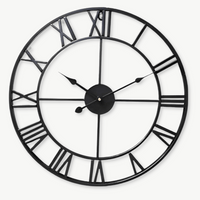
Size plays a bigger role than most people expect. A 60 cm clock with heavy metal hands needs a stronger motor pulse to move them than a lightweight 30 cm clock with plastic hands. That stronger pulse, repeated thousands of times per day, adds up. This is worth keeping in mind if you're eyeing a large statement clock for a living room wall. The good news? You can have the drama without the battery drain if you choose the right movement and keep the hands lightweight.
The 4 Main Movement Types, Ranked by Battery Efficiency
The four main wall clock movement types ranked by battery efficiency are: silent sweep quartz (best, 12-24+ months), standard stepping quartz (8-14 months), atomic radio-controlled (6-12 months), and digital LCD/LED (4 weeks to 6 months).
1. Silent Sweep Quartz (Most Efficient)
This is the gold standard for battery longevity in analog clocks. Instead of firing a discrete pulse every second (which creates the classic "tick"), a sweep movement uses a continuous, low-power signal to rotate the second hand smoothly. That smooth motion requires less peak power per cycle than the sharp electromagnetic kick a stepping motor needs.
The practical result: most quality silent sweep quartz clocks run 12 to 24 months on a single AA battery. Some minimalist Scandinavian-style clocks with light aluminum hands push past two years. The silence is a bonus, not just a marketing angle. In a bedroom or reading room, removing that tick entirely changes the feel of the space. It's the kind of thing you only notice when it's gone.
If long battery life is your top priority, look for clocks specifically labeled "silent sweep" or "sweep movement." Standard "silent" claims on digital or stepping clocks just mean the stepping has been cushioned, not that the mechanism is fundamentally different. Don't let the marketing blur that line.
2. Standard Stepping Quartz (Reliable, Slightly Less Efficient)
The most common movement in affordable analog wall clocks. One pulse per second, advancing the second hand in discrete steps. That familiar tick. These movements are robust and inexpensive, and battery life is generally decent: 8 to 14 months on a standard AA, sometimes more with quality alkaline batteries.
The stepping mechanism draws a short but relatively strong current burst each second. Over a year, that's about 31.5 million pulses. The cumulative draw adds up faster than the continuous low-level draw of a sweep movement. That said, stepping quartz clocks are widely available, affordable, and perfectly reliable for kitchens, offices, or utility rooms where silence isn't the priority.

3. Atomic / Radio-Controlled Clocks (Convenient, Shorter Battery Life)
Atomic clocks auto-set themselves by receiving a radio signal from a time standard transmitter. In North America, that's the NIST signal from Fort Collins, Colorado. In Europe, it's DCF77 from Germany. The accuracy is genuinely impressive: these clocks are correct to within a second per million years.
But that radio receiver doesn't run for free. It typically wakes up once or several times per day to synchronize, drawing a meaningful current spike each time. Combined with the base quartz movement, most atomic wall clocks run 6 to 12 months on two AA batteries. That's roughly half the life you'd get from a comparable silent sweep analog clock running on one AA.
For people who find time adjustment fiddly, or who need precise timekeeping in a kitchen or office, the trade-off is worth it. Just don't expect the battery economy of a simple analog sweep. Think of it this way: you're trading battery life for brain space. Fair deal for the right room.

4. Digital LCD and LED Clocks (Most Power-Hungry)
Digital wall clocks with lit displays, calendar functions, temperature readouts, or auto-DST adjustment are convenient, but they come at a power cost. A continuously powered backlight can drain four AA batteries in 4 to 8 weeks. Even clocks with backlight-on-demand features typically last only 3 to 6 months on a fresh set.
The more features a digital clock runs simultaneously (radio sync, temperature sensor, humidity reader, countdown timer), the faster it drinks power. This doesn't make them bad clocks. It just means you need to budget for more frequent battery changes, or consider a model with an AC adapter option as backup.

| Movement Type | Typical Battery Life | Best For | Noise Level |
|---|---|---|---|
| Silent Sweep Quartz | 12-24+ months (1x AA) | Bedroom, living room, office | Completely silent |
| Standard Stepping Quartz | 8-14 months (1x AA) | Kitchen, hallway, utility | Audible tick |
| Atomic / Radio-Controlled | 6-12 months (2x AA) | Kitchen, office, workshop | Usually silent |
| Digital LCD/LED | 4 weeks - 6 months (2-4x AA) | Kitchen, gym, workshop | Silent |
What Else Kills a Clock Battery Faster Than You'd Think
Beyond movement type, hand weight, battery quality, temperature, and magnetic interference all shorten clock battery life significantly, sometimes cutting expected runtime by half before you've even considered swapping the cell. Movement type sets the baseline, but several other variables can shorten (or extend) what you actually get from a battery. These come up repeatedly in real customer feedback, and they're worth knowing before you hang anything up.
Hand Weight and Dial Size
A clock with heavy cast-metal hands, especially on a large 50-60 cm dial, requires more torque from its motor than one with lightweight aluminum or plastic hands. More torque means higher current draw per pulse. If you're choosing between two silent sweep clocks, the one with slimmer, lighter hands will almost always outlast the heavier one on the same battery. This is one reason I consistently steer people toward clocks where the decorative interest is in the face design (think laser-cut wood, textured ceramic, geometric industrial steel frames) rather than in thick, heavy metal hands.
Battery Quality
This sounds obvious, but cheap carbon-zinc batteries lose 30-40% of their rated capacity in the first few months, especially in cold environments. Alkaline batteries from established brands hold capacity much more consistently over time. Lithium AA batteries are worth considering for clocks in unheated spaces (garages, covered porches) since they perform far better at low temperatures than alkaline chemistry.
Temperature and Humidity
Quartz crystals are temperature-sensitive. Extreme cold slows the oscillator slightly, which can cause minor timekeeping drift. More importantly, both heat and humidity accelerate battery self-discharge. A clock mounted near a kitchen steam source, a bathroom, or a south-facing window in direct summer sun will drain batteries faster than one in a stable, temperate interior room.
Magnetic Interference
Placing a clock too close to a powerful speaker, a large subwoofer, or certain refrigerator compressors can create magnetic interference that disrupts the stepping motor and forces it to work harder. Keeping a clock at least 30 cm away from strong magnetic fields is a simple fix that most battery guides never mention.
💡 Did you know? (Elena's engineering rabbit-hole)
The quartz crystal inside your wall clock oscillates at exactly 32,768 Hz. That specific frequency was chosen because it's a power of two (2 to the 15th), which makes it trivial for simple digital divider circuits to step it down to a clean 1 Hz signal for the second hand. This elegant engineering decision, made in the 1960s, is still used in virtually every battery operated wall clock with long battery life sold today. I find it quietly wonderful that a design choice from over 60 years ago is still ticking away on our walls.
Silent Wall Clocks and Battery Life: A Natural Partnership
Silent wall clocks and long battery life go hand in hand because the sweep motor that eliminates ticking also draws less peak current than a stepping movement, making the quietest clocks naturally the most energy-efficient. There's a reason silent wall clocks dominate the premium end of the battery-operated market. The sweep motor technology that eliminates ticking also happens to be more energy-efficient than the stepping alternative. So choosing a silent clock for a bedroom or living room isn't just about noise; it's also the smarter battery choice.
Wooden-cased silent sweep clocks get an extra advantage: wood is lightweight, which means the overall assembly (including the movement housing and hands) tends to be lighter than metal equivalents. The motor works less hard. That compounds over 12 or 18 months into a meaningful battery life difference.
Choosing the Right Clock for Each Room: Battery Life in Context
Choosing the right clock movement for each room means matching efficiency to use case: silent sweep quartz for bedrooms and offices, stepping or atomic for kitchens, and digital only where you need multi-function display features. The "best" battery life doesn't always mean the same thing in every room. Here's what actually matters by location.
Bedroom
Silent sweep quartz is non-negotiable here. The tick of a standard stepping clock is genuinely audible in a quiet bedroom, particularly at 3am. Beyond the noise, bedroom clocks tend to be relatively small (30-40 cm), which keeps hand weight low and battery life high. A good silent sweep bedroom clock should run comfortably for 12 to 18 months on one AA. My own bedroom clock (a pale ash-wood minimalist piece, 30 cm) has been running on the same battery for just over 16 months. That's the benchmark I'd set.
Living Room
Living rooms often call for larger clocks, 40-60 cm, sometimes more. At this size, hand weight increases and motor demands go up. Still, a quality silent sweep movement on a 50 cm clock with aluminum hands can deliver 10 to 14 months. Check the movement type in the product specs, not just the "silent" claim in the marketing copy.
If you want a statement piece for a living room wall, choosing a design where decorative weight is in the dial (laser-cut wood, textured face) rather than in heavy hands is a smart way to keep both visual impact and battery efficiency high.
Kitchen
Kitchens are where atomic and digital clocks make the most sense functionally: you need the time at a glance, accuracy matters for cooking, and ambient noise from appliances means the tick of a stepping clock isn't bothersome. Accept the shorter battery life as a trade-off, and keep a pack of AA batteries in a drawer nearby. A kitchen clock that auto-sets and shows the date earns its extra battery consumption.
Home Office
Office environments benefit from silence, since a ticking clock can be surprisingly distracting during focused work. Silent sweep quartz in a modest size (30-40 cm) is the practical choice. Battery life will be long, maintenance minimal, and the aesthetic can range from Scandinavian minimal to industrial, depending on your setup. Browse office clocks with sweep movements specifically if you work long hours at home.

Getting the Most Life from Whatever Battery Your Clock Uses
To get the most life from any clock battery, use name-brand alkaline cells, avoid mixing old and new batteries, keep the clock away from heat and moisture, and switch to lithium AA in cold spaces. Once you've chosen a clock with an efficient movement, a few habits make a real difference in how long each battery set lasts.
- Use name-brand alkaline batteries. The difference in capacity between a premium alkaline and a budget carbon-zinc cell is substantial, often 40-60% more runtime. For a clock you change once a year anyway, paying an extra dollar for a quality cell is worth it.
- Remove the battery if the clock will be unused for more than a month. Batteries left in a device continue to self-discharge slowly and can leak, damaging the contact terminals.
- Don't mix old and new batteries in a multi-cell clock. The weaker cell drains faster, and the stronger one then overdischarges into it, shortening both cells' effective life.
- Store spare batteries at room temperature, not in the fridge. The condensation from temperature cycling causes more harm than the minimal self-discharge reduction from cool storage.
- If your clock is in an unheated room in winter, switch to lithium AA batteries. They maintain nearly full capacity down to -20°C, while alkaline cells lose significant capacity below 0°C.
Silent Wall Clocks
Every clock here uses a sweep or silent movement, which means quieter rooms and longer battery life built right into the design.
179 references
Browse the collection →When a Clock Drains Batteries Unusually Fast: How to Diagnose It
When a wall clock drains batteries unusually fast, the three most common causes are a hand rubbing against the dial face, corroded battery contacts raising electrical resistance, and poor gear tolerances in budget movements. If your clock is burning through batteries much faster than expected, it's worth troubleshooting before writing off the clock entirely. Several common culprits are easy to fix.
Friction in the movement is one of the most common causes. If a hand is slightly bent or catching against the clock face or another hand, the motor has to overcome that resistance with every pulse. Carefully check that all hands have a small clearance gap above the dial surface. Even 0.5 mm of rubbing makes a difference over millions of pulses.
Corroded battery contacts are another frequent culprit. Even a small amount of oxidation on the contact springs increases electrical resistance, reducing the power actually delivered to the movement and causing the motor to underperform. A cotton swab with a tiny amount of isopropyl alcohol cleans contacts effectively.
Finally, cheap quartz movements in low-cost clocks sometimes have poor tolerances in the gear train, creating more friction than a well-machined movement. This is the one case where upgrading to a better clock, rather than trying to fix the existing one, is genuinely the right call. A well-made battery operated wall clock with long battery life pays for itself in batteries alone over two or three years.
"The best clock is the one you never have to think about. It shows the right time, it stays quiet, and the battery just keeps going."
A recurring theme in customer reviews for high-quality silent sweep clocks
FAQ
How long do battery operated wall clocks last on one battery?+
It depends almost entirely on the movement type. Silent sweep quartz analog clocks typically run 12 to 24 months on a single AA alkaline battery. Standard stepping quartz clocks manage 8 to 14 months. Atomic (radio-controlled) clocks use two AA batteries and last 6 to 12 months. Digital clocks with lit displays are the most power-hungry, lasting anywhere from 4 weeks to 6 months depending on how actively the backlight runs.
Why does my wall clock battery drain so quickly?+
The most common causes are: a clock hand rubbing against the dial face (creating friction the motor has to overcome with every tick); corroded battery contacts reducing power delivery efficiency; low-quality carbon-zinc batteries instead of alkaline; extreme temperatures (either cold outdoor spaces or heat near a kitchen appliance); or a clock with multiple power-hungry features like a backlit display, radio sync, or temperature sensor all running at once.
How long will an AA battery last in a wall clock?+
In a quality silent sweep analog clock, a standard AA alkaline battery typically lasts 12 to 18 months, sometimes longer in lightweight clocks with slim hands. In a standard ticking quartz clock, expect 8 to 12 months. Battery brand matters too: premium alkaline cells (Energizer, Duracell) hold capacity longer than budget cells, and lithium AA batteries significantly outperform alkaline in cold environments.
What clock movement lasts the longest on a battery?+
Silent sweep quartz is the clear winner. Its continuous low-power signal draws less peak current than the sharp electromagnetic pulse a stepping motor fires every second. In a well-designed lightweight clock (think slim aluminum hands on a 30-35 cm wooden dial), a single AA alkaline battery can exceed 24 months. Pairing a sweep movement with a lightweight frame and quality alkaline battery is the single best combination for maximum battery life.
Is a silent sweep clock actually more energy-efficient than a ticking clock?+
Yes, generally. A sweep motor uses a continuous low-level signal rather than a sharp electromagnetic pulse every second. That lower peak current draw, repeated over millions of cycles, adds up to meaningfully longer battery life. The relationship isn't absolute (a very heavy-handed sweep clock can match a light stepping clock's consumption), but all else being equal, sweep movements are the more efficient choice.
Does clock size affect how fast the battery drains?+
Yes, indirectly. Larger clocks often have heavier hands, which require more motor torque to move, which draws more current per pulse. A 60 cm clock with heavy cast-metal hands will drain a battery faster than a 30 cm clock with lightweight plastic or aluminum hands, even if both use the same movement type. If you want a large clock with maximum battery life, look for one where the dial visual impact comes from the design (laser-cut patterns, textured faces, geometric frames) rather than from heavy metalwork.