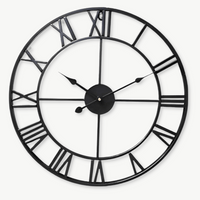


There's a specific kind of wall that stops a conversation. You walk into a room and your eye goes straight to it, past the furniture, past the art, to that cluster of interlocking wooden gears turning slowly around a clock face. An industrial gear wall clock decorative piece does something rare in home decor: it makes a room feel like it has a history. It references factories, workshops, and the honest beauty of machines designed to last, and it does all of that while quietly keeping track of your 3 p.m. calls.
That's a lot to ask of a single object. But the right clock delivers it without trying too hard, and that's exactly what makes the style worth understanding before you buy.
⭐ Key takeaways
- Industrial gear clocks work in far more room types than just lofts or industrial spaces. The material mix is what matters.
- Scale is the most common mistake: a gear clock that's too small reads as a curio, not a statement. Aim for at least 18 inches on any wall wider than 5 feet.
- Wooden gears soften the industrial edge, making the style accessible for transitional or even Scandinavian-leaning interiors.
- A silent quartz movement is non-negotiable for living rooms and bedrooms. Ticking and gear aesthetics are a bad combination.
- The clock's shadow is part of the design. Where you hang it in relation to a light source changes the whole effect.
Why Gear-Inspired Design Resonates Right Now
The appeal of mechanical imagery in home decor connects to something genuine: a hunger for objects that show their logic. Gear clocks tap directly into that. They wear their mechanism on the outside, or at least suggest they do, and that transparency reads as authenticity in spaces that are otherwise full of sealed, featureless devices. This appeal has grown steadily over the past decade, and it shows no sign of slowing.
There's also a textural argument. Most contemporary interiors are smooth. Flat-front cabinets, matte walls, clean upholstery. A gear clock brings edges, depth, and dimensional interest to a wall that would otherwise just... hang there. Each gear casts its own small shadow when the light hits at an angle, and those shadows shift through the day. The clock becomes a living element of the room, not just a mounted object.
💡 Did you know?
The steampunk aesthetic that inspires many gear clocks has roots in Victorian-era speculative fiction, particularly the novels of Jules Verne and H.G. Wells. Both writers described imaginary machines in extraordinary mechanical detail, planting the idea that exposed gears and brass fittings were markers of serious engineering. Contemporary designers borrowed that visual grammar not to imitate the past, but to evoke a feeling of craft and intention that feels missing from modern consumer objects.

Wooden Gears vs. Metal Gears: A Real Design Choice
The material of the gears changes the entire personality of the clock. Choosing between wood and metal is the first decision that matters. Neither is objectively better, but each belongs to a different conversation with the room around it.
When Wood Gears Work Best
Wooden gear clocks are warmer. The grain runs through each tooth, the color sits in the brown-amber range that plays well with natural textiles, and the overall effect is somewhere between workshop and wabi-sabi. They're particularly strong in spaces that already use natural materials: think oak floors, linen sofas, rattan baskets, or rooms that want industrial character without committing to the full raw-metal aesthetic.
There's also a practical edge. Wood gears are lighter, which matters if you're mounting into drywall without a stud behind the ideal placement spot. A clock built from layered MDF and natural wood can sit on a single anchor point with confidence.
When Metal Gears Belong
Metal gear clocks, typically cast iron, powder-coated steel, or zinc alloy with an oxidized finish, carry more visual weight. They command attention in high-ceilinged rooms, open-plan spaces, and genuine loft conversions where the architecture already speaks in hard materials. A metal gear clock on an exposed concrete wall doesn't fight the room. It continues the sentence.
The finish matters as much as the material. A brushed antique bronze reads completely differently from a matte black, and a copper-toned gear cluster has a warmth that raw steel doesn't. If you're working with a softer, more eclectic interior and still want metal, look for aged or patinated finishes rather than polished chrome. Patina signals age and story. Polish signals showroom.

Getting the Scale Right: The Mistake Most People Make
Undersizing a gear clock is the single most common error. A 12-inch gear clock on a wall that runs 8 feet wide reads as an afterthought. The gears look like a fussy detail rather than a bold statement, and the whole composition collapses. It's easy to understand why it happens: product photos always make things look bigger than what actually arrives at your door.
Here's a practical way to think about it. Tape a piece of cardboard cut to the clock's dimensions onto the wall before you commit. Live with it for a day. You'll quickly discover whether it fills the visual space or disappears into it. Most people who do this exercise size up by at least one step.
Size and Room Type: A Quick Reference
| Room / Wall Type | Recommended Diameter | Notes |
|---|---|---|
| Small bedroom or office | 13-16 in (33-40 cm) | Gear detail still reads at conversation distance |
| Standard living room wall | 18-24 in (45-60 cm) | The gear clock's sweet spot for most homes |
| Open-plan loft or high ceiling | 24-36 in (60-90 cm) | Go bold, smaller clocks get lost below high ceilings |
| Feature wall with artwork | 20-30 in (50-75 cm) | Let the clock anchor the arrangement, not compete with it |
| Entryway / hallway | 16-22 in (40-55 cm) | Narrower wall; depth of gears creates the impression of scale |

Placement: Where the Clock Lives in the Room
A gear clock is a composition element, not just a timekeeping device placed at eye level. Where it sits relative to furniture, light sources, and the room's geometry shapes the entire mood. Think of the wall as a canvas and the clock as the focal point you're building around, not an object you're finding a spare spot for.
Above Furniture Groupings
The most reliable placement is above a significant piece of furniture: a sofa, a console table, a media unit, or a fireplace mantle. This gives the clock a visual base and creates a layered composition. The key is proportion. The clock's diameter should be roughly one-half to two-thirds the width of the furniture below it. Tighter than that, and the clock floats awkwardly. Wider, and it starts to overpower the room.
Leave at least 8-10 inches of wall between the top of the furniture and the bottom edge of the clock's gear ring. That breathing room is what separates a considered installation from a cramped one.
The Standalone Statement Wall
Sometimes the right answer is just the clock. A large gear clock centered on a clean wall, with nothing competing for attention, is one of the boldest moves in interior design. It works especially well in entryways, where the first impression of a home is set. You walk in, the gears are there, and the whole character of the space is established before anyone says a word.
For this approach, the wall color behind the clock matters more than anywhere else. A dark wall (charcoal, deep olive, navy) makes the gear details pop forward. A light wall (warm white, natural linen) lets the clock's own shadow work harder, creating a secondary composition that shifts as the day moves.
Pairing with Other Wall Elements
A gear clock can anchor a gallery wall, but it needs careful handling. The clock should be the largest element, placed slightly off-center rather than dead center (off-center feels curated; dead center feels corporate). Surround it with smaller flat art in dark frames, botanical prints, or architectural sketches. Avoid mixing it with other round objects at a similar scale. Two circles fighting for dominance on the same wall always looks accidental.
Industrial Gear Wall Clock Decorative Ideas Across Different Interior Styles
The assumption that gear clocks only belong in full industrial interiors is worth questioning directly, because it's mostly wrong. What the gear aesthetic actually offers is mechanical texture and visual weight, and those qualities translate across a surprising range of interior styles when the material and finish are matched carefully. Think exposed ductwork and concrete floors, yes, but also oak-paneled transitional rooms and even restrained Scandinavian spaces.
In Transitional Interiors
Transitional rooms mix traditional forms with cleaner contemporary finishes. A wooden gear clock works beautifully here because it introduces character without raw edge. The warmth of the wood grain keeps it from feeling cold, and the gear motif adds enough visual interest to keep a traditional room from feeling static.
In Modern Farmhouse Spaces
Shiplap, open shelving, vintage-style hardware. The modern farmhouse aesthetic already loves exposed mechanics and raw materials. A decorative gear wall clock in this setting is less a statement and more a natural extension of the room's language. Finishes in weathered iron or dark walnut are particularly at home here. If you want to go further, pairing the clock with a vintage wall clock style on an adjacent shelf creates a cohesive collected-over-time feel.
In Scandinavian-Leaning Rooms
This is where you have to be more careful. Scandinavian design values restraint, clean geometry, and natural material. A highly ornate, densely geared clock with many overlapping elements can feel too busy for that framework. The move here is a simpler gear composition: fewer gears, larger and more geometric, in a natural wood with minimal surface treatment. The industrial reference is there, but it's edited down to its essentials.


The Silent Movement Question (It's Not Optional)
A gear clock with a ticking quartz movement is one of the more frustrating design decisions you can make. The visual promise of the clock, mechanical craft and considered engineering, is immediately undermined by the cheap-sounding tick-tick-tick that fills the room. This matters especially in living rooms and bedrooms, where you spend quiet time.
The good news: silent quartz movements (sometimes called sweep movements) have become standard on quality decorative wall clocks. The second hand glides rather than steps, and the only sound is silence. This is a detail worth confirming before any purchase. It doesn't appear visually in a product photo, but it makes the difference between a clock you love and one you eventually relocate to the garage.
"A well-designed clock can serve as the centerpiece of your home's interior decor, but only if it earns the silence around it."
CasaClock design principle
Hanging and Care: What the Instructions Don't Always Tell You
A 3D gear clock needs more wall real estate than its diameter suggests. The outermost gears often extend well beyond the central clock face, so before you mark your drill point, measure the total span of the gear assembly, not just the clock face. It's often 20-30% wider than the listed diameter, and that gap catches people off guard after the clock is already up.
Wall Type and Mounting Hardware
For brick or concrete walls, use a hammer drill and a proper anchor. A gear clock that weighs 2-4 pounds on a standard wall hook works fine in drywall with a stud, but if you're going into hollow drywall, use a toggle bolt rated for at least double the clock's weight. The 3D gear assemblies create a leverage effect: the outermost gears can amplify any lateral movement at the mounting point.
Most gear clocks ship with a single central mounting hole. If yours has two mounting points, use both, even if the upper one works alone. Two points prevent the subtle rotation that happens over months with a single anchor, especially in rooms with vibration from traffic or music.
Keeping the Gears Looking Sharp
Wooden gear assemblies attract dust in the teeth between each gear, and that dust reads visually at a distance. A soft-bristle paintbrush, the kind used for watercolor or pastels, clears the gaps without scratching the surface. Do it once every few weeks and the clock keeps its crisp graphic quality. Metal gears with an antique finish should be wiped only with a dry cloth; any moisture can lift the patina that gives them their character.
Frequently asked questions
Do industrial gear wall clocks actually work as functional timepieces?+
Yes. The decorative gear elements are typically mounted around or behind a standard quartz clock mechanism. The gears are visual, not mechanical, but the clock face and hands function like any battery-operated wall clock. Many models use a silent sweep movement so the gear aesthetic isn't undercut by audible ticking.
What wall colors work best behind a gear clock?+
Dark walls (charcoal, deep navy, forest green, aged terracotta) make the gear detail pop and create a dramatic contrast. Light walls (warm white, off-white linen, soft gray) let the clock's shadow do the work, especially as afternoon light rakes across the surface. Avoid busy wallpaper patterns, which compete with the clock's own visual complexity.
Can gear wall clocks fit in non-industrial interiors?+
Absolutely. Wooden gear clocks are particularly versatile: they read as organic and warm rather than raw and industrial. They work in transitional spaces, modern farmhouse interiors, and even softer Scandinavian-leaning rooms when the composition is kept simple. The key is matching the finish of the gears to the existing material palette in the room.
How do I clean the gears without damaging the finish?+
For wooden gears, use a soft-bristle paintbrush to sweep dust from the teeth between each gear. A dry microfiber cloth works for flat surfaces. For metal gears with a patinated or oxidized finish, use only a dry cloth: any moisture, even a damp cloth, can lift or mottle the aged finish that gives the clock its character. Avoid aerosol sprays near the clock face.
How far should a gear clock sit from a light source for the best shadow effect?+
A natural light source 45 to 90 degrees to the side of the clock produces the most defined gear shadows. Direct frontal light flattens the 3D effect entirely. If you're using artificial lighting, a wall sconce or directional lamp placed to the side of the clock at roughly the same height as the center will replicate the raking-light effect. Overhead downlights pointed straight at the clock produce almost no shadow and waste the dimensional design.
What is the best size for an industrial gear wall clock decorative piece in a living room?+
For a standard living room wall (roughly 10-12 feet wide), an 18-24 inch diameter is the sweet spot. That range is large enough for the gear teeth and layered depth to read clearly from across the room, without overwhelming a typical sofa or console table below. If your ceiling is above 9 feet, step up to 24-30 inches so the clock holds its visual weight in the taller space.