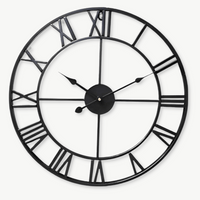

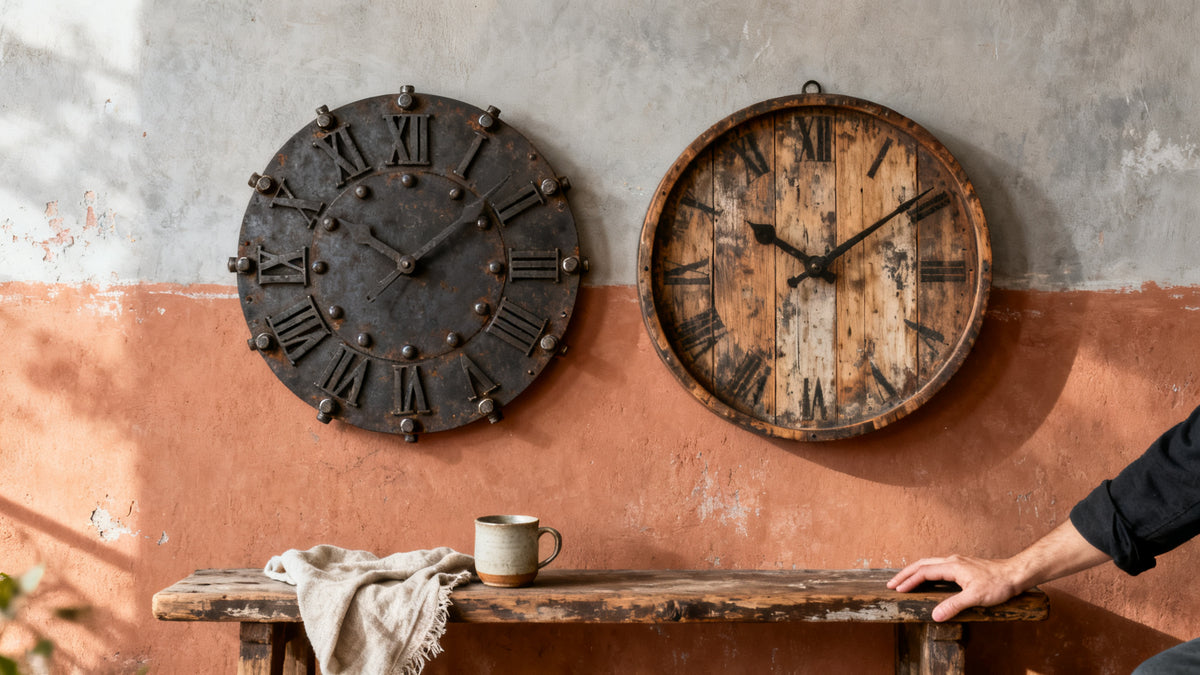
Two clocks. Same wall. Completely different feeling in the room. That's the real question when you're standing between an industrial wall clock vs rustic wall clock: not which one tells better time (they both do), but which one tells a better story about your home.
Both styles lean into materials with a past. Both carry a sense of history. But put a cold cast-iron gear clock above your reclaimed pine dining table, and something feels slightly off. Swap in a weathered wood farmhouse dial, and the room exhales. The reverse is equally true in a converted-loft kitchen with exposed brick. Getting this right isn't about rules. It's about reading the room you already have.
⭐ Key takeaways
- Industrial clocks use metal, iron, and mechanical details for a raw, urban edge.
- Rustic clocks lean on wood, worn finishes, and organic forms for warmth and comfort.
- Room architecture and existing furniture are the most reliable guides for choosing.
- Size and dial legibility matter as much as aesthetic style.
- Both categories work in kitchens and living rooms, but through very different moods.
What Actually Defines Each Style
Industrial clocks are built around materials that reference manufacturing: raw iron, steel, aged bronze, and exposed mechanical details. Think factory floor, converted warehouse, loft apartment with concrete ceilings. The design philosophy is honest, almost utilitarian. Nothing is hidden. Bolts are decorative. Gears become focal points. Roman numerals pressed into bare metal read like something from an old railway station clock. The result is a piece that carries visible weight, literally and visually.
Rustic clocks take the opposite emotional road. Wood is the core material here, often reclaimed, distressed, or finished to look as though it's been hanging in a farmhouse kitchen for forty years. The warmth is built into the material itself. Grain patterns, knots, and worn paint edges all contribute to a feeling of age and ease. Where industrial says "made," rustic says "grown." One celebrates the factory; the other celebrates the forest.
Materials at a Glance
| Feature | Industrial Clock | Rustic Clock |
|---|---|---|
| Primary material | Cast iron, steel, aged metal | Reclaimed wood, bamboo, pine |
| Finish | Raw, hammered, oxidized, dark patina | Distressed, whitewashed, natural grain |
| Numerals | Roman numerals, recessed or raised | Roman or Arabic, painted or branded |
| Typical size | Large to oversized (18 in to 60 cm+) | Medium to large (30 cm to 50 cm) |
| Mood | Urban, bold, architectural | Warm, organic, lived-in |
| Best wall color | White, gray, exposed brick, concrete | Cream, sage, warm white, terracotta |

The Room-by-Room Reality
Where you put a clock shapes how much style work it actually does, and each style earns its keep in different rooms for different reasons. It's not that one is "better" for living rooms and another for kitchens. It's that each style amplifies a specific mood, and some rooms already have that mood built in. Get this match right and the clock looks inevitable. Get it wrong and even an expensive piece feels like a guest who arrived at the wrong party.
Living Rooms: Scale and Anchor Points
Living rooms tend to be the highest-stakes wall in the house. A clock here has to hold its own against sofas, art, and lighting. Industrial clocks excel here when the room has architectural weight: high ceilings, exposed beams, large windows, or dark accent walls. A 23-inch cast-iron piece with Roman numerals can anchor a full wall in a way that feels considered rather than merely decorative.
Rustic clocks bring something different. They work especially well in living rooms styled around natural textiles, warm-toned furniture, and plank floors. The clock becomes part of a layered, cozy narrative rather than a standalone statement. A distressed wood dial above a linen sofa reads as completely intentional. One customer who bought a 45 cm whitewashed pine clock for her cream-and-sage living room wrote back to say it was the first piece of decor she'd bought that her partner noticed without being asked. That's the rustic effect at its best.
Kitchens: Function Meets Character
Kitchens are interesting because they tend to already have strong material stories (tile, wood, stone) and a clock competes with a lot of visual noise. Industrial clocks cut through that noise cleanly. A large dark-metal clock above open shelving in a kitchen with subway tile or concrete worktops feels right. It doesn't disappear into the background.
Rustic clocks often fit farmhouse and Shaker-style kitchens so naturally it looks like they were always there. Warm wood tones, white painted cabinets, and a distressed clock face above the range are practically a formula. The reason it works so often is that all three elements share the same design vocabulary: painted surfaces, natural grain, and a slight imperfection that signals handcraft rather than factory output.
Entryways and Hallways
Both styles work in entryways, but for different entry personalities. An industrial clock in a narrow hallway with dark floors and minimalist hooks signals a confident, urban aesthetic the moment you walk in. A rustic clock in a cottage-style entry with hooks, baskets, and a worn bench creates that immediate warmth that makes guests feel they've arrived somewhere they want to stay. Browse the living room wall clock collection if you want options that bridge both moods.

How to Read Your Room Before You Decide
The fastest way to choose is to count the five materials most present in your room, then decide whether they lean cold or warm. This isn't a design theory exercise. It's a practical pattern anyone can apply in ten minutes with their phone. Cold materials point toward industrial. Warm materials point toward rustic. The room has already voted; you just need to tally the score.
The Cold-Warm Material Count
Walk through the room and mentally list what you see: concrete, steel, glass, and exposed metal count as cold. Wood (especially natural or whitewashed), linen, wool, ceramic, and brick count as warm. If you're running three or more cold materials against two or fewer warm ones, an industrial clock will land naturally. The reverse points toward rustic.
Brick is an interesting wildcard. Exposed red or brown brick actually reads as warm despite being a hard surface. It combines well with both styles, but slightly more naturally with rustic pieces because of its organic, earthy color. Exposed concrete almost always calls for an industrial clock because the two share the same aesthetic origin: the unapologetic surface that refuses to pretend it's something softer.
Furniture Style as a Secondary Signal
After materials, look at your furniture silhouettes. Clean-lined, low-profile furniture in dark wood or matte metal reads industrial-friendly. Curved edges, turned legs, painted wood, and layered textiles read rustic-friendly. A room that mixes both (a leather sofa, a reclaimed wood coffee table, open metal shelving) is genuinely flexible. In mixed rooms, size becomes the deciding factor: a larger, bolder clock in either style commands attention rather than needing to blend.

Size, Scale, and the Wall Proportions Nobody Talks About
Both styles span compact 30 cm pieces to statement sizes above 60 cm, but each has a sweet spot where it performs best visually. Getting the size right matters more than most buyers expect before they open the box. The wrong size isn't just aesthetically off; it can make an otherwise perfect choice look like an afterthought.
Industrial Clocks and Oversized Scale
Industrial design was built for large spaces. Factory floors, railway stations, public buildings. This heritage means that industrial clocks look most at home when they're large, even on a standard-sized wall. A small industrial clock on a big wall can feel tentative. A large one, placed confidently with breathing room on all sides, feels exactly right.
A 23-inch piece (about 58 cm) is a strong starting point for a standard living room or kitchen. For wide open walls or double-height rooms, 60 cm and above creates the kind of presence that anchors the entire room. Check the large wall clock collection for pieces in this range.
Rustic Clocks and Medium-Scale Warmth
Rustic clocks tend to perform well at medium scale (30 cm to 50 cm) because their warmth comes from detail rather than sheer size. The grain of the wood, the worn numerals, the slightly irregular finish: all of these read best at a comfortable viewing distance of 2 to 4 meters. Going too large with a rustic piece can actually reduce the warmth, because the material details that define it become harder to read from the sofa.
That said, an oversized rustic clock used as a statement piece above a fireplace or a barn-style dining table works very well precisely because the scale feels architectural rather than decorative. Scale is not about filling the wall; it's about matching the room's visual weight. A low-ceilinged cottage room needs a different clock than a double-height barn conversion, even if both spaces lean rustic.

The Aesthetic Overlap: When Both Styles Work Together
There is a meaningful middle ground where industrial and rustic elements cross, and some of the most interesting clock designs live exactly there. Cast iron with a raw wood backing, aged metal with weathered paint, distressed finishes on heavyweight frames: these hybrids exist precisely because many real homes don't fit neatly into one category. If you've ever renovated an older house and found yourself mixing black iron pipe shelves with reclaimed oak boards, you already live in this overlap.
This overlap is sometimes called industrial farmhouse or rustic industrial, and it has become one of the most searched interior aesthetics for good reason. It captures the structural confidence of industrial design while keeping the tactile warmth of rustic materials. A clock in this hybrid register works beautifully in:
- Renovated older homes where original stone or brick meets new metal fixtures
- Open-plan kitchens that combine raw wood shelving with stainless appliances
- Home offices where leather, dark wood, and metal sit together
- Entryways with reclaimed wood floors and matte black hardware
💡 Did you know?
The industrial aesthetic in home decor traces back to the 1970s when New York artists began converting former factory and warehouse spaces into live-work studios in SoHo. Exposed pipes, brick, and oversized iron fixtures weren't design choices at first. They were simply what was already there. The look stuck because it felt authentic in a way that deliberately styled spaces often don't.
Movement and Noise: The Practical Side of the Choice
The clock movement determines whether your clock disappears into the background or announces itself every second. This matters more in bedrooms and home offices than anywhere else, but it's worth understanding before buying either style. Style tells you nothing about sound. The specs page does.
Quartz vs Sweep Quartz
Most modern clocks, whether industrial or rustic in style, run on quartz movements. Standard quartz movements tick once per second, which you can hear in a quiet room. Silent sweep quartz movements, sometimes called continuous sweep, move the second hand in a smooth, near-silent arc. No tick. No interruption.
If your industrial or rustic clock is going into a bedroom or a home office, prioritize a silent quartz sweep movement. If it's going into a busy kitchen or an open-plan living area with ambient sound, the standard movement won't bother anyone.
Does Style Predict Movement Type?
Not reliably. Industrial-style clocks are sometimes marketed with exposed gear mechanisms that appear to turn, but these decorative gears are almost always separate from the actual timekeeping movement inside. The real movement is a small, sealed quartz unit. Rustic clocks similarly carry no inherent relationship to movement type. Always check the product specification rather than assuming the style tells you anything about sound. Browse the full industrial clock collection and look for silent movement in the specs if noise matters to you.

Three Buying Mistakes Worth Skipping
Most clock buying regrets come down to three decisions made without enough information, and all three apply equally to both styles. Here's what actually goes wrong, and what the pattern looks like each time.
Buying the Wrong Size for the Wall
The most common issue is underscaling. Buyers see a clock in a product photo, it looks substantial. Then it arrives and sits on the wall looking slightly lost. I hear this most often from people who ordered a 35 cm piece for a wall they measured as "medium." There's no such thing as medium when you're standing in front of 180 cm of empty plaster. The fix is measuring the wall section where it will hang before ordering. A clock face should ideally span one-third to one-half of the wall width it's placed against, so it registers as intentional rather than accidental. On a 180 cm wide wall section, that means a clock between 60 and 90 cm.
Ignoring the Furniture Height Line
Clocks tend to work best when their center sits at or just above eye level for a standing adult, roughly 155 to 170 cm from the floor. Placed too high, they become hard to read and feel disconnected from the furniture below. Placed at exactly picture-frame height (around 145 to 150 cm center), they anchor the wall much more effectively. The furniture height line is the invisible grid your eye expects every piece to respect. Break it and the room feels slightly unstable, even if you can't name why.
Choosing Style Before Room Palette
Falling for an industrial clock online before checking whether your room has even one material that echoes it is genuinely risky. A dark iron clock with aged bronze hands can look extraordinary or completely incongruous depending on whether the room has any cool-toned anchor points at all. One buyer returned a beautiful raw-steel piece because her walls were warm cream, her floors were honey oak, and her soft furnishings were all terracotta and sage. Every material in the room was pushing warm. The clock fought everything around it. The rustic clock she swapped it for, in distressed ochre-washed pine, looked like it had always been there.
"A clock is not decoration. It's punctuation. Put it in the wrong sentence and the whole paragraph reads wrong."
Interior designer principle, widely attributed in mid-century American design writing
Side-by-Side: Which Style Fits Which Home Personality
If the room could speak, it would tell you exactly which clock it wants. This comparison maps the most common home personalities to the style that fits them most naturally. Think of it less as a formula and more as a shorthand check before you commit.
The urban loft or converted apartment almost always calls for industrial. Exposed structure, high ceilings, dark floors. Industrial clocks speak the same language the architecture already established. A rustic piece there looks like it was brought in from a different house.
The farmhouse or cottage home is where rustic clocks feel completely at ease. Stone floors, painted tongue-and-groove walls, heavy curtains. A distressed wood dial fits without any effort. An industrial clock in this context can work if the piece is very specific (warm patina rather than cold raw metal), but it requires more care.
The contemporary family home (neutral walls, clean lines, mixed materials) is the setting where the rustic-industrial hybrid pieces earn their keep. These homes are the most common on the market today. They benefit from a clock that has both structural presence and material warmth. Look at the designer wall clock collection for pieces that hit that specific balance.
The minimalist Scandinavian interior can work with either style in small doses. A single industrial clock on a white wall reads as intentional and considered. A single natural-wood rustic piece in pale birch or ash does the same. The key word is single: in a minimalist room, the clock is likely the only decorative object on that wall, so its presence is amplified. One wrong note in a spare room is louder than three wrong notes in a busy one.

Frequently asked questions
Can an industrial wall clock work in a rustic room?+
It depends on the finish. A very dark, cold raw-steel clock tends to fight the warmth of a rustic room. But an industrial clock with a warm aged bronze or oxidized brown patina can actually complement wood-heavy interiors well. The material overlap is what makes it work. Exposed brick walls are the best setting for this kind of crossover because brick shares tones with both styles.
Which shape wall clock is best for living rooms?+
Round clocks are the most versatile for living rooms because they introduce a curved form that softens the straight lines of walls, furniture, and frames. In industrial styles, round dials with a flat, open face read as strong without being aggressive. In rustic styles, round wood frames feel naturally organic. Square clocks work well in more structured, symmetrical living rooms where they echo the geometry of the architecture. Avoid very small diameters: in a living room, a clock under 35 cm often disappears visually.
What are the main types of wall clock movements?+
The three main types are quartz (battery-powered, ticks once per second), sweep quartz (battery-powered, smooth and nearly silent second hand), and mechanical (spring-wound, ticks continuously). Nearly all wall clocks sold today for home use run on quartz or sweep quartz. Mechanical movements require winding and more maintenance. For most homes, sweep quartz is the practical choice for any room where quiet matters, and standard quartz is fine anywhere with background noise.
How large should a rustic clock be for a farmhouse kitchen?+
For a standard farmhouse kitchen, a clock between 40 and 50 cm tends to hit the right scale. It's large enough to read easily from across the room and substantial enough to register as a design choice rather than an afterthought. Above a range or on a wall between cabinets, a 50 cm rustic clock fills the space without competing with the cabinetry. If the kitchen has high ceilings or an unusually wide feature wall, going up to 60 cm works well.
Are industrial and rustic wall clocks easy to hang?+
Most come with a single hanging hook or keyhole mount on the back, which needs one secure wall screw. The main practical difference is weight. Industrial clocks with heavy cast iron or steel frames can be significantly heavier than wood-framed rustic pieces of the same size. Always check the product weight spec before hanging, and use a wall anchor rated for the weight if you're hanging into drywall. Into brick or masonry, a standard masonry screw is usually sufficient for any clock in either style.
What is the difference between an industrial clock and a vintage clock?+
Industrial clocks reference the visual language of manufacturing and factory spaces: raw metal, exposed mechanisms, heavyweight frames, and a deliberately utilitarian look. Vintage clocks are broader in scope; they might include art deco brass pieces, mid-century enamel school clocks, or 1960s kitchen designs. The two categories overlap when a piece uses distressed metal finishes or retro dial typography, but an industrial clock is specifically about structural honesty, not just age. If the design looks like it belongs on a factory wall, it's industrial. If it could have been in a 1950s diner or a French brasserie, it leans vintage instead.