
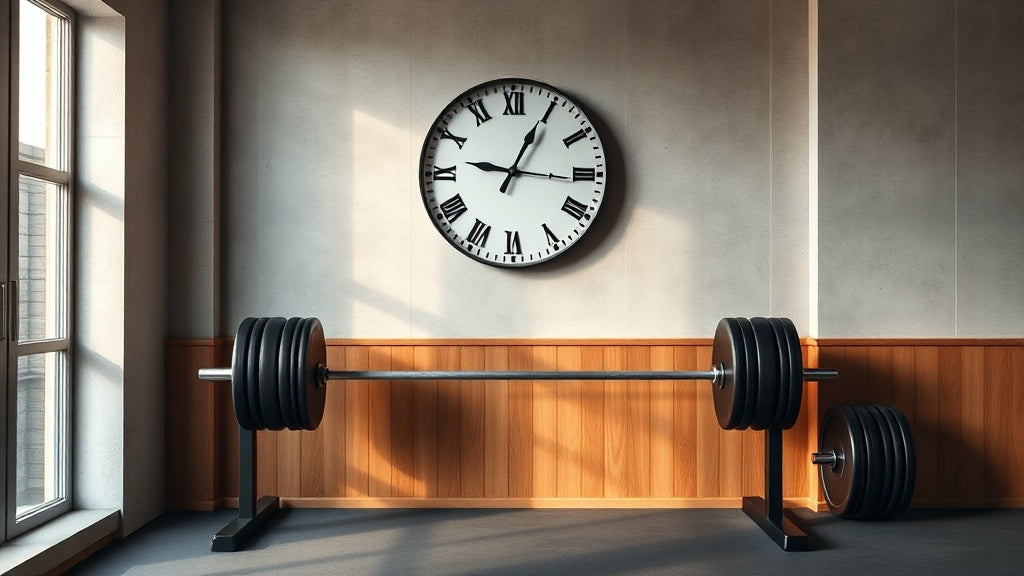
Picture this: you're mid-set, sweat dripping, lungs burning, and you have no idea if you've hit 45 seconds or two full minutes. Your phone is face-down across the room because you're trying not to doomscroll between sets. A quick glance at the wall tells you exactly where you are in the workout. That single glance is the whole point of a wall clock for gym use, and it does that job better than any app, any smartwatch, any voice assistant.
The thing is, most people pick a gym clock the same way they grab a shower curtain: functional, forgettable, done. But your home gym is a real room in your home. It deserves something you actually want to look at between burpees.
Here's what works, what doesn't, and why the right wall clock for gym or home gym motivation is one of the smartest design decisions you'll make in that space.
⭐ Key takeaways
- Readability at a distance matters more than aesthetics, but you don't have to choose between the two.
- Analog clocks let you track time intervals visually without doing mental math.
- Home gym clocks should handle temperature swings and occasional vibrations from heavy lifts.
- Placement height and ambient lighting directly affect how useful your clock actually is during training.
- A well-chosen clock doubles as a genuine design piece, not just a timing tool.
Why Your Home Gym Actually Needs a Dedicated Wall Clock
It sounds obvious. It isn't. A lot of home gym setups run entirely off phone timers, which means unlocking the screen, tapping through notifications, losing focus, and shaving ten seconds off a rest period because you got distracted by a text. That's not a training problem, it's a friction problem.
A wall clock solves it passively. No tap required. Your eyes flick up, your brain registers the time, you get back to work. That's it. Professional boxing gyms, CrossFit boxes, and physical therapy studios have used analog sweep-second wall clocks for decades precisely because a moving hand gives you instantaneous temporal orientation. You can see time flowing, not just read a static number.
Beyond the functional argument, there's a psychological one. The gym clock on your wall is part of the visual environment that shapes how hard you train. A dim, blank concrete wall with a cracked plastic battery clock says "temporary setup." A clean, bold timepiece says "this space is intentional." Small visual cues add up. Athletes who work in well-designed spaces consistently report training with more focus and for longer durations, and honestly, you feel it yourself the moment you walk into a room that's been put together with care.

Analog vs. Digital: What Actually Works Mid-Workout
This is the real debate, and it's worth settling properly rather than just saying "it depends."
Analog clocks have one underrated advantage: the sweep second hand lets you pace intervals without counting in your head. When you know you're doing 30-second work periods, watching a hand travel from 12 to 6 is faster to process than reading "00:30" change digit by digit. Your brain reads spatial position faster than it parses numerals when you're under physical stress. It's the same reason a Scandinavian-style minimal dial with clean Arabic numerals beats an ornate Roman-numeral face for gym use: less visual noise, faster reads.
Digital clocks win when you need absolute precision: boxing rounds with a 10-second warning, *Tabata* intervals, AMRAP timers. The big LED countdown timers sold for CrossFit boxes are purpose-built for that. They're visible from 15 feet away, they beep, they flash. Great for a garage gym used exclusively for structured training. Not so great if the same room doubles as a home office or creative space three days a week.
For most home gym owners, people who mix strength training, cardio, mobility work, and the occasional yoga session, a large-face analog clock with a clear second hand is the more versatile, better-looking, and honestly more satisfying tool. You can use it for interval pacing and it doesn't look like an airport departure board at 9pm on a Tuesday.
| Feature | Analog Wall Clock | Digital LED Timer |
|---|---|---|
| Readability mid-set | Excellent (spatial, instant) | Good (high contrast) |
| Interval precision | Good (second hand pacing) | Excellent (countdown/alert) |
| Dual-use aesthetic | High (looks great always) | Low (functional only) |
| Noise | Silent (quartz sweep) | Beeps/buzzes (by design) |
| Power | AA/AAA battery, years | Rechargeable or USB |
| Best for | Mixed training + design | Dedicated CrossFit/HIIT box |
What Size Gym Clock Do I Actually Need?
The single most overlooked spec when buying a wall clock for gym use is face diameter relative to viewing distance. A 12-inch clock looks perfectly reasonable on a bedroom nightstand. Mounted in a 200-square-foot garage gym, it disappears. At 10 feet away, you need a minimum of 30 cm (12 inches) to read time comfortably. At 15 feet or more, 40-60 cm becomes the right range.
Face contrast matters just as much as size. Bold black markers on a white or light grey dial read faster than stylized Roman numerals on a wooden background, even if the latter looks significantly better. The sweet spot is a clock with strong numeral contrast (black on white, or white on black) and a face large enough to read during movement. Clean sans-serif Arabic numerals, a high-contrast dial, quality material: that combination threads the needle between function and good design.
Second-hand visibility is the last piece. For interval training, you want a second hand that's a different color from the hour and minute hands. Red against black is the classic gym choice, and there's a reason it stuck around. A sweep second movement (continuous motion, no ticking) is also significantly easier to use for timing than a stepping second hand that jumps once per second.

Materials That Hold Up in a Gym Environment
Home gyms are harder on wall decor than living rooms. Temperature fluctuates, especially in garages and basements that aren't climate-controlled. Humidity rises after a tough session. Barbells occasionally get set down with more enthusiasm than intended. Here's what holds up and what doesn't.
Wood: warm, durable, and genuinely gym-friendly
Solid wood faces, walnut, oak, bamboo, handle humidity changes well when they're properly finished. They don't warp under normal conditions, they don't reflect glare from overhead lighting, and they absorb minor vibrations without rattling. A wooden wall clock with a silent quartz movement is one of the quietest, most durable options for a home gym. The natural grain also adds warmth to what can otherwise be a pretty cold-looking space. Walnut in particular pairs beautifully with the warm rubber flooring and natural-toned walls you see in modern minimalist home gym setups.
Metal: industrial, bold, and very easy to clean
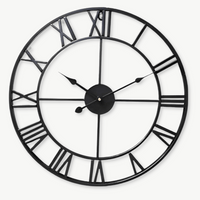
Powder-coated metal frames are essentially immune to gym conditions. They don't mind condensation, the finish holds up to occasional contact, and a matte black or brushed steel finish reads as intentional in a modern industrial-style gym. Think exposed concrete walls, black steel equipment, maybe a little Edison bulb lighting: a metal-frame clock fits right in. The weight does mean you need proper wall fixings: a screw into a stud, not a picture hook into drywall.
Plastic: functional, but choose carefully
Standard plastic-cased clocks work fine. They're light, inexpensive to replace, and available in large sizes. The issue is purely aesthetic and long-term practical: over time, cheap plastic yellows, the finish scratches, and the movement in budget units can develop an audible tick that becomes genuinely distracting during quiet rest periods. If you're going plastic, look for a higher-grade ABS casing and a confirmed silent sweep movement. The price gap between forgettable plastic and a properly made wood or metal piece is smaller than you'd think, and the difference in daily satisfaction is significant.
💡 Did you know?
The first sweep second hand on a clock was developed specifically for medical professionals in the 18th century: physicians needed to count pulse beats against a continuous second marker, not a jumping one. The exact same mechanism is now used in gym and hospital clocks for the same reason: precision pacing without mental counting. The design hasn't changed because it doesn't need to.
How to Actually Use Your Gym Clock for Interval Training
This is the section most clock guides skip because it feels too basic. It isn't. A lot of people hang a clock, glance at it occasionally, and wonder why it doesn't feel more useful than their phone did.
The trick is learning to read in reference points rather than absolute time. When you start a set, note where the second hand is: say, at the 6 (30-second position). Your 45-second rest ends when the hand reaches the 3 (15-second position past the 6 start). That takes about three sessions to internalize, and after that it's completely automatic. You stop calculating and start just seeing.
For longer rest periods, 2 to 3 minutes between heavy compound lifts, the minute hand becomes your anchor. Note where it is at the start of your rest, count two full divisions forward on the face. No math, no timer app, no interruption.
- 30-second work/rest (Tabata): second hand from 12 to 6, then 6 to 12
- 45-second sets: second hand travels three-quarters of the face
- 60-second rounds: one full second-hand revolution
- 90-second rest: minute hand moves one and a half markers
- 2-minute rest: minute hand moves two full markers
Once you're wired to the clock face this way, training rhythm improves noticeably. Rest periods stop being vague and start being structured. You actually take the full rest your program prescribes instead of cutting it short because it "feels like enough."

Placement: Where on the Wall Your Clock Does Its Best Work
Clock placement in a gym is different from clock placement in a living room. You're not hanging it where it looks best to someone sitting on a couch; you're positioning it for visibility during movement, from multiple positions in the room.
The standard recommendation is eye level when standing, centered on the main workout wall. That means roughly 155-170 cm from the floor to the center of the clock face for most people. Too high and you're craning your neck during floor work. Too low and it gets blocked by equipment.
If your gym has a mirror wall, mounting the clock at an angle where it's visible in the mirror reflection gives you two reading positions for the price of one placement. Make sure the face is not backlit by a window opposite: glare is the fastest way to render a clock unreadable during a set.
In longer, narrower spaces (a converted garage bay or a spare bedroom), mount the clock on the short wall at the end of the room, where it's visible from any position along the length. In square rooms, the clock goes on the wall you naturally face during your primary movements. For most people, that's the mirror wall, or wherever you face during barbell work.

When the Gym Clock is Also a Design Statement
Home gyms in 2026 don't look like commercial fitness centers anymore. The most impressive setups feel like an extension of the house: raw material finishes, intentional lighting, curated equipment. The clock is part of that picture.
A large wall clock in the 50-60 cm range can anchor a gym wall the way an art piece anchors a living room. The key is matching the clock's aesthetic language to the space. Exposed concrete and black steel equipment? A metal-frame industrial clock with a minimal face is the obvious call. Lighter wood paneling and rubber flooring in a warm tone? A walnut or oak clock face reads as cohesive rather than dropped in: the grain echoes the floor, the warmth balances the harder surfaces. Bright white walls with mirrored panels? A high-contrast black-and-white dial reads clean and sharp, very much in the spirit of Scandinavian minimalism.
The clocks that feel most at home in a well-designed training space share a few traits: they're large enough to own the wall (at least 35 cm, ideally 40-50 cm), they have a clear face rather than an ornate one, and they use quality materials that age well. A clock with a solid wood face and a silent quartz movement hits every one of those points. It's the kind of piece that still looks intentional five years from now, not dated.
"The gym you build at home reflects the athlete you're becoming. Every choice in that room is a statement of intent."
A thought that shapes every home gym decision worth making

Five Things Worth Checking Before You Buy
The options at different price points vary enormously in quality, and the specs that matter for gym use don't always show up in a product photo. Here's what to actually verify before you click "add to cart":
- Silent quartz movement, confirmed. "Silent" is often used loosely. Look for "sweep second movement" or "non-ticking quartz" in the spec sheet. A ticking clock in a quiet room during rest periods is genuinely distracting, and you'll notice it every single session.
- Face diameter versus room size. Measure the viewing distance from your primary training position to the wall. Minimum 30 cm face for under 3 meters distance. 40-50 cm for 3-5 meters. Over 5 meters, consider 60 cm or a digital display.
- Mounting weight and hardware included. Metal-frame and large wooden clocks can weigh 1-3 kg. Check that wall fixings are rated for the weight and appropriate for your wall type (drywall anchor vs. stud screw).
- Second hand type and visibility. A contrasting color second hand (red or orange) is dramatically easier to use for interval timing than a same-color hand. This is a small detail that makes a big functional difference.
- Battery type and access. AA batteries are easy to keep on hand. Some clocks use obscure cell sizes. Also check whether the battery compartment requires removing the clock from the wall: some do, some don't.
Large Wall Clocks
If readability from distance is your priority, the large format collection is where to start. Bold faces, quality movements, sizes from 45 to 60+ cm, in wood, metal, and mixed-material finishes.
83 references
Browse the collection →The Gym Clock and Long-Term Motivation: What the Research Actually Shows
There's a real body of sports psychology research on environmental design and athletic performance. The short version: the visual cues in your training space matter more than most people think. Clutter reduces focus. Intentional design, including lighting, color, and objects in the visual field, correlates with more consistent training habits and better session quality.
A clock contributes to this in two specific ways. First, it structures the session. When you can visually track time, your brain shifts from "I wonder when this will be over" to "I have 40 seconds left." That shift reduces perceived effort, documented in multiple endurance studies using pacing feedback. Second, a well-chosen clock is part of what makes your gym feel worth walking into. That's not soft psychology. It's the difference between a space you use three times a week and one you quietly avoid.
The home gym wall clock you pick isn't just decorating your space: it's part of the infrastructure that makes training actually happen. That's worth choosing thoughtfully. And frankly, it's one of the more enjoyable decisions in the whole gym build. You get to pick something that's both genuinely useful and something you're proud to have on the wall.
Quick specs: what to look for at a glance
- Face diameter: 30 cm (under 3 m distance) / 40-50 cm (3-5 m) / 60 cm+ (over 5 m)
- Movement: Silent sweep quartz (non-ticking)
- Second hand: Contrasting color (red or orange preferred)
- Material: Sealed wood or powder-coated metal for gym environments
- Mounting: Stud screw for metal clocks over 1.5 kg
- Battery: AA preferred; check compartment access before mounting
FAQ
Are wall clocks still useful in a home gym in 2026?+
Yes, and for home gym use specifically, they're more relevant than ever. Smartwatches and phone timers add cognitive load (notifications, unlocking, tapping) that breaks workout flow. A dedicated gym wall clock gives you passive, frictionless time tracking with zero interruption. The format isn't dated; cheap plastic versions are. A quality analog clock with a sweep second hand remains the most practical interval timing tool for a home training space.
What size wall clock do I need for a home gym?+
A minimum of 30 cm (12 inches) for a small room with a viewing distance under 3 meters. For a standard garage gym or basement setup where you might be 4-5 meters from the wall, 40-50 cm is the right range. The key is that you can read the second hand clearly during movement without stopping or squinting. If you're not sure, go bigger: nobody has ever complained that their gym clock was too easy to read.
How do gym trainers use wall clocks for interval timing?+
The standard method is reference-point reading: note the second hand position at the start of a set or rest, then watch for it to reach a known position rather than counting elapsed seconds. For example, a 45-second rest starts when the hand is at 12 and ends when it reaches the 9 position. This becomes automatic within a few sessions and is faster to process than reading a digital countdown during physical exertion.
Will a wood or metal clock hold up in a garage gym environment?+
Both hold up well with a few caveats. Solid wood clocks with a sealed or lacquered finish handle typical humidity fluctuations without warping. Avoid unfinished raw wood in spaces with dramatic moisture changes (uninsulated garages in humid climates). Powder-coated metal is the most durable option for uncontrolled environments. In both cases, the quartz movement inside is temperature-stable within normal ranges: the case material is the main variable.
Can a gym clock genuinely help with workout motivation?+
Structuring time reduces perceived effort: that's backed by pacing research in endurance sports. When you can see exactly how much time is left in a set or rest period, your brain manages effort more efficiently than when time is unknown. A gym clock also contributes to the overall quality of your training environment, which sports psychology consistently links to more consistent training habits. It's a small thing with a surprisingly concrete effect.
Where is the best place to hang a clock in a home gym?+
Mount it at 155-170 cm from floor to clock center on the wall you face most during training, typically the mirror wall or the short wall at the end of a long room. Avoid positioning it directly behind a window: backlit glare makes even a high-contrast dial unreadable mid-set. If you have a mirror wall, check whether the clock is visible in the reflection too: that gives you an extra reading angle with no extra hardware.