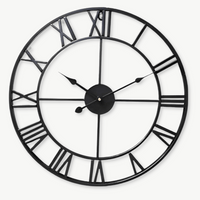

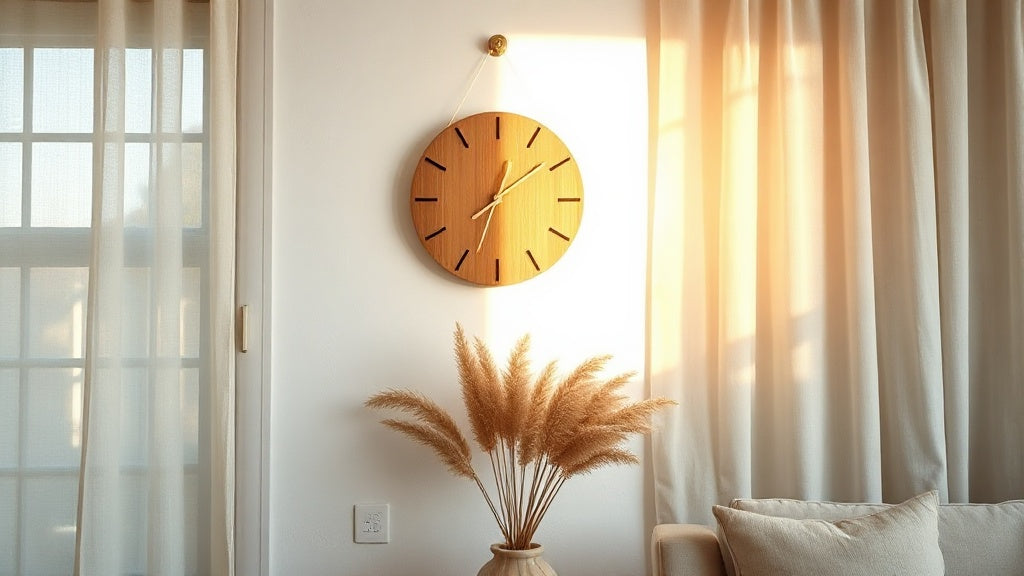
There's a specific feeling a room gets when everything in it breathes. Linen cushions, an oak side table, a terracotta pot catching afternoon light. Then you glance at the wall and there it is: a cold, mass-produced clock with thin black metal hands that feel like they belong in a different room entirely. A wall clock with wooden hands and a natural design fixes that. Not through some grand renovation, but through one quiet, considered choice.
Wooden hands read differently to the eye. The grain, the slight warmth in the color, the way they catch light at an angle: those details turn a timepiece into something that feels genuinely part of a home. This guide breaks down exactly what makes natural-design wooden clocks work, which rooms they suit best, and what to look for before you buy.
À retenir
- Wooden hands soften a clock visually, making it feel integrated rather than imposed on a wall.
- Bamboo and solid hardwood behave differently in humid rooms: material choice matters by room.
- Natural-design clocks work across Scandinavian, *japandi*, biophilic, and rustic interior styles.
- Silent quartz movement is almost always the right call for bedrooms and open-plan living spaces.
- Dial color and hand tone need to contrast enough to stay readable across the room.
Why Wood Hands Change the Feel of a Clock Entirely
Metal clock hands are precise. They're sharp, they hold their shape, and they photograph beautifully in a product shot. But in a lived-in room, that sharpness can feel slightly clinical. Wood hands do the opposite: they have weight, warmth, and a quiet personality that shifts depending on how the light hits them.
The difference comes down to how we process organic materials visually. Studies in environmental psychology consistently show that natural textures, wood grain, stone, linen, lower perceived stress and increase a sense of comfort in interior spaces. A clock face is a small surface, but it's also one you glance at dozens of times a day. That repeated micro-interaction adds up. It's a bit like the difference between a concrete floor and a whitewashed oak one: the room is technically the same, but it doesn't feel the same at all.

There's also a practical aesthetic point here. In rooms built around a natural palette, where walls are warm white, clay, or sage green and furniture leans toward oak, walnut, or rattan, metal hands in black or silver create a visual interruption. Wooden clock hands in a natural finish blend into that palette rather than fighting it. The clock becomes part of the room's story instead of a functional afterthought. And honestly, isn't that the whole point of decorating with intention?
Did you know?
Bamboo, often used for clock hands and frames in Scandinavian-influenced designs, grows up to 35 inches per day, making it one of the most renewable materials in furniture and decor production. It's harder than most hardwoods by density, which is why bamboo clock hands hold their shape and resist warping far better than pine or MDF alternatives.
The Interior Styles Where Natural Wood Clocks Shine
Not every style benefits equally from a wooden-hand clock. Here's where they really click into place, and why.
Scandinavian and Japandi Interiors
Both styles share a commitment to raw, honest materials and deliberate simplicity. A round clock with a light birch or bamboo frame and matching hands sits on a white wall the way a painting would: purposeful, calm, exactly where it should be. The minimalist dial, often without numerals or with the subtlest of markers, suits rooms that don't want visual noise. If your home leans Scandi or *japandi*, a natural-design wooden clock isn't just compatible, it's almost mandatory. Think: pale ash floors, a linen sofa in oatmeal, a single trailing pothos, and then this clock on the wall. Everything speaks the same language.
Biophilic Design Schemes
Biophilic interiors consciously bring natural elements inside: trailing plants, raw linen, unfinished stone surfaces, reclaimed wood shelving. A wooden wall clock with hands cut from the same material as the case reinforces that language. It reads as intentional rather than coincidental, which is exactly what biophilic design requires. The continuity of grain from frame to hand to second-hand is a tiny detail that trained eyes notice immediately.
Rustic and Farmhouse Spaces
In kitchens and dining rooms with exposed beams, open shelving, or antique furniture, wood-handed clocks feel at home without trying. A darker walnut-finish clock with bold, sweeping hands adds to the warmth rather than disrupting it. The key here is scale: rustic rooms can typically handle a larger diameter (35 cm and up) where minimalist rooms might call for something more restrained.
Modern Transitional Rooms
Transitional style mixes contemporary lines with natural textures. A clock with clean geometry, say a perfectly round face with no case surround, but with warm wooden hands, bridges both worlds. It reads modern at a glance but feels warm up close. That's the balance a lot of homeowners are genuinely chasing right now, and it's why this category has grown so much in recent years.
| Interior Style | Best Wood Tone | Ideal Clock Size | Dial Style |
|---|---|---|---|
| Scandinavian / Japandi | Light birch, pale bamboo | 25-35 cm | Minimal, no numerals |
| Biophilic | Natural bamboo, raw grain | 30-45 cm | Open face, leaf motif |
| Rustic / Farmhouse | Dark walnut, aged oak | 35-55 cm | Roman numerals, bold hands |
| Modern Transitional | Medium oak, blonde wood | 30-40 cm | Clean geometry, Arabic numerals |
Bamboo vs. Solid Hardwood Hands: What the Difference Actually Means
When you're shopping for a natural wood wall clock, you'll notice two dominant materials for hands and frames: bamboo and solid hardwood (oak, walnut, or beech). They're both beautiful. They're not interchangeable.
Bamboo is technically a grass, not a wood, and its cellular structure makes it extremely resistant to humidity changes. That's why it works in kitchens and bathrooms where temperature and moisture fluctuate. A bamboo-handed clock above your kitchen counter won't warp or swell. A solid pine or MDF alternative might, over time.
Solid hardwood hands, cut from oak or walnut, carry more visual weight and a richer grain pattern. They tend to feel more premium in the hand (if you ever hold one), and the color depth shifts noticeably with different lighting. In a bedroom or living room where conditions are stable, solid hardwood is worth the step up in price. Walnut in particular has this deep, almost chocolatey warmth that photographs poorly but looks extraordinary in real life, especially in a south-facing room at 4 PM.

How to Read a Clock Face Before You Buy: Contrast, Scale, and Readability
A lot of people fall for a clock in a product photo, mount it on the wall, and then realize they can't actually read it from across the room. Here's what actually matters when assessing a wall clock with wooden hands and a natural design before it goes up.
Hand-to-Dial Contrast
Natural wood hands on a white or off-white dial read clearly. Natural wood hands on a raw wood or cream dial, however, can blur together, especially at 3 meters distance in lower light. If you love the all-wood look, make sure the hands are either a darker shade than the face, or there's a subtle shadow effect in the design that gives definition. A good test: squint at the product photo. If the hands disappear, they'll disappear on your wall too.
Hand Length vs. Diameter
The minute hand should reach to within about 90% of the inner edge of the dial. Shorter hands look proportionally off and make the clock harder to read without moving closer. When checking product specs, compare hand length to the stated diameter. A 30 cm clock with 10 cm hands is too short. A 30 cm clock with 13 cm hands sits right.
Marker Style and Numerals
No numerals looks great in photos but requires more concentration in practice, particularly in a kitchen or entryway where you glance quickly. Roman numerals add character but take up more visual space. Simple hour markers, small lines or dots, split the difference well. For bedrooms and studies, the no-numeral approach works perfectly. For kitchens and family rooms, clearer markers are the better call.
Where to Place a Wooden Clock in Each Room (Without Getting It Wrong)
Placement does as much work as the clock itself. A beautiful natural-design piece hung too high, too low, or on a visually busy wall loses everything that makes it special.
Living Room
The sweet spot for a living room clock is 150 to 170 cm from the floor to the center of the clock, which puts it at natural eye-level for a standing adult and comfortably above seated eye-line. A wall between two windows, or the wall opposite the main sofa, tends to work best. Avoid positioning it directly above a fireplace unless the mantel sits below 130 cm: clocks mounted too high read as afterthoughts rather than focal points. For most open-plan living rooms, a 40 to 50 cm diameter gives you genuine presence without competing with artwork.
Bedroom
Here, quietness matters as much as aesthetics. A wooden wall clock with silent quartz movement placed on the wall facing the bed serves as both decor and practical timekeeper without the tick that disrupts light sleep. Size-wise, 25 to 35 cm is usually right for a bedroom. Anything larger can feel like it's watching you. A pale bamboo finish on a warm white wall keeps things serene; darker walnut works beautifully in a bedroom with richer, moodier tones.
Kitchen
Kitchen clocks need to be readable in motion, from across the island while you're cooking, or from the table while someone's plating food. A 30 to 40 cm clock with clearly defined hands works well. The challenge in most kitchens is finding a wall section that isn't already occupied by cabinets. The side wall above a doorway, or the gap between upper cabinets, tends to be the most practical and often the most stylish option. As noted in the bamboo-vs-hardwood section above, humidity is a real factor here: stick with bamboo.

Entryway and Hallway
Narrow hallways call for a clock that earns its place visually, not just functionally. A natural wood clock in a hallway, where it's seen fresh every time you enter the home, works as a first impression piece. Keep it to 25-35 cm in a standard hallway; any larger and it overwhelms the proportions. A lighter bamboo tone catches the eye without darkening a space that often lacks natural light. Pair it with a small wall-mounted shelf or a mirror nearby and it suddenly looks less like a practical item and more like a considered vignette.
The Scandinavian Wooden Clock Collection Worth Knowing
If natural wood design is the direction you're heading, it helps to browse within a curated edit rather than searching blind. The wooden wall clock collection covers everything from minimal bamboo faces with bare hands to more decorative pieces with cut-out details and organic silhouettes. Seventy-three references, which means there's room to find something that feels genuinely right for your space rather than just close enough.
Wooden Wall Clock Collection
Every natural-design wooden clock in one place, from minimal Scandinavian bamboo pieces to statement organic silhouettes with cut-out grain detail.
73 references
Browse the collection →The Black Nordic Option: When You Want Wood Without Beige
Natural wood doesn't have to mean light and neutral. One of the most interesting moves in Scandinavian clock design right now is the combination of dark-stained bamboo or birch with a black or near-black finish. The result is a piece that reads as natural, you can still see the grain through the color, but works in spaces with darker, more dramatic palettes.
Charcoal walls, dark-stained shelving, matte black fixtures: these are rooms where a standard pale bamboo clock would float awkwardly. A black Nordic wooden clock lands with authority without abandoning the organic material story. It's the same honest-materials philosophy as the lighter styles, just turned up a register. Think of it as the difference between a light-ash *Muuto* shelf and a smoked-oak one: same Scandinavian DNA, completely different mood.
Five Things Worth Checking on Any Natural Wood Clock Listing
Product photos do a lot of flattering work. Here's what to look for in the specs before committing to a wall clock with wooden hands and a natural design.
- Movement type: Silent quartz (also called sweep movement) is the standard you want for any living space. Stepping quartz, which ticks once per second, is fine for kitchens and hallways but disruptive in bedrooms.
- Frame material vs. hand material: Some clocks list "wooden design" but use MDF or plastic-coated hands. If the listing doesn't specifically say bamboo, solid wood, or name a species, ask or look elsewhere.
- Battery type: AA batteries are far easier to source than AAA or C-cell. Worth confirming before purchase.
- Mounting hardware included: Most quality clocks include a hanging hook and sometimes wall anchors. If the listing is silent on this, assume you'll need to source your own.
- Diameter vs. total width: Some decorative clocks have extending elements, like cut-out leaf shapes or open frames, that make the total width larger than the stated diameter. Measure your wall space against both figures.
FAQ
Do wooden clock hands warp over time?+
Quality bamboo hands are highly resistant to warping because bamboo's dense fiber structure resists moisture absorption. Solid hardwood hands (oak, walnut) can shift slightly in rooms with extreme humidity fluctuations, but in a standard heated home, warping is rarely a practical concern. Avoid placing any wood-handed clock directly above a steaming kettle or radiator as a precaution.
What size wooden clock works best in a living room?+
For most living rooms, a 35 to 50 cm diameter clock hits the right balance between presence and proportion. Smaller rooms or walls with existing artwork may work better with 25-30 cm. Very large open-plan spaces, especially those with high ceilings, can take 50 cm and above without looking crowded.
Is bamboo or solid wood better for a kitchen clock?+
Bamboo wins in the kitchen. Its resistance to humidity and temperature changes makes it the more practical choice where steam and cooking heat are regular factors. Solid hardwood looks richer but needs a stable environment to stay at its best over several years.
Can a wooden clock work in a modern or industrial interior?+
Absolutely. The key is contrast rather than blend: a dark-stained wood clock against raw concrete or exposed brick creates a deliberate material tension that reads as intentional design. A pale natural bamboo clock in the same industrial space would likely disappear. Go darker and bolder if the room is already heavy on metal and raw surfaces.
How do I clean and maintain wooden clock hands?+
A dry or barely damp microfibre cloth is all you need for regular dusting. Avoid any spray cleaners directly on the hands or frame: the chemicals in household sprays can strip natural finishes over time. For a deeper refresh once a year, a tiny amount of natural beeswax or furniture oil on a cloth, wiped on and immediately buffed off, keeps wood hands looking their best without any buildup.
What's the difference between silent quartz and stepping quartz movement?+
Stepping quartz movement advances the second hand once per second with a small audible tick. Silent (or sweep) quartz movement glides the second hand continuously and almost inaudibly. For bedrooms, studies, and open-plan living areas, silent quartz is almost always the better choice. Stepping quartz is perfectly fine in a busy kitchen where background noise masks any sound entirely.