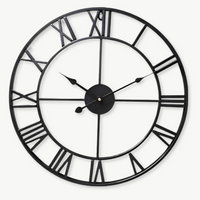


A home bar without a clock is a room without a pulse. You have the shelves lined with bottles, the lighting dialed in, the bar cart positioned just right, and then there is that blank wall staring back at you. An industrial wall clock for home bar decor is not just about telling time; it is the piece that anchors the whole mood, the thing guests notice before they even ask what you are pouring.
Industrial style is a natural fit for home bars. The exposed metal, the worn finishes, the Roman numerals that feel like they belong on a factory floor in 1920s Chicago, all of it speaks the same language as dark wood shelving, copper bar tools, and pendant lights strung low over a counter. The trick is knowing which clock styles actually hold up in that context, and which ones look like an afterthought.
⭐ Key takeaways
- Gear-wheel and exposed-metal designs work best in home bars because they echo the mechanical, raw aesthetic of the space.
- Size matters: a clock under 40 cm disappears on a bar wall; 50-60 cm holds a room.
- Silent quartz movement is worth prioritizing, you want conversation, not ticking.
- Roman numerals carry historical weight that fits the vintage-industrial bar mood far better than digital displays.
- Placement relative to your bar cart and shelving changes whether a clock reads as decoration or as design.
Why Industrial Style and Home Bars Belong Together
Industrial style belongs in a home bar because both share the same origin: raw materials, honest construction, and the working-class confidence of early 20th-century America. Factory lofts in Brooklyn, speakeasy basements in Chicago, gin joints in post-war London, these spaces had a shared visual grammar: exposed brick, aged wood, metal that showed its use. Your home bar is the direct heir to that tradition.
A clock fits naturally into that world because it was always there. Railway clocks, factory clocks, pharmacy clocks on iron brackets, they kept time in the same rooms where people gathered after shifts. That history gives an industrial clock in your home bar a sense of belonging that a sleek white minimal dial simply cannot replicate. The worn finish is not a flaw; it is the point.
💡 Did you know?
The large iron clocks you see on pub walls across Britain trace back to the Victorian railway network. Station masters needed clocks visible from across a crowded platform, so clockmakers built them big, bold, and impossible to ignore. The same logic applies to a home bar wall today.

The Five Industrial Clock Styles That Work Best Above a Bar Cart
Not every clock labeled "industrial" actually belongs in a bar setting; it helps to break the category into five distinct styles, each with a different character and a different ideal placement within your home bar setup.
Gear-Wheel Clocks: the Most Dramatic Choice
These are the clocks built around visible cogs, wheels, and mechanical-looking rings. They read as sculptural from across a room, which makes them ideal for the wall directly behind your bar cart or main shelving unit. A 60 cm gear-wheel clock in bronze or aged iron on a brick or dark-painted wall is the kind of thing people photograph when they visit.
The key detail to look for is a silent quartz movement inside the gear frame. Gear clocks with a loud mechanical tick feel theatrical for the first hour and exhausting after that. A silent movement gives you the visual drama without the noise.

Roman Numeral Metal Clocks: the Reliable Backbone
If gear clocks are the drama, Roman numeral metal clocks are the workhorse. A flat metal dial with clean Roman numerals, a dark iron or bronze finish, and a simple frame is the clock that works with almost any bar setup. It does not compete with your bottles, your glassware, or your pendant lights. It complements them.
Look for metal body construction with a glass or matte dial. Avoid chrome or brushed steel finishes in warm bar spaces; they read as bathroom accessories rather than bar fixtures. The sweet spot is aged iron, oxidized bronze, or a flat black with slight distressing.
Vintage Parfumerie and Retro Advertising Clocks
Some home bars lean more Prohibition-era speakeasy than factory loft. If yours has dark red walls, Art Deco bar stools, and vintage cocktail posters, a retro advertising clock fits the aesthetic better than a gear wheel. The dome shape and bold typography of a parfumerie-style clock recall the hand-painted enamel signs that decorated French and American shops in the 1930s.

Wood and Metal Combination Clocks
These are the most versatile option. A clock built around a solid wood body with metal Roman numeral accents or metal hands bridges the gap between the warmth of a whiskey bar (all wood tones and amber light) and the rawness of an industrial loft. They work above a wooden back bar, alongside floating shelves, or centered on a feature wall behind bar seating.
A 40 cm wood-and-metal clock at eye level tends to anchor the space better than a larger clock mounted too high. Eye level varies, but roughly 155-165 cm from the floor to the center of the clock is a reliable starting point when seating is involved.

Large-Format Statement Clocks
Some walls demand scale. A bar built into a garage conversion, a basement with high ceilings, or a dedicated room with an open-plan feel needs a clock that pulls its weight from a distance. Anything under 50 cm on a wall wider than 3 meters reads as a postage stamp. Go large, or leave the wall for something else.
Large clocks above 60 cm work best when the rest of the wall is relatively clear. They are the singular focal point; competing with rows of bottles on one side and floating shelves on the other tends to fragment the composition.
How to Match Your Clock to Your Home Bar Setup
The goal is coherence, not an exact match; your clock does not need to share the same finish as your bar stools, but it should speak the same material language. Here is a practical way to think through it.
| Bar Style | Best Clock Type | Ideal Size |
|---|---|---|
| Dark wood, leather stools, whiskey focus | Wood and metal Roman numeral | 40-50 cm |
| Exposed brick, pendant lights, loft feel | Gear-wheel or large metal dial | 55-65 cm |
| Art Deco, Prohibition speakeasy vibe | Retro advertising dome clock | 45-55 cm |
| Minimalist with bar cart | Black metal, clean Roman numeral dial | 40 cm |
| Garage conversion, high ceilings | Oversized gear or vintage gear-wheel | 60 cm+ |
One shortcut worth knowing: match the clock's finish tone to the dominant material in your shelving. Warm wood shelves pair with warm metal (bronze, aged iron, oxidized copper). Painted or raw steel shelving pairs with cooler or darker clock finishes. The table above gives you the big picture; this principle handles the fine-tuning.
Placement: Where the Clock Actually Goes on a Bar Wall
A clock placed above the bar cart or back bar shelving creates an immediate visual hierarchy: the clock anchors the top of the composition, bottles and glassware fill the middle ground, and the counter occupies the base. That three-tier structure is the same logic used in professional bar design, and it works at any scale.
A few placement rules that come up again and again when people share home bar setups:
- Leave at least 20-25 cm between the top of your highest bottle and the bottom of the clock frame. Any tighter and the composition looks crowded.
- Center the clock above the focal point of your bar, whether that is the tap, the back bar, or the bar cart itself. Off-center mounting works for asymmetric layouts but needs a strong reason.
- On a dark wall (charcoal, navy, deep green), choose a clock with a lighter dial or contrasting metal. On an exposed brick wall, aged iron or bronze reads better than matte black.
- If you have open shelving running the full width of the wall, consider flanking the clock with the shelves rather than mounting it above them. The clock becomes the center panel in a triptych.

The Details That Separate a Good Industrial Clock from a Great One
Two clocks at the same size and price can feel completely different on a wall; the difference usually comes down to three things: finish quality, movement, and dial legibility.
Finish Quality and Material Honesty
The best rugged bar wall clocks use real metal bodies, not plastic sprayed to look like iron. You can usually tell from the weight listed in the product specs. A 60 cm clock that weighs under 500 g is almost certainly lightweight plastic regardless of what the photos show. A genuine metal-body clock at 60 cm typically weighs 2-3 kg.
Look for descriptions that name a specific metal: iron, steel, aluminum alloy. Phrases like "metal-look" or "metallic finish" usually mean something else underneath. Weight in the product specs is the most reliable honesty test you have when buying online.
Movement: Silent Is Almost Always Right for a Bar
Home bars are social spaces. The one sound you want in a home bar is conversation, maybe music, maybe the clink of ice. A ticking clock does not add to that; it competes. A silent sweep quartz movement runs the second hand in a continuous smooth arc rather than the step-by-step tick. The difference is felt more than heard, but it matters in a quiet room.
Dial Legibility at a Distance
You are going to glance at this clock from across a room, often in dim bar lighting. Roman numerals in a bold font on a high-contrast dial (dark numerals on a light background, or light numerals on dark) read from distance far better than thin modern typefaces on a matching-tone background. If you cannot read the time clearly from 3-4 meters in average room light, the clock is not doing its job.

What Your Bar Cart Setup Says About the Clock You Need
The bar cart is often the most styled object in a home bar, and the clock needs to hold a visual conversation with it rather than compete. A polished brass bar cart with crystal decanters calls for something with warmth and a bit of age: a wood-and-metal Roman numeral piece or a vintage iron dial. A matte black bar cart with clean lines and stacked cocktail books calls for something with graphic weight: a large black metal gear clock or a bold Roman numeral on a dark field.
Mixed-metal bar carts (brass handles, steel frame) are actually the easiest to work with. They give you permission to use a clock that combines materials too, which is where the wood-and-metal category really earns its place. One practical shortcut: match the finish of the clock hands to the dominant metal accent on your bar cart. It creates a connection without forcing every element to match.
"The best bar is the one that feels like it has always been there."
Common wisdom among bar designers, and the reason why aged finishes outlast trendy ones
Lighting Your Industrial Clock for Maximum Effect
Bar lighting and clock placement interact in ways most people overlook until after installation, so it is worth spending five minutes on this before committing to a spot.
Pendant lights positioned directly above a bar counter cast their strongest light downward. A clock hung above that zone sits in relatively dim light, which can flatten a beautiful aged finish. A small, directional picture light or adjustable spot pointed at the clock face solves this entirely. It also makes the clock feel intentional rather than incidental, which is exactly the right signal in a designed home bar.
Warm tungsten or Edison-style bulbs (2700-3000K color temperature) are the reliable choice for home bars. They make aged metal glow and deepen wood tones. Cool white LEDs (4000K and above) tend to flatten those same materials and make a carefully chosen vintage industrial wall clock look like it came from a big-box store. If you already have cool lighting in the bar space, swap the bulbs before deciding whether the clock finish is right. It is a five-minute fix that changes everything.
You can find sizing, finish, and movement guidance for every style covered here in the industrial wall clock collection. If you are also thinking about the broader room, the vintage wall clock range covers the same aged-metal aesthetic across living rooms and dining spaces.
Frequently asked questions
What size industrial clock works best for a home bar wall?+
For most home bars, a clock between 45 and 65 cm in diameter holds the wall without overwhelming the space. Below 40 cm tends to disappear on a bar wall, especially against dark paint or exposed brick. If your ceiling is above 2.7 meters or your bar occupies a full wall, go to 60 cm or beyond to match the scale.
Do industrial clocks work in home bars that are not loft-style?+
Absolutely. Industrial clocks translate well into traditional, rustic, and even mid-century bar settings because the core material palette (aged iron, wood, Roman numerals) overlaps with many styles. The key is choosing the right sub-type: a wood-and-metal Roman numeral clock reads as warm and traditional in a whiskey-focused setup, while a full gear-wheel clock leans harder into the industrial direction. Match the sub-style, not just the label.
Is a silent movement necessary for a home bar clock?+
Not strictly necessary, but strongly recommended. Home bars are conversational spaces, and a ticking second hand becomes surprisingly noticeable during quiet moments between songs or when people are listening to each other. A silent sweep quartz movement costs no more than a standard quartz and removes that variable entirely. If music is playing at a consistent volume, the tick may not matter. If the bar is also used for intimate late-night drinks, you will notice the silence and appreciate it.
Where exactly should you hang a clock in a home bar?+
The most reliable position is centered above the bar's main focal point (the back bar, bar cart, or tap) at roughly 155-170 cm from floor to clock center, adjusted slightly higher if the wall is tall or the space is viewed from a standing position. Leave at least 20-25 cm of clearance between the top of your tallest bottle and the bottom of the clock frame. On walls with floating shelves, centering the clock as the top element of the composition, with shelves flanking it, tends to produce the most balanced result.
Roman numerals or Arabic numerals for a home bar clock?+
Roman numerals are the stronger choice for most home bar aesthetics because they carry a historical character that reads as intentional rather than functional. Arabic numerals work well in more contemporary or minimal bar setups where the clock is meant to feel clean and graphic. The exception is a retro advertising-style clock, where bold Arabic or script numerals are part of the design language and feel exactly right.
How do I tell if an industrial clock is real metal or plastic?+
Check the listed weight. A genuine iron or steel clock at 60 cm typically weighs 2-3 kg. If the product page lists under 500 g for a clock that size, the body is almost certainly plastic with a metallic-look finish. Descriptions that name a specific material (iron, steel, aluminum alloy) are a better sign than vague phrases like "metal finish" or "industrial look." When in doubt, contact the seller and ask directly.