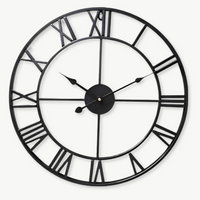


Exposed brick does something to a room that almost nothing else can. It brings weight, warmth, and a quiet sense of history all at once. But the moment you try to hang a clock on it, you run into a real problem: most clocks were designed for flat, neutral walls. A wall clock for exposed brick needs to earn its place against all that texture, not compete with it or disappear into it. The wrong choice looks like an afterthought. The right one makes the whole wall feel intentional.
This is where a lot of people get stuck. They pick a clock they love on a white wall, hang it over brick, and wonder why something feels off. The answer usually comes down to three things: material, scale, and contrast. Get all three right, and the brick becomes a backdrop that makes your clock look better than it ever would on drywall.
⭐ Key takeaways
- Exposed brick is high-texture - your clock needs visual weight to match it, not compete with it.
- Industrial metal, aged wood, and raw brass are the three material families that hold their own against brick.
- Size matters more than style: a clock under 40 cm reads as clutter on a full brick wall.
- Silent quartz movement keeps the atmosphere calm in rooms where brick already amplifies echo.
- Hanging on brick is simpler than most people think, and there are no-drill options that actually hold.
Why Exposed Brick Walls Need a Different Approach
Brick walls carry so much visual information that a delicate clock simply gets swallowed up, and an overly ornate one creates a visual argument neither side wins. The key is to think of the brick as a collaborator, not a backdrop.
Smooth plaster walls are neutral. They let any clock speak for itself. Brick is never neutral. It has grain, shadow lines between courses, color shifts from iron oxide variations in the clay, and a tactile roughness that your eye reads even from across the room. When you hang something on it, the wall participates.
That participation works in your favor if you choose materials and tones that belong to the same family. Aged iron, raw brass, weathered wood, and patinated copper all feel right because they share brick's sense of age and materiality. Shiny chrome, glossy white plastic, and overly refined ornate frames all feel wrong for the same reason: they belong in a different room entirely.
The Three Variables That Determine Success
Before you look at any specific clock style, it helps to run your wall through three quick checks. These aren't rules; they're filters that save you from an expensive mistake.
- Scale: How much wall is available? A large unbroken stretch of brick can handle a 50-60 cm statement clock. A smaller section between a window and a corner needs something in the 30-40 cm range that doesn't crowd the architecture.
- Brick tone: Is your brick warm (reds, oranges, ochre), cool (gray, blue-gray, pale cream), or mixed? Warm brick pairs best with brass, copper, and dark walnut. Cool or pale brick opens up more options, including matte black and brushed steel.
- Room function: A loft living room can absorb an oversized industrial gear clock with exposed mechanics. A kitchen nook with a single brick accent wall calls for something more focused and legible from a distance.

7 Clock Styles That Look Genuinely Good on Brick
All seven styles carry enough visual character to match brick on equal terms, without turning your wall into a design argument. Each brings something different to the pairing, so the right choice depends on what you want the room to feel like.
1. Industrial Gear Clocks
This is the obvious answer, and it's obvious for good reason. Exposed gears, iron frames, and open-face mechanics speak the same language as exposed brick. Both are honest about what they're made of. A large gear clock on brick reads as continuation, not decoration. It says "this room was built, not styled."
I've seen dozens of brick-walled lofts and converted warehouse apartments, and the ones that feel most resolved almost always have an industrial gear clock anchoring the main wall. The best ones for brick sit between 50 cm and 60 cm. Smaller than 45 cm and the mechanism detail gets lost against the texture. Larger than 65 cm and you start competing with the wall rather than anchoring it. Look for matte black, raw iron, or aged bronze finishes rather than polished metal, which can look jarring against brick's rough surface.

2. Oversized Roman Numeral Metal Clocks
Roman numerals on a large metal face bring a sense of civic scale to a room. Think train stations, old factories, public clocks in European squares. On a brick wall, that reference lands perfectly because brick itself is an architectural material. The combination feels earned rather than decorative.
For this style to work, the dial needs to be legible against the brick from across the room. High contrast is non-negotiable: dark numerals on a pale face, or aged cream on dark iron. A dial that blends with brick color makes the clock effectively invisible when you need it most.
3. Aged Wood with Metal Accents
Raw or slightly distressed wood carries the warmth of brick without mirroring its roughness too closely. When you add metal accents (iron hands, a brass rim, exposed mounting hardware), you get a clock that bridges industrial and organic in a way that brick walls reward. Wood grain and metal against rough masonry creates a layering that reads as genuinely considered.
This style works particularly well in kitchens with a brick splashback or accent wall, where the wood element ties back to butcher block countertops or open wooden shelving. In my experience, it's also the style that surprises people most: they expect a gear clock to work on brick, but a well-chosen aged wood piece often has just as much presence and a good deal more warmth.
4. Dome or Convex Metal Clocks
The three-dimensional quality of a dome clock matters more on a brick wall than anywhere else. Brick already projects from the wall surface. A flat clock can look like it's trying to sink into the texture. A dome clock holds its own physical depth, creating a conversation between the two surfaces rather than a flat competition.
Heavy-gauge metal with a slightly aged or patiné finish is the right choice here. The dome shape also tends to read well from oblique angles, which matters in rooms where you're not always looking at the wall straight on.

5. Large Bamboo or Natural Wood Minimalist Clocks
Minimalist wood clocks work on brick walls when the wood itself carries enough character. A 40-60 cm bamboo clock with visible grain reads beautifully against warm red brick. It brings softness to the hardness of the wall without introducing anything that feels out of place.
The key with minimalist designs on brick is scale. A 30 cm white wooden clock on a large brick wall looks accidental. Push to 40 cm minimum, and keep the finish natural (no painted or lacquered surfaces that would clash with the raw material quality of the brick).
6. Pendulum Clocks with Visible Movement
There is something particularly right about a pendulum clock on a brick wall. The pendulum's swing adds kinetic energy to a surface that is otherwise completely static. Brick has rhythm in its horizontal courses; a pendulum adds vertical rhythm. The two work together rather than canceling each other out.
Pendulum clocks with an open-sided case or exposed movement are especially good here. The transparency lets the brick show through slightly, so the clock doesn't block the wall so much as occupy it. For an exposed brick living room or entryway, a pendulum clock is one of the most architecturally honest choices you can make.

7. Vintage Enamel or Retro Typography Clocks
Brick and typography have a long shared history. Think of the painted signage you still find on old factory buildings, the stenciled lettering on industrial loft walls, the advertising murals that survive on Victorian brickwork. A clock face that references this tradition (retro lettering, enamel-style printing, vintage advertising graphics) fits into an exposed brick room as if it belongs to the building's history.
This style works especially well in kitchens, cafes converted into domestic spaces, or any room where you want the whole space to feel like it has a story. Keep the color palette close to the brick tones: cream, ochre, deep red, black, and aged gold all work. Bright primary colors on a typography clock can feel garish unless your brick is painted or very pale.
💡 Did you know?
Exposed brick became fashionable in domestic interiors largely through the loft conversions of Lower Manhattan in the late 1960s and early 1970s. Artists moved into former factories and warehouses, and the interior aesthetic of those raw industrial spaces slowly became aspirational. The large industrial clocks that factories used to time their shifts came along for the ride, which is why industrial gear and factory-style clocks feel so naturally at home on a brick wall today.
Getting the Size Right: A Practical Guide for Brick Walls
The most common mistake on brick is choosing a clock that is too small, and the textured surface makes that error far more visible than it would be on plain plaster. Here is a simple way to think about it before you buy.
How to Measure Your Available Wall Space
Stand back from the wall and identify the section where you want the clock to live. Note any furniture below it (a sofa, a console, a shelf), because the clock and the furniture together form a visual unit. The clock's diameter should be roughly one-third to one-half the width of the furniture below it. If you have a 180 cm sofa, a clock between 60 and 90 cm in diameter makes visual sense. If you have a 90 cm console table, a 40-50 cm clock is proportionate.
For walls with no furniture below, use the wall section width itself as your guide. A clear brick wall of 200 cm or more can support a 60-80 cm clock comfortably. A smaller section (a chimney breast, a wall between two doorways) usually works best with something in the 40-55 cm range.
Height Placement on Brick
The center of the clock face should sit at approximately eye level for a standing adult, which typically means the center point is between 155 cm and 170 cm from the floor. If there is furniture below the clock, add a visual gap of roughly 20-30 cm between the top of the furniture and the bottom of the clock. This gap keeps the two elements related without merging into a single visual blob.
| Wall Section Width | Recommended Clock Size | Best Style for Brick |
|---|---|---|
| Under 100 cm | 30-40 cm diameter | Vintage enamel, aged wood |
| 100-180 cm | 40-55 cm diameter | Roman numeral metal, dome, natural wood |
| 180-260 cm | 55-70 cm diameter | Industrial gear, large pendulum, oversized Roman numeral |
| Over 260 cm | 70 cm+ or grouped arrangement | Statement gear clock, large industrial, or multi-clock grouping |
How to Hang a Clock on a Brick Wall Without Making It Worse
Hanging on brick is more straightforward than most people expect, and you have more options than you might think, including solid no-drill solutions that hold heavier clocks than most adhesive products.
The Masonry Drill Approach (Most Reliable)
For clocks over 2 kg, drilling into the brick (not the mortar) is the most reliable method. You need a hammer drill, a masonry bit sized to match your wall anchor, and the right anchor for your brick type. Solid red brick takes a standard wedge anchor well. Older, softer Victorian brick benefits from a sleeve anchor that spreads the load rather than concentrating it in one spot.
Always drill into the face of the brick itself, not the mortar joint. Mortar is softer and can crumble over time, especially in older walls. One clean hole in the center of a brick gives you a more secure mount than two holes in the mortar on either side.
Drilling Into Mortar: When It's the Only Option
Sometimes the geometry of your wall means the hanging point falls on a mortar joint. In that case, use a slower drilling speed and a masonry anchor specifically rated for soft mortar (often called a "frame anchor" or "mortar joint anchor"). Inject a small amount of frame filler or anchoring adhesive before inserting the anchor if the mortar feels loose when you probe it. It takes five minutes and makes the difference between a clock that stays up for years and one that sags by summer.
No-Drill Alternatives for Lighter Clocks
For clocks under 1.5 kg, a handful of no-drill options genuinely work on brick. Heavy-duty adhesive strips rated for rough masonry can hold up to 4-5 kg when applied correctly to a clean, dust-free surface. The critical step is preparation: brush away any loose dust or paint from the brick face, wipe with isopropyl alcohol, and allow 24 hours of cure time before hanging anything.
Command-style brick clips that hook over the top edge of individual bricks are another option. They require no adhesive and no tools, and they remove cleanly. The load limit is lower (usually around 2 kg per clip), but for a 30-40 cm wooden clock, they work well.
Silent Clocks Matter More on Brick Than Almost Anywhere Else
Exposed brick rooms amplify sound further than soft-furnished spaces, making every tick count against you by evening. This is one of the few situations where the technical specification of the clock movement directly affects your daily comfort.
A silent sweep quartz movement eliminates the audible tick entirely. The second hand moves in a continuous sweep rather than the step-by-step motion of a standard quartz movement. In a loft, a kitchen with brick splashback, or a bedroom with an exposed brick chimney breast, the difference between a ticking clock and a silent one is the difference between a space that feels alive and one that feels like it's counting down.
Most of the clocks that suit brick aesthetically (industrial metal, aged wood, dome designs) are also available with silent movements. It is worth confirming before you buy rather than discovering the issue at midnight. I've had customers tell me they tried living with the tick for a week before returning a clock they loved the look of. Don't be that person. Always check for a silent movement specification before checkout.

Color and Finish: What Holds Its Own Against Brick
Your clock's finish determines whether it reads as deliberate or accidental against brick, and there are a handful of combinations that consistently work across different brick tones.

For Warm Red and Orange Brick
The most reliable pairings are matte black, aged bronze, deep walnut, and raw iron. These tones provide contrast without fighting the warmth of the brick. Bright gold or polished brass can work if used sparingly (a brass clock face within an iron frame, for example), but an entirely polished brass clock on warm red brick often feels too loud.
Cream or off-white dials within a dark frame are another strong option. The cream picks up the lighter mortar tones, the dark frame anchors the contrast, and the whole composition feels balanced.
For Pale, Gray, or Painted Brick
Pale brick gives you more latitude. Brushed steel, natural bamboo, and copper-toned finishes all sit well against gray or whitewashed brick. Because the wall tone is quieter, you can afford a clock with more graphic presence (bold numerals, high-contrast hands) without the combination becoming overwhelming.
Black metal is still a safe choice, but you might find that slightly lighter finishes (a dark gray iron, a brushed gunmetal) feel more harmonious against pale brick than the stark contrast of pure black.
The One Finish to Avoid
High-gloss or mirror finishes tend to work poorly on brick walls. The reason is simple: brick reflects light unevenly across its surface, and a glossy clock amplifies that unevenness rather than absorbing it. The clock ends up looking patchy and restless rather than considered. If you love a design in a glossy finish, look for the same piece in matte or satin, which will serve the brick wall far better.
"The clock should feel like it has always been there, not like it arrived from a different building."
Design principle for integrating objects into raw architectural surfaces
The Wood and Gear Clock: When You Want Both Warmth and Industrial Edge
Warm wood with industrial metalwork is the most versatile pairing for exposed brick, because it bridges the organic quality of the brick material with the mechanical vocabulary of factory and loft aesthetics. You get the softness that a purely industrial clock lacks, and the visual weight that a purely wooden clock sometimes can't deliver on its own.
A 60 cm wood and gear clock on a full brick wall anchors the room in a way that smaller pieces simply cannot. The gear details catch the light differently depending on the time of day, which gives the wall a kind of quiet dynamism. In morning light it reads one way; in the warm tungsten light of evening it shifts completely. That responsiveness to light is something brick shares, and the two surfaces end up in a real visual conversation. Few clock types respond to changing light the way a wood-and-gear design does on brick.

Pairing Your Clock with Other Objects on the Brick Wall
On exposed brick, the objects around your clock reinforce or undermine the whole wall, so thinking about the clock in context matters as much as choosing the clock itself.
What Works Around a Clock on Brick
Industrial shelving brackets in raw iron or matte black sit naturally below or beside a gear clock. A cluster of small framed prints (black and white photography, technical drawings, vintage maps) can surround a central clock without competing with it if the frames are kept consistent. Hanging plants in simple terracotta or concrete pots bring organic contrast without conflicting with the materiality of the wall.
The principle is restraint. Brick is already busy; every additional object must earn its place by being simpler than the surface it sits against. A single large clock and one or two supporting elements will always look more considered than a dense gallery arrangement where everything fights for attention.
What to Keep Away from the Clock Area
Avoid mixing metal finishes within a 60 cm radius of the clock. If the clock is iron, keep nearby hooks, brackets, and frames in the same family. A brass clock next to chrome shelving brackets next to a copper light fitting creates visual noise that the textured wall amplifies. Also avoid anything with very small detail (fussy ornaments, detailed figurines) near a large-scale clock on brick. The contrast in scale reads as clutter rather than richness.
The living room wall clock collection includes several pieces specifically suited to statement walls where the clock needs to hold its own against strong architectural character. The large wall clock range covers sizes from 45 cm up to 90 cm for walls that genuinely need presence rather than proportion. If you're working with a smaller section of brick (a kitchen nook, a bedroom accent wall), the vintage wall clock collection has options in the 30-50 cm range that carry enough character to register without overwhelming a tighter space.
FAQ
What style of wall clock works best on an exposed brick wall?+
Industrial gear clocks, aged metal designs with Roman numerals, and combination wood-and-metal pieces work best. They share the material honesty and sense of age that brick brings to a room. The key is choosing a clock with enough visual weight (typically 50 cm or larger for a full brick wall) to hold its own against all that texture. Delicate or overly refined designs tend to disappear or clash.
How do I hang a clock on a brick wall without damaging it?+
For clocks over 2 kg, drill into the face of a brick (not the mortar joint) using a hammer drill and a masonry anchor. For lighter clocks under 1.5 kg, heavy-duty adhesive strips rated for rough masonry surfaces work well if you clean and degrease the brick first. Brick clips that hook over individual bricks are a no-drill, no-adhesive option for lighter pieces. Always confirm the clock's weight before choosing your mounting method.
Can I put a wall clock in a kitchen with exposed brick?+
Yes, and kitchens with exposed brick are actually one of the best settings for a strong clock choice. Vintage enamel or retro typography styles fit the industrial kitchen aesthetic well. For a brick splashback area, a 30-40 cm clock in aged wood or matte black metal reads clearly without dominating the functional space. Make sure the clock is legible from wherever you spend most of your time cooking, typically 2-3 meters from the hanging point.
Does it matter if the clock is silent for a brick-walled room?+
More than in most other rooms, yes. Exposed brick walls usually sit in spaces with harder surfaces (concrete floors, metal furniture, large windows) that amplify sound. A ticking clock in these environments is noticeably louder than the same clock in a soft-furnished bedroom. A silent sweep quartz movement eliminates the tick entirely and is worth prioritizing, especially if the clock is in a room where you spend long stretches of time.
What size clock is right for a large exposed brick wall?+
For a wall section over 180 cm wide, a clock of 55-70 cm in diameter is the right range for a single focal piece. Under 50 cm on a large brick wall reads as accidental rather than considered. If the wall is very large (over 300 cm) and you want a more gallery-style arrangement rather than one statement piece, group three smaller clocks in varying sizes, keeping the largest at around 50 cm and the smallest at around 25-30 cm.
Can I use a modern or Scandinavian-style clock on an exposed brick wall?+
Yes, with the right approach. A Scandinavian minimalist clock (think clean lines, natural wood, simple markers instead of numerals) can look striking on pale or whitewashed brick, where the quiet geometry of the dial reads clearly against a low-contrast background. On darker, warmer red brick, a purely minimalist clock tends to get absorbed. In that case, size up: a 50 cm minimalist wood clock holds its own where a 35 cm version simply disappears.