
A wall clock used to be the kind of thing you picked up at a hardware store and forgot about. That era is over. The best modern wall clocks of 2025 sit at the intersection of craft and intention: they hold time, yes, but they also hold a room together. Whether you're finishing a Scandinavian-leaning living room or trying to add something unexpected to a bare kitchen wall, the clock is often the piece that makes everything else click.
What follows is a curated shortlist, not an exhaustive database. Each pick here earned its spot because of how it handles material, proportion, and the specific atmosphere it creates. Style notes, size guidance, and room fit are included for each one, because those details are what actually help you decide.
⭐ À retenir
- Silent quartz movement is the single most requested feature in 2025 - especially for bedrooms and offices.
- Size is often where people go wrong: most rooms benefit from a clock that feels slightly larger than expected.
- Material (wood, metal, glass, acrylic) does more for room atmosphere than the dial design itself.
- Mixing a clock's style with your existing furniture rather than matching it exactly gives a more considered look.
- Roman numerals read as timeless; Arabic numerals tend to lean contemporary or industrial.
Why Modern Wall Clock Design in 2025 Shifted From Minimalism to Materiality
Modern wall clock design shifted after 2022 because buyers started asking what a clock is actually made of: wood, glass, and metal returned as primary materials, while silent sweep movements became a near-standard expectation rather than a niche feature. For most of the 2010s, the dominant clock aesthetic was either hyper-minimal (think plain white face, black hands, nothing else) or overtly retro. Both directions started feeling like defaults rather than choices. What changed after 2022 was a return to materiality: designers and buyers alike started asking what a clock is actually made of, and whether that material earns its place on the wall.
Wood came back hard, but not as a rustic throwback. It came back as a primary design material in its own right, especially walnut and bamboo, which age visibly and honestly. Glass dials reappeared in European-influenced designs where the clock face is almost secondary to the layering of transparent surfaces. Metal moved from purely industrial contexts into mixed-material pieces that hold their own in both traditional and contemporary rooms.
The other shift was acoustic. Silent sweep movements, where the second hand glides rather than ticks, went from a niche feature to a near-standard expectation, especially for living rooms and bedrooms where the tick of a cheap quartz clock is genuinely distracting. And honestly, once you've lived with a silent clock, you can't go back.

💡 Did you know?
The silent sweep mechanism was originally developed for film and television production sets, where a ticking clock would ruin a recording. It took decades for the technology to become affordable enough for everyday home use, and now it's the norm rather than the exception in quality timepieces.
The Minimalist Wood Category: Warmth Without Clutter
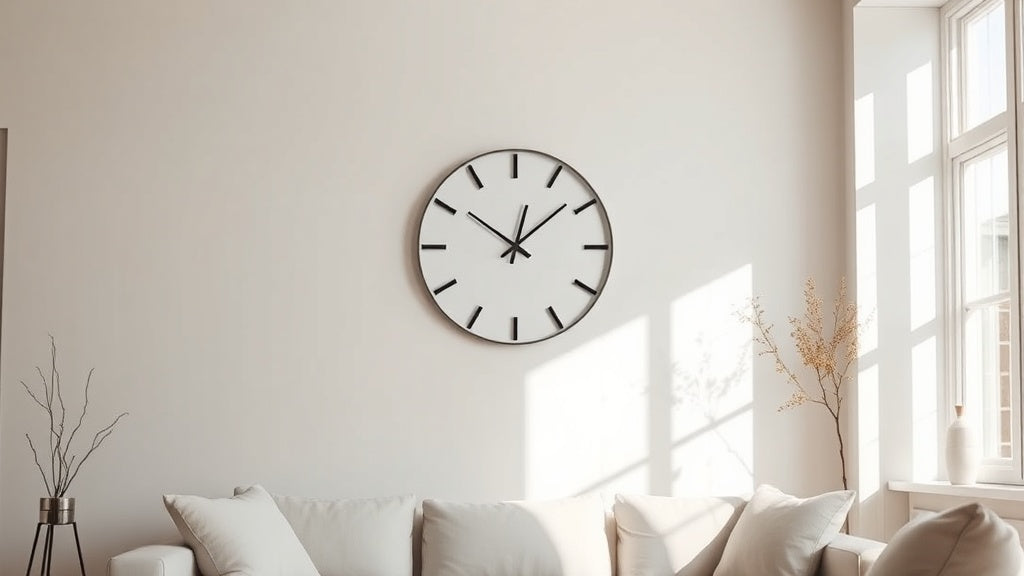
The minimalist wood clock is the most versatile starting point in 2025: natural grain treated as the design itself, in a 30 cm range, pairs effortlessly with Scandinavian interiors and stays quiet enough for bedrooms when the movement is truly silent. If there's a dominant trend in the best modern wall clocks of 2025 market, it's this: natural wood grain treated as the design itself, not as a background for decoration. The best pieces in this category trust the material enough to let it breathe.
A white wood clock in the 30 cm (12 inch) range is the most versatile starting point for this look. It reads clean from across the room, pairs with Scandinavian and japandi interiors without effort, and is light enough to hang with standard picture hooks. The key functional detail to check: whether the movement is truly silent. A lightweight bamboo or plywood clock that ticks in a quiet bedroom quickly becomes a problem.

For anyone who wants wood but with more visual weight, the handcrafted walnut option is worth the extra investment. Walnut darkens slightly with age, which means the clock actually improves over time. It's the kind of detail that matters when you're buying something to hang for years, not months. The full wooden wall clock collection covers everything from pale bamboo to rich dark walnut, so it's a good starting point if you're still narrowing down the material.
Bold and Large: Statement Clocks for Living Rooms and Open Plans
A large wall clock of 45 to 60 cm solves the anchor problem in open-plan spaces by giving the eye somewhere to land, and the best 2025 designs use deliberate contrast between materials to hold that focal role from across the room. Open-plan living spaces, the kind where the kitchen bleeds into the dining area which bleeds into the lounge, have a specific problem: no wall is quite "the wall." A large clock (anything from 45 cm to 60 cm) solves this by creating an anchor point. It gives the eye somewhere to land.
The most successful large clock designs in 2025 share one characteristic: they use contrast deliberately. Wood paired with dark metal hands. A crackled or textured dial against clean minimal numerals. A world map or gear motif that reads as a single coherent piece from across the room rather than a collection of elements.

The 60 cm world map metal dial clock is a specific case worth mentioning. It works because the cartographic element is restrained: it's not a novelty item, it's a composition. The metal construction means it holds up in rooms with fluctuating humidity, which matters for kitchen-adjacent dining spaces. At that scale, it functions as art as much as timekeeping.

For the living room specifically, the living room wall clock collection has 154 options worth browsing if a single piece isn't clicking. Filtering by size first, then material, then style, tends to work better than starting with aesthetics and working backward.
Mixed Materials: The Wood-and-Metal Combination That Works in Almost Any Room
The wood-and-metal pairing works in almost any room because it belongs to no single aesthetic: 2025 versions use metal structurally as hands, frames, or exposed movement elements, while wood carries the warmth, and Roman numerals add a productive tension between heritage and contemporary finish. The wood-and-metal pairing has been around for years, but 2025 versions are more sophisticated in how they balance the two. The best examples don't use metal as decoration: they use it structurally, as hands, frames, or exposed movement elements, while letting wood carry the warmth.
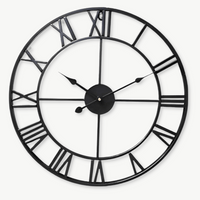
Roman numerals in this context are an interesting choice. They read as heritage but pair cleanly with industrial metal finishes, which creates a productive tension: something that feels both old and immediate. The 40 cm wood-and-black-metal Roman numeral clock sits exactly in this space. It's not a vintage piece trying to look modern, and it's not a minimal piece trying to add character. It has its own logic.
For rooms that mix styles, a mid-century sofa next to a more contemporary shelving unit, say, the mixed-material approach is actually the safest choice. It doesn't belong exclusively to one aesthetic, so it doesn't clash with either. That's a feature, not a compromise.
| Style | Best Room Fit | Ideal Size | Material Signature |
|---|---|---|---|
| Scandinavian Minimalist | Bedroom, home office | 30-40 cm | White wood, bamboo, pale beech |
| Industrial Mixed-Material | Living room, dining area | 40-60 cm | Dark wood + black or brushed metal |
| Japanese / Japandi | Bedroom, meditation space | 40 cm | Wood + frosted acrylic |
| European Designer / Glass | Living room, hallway | 30 cm (12 in) | Tempered glass dial, slim hands |
| Statement / Large Format | Open-plan living, loft | 60 cm+ | Metal, gear elements, map motifs |
The Japanese and Japandi Influence: Quiet Precision in 2025
The Japandi aesthetic shows up in clock design as clean circular forms, wood-and-acrylic combinations, and deliberate restraint: nothing is added unless it needs to be there, making the 40 cm wood-and-acrylic format one of the most considered options for bedrooms where intrusion is the enemy. Japandi, the hybrid of Japanese minimalism and Scandinavian hygge, has moved from trend to settled aesthetic over the past few years. In clock design, it shows up as clean circular forms, wood-and-acrylic combinations, and an almost deliberate restraint in decoration. Nothing is added unless it needs to be there.
The 40 cm wood-and-acrylic Japanese-style clock is a strong example of modern wall clock design that prioritizes negative space. The acrylic layer adds depth to the dial without adding visual noise. It catches light differently at different angles, which gives it a quality that flat-printed dials simply don't have. For a bedroom where the clock needs to be readable without being intrusive, this is one of the more considered options available.


European Glass and Designer Dials: When the Mechanism Is the Art
European designer clock tradition applies Swiss and German watchmaking aesthetics at room scale: a glass-faced silent quartz clock catches room light throughout the day, creating subtle reflections that work especially well in hallways and living rooms with indirect window light. The European designer clock tradition, think Swiss and German watchmaking aesthetics applied at room scale, has always been about showing rather than hiding. The glass-faced, transparent-dial clock sits in this tradition. You're not just reading time; you're watching how time is kept.
A 12-inch glass wall clock with silent quartz movement translates this tradition cleanly into a contemporary interior. The glass dial catches room light and creates subtle reflections that change through the day. It works particularly well in hallways and living rooms where it catches indirect light from windows, the kind of placement where a wooden clock might feel too matte.
For anyone drawn to this European-influenced direction but unsure where to start, the designer wall clock collection is the most focused entry point, with 139 pieces that sit in this more considered, craft-forward category.
"A clock on the wall is a rhythm marker for a room. Get it right and you stop noticing it. Get it wrong and it pulls focus every time someone walks in."
Interior design principle, frequently cited by European decorators
Celestial and Nature Motifs: When Decoration Earns Its Place
The celestial category earns its place when the motif is integral to the dial's composition, not a graphic layered on top: sun-and-moon designs and compass dials work because they are thematically honest, built on solid wood frames with silent sweep movements from 45 USD. Not every modern wall clock is strictly geometric. The celestial category, sun and moon designs, tree of life motifs, compass dials, has grown significantly, and the best pieces in it avoid looking like craft-fair items by treating the motif as an integral part of the dial's composition rather than a graphic layered on top.
The sun-and-moon wooden wall clock at 45 USD is a case where the motif actually serves the design. The dual symbol works graphically as a clock face: the moon suggests the passage of time in a way that's thematically honest rather than arbitrary. It suits bedrooms and reading corners well, spaces where a gentle visual narrative fits the atmosphere. The frame is carved from solid wood (not MDF), so it has a warmth in person that photos don't fully capture.
The compass wall clock occupies a different niche: nautical and coastal interiors, or any room with an explorer's sensibility. The key is that a compass is functionally related to time and orientation, so it doesn't feel like a decoration grafted onto a clock face. It feels like a coherent object. At 45 USD, it's also one of the more accessible entry points into the character-driven end of the catalog.
Both options sit in the unique wall clocks collection, which is where the more character-driven pieces live across the full catalog.
How to Get Size and Placement Right the First Time
Size is where most clock purchases go wrong: the instinct to go smaller than the wall needs produces a clock that looks apologetic, so knowing your room type determines the right range, from 30-35 cm for bedrooms up to 45-60 cm for living room focal walls. Size is where most clock purchases go sideways. The instinct is usually to go smaller than the wall needs: a 25 cm clock on a 3-meter wall looks apologetic rather than intentional. Here's what actually works:
- Bedroom above a bedside table or dresser: 30-35 cm. You want readability without the clock dominating a space meant to feel calm.
- Living room focal wall: 45-60 cm. Below 40 cm and the clock gets visually absorbed by surrounding furniture.
- Kitchen splashback or above cabinets: 30-40 cm. Kitchens have a lot of visual noise already, so a medium-size clock with high contrast (dark hands, light face) reads best.
- Hallway or entryway: 30-40 cm, but height matters more than size here. Eye level minus 5 cm is the sweet spot: visitors glance up naturally as they come in.
- Home office: 25-35 cm, positioned to the side of the primary sightline rather than directly ahead. Peripheral visibility without becoming a distraction.
The other placement detail that gets overlooked: the wall color behind the clock. A pale wood clock against a warm white wall disappears pleasantly. The same clock against a dark navy or forest green accent wall becomes a genuine focal point. Neither is wrong, but knowing which effect you want before you hang it saves a lot of repositioning.
For large wall clocks specifically, the 83-piece collection covers the range from 45 cm to statement-scale 70 cm+ pieces, with enough material and style variety to find the right fit for most interiors.
The Silent Movement Question: What "Silent Quartz" Actually Means for Your Home
Silent quartz means the second hand glides continuously rather than ticking 60 steps per minute: a standard quartz clock produces around 30-40 decibels in a quiet room, while a sweep movement produces almost none, making it essentially non-negotiable for bedrooms. Silent quartz, or "silent sweep," refers to a movement where the second hand advances in a continuous glide rather than discrete 60-steps-per-minute ticks. The practical difference is significant. In a quiet room, a standard quartz clock produces around 30-40 decibels of tick noise. A sweep movement produces almost none.
For bedrooms, the choice is essentially non-negotiable. Most people who've switched from a ticking bedroom clock to a silent one report that they had no idea how much background noise they'd normalized until it was gone. For living rooms and kitchens, it matters less; ambient sound from conversation, cooking, and music covers it. But it still tends to be the preferred option for design-forward buyers who've thought about it.
The silent wall clock collection gathers 179 options that all use sweep movements, which is a useful filter if this feature is a priority rather than a preference.
Frequently Asked Questions
What size modern wall clock works best in a living room?+
For most living rooms, 45-60 cm is the right range. A clock below 40 cm tends to get visually lost against furniture and art. If your wall is large or the room is open-plan, 60 cm or above reads as a genuine statement piece rather than a functional afterthought. Always measure the available wall space and mock up the size with cardboard before committing.
Are silent wall clocks worth it?+
Yes, absolutely, especially for bedrooms and home offices. A standard quartz movement ticks once per second with a mechanical click that reaches 30-40 dB in a quiet room. Silent sweep movements advance continuously and produce almost no audible sound. Many people only realize how disruptive a ticking clock was once they've switched. For living spaces with ambient background noise it matters less, but the silent option is nearly always worth choosing when it's available at a similar price point.
Which clock material suits a Scandinavian or minimalist interior best?+
Light wood, specifically bamboo, pale beech, or white-finished wood, is the most natural fit for Scandinavian and minimalist spaces. The grain adds warmth without visual noise, and natural materials complement the linen, wool, and stone textures common in these interiors. Keep the dial simple: minimal numerals or none at all, with clean hands in black or natural metal.
Can a modern wall clock work in a bedroom without looking out of place?+
Absolutely, as long as the clock is genuinely silent and the size is right (30-35 cm for most bedrooms). The key is choosing a piece that complements rather than competes with the room's existing materials. A walnut or light wood clock above a dresser or beside a window reads as intentional decor. Avoid anything with a backlit or LED display if the room is also a sleeping space.
What's the difference between a contemporary and a modern wall clock?+
"Modern" in clock design typically refers to the mid-20th century modernist aesthetic: clean lines, functional forms, no ornament for ornament's sake. "Contemporary" refers to what's current right now, which in 2025 includes everything from *japandi* minimalism to mixed-material industrial designs. In practice, both terms are used loosely, and the more useful questions are about material, scale, and room fit rather than strict stylistic categories.
How do I choose between wood and metal for a wall clock?+
Start with the room's existing materials. If your furniture runs toward warm tones (linen, oak, terracotta), a wood clock will feel native. If the room already has metal accents, brushed steel fixtures, or concrete surfaces, a metal clock will land more naturally. Mixed-material clocks (walnut frame with black metal hands, for example) bridge the gap well in rooms that combine both. The safest rule: match the clock's dominant material to the room's dominant texture, not its dominant color.