
Pick up your phone and search "wall clock" right now. You'll get thousands of results and zero clarity. Because the real question isn't which clock looks good in a product photo. It's which one actually works on your wall, in your room, with your furniture. That's the gap between browsing and buying. The modern wall clock vs traditional wall clock debate comes down to a surprisingly personal set of decisions: materials, proportions, mood, and what you want the room to say when someone walks in for the first time.
Neither style is objectively better. But one is almost always a better fit for a specific space. Here's how to figure out which one that is.
Key takeaways
- Modern clocks prioritize clean geometry, minimal ornament, and materials like acrylic, brushed steel, and bamboo.
- Traditional clocks rely on warmth, craftsmanship signals, roman numerals, and materials like aged brass, resin, and solid wood.
- Room architecture matters more than personal preference. A Georgian-molding room fights a flat-dial minimalist clock.
- The best clock for an open-plan home is often neither extreme, but a hybrid with industrial or vintage-modern character.
- Silent quartz movement is non-negotiable in bedrooms and home offices regardless of style.
What Actually Defines a "Modern" Wall Clock
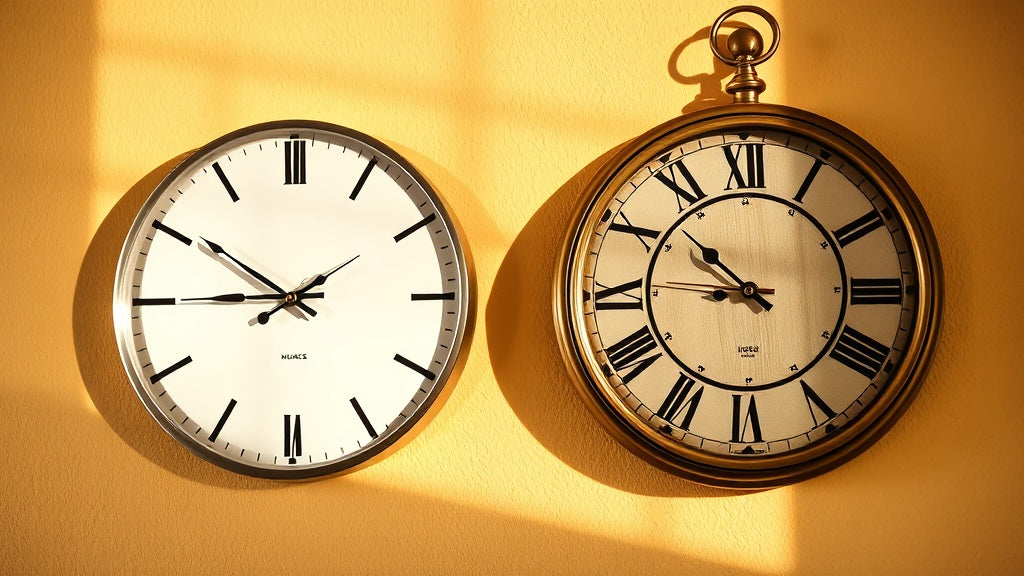
Modern doesn't just mean new. A clock released last year with scrolled iron hands and a distressed face is traditional by design language. Modern, in the design sense, means a specific visual grammar: reduced ornament, legible geometry, and an honest use of materials. You can spot a modern clock from across the room because nothing on its face is decorative for decoration's sake.
The dial is typically open, with either minimal hour markers or none at all. Hands tend to be thin, sharp, and architectural. The case, if there is one, sits flush against the wall rather than projecting depth. Colors lean toward neutrals: matte black, brushed nickel, natural wood tones, translucent acrylic. The clock's statement is made through proportion and placement, not through surface detail.

Scandinavian design had a massive influence on this language. From the 1950s onward, Nordic designers pushed the idea that a clock should be honest about what it is: a tool for reading time, elevated through good proportions rather than applied decoration. That philosophy still runs through the best Scandinavian wall clocks available today. Think clean bamboo frames, open dials, and quiet movements that slide seamlessly into bedrooms, home offices, and minimalist kitchens without demanding attention they haven't earned.
Modern clocks also tend to be quieter in a mechanical sense. Silent quartz movements became standard in contemporary clock design precisely because they suit the spaces modern aesthetics favor: bedrooms, reading nooks, open-plan living rooms where a persistent tick-tock would be a constant irritant rather than a charming quirk.
What Makes a Wall Clock "Traditional"
Traditional clock design has a longer and more layered history. It draws from European clockmaking traditions dating back to the 17th century, when a wall clock was genuinely a luxury object in a household. That heritage shaped everything: the use of roman numerals (which read as educated and classical), the preference for brass and dark wood, the tendency toward larger faces with visible bezel depth, and the decorative details around the frame that signal craft and permanence.
A traditional clock communicates something specific. It says that time is weighty, that objects should carry history, that a room deserves considered furnishings rather than interchangeable pieces. That's not nostalgia, it's a design philosophy that resonates strongly with homeowners who are building rooms around heirlooms, antique furniture, or Georgian and Victorian architectural bones.

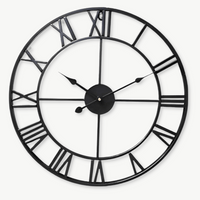
Roman numerals deserve a specific mention because they're often misread as purely decorative. They actually function differently from arabic numerals on a clock face. The varying character widths create natural visual anchors at the 12, 3, 6, and 9 positions, which helps the eye read time at a glance even on a large-diameter dial. That's why the Large Roman Numeral Wall Clock in metal works so well in dining rooms and hallways: it's both a design statement and a practical timepiece at scale.
Did you know?
The pendulum clock, invented by Christiaan Huygens in 1656, was accurate to within 10 seconds per day, a dramatic leap from the 15-minute daily drift of earlier mechanical clocks. That precision made the wall clock the trusted authority of its era, which is why traditional design still carries connotations of reliability and seriousness.
Materials: The Fastest Way to Read a Clock's Design Language
Before you look at the dial or the hands, look at what the clock is made of. Material is the clearest signal of where a clock sits on the modern-to-traditional spectrum, and it's the dimension that most directly affects how the piece will age in your room.
| Material | Modern Clock | Traditional Clock |
|---|---|---|
| Metal | Brushed steel, matte black, powder-coated aluminum | Aged brass, antique bronze, wrought iron with patina |
| Wood | Bamboo, light birch, clean-grain panels, raw edges | Dark walnut, mahogany, carved oak, turned spindles |
| Dial surface | Open frame, acrylic, glass, bare mechanism visible | Printed or painted face, parchment effect, enamel |
| Texture | Smooth, matte, minimal surface variation | Hammered, distressed, relief carving, visible grain |
| Finish | Consistent, uniform, factory-precise | Varied, aged-looking, handcrafted feel |
One thing worth flagging: industrial clocks sit at an interesting crossroads. A copper or rust-red metal clock with exposed gear details uses modern manufacturing but references traditional workshop craft. It's neither strictly modern nor strictly traditional, which is exactly why industrial design works well in hybrid interiors where you're mixing a reclaimed wood dining table with a contemporary sofa.
Room by Room: Where Each Style Actually Works
This is where the conversation gets practical. Aesthetic preference is real, but a clock that fights the architecture of a room will always look like an afterthought. Here's how to think about placement by space.
Living Room
The living room clock is doing the most work of any clock in the house. It's seen from multiple angles, at varying distances, and it competes with furniture, art, and natural light for attention. A modern clock in a living room works beautifully when the walls are clean, the furniture is low-profile, and there's an intentional color palette running through the space. Think: a 50 cm geometric metal clock above a minimalist console, or a sculptural acrylic design floating on a white wall.
Traditional clocks in a living room tend to anchor the space. A large roman numeral clock above a fireplace, or a vintage pendulum piece on a feature wall, becomes the room's focal point in a way that modern clocks rarely attempt. If your living room has crown molding, deep baseboards, or period furniture, a traditional piece reinforces that architectural language rather than fighting it.
Kitchen
Kitchens are practical spaces that tolerate more design playfulness. Modern clocks work especially well in contemporary kitchens with flat-front cabinetry, concrete counters, or open shelving. A clean 30 cm metal dial above the sink reads well without drawing the eye away from the cooking space. Traditional and vintage styles add warmth to kitchens with natural wood cabinetry, subway tile, or farmhouse fixtures. A small café-style clock with a cream face and roman numerals feels at home next to a copper range hood.
Bedroom
Silence comes first in a bedroom. Whatever style you choose, the movement has to be silent quartz. Beyond that, bedrooms reward restraint. A smaller modern clock in bamboo or natural wood creates a calm presence without asserting itself, which suits the bedroom's purpose. Traditional styles can work if the room leans romantic or eclectic, but heavy ornate pieces can feel oppressive in a space meant to be restful.
Home Office
A home office clock is a working tool first. Modern design wins here almost by default: clean dials, minimal distraction, silent movement. An acrylic or brushed metal clock with clear arabic numerals lets you check the time without breaking focus. That said, if your office has a library feel, with bookshelves, leather, and warm desk lamps, a vintage-style piece adds a sense of gravitas that actually helps with productivity. Seriously. There's a reason old law firms kept grandfather clocks.
Hallway and Entryway
The hallway is where you can take risks. It's a transitional space, not somewhere people linger, so a bold statement piece lands differently here. Large-format traditional clocks work brilliantly in hallways with dado rails, parquet floors, or period tiles. An oversized modern geometric design works just as well if the hallway is architecturally spare. Either way, scale up. A small clock in a hallway reads as indecisive.

How Size and Scale Change the Equation
Here's something that doesn't get discussed enough: a clock's style category matters less than its relationship to wall size and ceiling height. A traditional clock at 25 cm diameter looks insignificant on a 4-meter dining room wall. A modern minimalist design at 60 cm becomes the room's statement piece whether you planned for that or not.
The general rule that works: ceiling height divided by roughly 10 gives you a reasonable dial diameter in centimeters for a primary wall clock. 250 cm ceiling? 25 cm clock minimum for normal viewing distances. 300 cm? You can go to 30-40 cm comfortably. For statement pieces on feature walls, you can push further, but proportional relationships with surrounding furniture matter more than absolute measurements.
Modern clocks tend to be designed with scale flexibility in mind. The open-dial format means a 60 cm modern piece doesn't visually overwhelm the wall the way a 60 cm traditional clock with a full painted face might. Traditional pieces at large scale need more wall breathing room: at least 30-40 cm of clear wall on each side to avoid looking cramped.
When Traditional Design Wins Over Modern (and Vice Versa)
There are situations where one style is clearly the stronger choice, and it's worth being direct about them.
Go traditional when: your home has architectural detail built in. Cornicing, ceiling roses, picture rails, exposed brick, arched doorways. These features were designed in an era when ornamentation was expected, and a stark minimalist clock creates friction with that visual language. Traditional also wins in rooms where warmth and comfort are the primary goals: a sitting room where people gather in the evenings, a kitchen that doubles as family space, a reading corner.
Go modern when: the architecture is neutral or contemporary. Flat ceilings, painted plaster walls, flush-front kitchens, large-format windows. Modern clocks also work better in rooms where other art or decorative objects are already doing the visual heavy lifting. If your walls have gallery arrangements or bold artwork, a minimal clock steps aside rather than competing.
There's a third path that more and more homeowners are taking: the hybrid approach. Industrial wall clocks with exposed gear mechanisms, raw metal frames, and aged finishes carry traditional craft signals while maintaining a modern silhouette. They work in converted apartments, kitchen-diners, and studio spaces where both histories are present in the materials and architecture.
"A clock on a wall is not decoration. It's a decision."
Interior designer maxim - a reminder that every clock placement communicates something about the room's character.
The Vintage Middle Ground Worth Knowing About
Before leaving the comparison, vintage deserves its own section because it genuinely sits outside the modern-traditional binary in a useful way. A vintage clock isn't necessarily old; it's a design language that references a specific period: café clocks from early 20th-century European train stations, *art deco* pieces from the 1920s-30s, mid-century modern designs from the 1950s-60s.
These clocks carry traditional signals (roman numerals, analog faces, aged finishes) while being proportionally and materially closer to modern pieces. They're typically smaller and simpler than grand traditional designs, which makes them easier to integrate into contemporary homes without committing to a full traditional aesthetic. A small café-style vintage wall clock in a kitchen nook reads as charming rather than heavy. It adds personality without dominating the space.
The vintage wall clock category is also where you'll find the most cross-over buyers: people who describe their style as "eclectic" or "lived-in" and want a clock that fits neither a showroom-perfect modern kitchen nor a fully period-restored Victorian parlor. That's a legitimate design space, and it's genuinely well served by the range of styles available today.

Five Questions That Will Tell You Which Clock to Buy
Rather than a checklist, think of these as a short conversation with yourself before committing to a purchase.
- What's the dominant material in the room already? Light wood and linen pull toward modern or Scandinavian. Dark wood, leather, and velvet pull toward traditional or vintage.
- Is the architecture neutral or detailed? Period moldings and cornicing favor traditional. Flat, painted plaster favors modern.
- How much of the wall do I want the clock to occupy visually? Modern open-dial designs read lighter. Traditional full-face designs at the same diameter read heavier.
- Will this be a statement piece or a background element? Traditional clocks tend toward statement. Modern clocks can do either, depending on scale.
- Which room is this for, and what's the primary activity? Sleep and focus demand silence. Social rooms can handle more visual weight and personality.
Answer those five honestly and the right category almost selects itself. The specific clock within that category is where personal taste takes over. And that's exactly where the fun starts, because there are genuinely excellent options across every style, size, and budget once you know what you're looking for before you start browsing.
Whether you settle on a contemporary wall clock with clean modern lines or a richly detailed traditional piece with roman numerals and aged brass, the one thing that makes a clock work in a room is intentionality. Picked carefully, it's not just functional. It becomes the thing guests notice first.
Ready to find yours?
I'd suggest starting with the room you find hardest to furnish and working outward from there. Browse the full collection, filter by material or style, and if you're still on the fence between modern wall clock vs traditional wall clock, use the five questions above as your guide. A clock is a long-term relationship with a wall, so it's worth spending five extra minutes to get it right.
Explore all wall clocks →Frequently asked questions
Can a modern clock work in a room with traditional furniture?+
Yes, with care. The key is to let one style lead and use the other as an accent. If the furniture is traditional, a very simple modern clock in a neutral finish (matte black, natural wood) can read as a deliberate contemporary edit rather than a mismatch. Avoid ultra-minimal open-dial designs in rooms with heavy ornamental furniture: the contrast becomes jarring rather than interesting.
Are traditional clocks harder to maintain than modern ones?+
Not necessarily. Most traditional-style wall clocks sold today use the same silent quartz movements as modern pieces. The difference is in the case and dial materials. Pieces with aged brass or resin detailing may require occasional gentle dusting to maintain their finish. True mechanical or pendulum clocks need periodic regulation, but most decorative traditional clocks are quartz-powered and maintenance-free beyond battery changes.
What size clock should I buy for a large living room wall?+
For a primary feature wall in a living room with standard 250-270 cm ceilings, a clock between 40-60 cm in diameter is a practical starting range. If the wall is more than 3 meters wide and the clock is the main visual anchor, going to 60-80 cm works well with both modern open-dial designs and large traditional faces. Below 30 cm on a large wall typically looks decorative rather than intentional.
Do roman numeral clocks belong only in traditional interiors?+
Not at all. Roman numerals in a clean, sans-serif typeface on a minimal dial read as modern with a nod to heritage. It's the combination of numerals plus ornate case plus distressed finish that signals "traditional." A sticker-style roman numeral clock on a flat acrylic or metal face sits firmly in contemporary design territory and works beautifully in modern apartments.
Are silent clocks less accurate than standard quartz movements?+
No. Silent sweep movements use the same quartz crystal oscillator as standard ticking clocks; the only difference is that the second hand moves in a continuous sweep rather than discrete steps, which eliminates the audible tick entirely. Accuracy is identical: both drift by roughly 15-30 seconds per month, which is negligible for a wall clock. The silent version is worth the small price premium in any room where you work, sleep, or read.
How do I choose between a modern wall clock vs traditional wall clock for an open-plan living space?+
Open-plan rooms are tricky because different zones often have different moods. A good starting point: anchor the clock to the zone where it will be viewed most (usually the seating area or kitchen island). If the overall scheme is light and contemporary, a modern open-dial design keeps the space breathing. If you have warm wood floors, exposed brick, or mixed vintage furniture, an industrial or vintage hybrid bridges the gap without forcing a choice between the two styles.