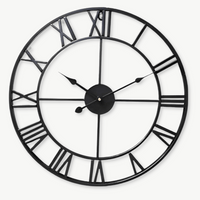


You've turned the lights off, the room is finally quiet, and then, tick. Tick. Tick. If you're a light sleeper, that sound doesn't fade into the background. It grows. It fills the room. And suddenly you're staring at the ceiling at 2 a.m., fully awake, wondering why you ever put a clock in the bedroom at all.
Here's the thing: you don't have to choose between knowing the time and actually sleeping. A non-ticking wall clock for light sleepers is a real, practical solution, not just a niche product. But not every "silent" label on a box tells the whole truth. Some clocks are quieter than others. Some are genuinely inaudible. And a few will still drive you up the wall at 3 a.m.
This guide explains exactly what makes a clock silent, which specifications to check before you buy, and which styles work best in a bedroom without looking like an afterthought. Whether you're shopping for yourself, a restless partner, or a baby whose nap schedule is basically your entire personality right now, let's make sure you pick the right one.
⭐ À retenir
- The ticking sound comes from a stepping motor in standard quartz movements, not the clock hands themselves.
- Sweep (or "continuous") movements eliminate the tick entirely by moving the second hand in one fluid rotation.
- Not all "silent" clocks are genuinely quiet: always look for "sweep movement" or "continuous movement" in the specifications.
- Room acoustics matter: hard walls, tile floors, and high ceilings amplify even faint mechanical sounds.
- Design and silence are not a trade-off: the best non-ticking wall clocks for light sleepers are also some of the most beautiful on the market.
Why Your Clock Ticks (and Why That's a Problem for Light Sleepers)
Standard quartz clocks use what's called a stepping motor. Every second, the motor sends a small pulse of electricity through a coil, which moves the second hand exactly one step forward. That step creates a tiny mechanical impact. In a noisy room, you'd never notice it. In a silent bedroom at night, it can reach 30 to 40 decibels, which is roughly the same as a quiet whisper heard from two metres away.
For most people, that's fine. For light sleepers, particularly those who wake easily to repetitive sounds, it's genuinely disruptive. Sleep researchers have long noted that rhythmic, predictable sounds can prevent the brain from fully dropping into deep sleep stages, even when a person doesn't consciously register waking up. One customer put it perfectly: "I didn't realise how much the ticking was affecting my sleep until I finally replaced the clock. I thought I was just a bad sleeper."
The fix isn't complicated. It's just a different type of movement.

Sweep Movement vs. Stepping Movement: The Key Difference
A sweep movement (also called a *mouvement continu* or continuous movement) replaces the stepping motor with a mechanism that drives the second hand in one continuous, fluid rotation rather than a series of clicks. There's no impact, no mechanical pulse per second, and no audible tick.
Some manufacturers describe this as a "silent quartz movement." Both terms refer to the same technology. The second hand glides around the dial the way a second hand on a high-end Swiss watch moves, smooth and uninterrupted. If you've ever noticed how satisfying that looks on a premium timepiece, you'll appreciate it just as much on your bedroom wall.
| Feature | Stepping Movement | Sweep Movement |
|---|---|---|
| Sound level | 25-40 dB (audible tick) | Near 0 dB (inaudible) |
| Second hand motion | 60 discrete steps/minute | Fluid, continuous rotation |
| Timekeeping accuracy | High (quartz standard) | High (quartz standard) |
| Battery life | Typically 12-18 months | Typically 10-14 months |
| Best suited for | Kitchens, hallways, offices | Bedrooms, nurseries, home offices |
One important nuance: a clock can have a sweep movement and still produce a faint hum from the motor itself. This is rare, but worth knowing. If near-total silence is a hard requirement, look for models specifically designed with dampened motors, or those made with denser casings. Solid walnut or oak, for instance, absorbs more motor vibration than thin hollow plastic ever could.
💡 Did you know?
The sweep movement was first developed for high-end Swiss watchmaking in the early 20th century, where a ticking second hand was considered ungentlemanly in formal settings. It only became widely available in affordable wall clocks with the mass adoption of quartz technology in the 1970s and 80s. So when you choose a sweep clock for your bedroom, you're essentially bringing a bit of that horological refinement home.
What "Silent" Actually Means on a Product Label
This is where things get a bit murkier, and where light sleepers get burned most often. "Silent" on a product label is not a regulated term. A manufacturer can legally call a clock "silent" if it's quieter than a standard stepping clock, even if it still produces a faint tick every second.
Here's what to look for instead:
- Sweep movement or continuous movement in the specifications section, not just in the marketing copy.
- Solid casing materials: wood, metal, and glass all handle motor vibration differently from hollow plastic. Solid wood tends to absorb rather than amplify. A Scandinavian-style clock in whitewashed oak behaves very differently acoustically from a budget plastic import with a printed wood finish.
- Verified buyer reviews that specifically mention using the clock in a bedroom. Marketing copy is written to sell; a customer who bought the clock for a nursery and reports no sound at night is telling you something real. "I can finally sleep with the clock in the room," is the kind of review to scan for.
- Clock diameter: larger clocks often use heavier movements with more mechanical mass, which can either dampen or amplify sound depending on the build quality. Compact 30 cm clocks are generally easier to keep truly silent.

Non-Ticking Clocks for Light Sleepers: The Best Rooms and Why They Work
Light sleepers aren't the only people who benefit from a non-ticking wall clock for light sleepers. These clocks genuinely improve daily life in several other spaces, and once you've experienced real acoustic quiet, you'll find yourself wanting sweep movements throughout the whole house.
Home offices and study rooms
Anyone who works from home in a quiet environment knows that sound distractions fragment concentration. A ticking clock in a study room doesn't just irritate, it actively interrupts focus cycles. Sweep clocks solve this without requiring you to rely on a phone screen to check the time, which is its own rabbit hole of distraction. A clean minimalist dial in brushed oak or industrial matte steel fits a home office aesthetic far better than anything you'd find in a generic office supply store anyway.
Nurseries and children's rooms
Getting a baby or toddler to sleep is hard enough. A ticking clock is an unnecessary saboteur. Parents who've switched to sweep clocks in nurseries consistently report fewer mid-nap disturbances. As one parent told us: "I moved the old kitchen clock into the nursery without thinking, and it took me two weeks to figure out why the baby kept waking at the same intervals." The clock doesn't need to be purely functional here either: a beautifully designed piece at eye level, perhaps a Scandinavian wall clock in pale birch, can become part of the room's character as the child grows.
Meditation and yoga spaces
Any room designed for calm and focus benefits from a sound-free timekeeper. A non-ticking wall clock lets you track session length without introducing mechanical rhythm into a space meant to be free of it. It's a small detail that makes a real difference once you're trying to hold a restorative pose for a timed interval without a clock ticking in the background like a metronome.

Materials and Design: How They Affect Sound (and Style)
The casing of a clock is doing more acoustic work than most people realise. Once you start paying attention to materials, the choice becomes both a design decision and a practical one. The two reinforce each other more than you'd expect.
Solid wood
Wood is a natural sound absorber. A solid walnut, oak, or bamboo casing dampens the vibration of the quartz motor before it can resonate outward. This is why handcrafted wooden clocks tend to be among the quietest options even when the sweep mechanism itself isn't the most premium available. Solid walnut has a particularly dense grain structure that's especially effective. As a bonus, natural wood fits almost every interior style: Scandinavian minimalism with its clean lines and pale tones, warm Mediterranean spaces, rustic farmhouse kitchens, and contemporary organic interiors all welcome wood without any visual conflict.
Glass-faced clocks
A glass dial or cover adds visual elegance and a sense of depth to the clock face. Glass doesn't dampen sound the same way wood does, but high-quality glass clocks with solid frames can still be very quiet. They tend to suit more contemporary or European-inspired interiors, and the transparency of the dial creates a lighter visual presence on the wall. Think of a glass-faced clock in a pared-back white bedroom: it reads as art first, timekeeper second.
Metal dials
Metal casings, particularly large-format industrial or designer clocks, can sometimes amplify motor hum if the metal is thin or the case is hollow. Heavier, solid metal frames with good mounting hardware perform better acoustically. Large brushed-steel or matte-black metal clocks are a strong design statement in open-plan living rooms and lofts with an industrial aesthetic, just confirm the sweep movement specification before committing to a statement piece that size.
Placement Tips That Make a Real Difference
Where you hang the clock affects how much you hear it. A few placement decisions can be the difference between a truly silent night and a barely-noticeable but still frustrating hum.
- Avoid hollow walls: plasterboard stud walls act as resonance chambers. If possible, mount the clock on a solid masonry wall, or use a wall anchor that minimises surface contact.
- Keep it away from the headboard wall: sound travels through walls, and placing the clock on the wall directly behind your head puts you closest to any vibration. A side wall or the wall opposite the bed works better acoustically.
- Use felt or rubber mounting pads: these simple hardware additions cost almost nothing and absorb a surprising amount of motor vibration before it transmits into the wall.
- Height matters for readability too: for a bedroom, eye level from a seated position on the bed (roughly 140 to 155 cm from the floor) is the sweet spot. You can read the time without lifting your head from the pillow, which matters more than you'd think when you're half asleep and need to decide whether the alarm is worth worrying about.

Choosing by Room and Interior Style
A non-ticking clock doesn't have to mean a plain clock. The range of silent sweep designs available now covers virtually every interior aesthetic. Here's how to match the clock to the room without sacrificing the quietness that matters to you.
Minimalist and Scandinavian bedrooms
Clean lines, light woods, and simple dial designs work best here. A 30 to 40 cm round clock in white-washed oak or natural bamboo with a clean face, no second hand markers, and a pale dial reads as intentional rather than functional. The Scandinavian wall clock collection covers this aesthetic well, with options that prioritise restraint over decoration. These are clocks that feel curated, not purchased.
Warm, eclectic, or bohemian spaces
This is where you can afford to be more expressive. A celestial design, a nature-inspired motif, or an organic wooden shape adds character without cluttering the wall. The key is still to check for the sweep movement specification. A beautiful boho clock that ticks is still a problem at 3 a.m., no matter how good it looks during the day.
Contemporary and industrial interiors
Larger format clocks in mixed materials (wood and metal, or glass and steel) anchor living rooms and home offices with authority. These work best on solid walls where the scale doesn't feel oversized. For a range of statement pieces that are still quiet, the silent wall clock collection has 179 options worth browsing, from compact 30 cm pieces to bold 60 cm designs.

A Note on Clocks Without Second Hands
There's an option that often gets overlooked: removing the second hand variable from the equation entirely. Many silent analog wall clocks are designed without a second hand at all, showing only hours and minutes. This has two practical advantages. First, there's no second hand mechanism to generate any sound, stepping or sweeping. Second, the dial reads as cleaner and more minimal, which suits bedrooms where visual calm matters as much as acoustic calm.
If you're not someone who needs second-level precision from a wall clock (and in a bedroom, who genuinely does?), a two-hand design is worth considering. You get an even quieter result and a more refined aesthetic. Many of the most popular bedroom clocks follow this approach precisely because it works so well in that context. It's the kind of detail that feels obvious in retrospect.

The Checklist Before You Buy Any "Non-Ticking" Clock
Here's what actually works as a pre-purchase filter, based on what light sleepers consistently report matters most.
- Verify "sweep movement" in the product specifications, not just in the title or description. If it only says "silent" without specifying the movement type, ask or assume stepping.
- Check the casing material: solid wood and solid metal outperform hollow plastic in sound damping. If the casing weight isn't listed, it's worth checking reviews for comments on build quality.
- Read bedroom-specific reviews: look for mentions of night-time use, nursery use, or home office use in quiet conditions. These tell you far more than a laboratory sound rating.
- Consider diameter relative to your wall: a clock that's too large for the wall creates visual noise, and an oversized movement in a thin case can vibrate more audibly. For bedrooms, 30 to 40 cm is typically the sweet spot.
- Check whether the clock needs a second hand at all: if not, a two-hand analog design eliminates the variable entirely.
"I didn't realise how much the ticking was affecting my sleep until I switched to a sweep clock. The difference was immediate. I actually forgot the clock was there."
Verified buyer review, bedroom wall clock
Beyond the Bedroom: Silent Clocks as Statement Pieces Throughout Your Home
Once you've chosen silence for the bedroom, it's hard to go back to ticking anywhere in the house. The good news is that the same sweep movement technology comes in formats that suit every room. A large 60 cm silent metal dial clock in the living room. A vintage-style sweep clock in the kitchen that reads well from across the room. A compact Scandinavian piece in the home office that doesn't interrupt a thinking session.
The most rewarding shift happens when you stop treating a clock as a purely functional object and start seeing it as wall art that also happens to tell the time. That's a different purchase decision, and a much better one. A well-chosen unique wall clock does what no generic timekeeper ever could: it becomes part of the room's story.
If you want to start somewhere specific, the silent wall clock collection brings together 179 sweep-movement options across every size, material, and style. Browse by room, by aesthetic, or simply by what stops you when you're scrolling. That instinct is usually right.
Frequently Asked Questions
What is the best non-ticking wall clock for a light sleeper?+
The best option is any clock with a verified sweep (continuous) quartz movement and a solid casing material, preferably solid wood or heavy-gauge metal. Solid wood casings in the 30 to 40 cm range consistently perform well in bedroom settings because the material absorbs motor vibration rather than transmitting it. Always confirm "sweep movement" in the product specifications rather than relying on the word "silent" alone in the title.
Are sweep movement clocks worth the price premium?+
For light sleepers, yes, unambiguously. The price difference between a standard stepping clock and a sweep movement clock is usually modest (often $10 to $30), but the practical impact for anyone sensitive to repetitive sound is significant. The sweep mechanism also tends to appear in better-built clocks overall, so you're often getting improved casing quality and longer battery life alongside the silence. For nurseries and home offices, the value case is equally strong.
Do all silent clocks really have zero ticking sound?+
Not quite. True sweep movement clocks eliminate the audible tick-per-second entirely, but a very small number of sweep clocks can produce a faint motor hum, especially in acoustically reflective rooms (hard floors, bare walls, high ceilings). This is rare and much quieter than any stepping clock, but it's worth doing a quiet-room test when your clock arrives. Placing a felt pad between the clock and the wall almost always resolves any residual vibration. Clocks marketed as "silent" without specifying sweep movement may still produce a reduced but present tick.
How can I make an existing wall clock quieter?+
There are a few things worth trying before replacing the clock entirely. Add a thin felt or rubber pad between the clock and the wall surface to reduce vibration transfer. Move the clock to a solid masonry wall rather than a hollow stud partition, which acts as a resonance chamber. You can also open the clock case and apply a small amount of clock oil to the movement gears. None of these will convert a stepping mechanism into a sweep movement, but they can noticeably reduce the perceived volume in a quiet room.
Are sweep clocks less accurate than standard quartz clocks?+
No. Both sweep and stepping quartz clocks use the same fundamental technology: a quartz crystal oscillating at 32,768 Hz regulated by a circuit board. The difference is only in how the motor translates those oscillations into hand movement. Timekeeping accuracy is essentially identical between the two types.
Do silent wall clocks work in rooms with hard floors and high ceilings?+
Room acoustics do amplify sounds, including any faint residual motor hum from a sweep clock. In a room with hard surfaces, tiled floors, and high ceilings, even a very quiet clock can become slightly more perceptible. In these environments, prioritise solid wood casings (better vibration absorption), mount on a solid wall with felt pads, and consider a two-hand design (no second hand) to reduce any mechanical variable completely.