
A bare wall in a country kitchen can feel incomplete for months before you figure out what's missing. Not a painting, not a shelf. Something functional, something with presence. A rustic wall clock for country home decor fills that gap in a way no other piece can: it anchors the room, marks the rhythm of the day, and carries a warmth that polished modern objects simply don't offer.
Whether you're furnishing a stone cottage, a converted barn, or a suburban home that leans into farmhouse character, the right clock ties a room together. The wrong one sticks out like a chrome appliance in a log cabin. Here's what works, and why the details matter so much more than you'd expect.
⭐ Key takeaways
- Solid wood, reclaimed timber, and aged metal are the three core materials for authentic rustic clocks
- Silent quartz movements keep country charm without the ticking that interrupts quiet evenings
- Oversized dials (16 inches and above) work best in open-plan kitchens and living rooms with high ceilings
- Placement height matters: center the clock at 57 to 60 inches from the floor for natural sightlines
- Patina and imperfections are features, not flaws; they're what separate rustic from mass-produced

What Makes a Wall Clock "Rustic" (Beyond the Label)
Retailers love the word "rustic." It gets slapped on everything from a $12 plastic clock with a wood-grain sticker to a hand-carved oak piece from a European workshop. The difference is visible from across the room, and it matters enormously to a room that's meant to feel genuine.
Material Honesty: Wood, Metal, and Nothing Fake
A genuinely rustic wall clock for country home decor starts with real materials. Solid pine, walnut, oak, mango wood, reclaimed barn boards. You can see the grain, feel the texture, sometimes even smell the timber. When metal is involved, think wrought iron, aged brass, or galvanized steel with a naturally dulled patina. The finish should look like it happened over decades, not in a spray booth.
MDF with a printed veneer can fool you in a photo. In person, it falls flat. The edges give it away: uniform, too smooth, no variation. If your goal is a country interior that feels lived-in and genuine, the clock needs to hold up to close inspection the same way a solid wood dining table does. Would you buy a dining table with a wood-grain sticker? Exactly.
Proportions That Suit Country Spaces
Country rooms tend to be generous. Exposed beams, wide doorways, stone or plaster walls. A 10-inch clock disappears in these spaces. For a farmhouse living room or an open kitchen, clocks between 16 and 24 inches in diameter strike the right balance: large enough to be a focal point, not so large they overwhelm a mantel or sideboard.
Smaller rooms (a mudroom, a powder room, a reading nook) can get away with 12 inches. The rule isn't rigid, but here's an easy test: stand at the doorway of the room. If you can't read the numbers comfortably, go bigger.

Seven Rustic Clock Styles That Belong in a Country Home
Not every rustic clock looks the same, and that's the point. Country decor ranges from French provincial to American farmhouse to English cottage. The clock should match the specific flavor of your home, not just the general idea of "old-timey." Which one sounds like yours?
1. Reclaimed Wood Round Clock
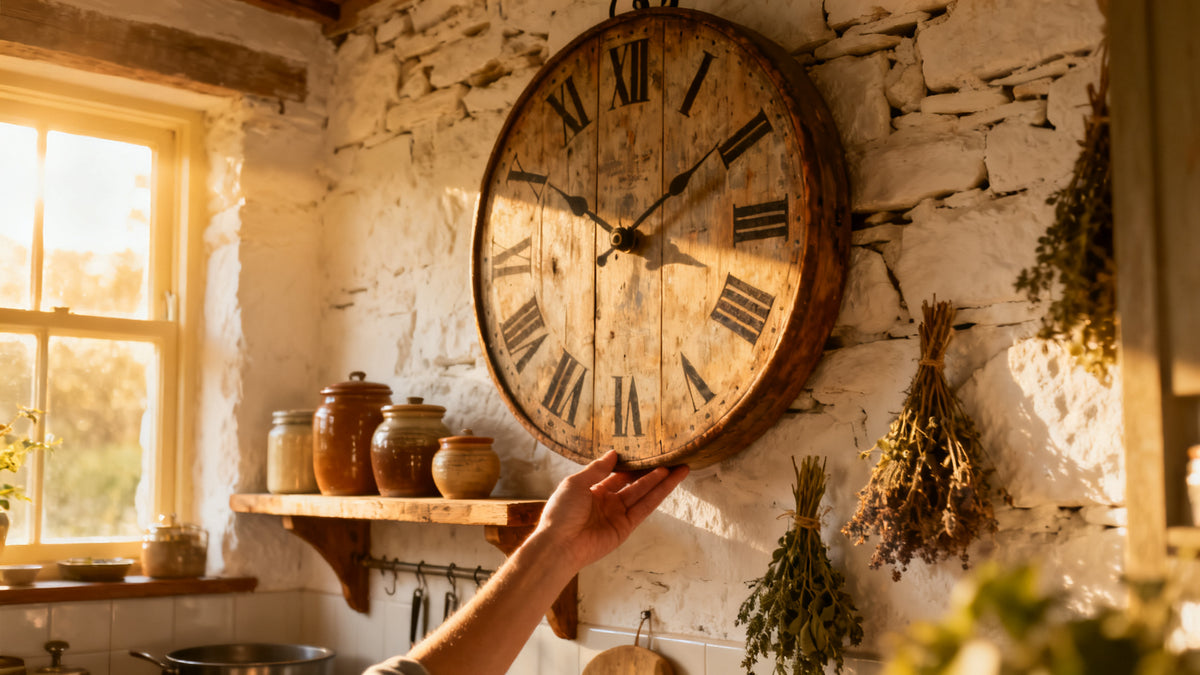
This is the classic. A circular face made from weathered planks, often with visible nail holes and color variation from plank to plank. Roman numerals are common. The effect is immediate: it looks like it's been hanging in a French kitchen for forty years. These work beautifully above a farmhouse sink, on a shiplap accent wall, or centered over a stone fireplace.
2. Oversized Distressed Metal Clock
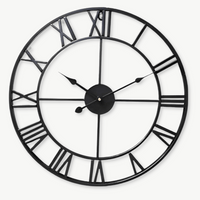
Think of an old train station dial, scaled for a home. Galvanized or rusted iron frame, Arabic numerals, sometimes with a glass or open face. The industrial edge grounds a room that might otherwise lean too "cute." Perfect for loft-style country spaces where barn conversions meet modern living. It's the clock equivalent of an exposed steel beam: honest, structural, quietly impressive.
3. Natural Wood Slab Clock
A single cross-cut slab of wood with bark edges intact (what woodworkers call live edge). Each one is unique. The grain patterns, knots, and natural coloring do all the decorating. Pair it with a silent quartz movement, and you've got a rustic wall clock with natural wood that doubles as a sculptural object. No two are ever identical, which is precisely the appeal.
💡 Did you know?
The tradition of wooden wall clocks in rural European homes dates back to the Black Forest region of Germany in the 1600s. Local farmers, unable to work during long winters, began carving clock housings from the abundant local timber. That heritage is why wood-cased clocks still feel so at home in country settings centuries later.
4. French Provincial Clock with Toile or Floral Accents
Softer, more decorative. A painted or cream-colored face with delicate numbering, sometimes surrounded by a carved wooden frame finished in chalk paint or whitewash. These lean feminine and suit a Provençal kitchen, a breakfast nook with linen curtains, or a bedroom in a country guesthouse. If your aesthetic runs toward lavender-scented linen and hand-thrown pottery, this is your clock.
5. Windmill or Farm Motif Clock
Shaped like a windmill blade, a rooster, or incorporating farm imagery into the dial. These are unapologetically thematic and work best when the rest of the room is already committed to the aesthetic: gingham textiles, enamelware, woven baskets. One themed piece per room, though. More than that tips into novelty territory.
6. Pendulum Wall Clock in Weathered Finish
A pendulum adds motion and a gentle sense of rhythm. In a country context, look for models with a distressed wood case (think walnut or aged oak), visible gears, or an antique brass pendulum. The swinging weight draws the eye and creates a living, breathing quality that static clocks can't match. Just keep in mind that some pendulum clocks tick audibly; if you want silence, check the movement type before buying.
7. Woven or Rattan Frame Clock
Rattan, wicker, or jute-wrapped frames bring a coastal-country crossover. These suit lighter palettes: white walls, bleached wood, sandy textiles. They're unexpectedly versatile, working in a coastal cottage as well as a bohemian farmhouse. The texture keeps them from looking plain, and they photograph beautifully too (if that matters to you).


Choosing the Right Finish: Distressed, Whitewashed, or Raw
The finish on a rustic clock determines its personality as much as the shape or size does. Three main finishes dominate country decor, and each creates a distinctly different mood. Getting this right is the difference between a clock that belongs and one that just hangs there.
| Finish | Best For | Mood | Pairs With |
|---|---|---|---|
| Distressed / Aged | American farmhouse, barn conversions | Warm, nostalgic, lived-in | Exposed brick, cast iron, dark wood beams |
| Whitewashed / Chalk Paint | French country, coastal cottage | Airy, soft, romantic | Linen, pale stone, dried lavender |
| Raw / Unfinished | Scandinavian country, modern rustic | Clean, honest, organic | Concrete, white plaster, matte ceramics |
| Dark Stain / Ebony | Tudor style, English cottage | Rich, grounded, formal | Leather armchairs, wool throws, brass fixtures |
A quick shortcut: look at the dominant wood tone in your room. If your furniture runs warm (honey oak, cherry), a distressed clock with warm undertones will blend right in. If you've kept things pale (birch, ash, painted pine), whitewashed or raw finishes create cohesion without competing. When in doubt, match the wood, not the wall color.
Where to Hang a Rustic Clock (and Where Not To)
Placement can make or break the effect. A gorgeous reclaimed-wood clock hung too high, or tucked into a corner, loses its impact entirely. These are the spots that actually work.
The Best Spots in a Country Home
- Above the fireplace mantel: The natural focal point in most country living rooms. Center the clock, leave 4 to 6 inches between the mantel top and the clock's bottom edge.
- Kitchen wall opposite the stove: Where you naturally look while cooking. A large rustic dial becomes the room's anchor, and it's genuinely useful when you're timing a roast.
- Entryway or mudroom: The first impression. A weathered wood clock paired with hooks and a bench sets the farmhouse tone before visitors even reach the kitchen.
- Staircase landing: Often an overlooked wall. A 20-inch clock fills this transitional space without requiring a full gallery arrangement.
- Dining room wall: Centered above a sideboard or hutch, it grounds the room's aesthetic and adds vertical interest.
Spots to Avoid
Direct sunlight is the enemy of wood and aged finishes. A south-facing window wall will bleach and warp a wooden clock within a year or two. Bathrooms with poor ventilation are similarly risky: humidity swells wood and corrodes unprotected metal. And placing a clock directly above a TV creates visual competition; both demand attention, and neither gets it.
Height is another common mistake. Many people hang clocks too high, near the ceiling line. The center of the clock face should sit roughly at eye level, between 57 and 60 inches from the floor. In a room with very high ceilings (over 10 feet), you can go slightly higher, but resist the urge to fill the top of the wall. That empty space is what makes the clock feel intentional rather than an afterthought.

Silent Movements vs. Ticking: What Country Living Actually Demands
There's a romantic idea that a ticking clock belongs in a country home. And sometimes it does: the steady rhythm can add character to a quiet room, the way a crackling fire does. But the reality is more nuanced, and getting this wrong is one of the easiest mistakes to make.
Most modern rustic clocks use quartz movements. The standard quartz mechanism ticks once per second, and the sound carries further than you'd expect in a quiet cottage with stone or plaster walls (hard surfaces amplify it considerably). A silent or "sweep" quartz movement rotates the second hand continuously instead of in one-second jumps, producing virtually no sound.
For bedrooms, nurseries, and home offices, silent is the way to go. For a kitchen or living room where background noise is constant, a gentle tick won't bother most people. Some people even find it comforting. The key is to make that choice deliberately, not discover it at 2 a.m. when you're trying to sleep and the ticking is suddenly all you can hear.

Mixing Rustic Clocks with Other Decor Styles
Country interiors in 2026 rarely stick to one aesthetic. A farmhouse table might sit next to mid-century chairs. A stone wall might face a wall of modern bookshelves. The rustic wall clock for a country-style room doesn't need to be surrounded by more rustic objects to work well. It just needs contrast handled thoughtfully.
Rustic Clock + Modern Furniture
A reclaimed-wood clock on a clean white wall, above a simple Scandinavian sideboard in birch or ash, creates a beautiful tension between old and new. The wood brings warmth; the modern lines keep things from feeling cluttered. This combination works especially well in open-plan spaces where the kitchen is contemporary but the living area leans traditional.
Rustic Clock + Industrial Accents
Metal-framed clocks with visible gears or rivets pair naturally with industrial lighting (Edison bulbs, black iron pendants) and raw materials like concrete and exposed ductwork. The shared emphasis on "honest materials, visible construction" makes these styles natural allies. It's a look that says the space has been lived in, not styled for a magazine shoot.
Rustic Clock + Soft Textiles
In a room full of cushions, quilts, knitted throws, and linen curtains, a wooden clock provides a solid, structural counterpoint. Without something sturdy on the wall, soft-textured rooms can feel formless. The clock gives the eye a resting point and quietly grounds the whole composition.
"The best room is one where you can't quite pin down the era. Something old, something new, and you stop noticing the difference."
A principle from English country house design
Caring for a Wooden Rustic Clock
Wood is a living material. It responds to humidity, temperature, and light. A few simple habits keep a rustic clock looking its best for years. None of these are complicated, and they apply to your other wood furniture too.
- Dust regularly with a dry, soft cloth. Avoid furniture sprays or polishes with silicone; they build up a film that dulls the wood's natural character over time.
- Keep it out of direct sunlight. UV exposure bleaches wood unevenly. If your favorite wall gets afternoon sun, consider a clock with a darker stain that tolerates light exposure better, or use sheer curtains to diffuse it.
- Check the battery once a year. A dying battery in a quartz movement can leak and damage the mechanism or stain the wood backing. Swap batteries proactively rather than waiting for the clock to stop.
- Control humidity if you can. Wood expands in damp conditions and contracts in dry ones. If your home swings dramatically between seasons (common in older country houses), a dehumidifier or humidifier helps protect all your wood furniture and decor, not just the clock.
Wooden Wall Clock
Browse the full range of natural wood wall clocks, from raw-edge slabs to carved designs, all with silent quartz movements.
73 products
Browse the collection →Roman Numerals, Arabic Numbers, or No Numbers at All
The number style on a clock face changes the whole personality of the piece, and it's a detail most people overlook when shopping. Think of it as the typography of your wall.
Roman Numerals
Classic. Formal. They carry a European, old-world sensibility. On a distressed wood face, Roman numerals add gravitas without feeling stuffy. They suit dining rooms, hallways, and living rooms where the tone is slightly elevated. One quirk worth knowing: many clock makers use "IIII" instead of "IV" for the four o'clock position. This tradition dates back centuries, and both versions are considered correct. So don't worry if yours looks "wrong" at four.
Arabic Numbers
More casual and easier to read quickly. They work in kitchens, mudrooms, children's rooms, and any space where the clock is primarily functional. A bold, hand-painted Arabic numeral set on a rustic face creates a cheerful, folk-art quality that feels completely at home in an American farmhouse kitchen.
Minimalist (Markers or Blank)
Some rustic clocks use simple notches, dots, or nothing at all. This leans modern-rustic or Scandinavian-country. The clean face lets the wood grain be the star. These clocks are more about aesthetics than at-a-glance readability, so place them where precise timekeeping isn't critical. Near a window seat? Yes. Over the stove where you're watching a roast? Maybe not.
Sizing Your Clock to the Wall: A Practical Framework
There's no universal "right size," but there are proportions that look intentional rather than accidental. Here's a framework that works in most country homes.
- Measure the wall space. Not the whole wall, but the specific area where you want the clock (above a mantel, between two windows, etc.).
- Aim for the clock to fill 50 to 75 percent of the width of that space. A clock above a 48-inch mantel should be roughly 24 to 36 inches wide.
- Leave breathing room. At least 6 inches of clear space between the clock and any adjacent decor (sconces, picture frames, shelves).
- Consider the room's ceiling height. In rooms with 8-foot ceilings, 12 to 18 inches is comfortable. With 10-foot or higher ceilings, scale up to 20 to 30 inches.
If you're nervous about committing, cut a circle from newspaper or cardboard at the size you're considering. Tape it to the wall and live with it for a day. You'll know within hours whether it feels right. It sounds fussy, but it saves a second trip to the hardware store.
💡 Did you know?
Oversized wall clocks gained mainstream popularity in the early 2000s as a response to minimalist interiors. Designers needed one bold piece to fill large walls without resorting to gallery walls. In country homes, oversized rustic clocks became the go-to because they added personality without visual clutter. The trend hasn't faded because the logic still holds.
What Wall Clock Styles Are Trending for Country Homes in 2026
Country decor moves slowly compared to fashion, which is part of its appeal. But there are shifts worth noting this year, and a few of them are genuinely exciting.
Warm-toned woods are overtaking the cool, grey-washed finishes that dominated for the last several years. Walnut, cherry, and honey oak are back in favor, partly as a reaction to the all-grey interiors of the late 2010s. Clocks with rich, warm wood grain are easier to find now, and they feel current without being trendy.
Mixed materials are gaining ground. A clock face that combines solid wood and forged metal, or wood and woven rattan, adds textural interest. These hybrid pieces bridge different style zones in a room and feel more layered than single-material designs. They also photograph beautifully, which matters if your home doubles as an Airbnb or you're planning a renovation reveal.
Handcrafted details are increasingly valued. Hand-carved numerals, hand-turned frames, artisan joinery. Buyers are gravitating toward pieces with visible craftsmanship because they stand apart from mass-produced alternatives. If you can see the maker's hand in the finish, the clock feels more like a companion and less like a commodity.
And silent movements have gone from niche to expected. Most shoppers now actively seek out "silent" or "sweep" quartz mechanisms. The ticking clock isn't extinct, but it's no longer the default, and for good reason.
Creating a Moment, Not Just Filling a Wall
A rustic wall clock for country home decor, at its best, creates a moment in your home. It's the piece your guest notices when they walk in and says, "I love that." It's the thing you glance at while kneading bread and feel, for a second, like your kitchen is exactly right.
Country decor works when it feels personal, not staged. Pick a clock that speaks to you, not just one that matches the color palette. If the knots in the wood remind you of a cabin you visited, if the Roman numerals recall your grandmother's kitchen, if the oversized dial makes you feel grounded every morning, that's the one. The right clock should feel like it was always there, even on the very first day you hang it.
Ready to find yours? Browse the full wooden wall clock collection and filter by size, finish, and movement type to find the one that fits your space perfectly.
FAQ: Rustic Wall Clocks for Country Home Decor
What kind of wall clocks are in style for country homes right now?+
Warm-toned natural wood, mixed-material designs (wood plus forged metal or rattan), and oversized dials with minimal numbering. Silent quartz movements are also strongly preferred. The grey-washed "faux distressed" look is fading in favor of authentic wood tones and visible craftsmanship.
What type of wall clock is best for a home with country or cottage decor?+
A solid wood clock (reclaimed, live-edge, or traditionally stained) with a silent movement is the most versatile choice. For American farmhouse styles, distressed finishes work well. For French country or English cottage, look for whitewashed or chalk-paint frames with Roman numerals. Size it to your wall: 16 inches or larger for open-plan rooms, 12 inches for smaller spaces.
Where should you not hang a wall clock?+
Avoid walls that get direct sunlight for extended periods (UV bleaches and warps wood). Humid bathrooms without proper ventilation can swell wood and corrode metal hardware. Directly above a television creates visual competition. And hanging a clock too high (near the ceiling) makes it feel like an afterthought; aim for the center of the dial at 57 to 60 inches from the floor.
Can a rustic clock work in a modern home?+
Absolutely. A reclaimed-wood or raw-edge clock on a clean white wall, above a simple Scandinavian sideboard, creates a compelling contrast between old and new. The key is to let the rustic piece be the warm accent in an otherwise streamlined space, rather than surrounding it with more rustic objects that could tip the room toward a theme park.
How do I maintain a natural wood wall clock?+
Dust it regularly with a dry, soft cloth. Avoid silicone-based furniture sprays. Keep it away from prolonged direct sunlight and high humidity. Replace the battery once a year before it dies, as leaking batteries can stain the wood and damage the movement.
Is a silent or ticking clock better for a country bedroom?+
For a bedroom, silent is almost always the better choice. Stone and plaster walls (common in country homes) amplify sound, so even a standard quartz tick can feel loud at night. A sweep quartz movement rotates the second hand continuously with no audible sound. Save the ticking for the kitchen or living room, where background noise already fills the space.