
There's something quietly compelling about watching a second hand move. It's not the hour hand that tells you the day is slipping by, and it's not the minute hand you check when you're running late for a meeting. The second hand is honest, constant, almost meditative. A wall clock with second hand visible design does something a digital display simply can't: it makes time feel real. Tangible. Worth paying attention to.
That's the whole tension at the heart of this choice. You want a clock that works hard, precise, readable, reliable. But you also want something you'll actually want to look at every day. Turns out, those two things aren't in conflict. They just require a little more thought than grabbing whatever ships fastest.
⭐ À retenir
- A visible second hand adds kinetic energy to your wall, it's the only part of a clock that's always in motion.
- Sweep vs. tick: the movement type changes both the sound and the visual rhythm of your clock.
- Second hands work in nearly every room, but the way you choose them should match the room's function and noise tolerance.
- Minimalist Scandinavian designs and industrial styles both handle the second hand beautifully, for very different reasons.
- A silent sweep second hand gives you all the visual precision without the audible tick-tick-tick.
Why a Visible Second Hand Still Matters in 2026
A wall clock with a visible second hand remains relevant because it delivers continuous analog motion, genuine second-level readability from across the room, and a layered visual hierarchy that no digital display or two-hand clock can replicate. We check time on phones, watches, microwaves, laptop corners. So why does a wall clock with second hand visible design still pull people in? Because it offers something screens have trained us to forget: continuous, analog motion. A second hand sweeping smoothly around a dial is one of the few things in a home that moves with purpose and rhythm.
From a purely functional standpoint, a visible second hand is genuinely useful. Cooks timing a sauce reduction, parents tracking homework breaks, anyone doing timed breathing exercises, yoga holds, or study sprints, all of them benefit from at-a-glance second-level precision. No need to unlock a phone. No blue light. Just a quick look across the room.
But the aesthetic case is equally strong. A second hand gives a clock face visual hierarchy. It creates a layered reading: the slow arc of the hour hand, the purposeful march of the minute hand, and then the constant motion of the second hand beneath it all. That layering is what makes an analog clock face feel designed rather than just functional.

Designers started noticing this in the mid-20th century. Danish clockmakers in particular leaned into the thin, contrasting second hand as a compositional tool, often in red or orange against white or walnut dials. The second hand wasn't an afterthought; it was the accent color. A brush stroke that brought the whole composition alive.
💡 Did you know?
The red second hand became a design standard largely because of the Danish Roskilde clockmakers in the 1950s and 60s. Their influence spread through Scandinavian furniture stores in the 70s, and today that red-on-white second hand is so culturally embedded that most people assume it's just "how clocks look." It was, in fact, a deliberate aesthetic choice that became a convention.
Sweep vs. Tick: The Choice That Changes Everything
The sweep versus tick decision is the single most important choice when buying an analog clock with a second hand: sweep motors move silently and fluidly, making them ideal for quiet rooms, while ticking motors produce an audible step every second, suiting kitchens and hallways. Before you look at any design, you need to make one mechanical decision. Does the second hand sweep, moving in one continuous, fluid motion, or does it tick, advancing in discrete one-second steps? This single difference affects how the clock sounds, how it looks in motion, and where it works comfortably in your home.
A ticking second hand uses a standard quartz stepping motor. Each pulse of the quartz crystal moves the hand exactly one step forward. It's accurate, it's inexpensive to produce, and it creates that unmistakable tick-tick-tick sound. In a busy kitchen or a hallway, this might not bother you at all. In a bedroom or a quiet home office, it can be the only thing you hear at 11pm.
A sweep second hand (also called a silent sweep) uses a higher-frequency motor that divides each second into multiple small steps, often 8 or 16 per second, making the motion appear fluid and nearly silent. The result looks more refined on the wall and works beautifully in spaces where quiet matters. If you've ever stood next to a high-end Swiss wall clock in a hotel lobby and noticed you couldn't hear it at all, that's a sweep movement doing its job.
| Feature | Ticking Second Hand | Sweep Second Hand |
|---|---|---|
| Sound | Audible tick every second | Near-silent, whisper-quiet |
| Visual motion | Step-by-step, staccato rhythm | Fluid, continuous arc |
| Best rooms | Kitchen, hallway, workshop | Bedroom, office, living room |
| Cost | Lower (standard motor) | Slightly higher (precision motor) |
| Aesthetic feel | Mechanical, industrial character | Refined, Scandinavian, modern |
| Precision perception | Feels precise, deliberate | Feels elegant, watchmaker-quality |
Here's what works: if you love the visual drama of a large industrial clock with bold Roman numerals, the audible tick can actually add character. It fits the aesthetic. But if your clock is going into a room where you read, work, or sleep, the sweep motor is worth every extra dollar. It's genuinely one of those upgrades you notice the very first night.
The Design Language of a Second Hand: Color, Shape, and Weight
The physical design of the second hand, its color, profile, and counterweight, carries more visual weight than most buyers expect: it sets the clock's graphic character and determines whether the piece reads as intentional or incidental from across the room. Not all second hands are created equal. The physical design of the hand itself carries a huge amount of visual weight, sometimes more than the dial or the case. Getting this right is the difference between a clock that reads as intentional and one that looks like a committee decision.
Color contrast and its role on the dial
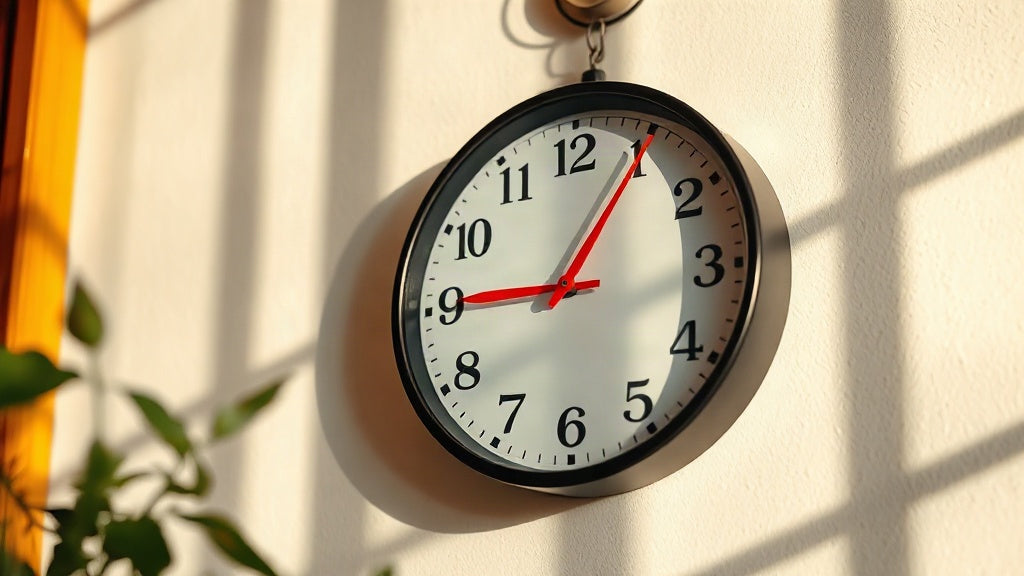
A red second hand on a white or cream dial is the most readable combination at distance. The high contrast means you can track seconds from across the room without squinting. Red also reads as energetic, precise, slightly technical, which is why it appears in laboratory clocks, school clocks, and professional timing environments. In a home context, that energy reads as confident and graphic.
A black or dark grey second hand on a light dial is subtler. It doesn't jump out the same way, which suits minimalist interiors where you want the clock to integrate rather than announce itself. Think Scandinavian or Japanese-influenced rooms: oak floors, muted walls, clean lines. The second hand is there when you look for it; it doesn't compete with the space.
A metallic or gold-toned second hand works on both dark dials and warm-toned wood faces. It catches light differently throughout the day, giving the clock a slightly precious, watchmaker quality. This treatment suits vintage and mid-century styles particularly well.
Hand profile: slim vs. substantial
A thin, needle-like second hand is almost universally flattering. It implies precision without bulk. It works on open-face dials where the mechanism is partially visible, and it works on classic white enamel faces. A wider, paddle-shaped second hand has more visual presence, it reads better from a greater distance, which matters when you're hanging a large-format clock (60 cm or more) on a feature wall.
One detail most people overlook: the counterweight. Many second hands have a small, weighted tail on the opposite end from the tip. This isn't decorative, it's mechanical, balancing the hand so the motor doesn't strain. But visually, a well-designed counterweight adds symmetry and gives the hand an almost architectural quality when viewed up close.

Room by Room: Where a Visible Second Hand Works Best
The kitchen and home office are where a clock with a visible second hand earns its keep most clearly, while the living room rewards a bolder format and the bedroom demands a silent sweep movement above all else. The functional argument for a visible second hand is strongest in specific rooms. Here's an honest look at where it genuinely adds value and where you might be better served by a simpler design.
The kitchen: your most precision-demanding room
A kitchen clock with a clear second hand is one of the most practical objects you can hang. Timing pasta, resting meat, reducing a sauce, these tasks need second-level precision and both hands occupied. A quick glance at the wall beats fumbling with a phone every single time. Here, a ticking movement is perfectly acceptable; the kitchen is rarely the quietest room anyway. Go for a bold face, strong numeral contrast, and a second hand you can read from the stovetop.
For the kitchen, size matters more than style refinement. A 35-40 cm clock is the sweet spot for most kitchens: large enough to read across the room, small enough not to visually compete with cabinetry. A white enamel dial with a contrasting red second hand is genuinely the most functional combination you can choose, it's a classic for good reason.

The home office: precision without distraction
A home office is where the sweep second hand earns its keep. The silence matters for focus, but so does the functionality: timing meetings, tracking Pomodoro work sessions, noticing when a call has run five minutes over. A wall clock with second hand visible design and a silent sweep motor delivers all of that without adding a digital device to your desk or a distracting tick to your concentration. Stick with a clean, minimal face in a Scandinavian or Japanese minimalist style, this isn't the room for decorative excess. A 30-35 cm dial in white or pale grey sits perfectly above a monitor without dominating the space.
The living room: where design and precision meet
In a living room, a clock with a visible second hand becomes part of the room's visual composition. Here the design weight is higher. You want something that commands the wall with confidence, a larger face (45-60 cm), a well-considered color palette, and a second hand that feels like part of the design language, not an add-on. This is where a red second hand on a walnut dial really shines, or where a slim black hand on a white open-face clock creates that Scandinavian editorial look.
The bedroom: think carefully before you hang it
The bedroom is the one room where the second hand requires the most consideration. If sleep matters to you, and it should, a ticking second hand is a genuine problem. That rhythmic sound amplifies in a quiet room, especially after midnight. I've had clients tell me they went three nights without sleeping properly before they realized the culprit was a new clock they'd hung that afternoon. A silent sweep movement solves this completely. You get the visual precision and the design character without the audio accompaniment. If you're choosing a bedside clock or a smaller bedroom wall piece, always confirm the movement type before buying. Look for "silent" or "sweep" in the product specification, not just in the name.
Clock Sizes and the Visual Weight of the Second Hand
Clock diameter directly changes how the second hand reads in a room: a 25-30 cm clock gives an intimate, watchlike sweep while a 50 cm or larger clock turns the second hand into a dramatic, kinetic design element visible from across the space. Here's something that rarely comes up in buying advice: the size of the clock changes how the second hand reads visually, and that affects your perception of the whole room.
On a small clock (25-30 cm), the second hand sweeps a tight circle. The motion is compact, watchful, a little watchlike. It reads as precise and intimate, good for a desk, a kitchen shelf, or a small hallway.
On a medium clock (35-45 cm), the second hand sweeps a broader arc. This is the most balanced format for most rooms, large enough to read easily, with a second hand that's clearly visible without dominating. The motion feels measured, purposeful.
On a large clock (50 cm and above), the second hand covers serious ground with each sweep. The motion is dramatic, you notice it from across the room. This is where the second hand becomes a genuine design element, not just a functional feature. It creates kinetic energy in a way that smaller clocks simply can't. If you've been on the fence about going large, a silent wall clock at 60 cm is often the piece that makes people wish they'd sized up sooner.

The Mechanics Behind the Motion: What Actually Drives a Second Hand
Understanding the movement inside a clock with a second hand helps you predict how it will perform over time: standard quartz stepping motors are accurate and affordable, sweep motors add silent fluidity, and radio-synchronized movements deliver atomic-level precision. Knowing what's inside a clock is genuinely useful when you're shopping. Not because you need to become a horologist, but because the movement type is the single biggest predictor of how the clock will behave in your home over time. Here's what the main options actually mean.
Standard quartz stepping motor
Most affordable wall clocks use a standard quartz movement. A tiny quartz crystal vibrates at precisely 32,768 Hz when an electrical current passes through it. A chip counts those vibrations and sends one pulse per second to the motor, advancing the second hand exactly one step. Reliable, cheap to manufacture, accurate to within 15-30 seconds per month in normal conditions.
High-torque sweep motor
A sweep or "silent" motor drives the second hand with a higher-frequency pulse, typically 8 steps per second or more. The hand appears to glide continuously. These motors run on the same quartz crystal principle but require a more sophisticated mechanism, which is why they cost more. Accuracy is similar to standard quartz, but the perceived quality is significantly higher.
Radio-controlled and Wi-Fi synchronized movements
Some premium wall clocks include radio-controlled or Wi-Fi synchronization, which means the clock automatically corrects itself against an atomic time signal. For anyone who genuinely needs second-level precision, a music studio timing tracks, a home gym running interval sessions, a professional working from home against international time zones, this is the gold standard. The second hand on a radio-synchronized clock is, functionally, as accurate as it's possible to be outside of a laboratory.

Open-face and skeleton movements
A design trend worth knowing: open-face or skeleton clocks expose part of the movement itself. On these, the second hand pivot, the gear train, or even the motor housing is visible. The second hand becomes part of the mechanical exhibition. It's a particularly strong look in industrial and steampunk-influenced interiors, and it makes the precision argument visually explicit.
💡 Did you know?
The quartz revolution of the 1970s didn't just make clocks cheaper, it made the second hand democratically visible. Before quartz, a reliable second hand required a mechanical escapement that added significant cost and weight. The Seiko Astron (1969), the world's first quartz watch, proved the technology worked, and within a decade, accurate second hands were standard on wall clocks at every price point.
Style Pairings: Which Interior Aesthetic Suits a Second Hand Clock?
The right second hand clock for your home depends entirely on your interior aesthetic: Scandinavian minimalism calls for slim contrasting hands on pale dials, industrial spaces welcome bold ticking movements, and mid-century rooms suit warm walnut cases with orange or red second hands. The clock style and the second hand design need to speak the same visual language as the room. Here's how it breaks down across the most common interior aesthetics in 2026.
Scandinavian and Nordic minimalism
White or off-white dial, slim black or natural wood case, thin contrasting second hand (red or black). The emphasis is on legibility and restraint. Nothing competes with the hands themselves. These clocks suit rooms with light-colored walls, natural wood accents, and plenty of negative space. The second hand here feels purposeful, you notice it when you look, but it doesn't shout.
Industrial and raw loft interiors
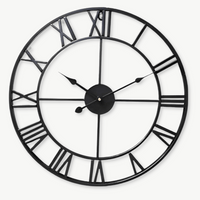
Exposed metal cases, open-face designs, bold Roman numerals, larger formats (45 cm+). A ticking second hand can actually work here, the audible mechanism adds to the industrial character. Metal or aged-brass second hands suit this aesthetic better than red plastic. The whole aesthetic says "working object," and the second hand reinforces that message.
Mid-century modern
Warm walnut or teak cases, cream dials, orange or burnt-red second hands. This is the most historically accurate pairing for a visible second hand, it's essentially the era that popularized the design. A 35-45 cm clock in this style becomes a period-correct piece that also works hard as a room anchor. Look for hands with slightly tapered, blade-like profiles rather than uniform-width needles.
Japandi (Japanese-Scandinavian hybrid)
Natural bamboo or pale wood frames, minimal dial markings, extremely slim second hands in black or dark charcoal. Silence is non-negotiable in Japandi spaces, a sweep movement is mandatory. The second hand here is almost architectural in its restraint. You'd barely notice it on the dial, but you'd miss it if it were gone.
Contemporary and eclectic spaces
More freedom here. A designer wall clock with a prominent second hand can be the room's statement piece, a large graphic dial, a bold color-blocked second hand, an unusual case material. Contemporary interiors reward confident choices, and a clock with a strong second hand is one of the easiest ways to add kinetic visual interest to a wall that's otherwise static.

Five Things to Check Before You Buy
Before buying any analog clock with a second hand, verify the movement type, the hand material, the dial-to-hand contrast, the viewing distance, and the battery longevity, these five checks prevent the most common post-purchase regrets. Most buying guides for wall clocks stop at "pick a size and a color." Here's what actually matters when a visible second hand is part of the equation.
- Confirm the movement type. "Silent" in a product name doesn't always mean silent sweep. Check the product description for "sweep second hand" or "continuous second hand movement." If the listing doesn't specify, contact the seller. A ticking second hand in a bedroom is a commitment you can't fix without replacing the clock.
- Check the second hand material. Plastic hands are standard at lower price points. Metal hands, aluminum, steel, brass, catch light differently and hold their shape over time without warping. On a well-made clock, the second hand material matches the rest of the hand set.
- Look at the dial-to-hand contrast. On a product photo, zoom in on the clock face. Can you clearly distinguish the second hand from the minute hand? On a pale dial with all-black hands, the second hand should be slightly slimmer than the minute hand so the hierarchy reads instantly.
- Consider the viewing distance. Will you be looking at this clock from 1.5 meters or 5 meters? At distance, a thin second hand on a small dial simply disappears. Scale the hand size to the room size, not just your aesthetic preference.
- Battery type and longevity. A sweep motor draws slightly more current than a standard stepping motor. Most quality sweep clocks still run 12-18 months on a single AA or AAA battery, but it's worth confirming, especially for a clock hung somewhere inconvenient to reach.
Placement That Makes the Second Hand Work Harder
Hang the clock at eye level with 15-20 cm of clear wall space on each side, away from direct sunlight, so the second hand registers as a focal point rather than competing visually with surrounding objects. Where you hang a clock with a visible second hand changes how the motion reads in the room. This is worth thinking through before you put a nail in the wall.
Hang it at eye level or just slightly above. A clock hung too high means you're looking up at the face at an angle, the second hand's position becomes harder to read precisely because you're not looking at the dial plane straight-on. For most people, the center of the clock face should sit between 155 and 175 cm from the floor.
Give it breathing room on the wall. A clock with a dynamic second hand needs clear wall space around it to register as a focal point. When it's surrounded by frames, shelves, or other objects, the motion of the second hand competes visually for attention and reads as noise rather than rhythm. A 15-20 cm clear border on each side is the minimum for a clock to breathe.
Avoid direct sunlight on the face. Beyond fading the dial over time, direct sunlight creates glare that makes the hands, particularly the slim second hand, harder to read. A north-facing or side-lit wall is the best placement for both readability and longevity.
"A clock without a second hand is like a sentence without a verb. It tells you where you are, but not that anything is happening."
An old watchmaker's saying, shared by clock enthusiasts on horological forums
Caring for a Wall Clock with a Second Hand Movement
Caring for a wall clock with a second hand movement is minimal: change the battery annually before it fully depletes, clean the face with a dry microfibre cloth, and adjust the second hand at the first sign of catching to avoid motor damage. A clock with a visible second hand has one more moving part than a two-hand design, which means one more thing to maintain, though the requirements are minimal with quality quartz movements.
Change the battery at least once a year, even if the clock is still running. A low battery causes the sweep motor to slow fractionally before it stops entirely. You might notice the second hand beginning to stutter slightly, that's the first warning sign. Change the battery promptly when this happens; running a sweep motor on a near-dead battery can damage the mechanism over time.
Clean the face with a soft, dry microfibre cloth. Avoid liquid cleaners on the dial, especially if the face is paper or printed rather than metal or glass. The hands themselves can be very lightly wiped with a barely damp cloth, but avoid bending or applying pressure, second hands are the most delicate hand on any clock because they're the longest and slimmest.
If the second hand develops a slight wobble or starts catching on the minute hand (a surprisingly common issue on lower-quality clocks), the hands likely need adjustment. Most clockmakers can do this in a few minutes, or you can carefully adjust the hand yourself by very gently pressing it straight on its shaft, never force it.
For silent wall clocks with sweep movements, the motor itself requires no maintenance. Unlike mechanical clocks that need oiling and regulation, quartz sweep motors are sealed units. If the motor fails, the entire movement is replaced, typically at a cost well under the price of a new clock.
FAQ
Why choose a wall clock with second hand visible design over a digital clock?+
A wall clock with second hand visible design offers something a digital display simply can't replicate: continuous, analog motion that makes time feel tangible rather than abstract. The sweeping second hand creates visual hierarchy on the dial, adds kinetic energy to your wall, and lets you read seconds at a glance without unlocking a phone or adding a screen to the room. For spaces where design matters as much as function, a well-chosen analog clock with a visible second hand is both a precision tool and a considered decor object.
What's the real difference between a sweep and a ticking second hand?+
A ticking second hand uses a standard quartz stepping motor that moves the hand one discrete step per second, producing the familiar tick-tick-tick sound. A sweep (or silent sweep) second hand uses a higher-frequency motor firing 8 or more pulses per second, making the motion look fluid and nearly silent. Both are equally accurate for everyday timekeeping. The choice comes down to sound tolerance and aesthetic preference: tick for a mechanical, industrial feel; sweep for refined, Scandinavian-style rooms or any space where quiet matters.
Which room is best suited to a wall clock with a visible second hand?+
The kitchen is the most functionally rewarding room for a clock with a visible second hand, you're constantly timing things with both hands busy. The home office is a close second, where a silent sweep model helps you track meetings and Pomodoro sessions without adding noise. The living room is where the design argument is strongest, a larger format (45-60 cm) with a confident second hand becomes a genuine room anchor. The bedroom is the one room requiring caution: only use a silent sweep movement there, a ticking second hand in a quiet room at night is far more disruptive than most people expect.
Is a sweep second hand more accurate than a ticking one?+
In most consumer quartz clocks, accuracy is essentially the same, both types use the same quartz crystal frequency standard and are accurate to within 15-30 seconds per month. The sweep motor moves the hand in multiple smaller steps per second rather than one, which makes the motion look continuous. Neither type is meaningfully more accurate than the other unless you're looking at radio-synchronized or atomic-reference movements, which are in a category of their own.
My second hand keeps stopping at the same position on the dial. What's happening?+
This is almost always a physical obstruction issue. The second hand is catching on the minute or hour hand as it passes. This happens when the hands aren't perfectly aligned on their individual shafts, one is sitting slightly too low or too high. Remove the battery, gently lift the second hand away from the dial slightly (a hair's-width gap is enough), replace the battery, and test. If it continues, the movement itself may be faulty and worth replacing.
What size wall clock works best when a visible second hand is a priority?+
For a second hand to be readable at a glance from typical room distances (2-4 meters), a clock diameter of at least 30 cm is recommended. At 25 cm or smaller, the second hand sweeps a tight arc that's easy to miss unless you're looking directly at the clock from close range. If your priority is functional second-level timekeeping across a room, a kitchen, a gym space, a studio, aim for 35-45 cm minimum. For a purely aesthetic statement with a dramatic sweep, 50 cm and above is where it really registers.
Can I add a second hand to an existing wall clock that doesn't have one?+
In most cases, no, not practically. The movement (motor) in a two-hand clock doesn't have the shaft or the mechanical output for a third hand. Replacing the movement with a three-hand equivalent is possible if the clock's design allows access to the mechanism, but at that point you're essentially rebuilding the clock. For most people, it's more straightforward to buy a clock that already includes the second hand you want.