
There is a particular kind of quiet that settles into a traditionally decorated room when a pendulum clock for a traditional home is working well. Not just the rhythm of the swing. The whole room seems to anchor itself around it. The right pendulum clock on the right wall does something most decor pieces cannot: it gives a space a pulse.
But finding that clock is trickier than it sounds. Traditional interiors vary enormously, from French provincial to English country cottage, from Georgian townhouse to warm Tuscan farmhouse. A pendulum clock that looks perfect in one setting can feel jarring in another. Scale, finish, pendulum swing clearance, chime options, case material: each of these factors matters more than the product photos let on.
Here is a practical, opinionated guide to getting it right.
⭐ Key takeaways
- A pendulum needs at least 40 cm of clear wall space below the dial for the swing to breathe without hitting furniture.
- Traditional homes split into broadly two categories: warm-toned (oak, brass, terracotta) and cool-toned (marble, grey stone, painted panelling). Your clock finish should follow that lead.
- Battery-operated quartz pendulum clocks are now nearly indistinguishable from mechanical ones aesthetically, and they require zero maintenance.
- Chimes are charming until they're not: think about where in the house the clock will hang before choosing a chiming model.
- Weight and fixing matter. A solid wood or forged iron clock above 2 kg needs a wall anchor, not just a picture hook.
Why Pendulum Clocks Still Belong in Traditional Interiors
A pendulum clock earns its place in a traditional home because the swing introduces movement and a living quality that no framed print or decorative object can replicate. That is not nostalgia talking. It is a genuine design principle.
Traditional interior styles, whether Georgian, Victorian, French country, or rustic farmhouse, were built around objects that had presence. Furniture was solid. Fabrics had texture. Rooms were layered, not sparse. A pendulum clock fits that logic naturally: it is both functional and theatrical in the best possible sense.
The movement of the pendulum also draws the eye in a way that keeps a room from feeling static. Interior designers sometimes call this dynamic anchoring: a focal point that holds attention without demanding it. A pendulum does exactly that. You glance at it, register the time, notice the swing, and move on. But the room feels more alive for it.
I see this effect almost every time someone adds a pendulum to a room that felt "nearly right but not quite there." The clock is rarely the last thing people expect to make the difference. It almost always is.

The Case Against Purely Decorative Clocks in Traditional Rooms
A common mistake is treating a clock as pure ornament and choosing it on looks alone. In a traditional room, a clock that cannot be read easily from across the room, or whose scale is too small for the wall, reads as a prop rather than a fixture. It looks like it wandered in from somewhere else.
The pendulum clock styles that work best look as though they have always been there. That feeling comes from proportion, finish coherence with the room's existing palette, and genuine material quality. Plastic that mimics wood rarely fools the eye at close range, especially in a room full of real wood and natural stone.
Reading Your Room Before You Buy
Before choosing a pendulum clock for a traditionally decorated space, name the three dominant materials in that room: the floor, the largest piece of furniture, and the hardware. Those three elements tell you everything about which clock finish belongs.
It sounds almost too simple, but I cannot tell you how many people skip this step and end up with a beautiful clock that fights its own wall. Five minutes with a notepad saves a lot of second-guessing.
Warm-Toned Traditional Rooms
Warm-toned traditional rooms typically feature oak or walnut floors, brass or bronze hardware, terracotta or cream walls, and textiles in amber, burnt orange, or deep burgundy. These rooms want pendulum clocks in dark wood, aged brass, warm bronze, or distressed iron with gold accents.
The goal is to feel continuous with the room, not to contrast with it. A cold chrome or gunmetal pendulum clock will look out of place here, however good-looking it might be in isolation.
Cool-Toned Traditional Rooms
Cool-toned traditional rooms are built around painted panelling (grey-green, chalky white, dusky blue), marble or stone floors, pewter or polished nickel hardware, and textiles in deep navy, forest green, or cream. These rooms welcome pendulum clocks in dark stained wood, matte black iron, or aged pewter finishes.
Interestingly, an antique-style clock in almost any finish tends to work in both room types, because the patina reads as neutral heritage rather than a specific tone. Antique patina is the great neutraliser in traditional decorating: it bridges warm and cool without effort.
💡 Did you know?
The pendulum as a timekeeping device was first described by Christiaan Huygens, a Dutch mathematician, in 1656. His original pendulum clock was accurate to within 10 seconds per day, which was a remarkable leap forward from the verge escapement clocks of the time that could lose or gain several minutes every hour. The characteristic tick-tock sound that we associate with pendulum clocks today comes from the escapement mechanism, not the pendulum itself.
The 7 Pendulum Clock Styles That Work in Traditional Homes
Traditional homes span several centuries of design, so the range of pendulum clock styles that fit them is broader than most people assume: from Black Forest cuckoo designs to regulator-style wall clocks, each style belongs to a specific room vocabulary. Here is how to match them.

1. The Black Forest Cuckoo Clock
Cuckoo clocks from the Black Forest region of Germany are perhaps the most iconic pendulum-driven traditional clocks in existence. They have been made in the same forested corner of south-west Germany since the early 18th century, with hand-carved linden wood cases depicting wildlife, leaves, and hunting scenes.
In a traditional home, a Black Forest cuckoo clock works best in a rustic or cottage-style room: exposed beams, stone floors, wood furniture with visible grain. It looks at home above a farmhouse kitchen dresser or beside a wood-burning stove in a stone fireplace wall.
What to watch for: the pendulum chains on a mechanical cuckoo clock need to be pulled every 24 or 48 hours, depending on the movement. If you prefer zero maintenance, modern battery-operated quartz versions are available with the same carved aesthetic but a quartz pendulum movement.

2. The Baroque Antique Case Clock
Baroque-style pendulum clocks draw from the ornate decorative language of 17th and 18th century Europe: elaborate scrollwork, gilded accents, heavily decorated frames, and bold numerals. They suit formal traditional rooms with corniced ceilings, oil paintings, and richly upholstered furniture.
In a Georgian dining room or a classic French salon, a baroque antique case clock on a prominent wall carries the same visual authority as a large oil painting. Scale is everything here: a baroque clock below 45 cm diameter will look lost in a high-ceilinged room. That 45 cm measurement tends to be the practical minimum for rooms with ceilings above 2.5 m.
Rooms where this style struggles: overly cluttered rooms where the ornate frame fights with competing decorative elements. Baroque clocks want breathing room on the wall around them.

3. The Industrial Vintage Loft Clock
Industrial vintage clocks occupy an interesting middle ground. They are not strictly "traditional" in the Georgian or Victorian sense, but they fit very naturally into the growing number of homes that blend traditional bones (original brick walls, reclaimed wood floors, steel windows) with contemporary living.
A converted warehouse apartment, a Victorian terrace with exposed brick, or a stone barn renovation are exactly the environments where an industrial vintage pendulum clock with a distressed iron finish and bold Roman numerals feels completely right. These clocks often run 60 cm and above, which suits high ceilings and generous wall runs where a smaller dial would look hesitant.
4. The Carved Wood Country Clock
Simpler than a cuckoo clock but sharing its material vocabulary, the carved wood country pendulum clock is a staple of English country houses, Provençal farmhouses, and New England Colonial interiors. These clocks typically feature a plain wood case, a painted or enamel dial, and a simple brass or polished wood pendulum.
They work in almost any room that has natural wood elements: a hallway with oak floorboards, a sitting room with a timber-framed fireplace surround, or a kitchen with open wooden shelving. The finish of the case should match or complement the existing wood tones rather than clash with them.
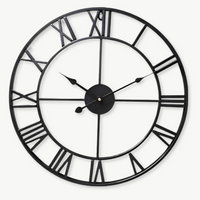
5. The Roman Numeral Metal Wall Clock
Not every traditional home wants the full architectural presence of a cased clock. For rooms where the wall already carries a lot of character (textured plaster, exposed stone, decorative tiles), a flatter, dial-forward metal clock with Roman numerals and a pendulum can be the smarter choice.
Roman numerals read as inherently traditional. They reference sundials, church tower clocks, and civic architecture. A well-made Roman numeral metal clock with a pendulum can anchor a traditional room without needing a case at all, letting the wall texture become part of the composition.

6. The Westminster Chime Bracket Clock
Westminster chime clocks occupy a specific emotional register. The Westminster Quarters melody (the four-note pattern that most people recognize from Big Ben) is one of the most recognizable chime sequences in the world. Having it play every quarter-hour in your hallway or sitting room is either deeply comforting or mildly maddening, depending on who you ask.
For people who love it, there is nothing better in a traditional home. A Westminster chime clock with a visible pendulum, mounted in a hallway with original tiled floor and Victorian woodwork, creates an atmosphere that is genuinely difficult to replicate with any other single decor object.
7. The Regulator-Style Wall Clock
Regulator clocks were the precision instruments of the 18th and 19th centuries: used in observatories, workshops, and railway stations to keep accurate time. Their design language is clean, serious, and elegant. A long pendulum, a glass case or open dial, minimal ornamentation, and large clear numerals.
In a traditional home, a regulator-style clock suits spaces that value refinement over decoration. A home library with floor-to-ceiling bookshelves, a panelled study, or a dining room with classic mouldings are perfect settings. The clock does not compete with the room: it anchors it with quiet authority.
Pendulum Swing Clearance: The Measurement Most People Skip
The most common mistake when buying a pendulum clock for a traditional home is ignoring swing clearance: the vertical space the pendulum needs below the clock body to complete its arc without hitting furniture, shelving, or the floor. Getting this wrong means the pendulum either does not swing freely, or the clock stops working altogether.
| Clock Type | Typical Pendulum Length | Min. Clearance Below Dial | Best Wall Position |
|---|---|---|---|
| Cuckoo clock (small) | 15-25 cm | 30 cm | Above a dresser or shelf at eye level |
| Baroque antique wall clock | 20-35 cm | 40 cm | Feature wall, 160-180 cm from floor to dial centre |
| Roman numeral metal wall clock | 25-40 cm | 45 cm | Open wall section, away from furniture |
| Industrial loft clock (60 cm+) | 35-55 cm | 60 cm | High on wall above sofa or fireplace |
| Regulator clock (tall pendulum) | 50-80 cm | 80+ cm | Tall wall section, hallway, or above waist-height furniture |
Measuring before you order takes two minutes. Mark the intended hanging point on the wall with a piece of tape, then measure down to the nearest obstacle. If that measurement falls short of the minimum clearance for your chosen clock type, hang it higher, choose a shorter pendulum model, or find a different wall.
Mechanical vs. Battery-Operated Quartz: Which to Choose in 2026
For most traditionally decorated homes today, a battery-operated quartz pendulum clock is the more practical choice, delivering the same visual effect as a mechanical movement with none of the winding, regulation, or servicing requirements.
That said, the choice is not purely practical. Some people genuinely want the experience of a mechanical clock: the ritual of winding, the organic variation in the tick, the connection to the craftsmanship of a real escapement. If that matters to you, it is a legitimate reason to choose a mechanical movement. Just go in with clear eyes about what it involves.
What Quartz Pendulum Movements Do (and Do Not) Replicate
A battery-operated quartz pendulum moves the pendulum via a small motor that runs off the same battery as the clock movement. The pendulum arc is cosmetic: it does not regulate the timekeeping the way a true mechanical pendulum does. The clock keeps time via the quartz crystal, which is significantly more accurate.
What quartz replicates perfectly: the visual rhythm of the swing, the sound of a tick (if the movement is not a silent sweep), and the overall aesthetic. What it cannot replicate: the mechanical sound of a true escapement, the variation in rate that gives antique clocks their character, and the weight and feel of a heavy brass pendulum bob.
For a traditionally decorated room where you want presence without maintenance headaches, silent quartz pendulum movements are the practical choice. For a formal drawing room or a hallway where you want the full sensory experience of a ticking clock, a chiming mechanical movement is worth the upkeep.
A Quick Side-by-Side
To make the decision concrete: a quartz movement needs a battery change roughly every 12-18 months, stays accurate to within a minute per year, and will work happily on a slightly unlevel wall. A mechanical movement needs winding every 1-8 days (depending on the spring), benefits from a clockmaker service every 5-10 years, and must hang on a plumb wall to keep accurate time. If you live in a rented home or move frequently, quartz is the obvious answer. If you own your home and genuinely enjoy a small ritual with your objects, mechanical repays that attention with a character quartz cannot fake.

Where to Hang a Pendulum Clock in a Traditional Home
The three most effective positions for a pendulum clock in a traditionally decorated home are: above the fireplace mantelpiece, in the hallway entrance, and on the principal wall of a sitting room directly across from the main seating arrangement. Each location gives the clock a different role in the room's hierarchy.
Above the Fireplace
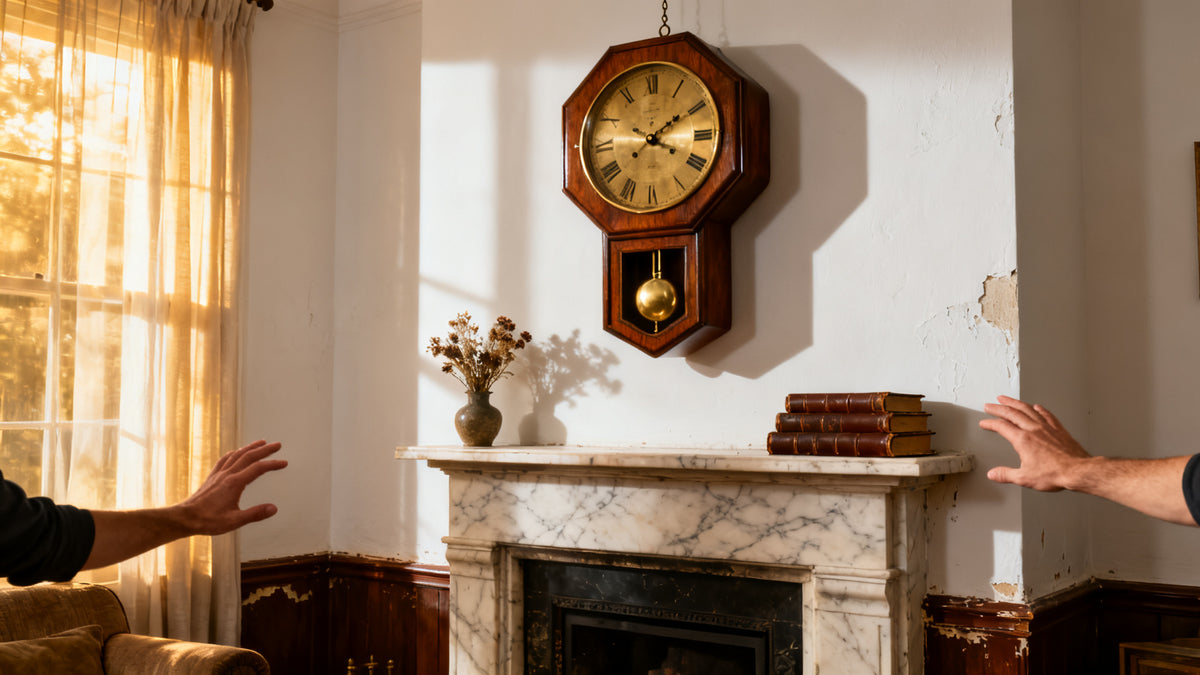
This is the most classic position, and for good reason. The fireplace is typically the focal point of a traditional sitting room or dining room, and hanging a pendulum clock above the mantelpiece reinforces that hierarchy. The eye travels upward from the fire to the clock face naturally.
The challenge here is heat and humidity. Keep the clock at least 30 cm above the mantelpiece if you use the fireplace regularly, and avoid placing it directly in the path of rising warm air from the chimney. Extreme temperature swings shorten battery life and, in mechanical clocks, alter the rate of the pendulum. A good rule of thumb: if the wall above your mantelpiece ever feels warm to the touch, move the clock higher.
The Entrance Hallway
A pendulum clock in a hallway is one of the oldest domestic design traditions in Britain and continental Europe. The long-case (grandfather) clock evolved specifically for the hallway, where ceiling height was generous and traffic past the clock was frequent enough to justify its prominent placement.
In a modern home with a traditional entrance, a wall-hung pendulum clock above a console table or beside a coat rack carries that same ancestral logic. It greets people as they enter and marks their departure. Hallway pendulum clocks work particularly well in black or dark stained finishes, which read as deliberate and characterful against painted plaster walls.
The Primary Sitting Room Wall
For open-plan or generous sitting rooms, hanging a pendulum clock on the wall directly opposite the main sofa creates a natural focal point for the room. This is where scale matters most: a clock that is too small for a large expanse of wall will look hesitant. Aim for a minimum diameter of 45 cm in a room with ceilings above 2.5 m.
"A clock that ticks well in a room is better than a clock that merely looks good on a shelf."
Traditional cabinetmaker's principle, 18th-century English workshop practice
Pairing a Pendulum Clock with the Rest of Your Traditional Decor
The pendulum clock that works hardest in a traditionally decorated room holds a visual conversation with two or three nearby objects, rather than standing alone on a bare wall. Traditional interiors are built on layering, and the clock should participate in that layering.
Above a fireplace, pair the clock with flanking candlesticks, a small sculpture, or framed botanical prints at the same height on either side. The clock anchors the arrangement; the other objects give it context and scale.
In a hallway, a console table below the clock with a ceramic bowl, a small lamp, and a tray for keys creates the kind of composed vignette that feels genuinely lived-in rather than staged. The clock above should be taller than wide in this setting, to echo the vertical proportion of the hallway itself.
On a sitting room feature wall, resist the urge to surround the clock with too many competing objects. Two or three well-chosen pieces at different scales (a framed mirror, a wall sconce, a small painting) are plenty. Traditional decorating at its best is about restraint, not accumulation.
Pendulum Clock
21 pendulum clocks spanning Black Forest cuckoo styles, baroque antiques, and designer acrylic designs: a range built for traditional rooms that want more than a standard dial.
21 products
Browse the collection →What Traditional Home Owners Actually Say After Buying
The feedback that comes up most consistently from people who have placed a pendulum clock in a traditionally decorated room is not about aesthetics alone: it is about the feeling of the room changing. People describe it as "the room finally feeling finished" or "it gave the hallway a personality it was missing."
That tracks with how traditional interiors actually work. They are built through accumulation over time: a piece of furniture here, a painting there, a rug that took years to find. A pendulum clock, when it is the right one, is often the piece that completes a room rather than starting it. It slots into a space that was always waiting for something with its particular weight and rhythm.
What people occasionally regret: buying a chiming clock without testing whether the chime sound suits the space (some chimes are tinny on battery movements), and buying a clock whose pendulum is too long for the wall section available. Both are preventable with a little upfront research, which is exactly why that swing clearance table above matters.
I hear this second regret more than any other. Someone finds the perfect case style, falls in love with it, and only after hanging it discovers the pendulum taps the console table below every half-swing. Measure twice, order once is the only rule that never fails.
Frequently asked questions
What is a good pendulum wall clock for home use?+
A good pendulum wall clock for home use combines a movement that suits your tolerance for maintenance (quartz battery for zero fuss, mechanical if you enjoy the ritual), a case material that matches your room's existing palette, and a pendulum length that fits the wall space available below the hanging point. For most traditionally decorated rooms, a battery-operated quartz model with a 30-45 cm pendulum and a wood or antique metal case is the most practical starting point.
Is a pendulum clock a good choice for a home?+
Yes, with one important caveat: the wall space needs to accommodate the pendulum swing. As long as there is at least 40 cm of clear space below the dial and the wall section is wide enough for the case, a pendulum clock adds a kind of living quality to a room that static clocks cannot match. Modern quartz pendulum movements keep excellent time and require only a battery change every 12-18 months.
What type of wall clock works best in a traditional home?+
Traditional homes respond well to clocks that use natural or aged materials: solid wood cases, wrought iron or brass dials, antique-patina finishes. Styles that consistently work include cuckoo clocks for rustic or farmhouse rooms, baroque antique cases for formal Georgian or Victorian interiors, Roman numeral metal clocks for exposed-brick or stone spaces, and carved wood country clocks for English cottage or Provençal settings. The key is matching the clock's finish temperature (warm or cool) to the existing materials in the room.
How high should a pendulum clock hang on the wall?+
The dial centre of a pendulum clock typically looks best at around 160-180 cm from the floor in a room with standard 2.4 m ceilings, which puts it slightly above average eye level. In rooms with higher ceilings (2.7 m and above), hanging higher at 180-200 cm from the floor is more proportionate. The critical measurement is not the dial height but the clearance below the pendulum's lowest point: measure down from the bottom of the case to the nearest surface and confirm it matches the minimum swing clearance for your specific model.
Do pendulum clocks need a level wall to work properly?+
For mechanical pendulum clocks, yes: an unlevel wall can cause the pendulum to swing unevenly, which will affect timekeeping or stop the clock entirely. For battery-operated quartz pendulum movements, the pendulum is cosmetic and driven by a motor, so the clock keeps time regardless of whether the wall is perfectly plumb. If you have an older home with walls that are slightly off-level, a quartz movement is the more forgiving option.
Should I choose a mechanical or battery-operated quartz pendulum clock?+
It depends on how much upkeep you want. A battery-operated quartz pendulum clock needs only a battery change every 12-18 months, keeps time accurately to within a minute per year, and works on walls that are slightly unlevel. A mechanical movement needs winding every 1-8 days, benefits from a professional service every 5-10 years, and requires a plumb wall to keep accurate time. For most homes, quartz is the practical choice. Choose mechanical if you want the ritual of winding and the character of a true escapement tick, and you are prepared to look after it.