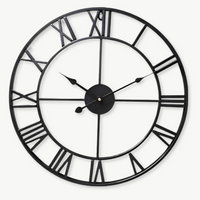


There's a moment when a living room clicks. The furniture feels right, the lighting is warm, and then your eye lands on the wall above the sofa. Something's missing. Or something's there, and it's just... timid. A black metal industrial wall clock in the living room is one of the fastest ways to fix that. Not because it's a trend, but because it does something very specific: it introduces contrast, weight, and a visual anchor that softer materials rarely manage on their own.
Industrial clocks have roots in factory floors and railway stations. That origin story matters. These pieces were never designed to whisper. They were built to be read from a distance, mounted on bare walls, surrounded by machinery and noise. Bring one into a home and that same visual authority translates directly into design energy.
⭐ Key takeaways
- A black metal frame creates sharp contrast against pale, warm, or textured walls.
- Industrial clocks anchor a visual zone best when placed above a sofa, mantelpiece, or sideboard.
- Scale matters more than style: too small and the clock disappears, too large and it crowds the wall.
- Exposed gear details and open-face dials add depth without requiring extra decor around them.
- Pairing with warm materials (wood, leather, linen) softens the rawness of the metal.
Why Black Metal Creates Strong Contrast in a Living Room
Black metal grounds a living room without competing with anything else. Light colors reflect and shimmer. Dark metal absorbs. That absorption is what creates edge: the visual weight that stops a room from feeling like a showroom catalog.
Think of a white or off-white wall. That surface is already clean and neutral. Place a clock with a pale face and a thin silver frame and it reads like a decoration. Place a black iron frame with exposed numerals and the wall suddenly has a focal point. The contrast is stark in the best possible way.
This works across wall finishes, not just white plaster. A black metal clock against exposed brick amplifies the industrial character of both. Against a deep olive green or a muted charcoal paint, the contrast shifts: now it's texture and material against texture and material. The clock still holds its own because the metal reflects slightly differently from the matte wall behind it.

💡 Did you know?
The aesthetic we now call "industrial" was largely borrowed from American loft conversions in SoHo, New York, during the 1970s. Artists turned former factory buildings into studios and kept the original metal fixtures, exposed pipes, and bare concrete walls intact, partly out of necessity and partly because the rawness suited their work. Interior designers eventually noticed that the look conveyed authenticity in a way that traditional decor couldn't replicate.
Getting the Scale Right: Size, Proportion, and Wall Real Estate
The most common sizing mistake is choosing a clock that is too small for the wall. A 12-inch clock on a standard 10-foot living room wall looks like a postage stamp. The room swallows it. Most living rooms work best with clocks between 18 and 36 inches in diameter.
How to Read Your Wall Before You Buy
Cut out a circle of newspaper or kraft paper in the diameter you're considering. Tape it to the wall at eye level and stand back. This takes sixty seconds and prevents a lot of regret. If you have high ceilings or a very long sofa wall, 36 inches or more reads correctly.
For above a sofa, the clock face should span roughly two-thirds of the sofa's width or less. A clock that's wider than the sofa creates visual imbalance. A clock that's much narrower looks like an afterthought perched above a piece of furniture that deserves more.
Open Face vs. Solid Dial: What Changes Visually
Many industrial wall clocks use an open-face design, where the clockwork mechanism or decorative gears are visible through the dial. This adds visual complexity without adding physical bulk. The depth you see through the frame makes the clock feel larger and more intentional than a flat, solid-faced option of the same diameter.
A solid black metal dial with white numerals reads clean and sharp. An open face with exposed gears reads layered and mechanical. Both are genuinely good choices. The difference is the room's existing texture level.
| Feature | Open-Face / Gear Dial | Solid Dial |
|---|---|---|
| Visual complexity | High: layered, mechanical depth | Low: clean graphic read |
| Best room context | Plain walls, minimal furniture | Patterned walls, busy rooms |
| Pairs well with | Exposed brick, raw concrete | Scandinavian interiors, linen walls |
| Statement strength | Architectural focal point | Subtle accent piece |
| Typical buyer feedback | "Looks far bigger than its diameter" | "Works in every room without clashing" |
A room with a lot of pattern and material variety benefits from the cleaner solid dial. A room with plain surfaces and minimal decor can carry the gear detail without it feeling busy.

Placement Strategies That Actually Work
Position determines whether a clock feels deliberate or accidental. In living rooms, the difference between those two outcomes is usually a matter of six inches and a bit of forethought. Industrial clocks have strong visual presence. They benefit from placement that lets them breathe.
The Sofa Wall Anchor
The wall directly behind or above the main sofa is the most natural location for a large statement clock. Centre it horizontally above the sofa, with the bottom of the clock at least 8 to 12 inches above the back cushions. This leaves room for the eye to travel between furniture and clock without the two visually colliding.
Resist the urge to add more decor on either side of the clock. Industrial pieces have a self-contained quality. A black metal clock flanked by framed prints and decorative shelves loses its architectural authority. Let it hold the wall on its own.
The Fireplace or Mantelpiece Option
Above a fireplace, a large industrial clock works especially well because both elements share the same visual character: raw materials, functional origins, and permanence. A brick or stone surround paired with a black iron clock face creates a composition that feels gathered rather than arranged.
The sizing logic shifts slightly here. The clock should align with the width of the fireplace opening or the mantelpiece shelf, not the full chimney breast. Centring a 24-inch clock above a narrow fireplace reads more balanced than a very large piece that spans beyond the architectural frame below it.
The Entryway or Hallway Continuation
Some open-plan living rooms flow directly from an entryway. A black metal clock mounted at the junction of those two spaces works as a visual punctuation mark. It signals a shift in function while maintaining a unified design language. Guests clock (no pun intended) the piece immediately on entry, which is exactly what a statement piece should do.

Materials That Pair Well with Black Metal in a Living Room
Black metal becomes genuinely comfortable when balanced by warm organic materials. A living room gives you plenty of opportunities to build that balance. This isn't about softening the industrial look into something else. It's about giving the eye contrast within contrast: the hard edge of metal against the grain of wood, the cool finish of iron against the pile of a wool throw.
Wood: The Essential Counterpoint
Natural wood and black metal have a long history together in industrial design. Walnut, oak, and reclaimed pine all work well. The warm undertones of wood grain pull against the coolness of the metal finish. If the living room already has wooden floors, a wooden coffee table, or wooden shelving, a black metal clock above it all reads as intentional, not accidental.
The contrast is most striking when the wood tones are medium to dark. A light bleached oak with a very large black iron clock can tip into starkness. A rich walnut or a dark-stained oak holds more visual tension in an interesting way. One customer put it simply: "I was worried the clock would feel harsh next to our pale birch shelves, but the walnut floor pulled everything together."
Leather, Linen, and Textured Textiles
Leather sofas and armchairs carry a similar industrial reference point. A lived-in leather sofa below a black metal clock creates a room that feels considered without being precious. Linen and canvas cushions add softness while keeping the material palette earthy and honest. Avoid highly polished surfaces near the clock: they compete with the metal finish rather than complementing it.
Concrete, Plaster, and Exposed Brick
These wall finishes do most of the tonal work for you. Raw plaster in a warm grey, exposed brick in terracotta brown, or board-formed concrete all provide a backdrop that the black metal settles into naturally. The clock doesn't need to fight for attention against these surfaces. It belongs there by material logic.
| Wall or furniture material | How it pairs with black metal | Tip |
|---|---|---|
| Exposed brick | Amplifies the industrial character of both | Go large: 28 inches or more reads best |
| Walnut / dark oak | Warm grain against cool iron: satisfying tension | Pair clock above a walnut sideboard for instant coherence |
| Raw / lime plaster | Textured backdrop lets the metal frame read crisply | Avoid gloss paint on the same wall |
| Leather sofa | Shares the industrial reference point; room feels considered | Aged leather works better than glossy bonded leather |
| Concrete / board-form | Clock belongs there by material logic | Matte finish on both surfaces avoids glare |

How to Distinguish a Strong Industrial Clock from a Generic One
The difference between a piece with real character and a mass-produced imitation is visible the moment you put them side by side. Not every clock with a black frame and Roman numerals earns the label "industrial." Knowing what to look for saves money and prevents disappointment.
Frame Construction and Finish Quality
Genuine industrial-style clocks use cast iron, wrought iron, or heavy-gauge steel. The finish is typically matte or semi-matte with visible texture: hammer marks, slight surface variation, a deliberate roughness that catches light differently at different angles. Powder-coated finishes are durable and intentional. A glossy, perfectly uniform surface reads as plastic coated in black paint, which is often exactly what it is.
Lift the clock if you can, or check the product weight in the specifications. A substantial metal clock in a 24-inch format should weigh several kilograms. Anything that feels light relative to its size warrants closer inspection of the materials.
Movement Quality and Noise
Industrial aesthetics and noisy tick-tock movements don't have to go together. Many people assume that a mechanical-looking clock must sound mechanical. It doesn't. Silent quartz or sweep movements are widely available in industrial formats and make a significant difference in living rooms where you actually spend time. A loud ticking clock in a quiet evening conversation becomes a distraction very quickly.
Check the product specifications for "silent sweep" or "silent quartz" descriptions. If the movement type isn't mentioned, ask. It's a reasonable question for any piece at a design price point. Several customers have told us that this was the detail they wished they'd checked before buying elsewhere.
Numeral and Hand Design
Roman numerals are the traditional choice for industrial and vintage formats: they reinforce the historical reference and read clearly from a distance. Arabic numerals work in a more contemporary industrial direction, pairing well with cleaner frames and minimal face detail. Marker-only dials (no numerals at all) push into modern territory and suit rooms where the clock is purely architectural rather than functional.
The hands matter as well. Skeleton hands or sword hands in matte black hold the industrial character. Oversized minute hands relative to hour hands are a common industrial design feature: they emphasize the mechanical hierarchy of timekeeping in a way that's subtly interesting without being obvious.

Mixing Industrial Clocks with Non-Industrial Living Room Styles
An industrial wall clock doesn't require an industrial room. Some of the most interesting living room compositions place a raw metal piece in a context that should by rights resist it. The tension is the point.
In a Scandinavian or Minimalist Room
A black metal clock against white-washed walls and pale wood furniture creates a sharp, graphic composition. The industrial piece becomes a single strong element in an otherwise restrained space. This works particularly well when the clock has a simple frame without heavy gear ornamentation: clean lines, bold numerals, nothing extra. The contrast is between the warmth of the Scandinavian palette and the coolness of the metal, not between competing levels of visual complexity.
In a Transitional or Eclectic Room
Eclectic living rooms collect pieces from different eras and origins. An industrial clock sits comfortably alongside antique furniture, global textiles, and contemporary art because it has a strong enough material identity to hold its own without dominating. Place it high on the wall so it reads above the visual noise of mixed decor at furniture level.
In a Warm, Traditional Room
This is where the choice gets interesting. A dark metal clock in a room full of warm heritage tones (burgundy, forest green, deep ochre) creates an unexpected jolt of modernity. The room reads layered and personal rather than matched. This works best when the clock is genuinely large, 28 inches or more, so its presence is deliberate rather than accidental.

Common Sizing and Placement Questions, Answered Directly
Most hesitation around buying an industrial wall clock for the living room comes down to three practical concerns: size, wall choice, and hanging correctly. Here's what actually works.
- Height from the floor: The center of the clock face should sit at roughly 57 to 60 inches from the floor when hung in isolation on a wall. When hung above furniture, measure up from the top of the furniture piece, not from the floor.
- Distance above a sofa: 8 to 12 inches between the top of the sofa back and the bottom of the clock frame is the standard comfortable range. Less than 6 inches looks cramped. More than 16 inches breaks the visual connection between the two elements.
- Heavy metal clocks and wall anchoring: Any clock over 5 kg (roughly 11 lbs) should be fixed into a wall stud or use a proper wall anchor rated for the weight. The clock packaging will specify the weight. Don't skip this step: a falling clock damages both the wall and whatever is below it.
- Single hook vs. two-point hanging: Very large clocks (over 30 inches) often benefit from a two-point hanging system to prevent the clock from tilting. Check the back of the clock before purchasing: a single D-ring at the top center is adequate for most sizes, but heavier pieces should have two anchor points.
"A room without a clock is a room without a heartbeat."
Common saying among interior designers working in the Arts and Crafts tradition
That said, the heartbeat only works if the clock is placed where you actually look. Living rooms are inhabited spaces. The clock should be visible from the main seating area without requiring you to turn your head more than a few degrees. If you can only see it by craning your neck, it's in the wrong spot regardless of how well it fits the wall proportionally.
Frequently asked questions
Here are the six questions that come up most often when customers are choosing a black metal industrial wall clock for their living room.
- What size works best in a typical living room?
- Will it work in a light, Scandinavian-style room?
- Are industrial clocks noisy?
- How do I stop a heavy clock from tilting?
- Can I mix it with other metal accents?
- How do I care for the metal finish over time?
1. What size black metal wall clock works best in a typical living room?+
For a standard living room with 8 to 9 foot ceilings, a clock between 20 and 30 inches in diameter tends to read correctly from the main seating area. Rooms with higher ceilings or longer walls benefit from 30 to 36 inches. The newspaper template test (tape a paper circle to the wall) is the most reliable way to confirm before purchasing.
2. Will a black metal industrial clock work in a light, Scandinavian-style living room?+
Yes, and often very well. The graphic contrast between a black metal frame and a pale wall creates a strong focal point that a Scandinavian room (which tends toward neutrals and minimal decor) can actually carry without looking cluttered. Choose a clean frame design with minimal ornamentation for the best result in a minimalist context.
3. Are industrial wall clocks noisy? Do they all tick?+
Not all of them. Many industrial wall clocks now use silent sweep or silent quartz movements that produce no audible ticking. The mechanical gear aesthetic of the clock face is completely independent of the movement type inside. Always check the product description for "silent sweep" if quiet operation matters to you.
4. How do I stop a heavy metal wall clock from tilting on the wall?+
For clocks with a single hanging hook, a small adhesive foam pad or felt disc at the bottom back of the clock frame prevents the bottom from swinging out from the wall. For very heavy pieces, a two-point hanging system (two screws or anchors spaced horizontally) is more reliable and keeps the clock level over time.
5. Can I pair a black metal clock with other metal accents in the same room?+
Yes. Black metal as a finish is one of the most versatile in a living room because it reads as a neutral rather than a color. It pairs naturally with brass, bronze, and copper accents (warm metals) without clashing. The key is to let the clock be the largest metal piece in the room so that the other metal accents register as deliberate repetition rather than competition.
6. How do I care for a black metal clock frame over time?+
Wipe the frame with a dry or barely damp microfibre cloth every few months to remove dust. Avoid spray cleaners with alcohol or ammonia: they degrade powder-coat finishes over time. If the frame develops light surface rust (possible on raw iron finishes), a very fine steel-wool pad followed by a thin coat of clear paste wax will restore the surface and protect it going forward. Most cast-iron and powder-coated finishes need no treatment at all in normal indoor conditions.