
There's a certain kind of clock that stops people mid-conversation. Not because it's loud or flashy, but because it looks like it was pulled from the engine room of a Victorian airship. Steampunk wall clock home decor ideas have a way of making a blank wall feel like it has a story to tell, and that's exactly why they've moved from niche collector pieces to genuine statement furniture in homes that care about character.
The aesthetic borrows from late 19th-century industrial design: exposed clockwork, bronze and copper tones, riveted metal frames, visible gears that spin or stay frozen mid-motion. It reads as both antique and fantastical. The challenge, though, is making it feel like a deliberate design choice rather than a theme park installation. That line is thinner than you'd think, and it comes down to a few honest decisions about your space.
⭐ Key takeaways
- A steampunk clock works best as a solo anchor, not mixed with other "themed" pieces
- Brick, raw plaster, reclaimed wood, and dark metal are its natural companions
- Scale matters more than style: a small steampunk clock on a large wall reads as clutter
- Living rooms and home offices take the aesthetic best; bathrooms and children's rooms rarely do
- The most convincing steampunk spaces use two or three materials consistently, not a full catalog
What Makes a Clock "Steampunk" in the First Place
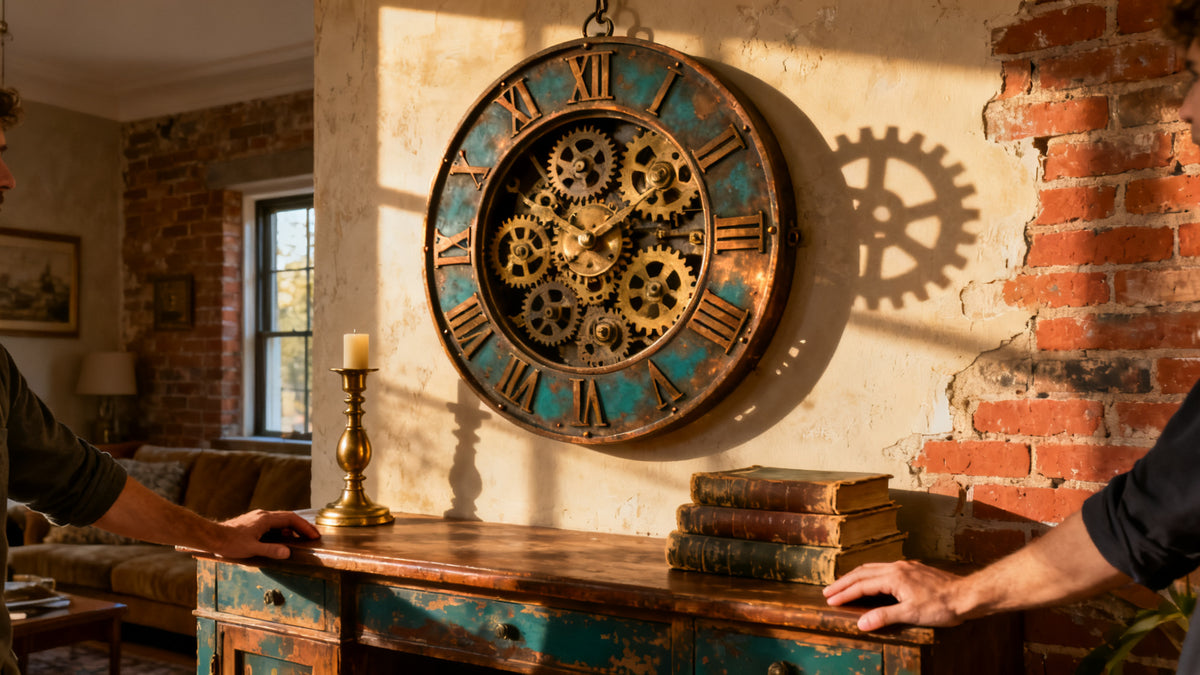
Steampunk as a visual style distills Victorian-era industrialism through an alternate-history lens, wearing every mechanism proudly on the outside. In clock form, that means gear trains displayed behind glass or open frames, materials that patina naturally (brass, copper, oxidized iron), Roman numerals on weathered dials, and often a sense of weight even when the piece is decoratively light.
Not all "gear clocks" are steampunk. A modern geometric wall clock with a single decorative cog motif is closer to industrial minimalism. True steampunk leans into layered complexity: multiple visible gear rings, aged finishes that look worked rather than distressed-for-effect, and a silhouette that feels more workshop than showroom.
The distinction matters when you're buying because it changes what the clock will sit comfortably alongside in your home. A gear-accent clock pairs easily with Scandinavian furniture. A full steampunk wall clock showpiece needs a room that can hold its presence.
💡 Did you know?
The term "steampunk" was coined by science-fiction author K.W. Jeter in a 1987 letter to Locus magazine, where he used it playfully to describe a genre of Victorian-era speculative fiction he and his friends were writing. It took another two decades for the word to migrate from literature into interior design, prop-making, and home decor.

The Rooms Where Steampunk Clocks Feel at Home
Not every room handles a steampunk clock with equal grace, and being honest about that upfront saves you from a purchase you'll second-guess every morning. The aesthetic thrives in spaces that already carry a sense of history, raw texture, or functional drama.
Living Rooms: The Mantel or Feature Wall
The living room is the most forgiving room for a bold steampunk piece. A large gear clock above a fireplace mantel commands the room naturally because the eye expects something significant there. The key is scale: you want the clock to fill roughly a third of the wall width above the mantel, or it will look like an afterthought.
Pair it with furniture in warm neutrals, aged leather, or dark wood. A single velvet cushion in deep teal or oxblood on a nearby sofa connects the clock's tones to the seating without overstating the theme. The clock does the talking; the rest of the room just listens.
Home Offices and Studies: Where the Aesthetic Makes Sense
A home office with exposed brick or a dark painted accent wall is arguably the perfect home for a steampunk clock. The workspace context gives the industrial aesthetic intellectual credibility. It looks like you chose it deliberately rather than stumbled into a theme.
Keep the desk itself clear and functional. If the clock is busy with gears and brass, your desk accessories should be calm: a simple leather-bound notebook, a ceramic pen pot, maybe a single lamp with a warm filament bulb. The contrast between the controlled chaos of the clock and the orderliness of the desk is what makes the room feel designed.
Entryways: First Impressions That Stick
An entryway is a high-impact, low-risk location for a steampunk statement. Guests see it immediately, and since they don't live with it all day, its theatrical quality feels charming rather than exhausting. A medium-sized piece with a worn bronze frame works especially well against a dark painted entryway wall, particularly when there are coat hooks or a wooden bench below it to anchor the composition vertically.

How to Style a Steampunk Clock Without Going Overboard
The most common mistake with steampunk home decor is stacking themed elements until you're living in a set design rather than a home. The clock, the pipe shelf brackets, the Edison bulb pendant, the gear-print cushions: each one individually is fine. All four together is a committed costume. Real restraint is what separates a considered space from a theme park.
The One-Anchor Rule
Pick one steampunk anchor per room. The clock is almost always the best candidate because it's vertical, time-giving, and functional. Once you have it, the rest of the room stays grounded in your existing aesthetic. The clock provides the punctuation; your other decor choices provide the sentence.
If you already have industrial metal shelving or an exposed pipe feature, a steampunk wall clock can reinforce the room's direction. But even then, resist adding more clock-adjacent pieces. Two geared objects in the same room compete for the eye's attention rather than earn it.
Materials That Work With Bronze and Copper Tones
Most steampunk clocks read in a narrow palette: aged bronze, dark copper, oxidized black, sometimes a warm walnut wood base. The rooms that host them best share at least two of these:
- Reclaimed or dark-stained wood (floors, furniture, beams)
- Brick or raw plaster walls in warm tones
- Leather or velvet upholstery in cognac, forest green, or deep burgundy
- Warm filament lighting (not cool LED strips)
- Natural linen or canvas textiles as a neutral backdrop
What doesn't work: bright white walls with no texture, chrome or stainless steel appliances in the same eyeline, contemporary glass-and-lacquer furniture. These create a tonal clash that makes the clock look misplaced rather than curated.
Gallery Walls: When to Include and When to Skip
A gallery wall featuring a steampunk clock can work beautifully, but only when the other pieces share its vocabulary. Think vintage botanical prints in oxidized frames, old maps, sepia-tone photography, industrial typographic prints. What kills it: mixing a steampunk clock with modern geometric prints or bright pop-art pieces. They don't argue well.
The safer and often more striking approach is to let the clock stand alone on a clean section of wall. No competition, full attention. A subtle drop shadow from warm side-lighting does more for a gear clock than any gallery wall arrangement.

Room-by-Room Ideas: What Works Where
The same clock can read completely differently depending on ceiling height, wall color, and surrounding furniture. Moving room by room gives you a clearer picture of how steampunk wall clock home decor ideas play out across a real home. The aesthetic isn't one-size-fits-all, even within a single house.
Kitchen: Functional Drama Above the Counter
Kitchens with exposed brick or open shelving take a steampunk clock well, especially in medium sizes (40-50 cm). Hang it above a floating shelf or a coffee station where it can be glanced at practically. The industrial kitchen aesthetic has been popular long enough that a gear clock reads as intentional here rather than eccentric.
Avoid placing it near steam sources or above a stove. Most decorative clocks, steampunk included, are not rated for high-humidity proximity, and the thermal cycling will affect both the mechanism and the finish over time.
Bedroom: Proceed With Care
Steampunk clocks in bedrooms are a legitimate choice, but they work best as a secondary accent rather than the primary focal point. A large gear clock above a bed competes with the headboard for visual dominance. A medium piece on a side wall, above a reading chair or a low dresser, fits more comfortably.
The other consideration: if the clock has moving gears that actually rotate, confirm the movement is silent quartz. A ticking mechanism in a bedroom ruins the room's purpose within a week.
Where Not to Hang a Steampunk Clock
Some placements that seem intuitive actually undercut the aesthetic:
- Directly facing a window: the glare on any glass or polished metal surface makes it unreadable and flattens the texture
- Above a television: competing focal points that fight each other every time someone sits down
- In a bathroom with poor ventilation: humidity will oxidize unprotected metal finishes faster than intended
- On a wall with busy wallpaper: the clock needs a neutral or subtly textured background to read clearly

Steampunk Clocks vs. Industrial Clocks: The Practical Difference
Shoppers often use "steampunk" and "industrial" interchangeably, but the two aesthetics solve different design problems. Understanding the difference helps you buy the right piece the first time, without redecorating afterward.
| Feature | Steampunk Clock | Industrial Clock |
|---|---|---|
| Primary material | Bronze, copper, aged brass | Raw iron, steel, matte black metal |
| Dominant tone | Warm amber, oxidized gold | Cool gray, matte black, dark silver |
| Narrative feel | Victorian workshop, fantastical invention | Factory loft, urban utility |
| Best room companions | Aged leather, dark wood, velvet, warm filament lighting | Concrete, raw wood, steel shelving, Edison bulbs |
| Visual complexity | High (layered gears, multiple textures) | Low to medium (clean lines, single material reads) |
| Commitment level | High: room needs to support the drama | Lower: blends with many contemporary styles |
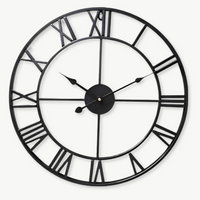
If you love the gear and metal vocabulary but your home is mostly modern-neutral, an industrial wall clock will integrate more naturally without requiring a room redesign. If your space already leans dark, warm, and textured, a full steampunk piece pays off in a way a simpler industrial clock never quite achieves.

Sizing and Placement: Getting the Proportions Right
A steampunk wall clock that's too small loses the impact that makes the aesthetic worthwhile; too large on a small wall becomes claustrophobic rather than dramatic. Here's how to think through scale before you buy, so you're not squinting at a too-small piece and wondering why it isn't working.
A Simple Sizing Formula
A rough rule that holds up well in practice: the clock's diameter should be between 1/3 and 2/3 of the width of the furniture or architectural element below it. So if you're hanging above a 120 cm sofa, aim for a clock between 40 cm and 80 cm. This keeps the relationship proportional without requiring the clock to feel oversized or underwhelming.
For steampunk pieces specifically, err toward the larger end of your range. The visual complexity of exposed gears and layered metal reads better at scale. A 40 cm steampunk clock on a large wall often gets lost, where a 60 cm piece commands attention in the right way.
Height: Lower Than You Think
Most people hang wall clocks too high. The clock's center should sit at roughly eye level when standing, which puts it at approximately 155-165 cm from the floor for most rooms. Any higher and you lose the connection between the clock and the furniture below it; the piece floats visually rather than anchoring the wall.
In rooms with high ceilings (above 280 cm), you can go a little higher, but never above the halfway point of the wall. Steampunk clocks need to feel grounded in the room's gravity, not suspended in the upper atmosphere.

DIY Steampunk Clock Decor: When to Build, When to Buy
Building a decorative steampunk clock from copper piping and craft-store gears genuinely works as wall art when done with restraint, though it rarely functions as a reliable timepiece. The tradeoff is worth knowing before you commit an afternoon to it.
A DIY steampunk wall decoration excels at one thing: personalization. You choose the gear arrangement, the finish, the frame dimensions. The result feels handmade in the best sense. What it doesn't do reliably is keep accurate time, because decorative clock movements from craft stores often drift noticeably over weeks.
If precise timekeeping matters, pair the aesthetic with a quality quartz movement. Drop a standard quartz clock module into your handmade frame. The movement is invisible, the aesthetic is yours, and the time stays accurate. It's a solution that more people arrive at after the fact than plan for upfront.
For those who want the steampunk look without the build time, the market for vintage-style wall clocks with gear elements has expanded considerably, and several designs sit exactly at the intersection of artisanal craft and reliable mechanics. The gear clock from this shop's range, for example, uses actual spinning gear displays with a silent quartz core: the visual drama of a workshop mechanism, none of the maintenance headaches.
"I was convinced the clock would overpower the room. It did the opposite. It gave the whole space a reason to exist. Three visitors asked me which architect specified it."
James R., converted-loft home office in Manchester, after mounting the 60 cm Wood & Gear Clock above his drafting table
Pulling the Look Together: Three Approaches That Hold Up Over Time
Three distinct approaches consistently produce rooms that feel genuinely designed rather than assembled from a theme kit. Each one scales to a different level of commitment, from a single confident purchase to a room built around an era.
The Focused Statement
One large steampunk gear clock. Everything else in the room neutral or warm-toned. The walls are the background, the clock is the painting. Works in living rooms, studies, and entryways. Low risk, high reward. This is where most people who are new to the aesthetic should start.
The Victorian Study
Dark walls (navy, forest green, deep burgundy), a steampunk clock as part of a cohesive collection that also includes scientific instrument reproductions, vintage maps, and leather-bound books. The room commits fully to the era. When done well, it's one of the most atmospheric interior styles in residential design. When overdone, it feels like a costume shop. The discipline is in editing: every piece earns its place or leaves.
The Industrial Hybrid
A steampunk clock placed deliberately in an otherwise modern industrial space: exposed brick, concrete floors, clean steel shelving. The clock acts as a warm counterpoint to the room's cool tones. Bronze against raw concrete is a genuine design tension that works. This is the approach that ages best because it doesn't require the room to stay frozen in one moment in time, and it sits naturally alongside the broader industrial wall clock aesthetic that's become a staple of contemporary interiors.
Whichever approach you land on, the principle stays the same: one bold steampunk anchor, a room that earns it, and restraint on everything else. The clock carries the story. Your job is to give it a wall worth hanging on.
FAQ: Steampunk Wall Clock Home Decor Ideas
What is steampunk home decor, exactly?+
Steampunk home decor draws on the visual language of late Victorian industrial design, imagining a world where steam-powered machinery and mechanical ingenuity never gave way to modern technology. In practice, it means exposed gear and clockwork elements, aged bronze and copper finishes, riveted metalwork, warm filament lighting, and materials like dark wood and leather. It's theatrical but grounded in real craft traditions.
How do you decorate with a steampunk wall clock without it looking over-the-top?+
Keep it as the only "steampunk" element in the room. Let the surrounding furniture and textiles stay in warm neutrals, dark woods, or aged leather, but avoid stacking multiple themed pieces. The clock carries the narrative; the rest of the room frames it. A single bold piece reads as confident design. Three or four themed pieces reads as a committed costume.
Where should you not hang a steampunk wall clock?+
Avoid placing it directly opposite a window (glare kills the texture detail), above a television (competing focal points), or near steam sources like a stove or shower without good ventilation. Rooms with busy wallpaper also tend to swallow the clock's design complexity rather than let it breathe.
What size steampunk clock works best for a living room wall?+
For a standard living room sofa wall, a clock between 50 cm and 70 cm diameter is usually the sweet spot. Steampunk designs rely on visual complexity that reads better at scale, so if you're unsure, go slightly larger rather than smaller. A clock that's too small disappears; one that's appropriately large anchors the room exactly as intended.
Can a steampunk clock work in a modern or minimalist space?+
It can, but with careful calibration. A full multi-gear steampunk showpiece will fight a minimalist room's atmosphere rather than complement it. A better approach in a modern space is a gear-accented clock that borrows steampunk vocabulary (warm metal, Roman numerals, visible movement detail) without the full layered complexity. The industrial hybrid approach works here: one piece with character in a room that otherwise stays clean.
What's the difference between a steampunk clock and an industrial clock for home decor?+
Steampunk clocks use warm bronze, copper, and aged brass with high visual complexity, multiple gear rings, and a Victorian workshop narrative. Industrial clocks lean toward raw iron, matte black steel, and clean lines with a modern factory-loft feel. Steampunk asks more of the room; industrial integrates into more contemporary homes without requiring a dedicated aesthetic commitment. When in doubt, the comparison table above makes the decision straightforward.