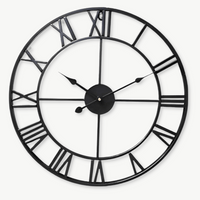


Most people hang a wall clock, step back to admire it, and promptly forget it exists until the battery dies. It's one of those things that just... runs. Until it doesn't. The hands freeze at 4:22, the glass picks up a soft layer of kitchen grease, or the ticking starts to sound slightly off. That's usually when the search starts.
Here's what I've found after years of watching clocks age well (and not so well): how to maintain a wall clock at home isn't complicated, but it does require a bit of intention. Five minutes of care twice a year will keep your timepiece running accurately and looking sharp for decades. Let's get into it.
À retenir
- Most wall clocks only need cleaning twice a year and a battery swap every 12-18 months.
- The material of your clock (wood, metal, glass, acrylic) completely changes how you clean it.
- Quartz movements are nearly maintenance-free, but position and humidity still affect accuracy.
- Never use liquid cleaners directly on the clock face or movement.
- A well-maintained clock keeps better time and holds its visual impact longer.
Why Wall Clock Maintenance Actually Matters
A clock that loses two minutes a week might seem like a small annoyance. Over six months, that's nearly an hour off. More practically, dust buildup inside a quartz movement increases friction on the gear train, which drains batteries faster and accelerates wear. On a decorative piece you paid good money for, that's a real problem.
There's also the visual side. A clock with a smudged glass face or a dusty wooden frame stops being a design statement and becomes background noise. A statement piece on your wall earns its place by holding presence over time, and regular upkeep is what keeps it doing exactly that.

Cleaning Your Wall Clock: What to Use on Each Material
The biggest mistake people make is grabbing whatever's nearest, usually a damp cloth or a multi-surface spray. That works fine on some materials and ruins others. Here's what actually works per surface:
Wood and Bamboo Clock Frames
Wooden frames, including bamboo, are porous. Moisture is the enemy. Use a dry microfiber cloth for weekly dust passes. For deeper cleaning every few months, a cloth barely dampened with water (wrung out until almost dry) works, followed immediately by a dry wipe. Never spray directly onto the wood. If the frame looks dull, a tiny amount of natural wood oil on a soft cloth will restore warmth without leaving residue. This matters especially for Scandinavian-style bamboo clocks where the natural grain is part of the design: strip the moisture barrier and you dull the very thing that makes the piece sing.
Metal Frames (Iron, Copper, Aluminum)
Metal clocks, especially industrial or copper-finish styles, can handle slightly more. A microfiber cloth with a drop of mild dish soap diluted in water handles fingerprints and kitchen grease well. Buff dry immediately. For copper-tone finishes, avoid anything acidic. Lemon-based cleaners will strip the living patina that gives an industrial-style copper clock its aged, storied character. That patina isn't a flaw to clean away; it's part of the aesthetic. Buff with a dry cloth only, and let time do the rest of the work.
Glass and Acrylic Faces
Glass faces can be cleaned with a standard glass cleaner, but spray it onto the cloth first, never directly onto the clock. Acrylic scratches more easily than glass. Use only a soft microfiber cloth with no cleaning product, or at most a tiny drop of plastic-safe cleaner. Circular motions leave micro-scratches on acrylic over time; use straight, gentle strokes instead.
The Clock Face (Dial) Itself
This is the part people are most nervous about, and rightly so. Whether it's printed paper, painted metal, or a lacquered surface, the dial should only ever be touched with a dry, soft brush. A makeup brush or a wide artist's brush works perfectly. No moisture, no cloths. Brush lightly from the center outward to move dust off without pressing it into the surface.
L'astuce de Elena
I keep a small, dedicated makeup brush hooked behind my two wooden clocks. Takes ten seconds to dust the face during my regular tidying rounds. It means I never have to do a "big clean" because the dial never gets a chance to accumulate grime. Honestly, it's become a ritual I weirdly enjoy.
Wall Clock Battery Replacement: Timing and Technique
Quartz wall clocks run on one or two AA (or occasionally AAA) batteries. The standard advice is to replace them annually, but the real answer depends on the clock. A clock with a silent sweep movement draws more current than a standard ticking mechanism, which means batteries run down faster. Heavy decorative clocks with multiple hands or lighting features burn through batteries even quicker.
A few things to keep in mind when changing batteries:
- Use alkaline batteries, not budget zinc-carbon ones. Alkaline batteries maintain consistent voltage longer, which means steadier timekeeping until the very end rather than a gradual slow-down.
- Change both batteries at the same time, even in two-battery movements where one may still have charge. Mismatched discharge levels create voltage imbalance.
- After inserting fresh batteries, set the time by rotating the time-set knob (usually at the back) clockwise only. Forcing it counter-clockwise can strip the gear teeth in budget movements.
- If a clock stops within days of a new battery, the problem is almost certainly the movement, not the battery.
Le savais-tu ?
The first quartz clock was built in 1927 by Warren Marrison at Bell Telephone Laboratories. It was the size of a room. Today, the same quartz oscillation principle powers the compact movement sitting in your wall clock, accurate to within about 15 seconds per month under normal conditions. One thing that disrupts that precision at home: high humidity. Water vapour raises the electrical resistance across the quartz crystal, which slightly alters its oscillation frequency. It's a tiny effect under normal conditions, but in a steamy bathroom or a kitchen with poor ventilation, it adds up over months. Keeping your clock in a stable-humidity environment isn't just good for the casing; it's good for the timekeeping itself.
Caring for the Quartz Movement: What You Can (and Can't) Do at Home
The movement is the engine. For a quartz wall clock, the good news is that modern quartz movements are sealed units. They're not designed to be opened and oiled the way antique mechanical movements are. Opening the casing generally does more harm than good.
What you can do at home:
- Keep the clock away from direct humidity sources like steamy bathrooms or above kitchen stovetops. Moisture is the primary killer of quartz movements, and as noted above, it can also subtly affect oscillation frequency before any visible damage appears.
- Avoid placing the clock where it receives direct sunlight for hours each day. Heat warps plastic gear components inside budget movements over time.
- Make sure the clock hangs level. A tilted clock puts uneven stress on the gear train and can cause the pendulum (on clocks that have one) to swing unevenly.
- If the clock sits in storage for more than a few weeks, remove the batteries. Leaking batteries are the most common cause of irreversible movement damage.
If a clock becomes inaccurate even with fresh batteries and proper positioning, the movement itself likely needs replacement. For most wall clocks, quartz movements are modular and can be swapped out by any watchmaker or clock repair shop for $15-30, which is far cheaper than replacing the whole piece.

Maintenance by Clock Type: Quartz, Pendulum, and Mechanical
| Clock Type | Cleaning Frequency | Battery / Winding | Professional Service |
|---|---|---|---|
| Quartz (standard) | Every 3-4 months | Replace battery every 12-18 months | Only if movement fails |
| Silent sweep quartz | Every 3-4 months | Replace battery every 8-12 months (higher draw) | Only if movement fails |
| Pendulum (quartz-driven) | Every 3-4 months, pendulum rod dusted separately | Replace battery every 12 months | Check pendulum arm alignment annually |
| Mechanical / wind-up | Every 2-3 months | Wind weekly or monthly depending on mechanism | Professional oiling every 5-7 years |
| Cuckoo clock | Every 2-3 months, bellows dusted gently | Wind chains daily or weekly | Professional service every 3-5 years |
Seasonal Upkeep: Building a Twice-a-Year Routine
Here's what works. Pick two fixed dates each year, say the start of spring and the start of autumn, and run through this short checklist. It takes about 15 minutes per clock.
- Take the clock down. Set it on a soft surface (a folded towel works fine).
- Remove the batteries and check the battery compartment for any sign of corrosion or leakage. If there's a white powdery residue, clean with a cotton swab lightly dipped in white vinegar, let dry completely before inserting new batteries.
- Dust the frame and glass with a dry microfiber cloth or the appropriate material-specific method described above.
- Brush the clock face with a soft dry brush, working from the center outward.
- Check the hanging hardware. Wall hooks fatigue over time. Give the screw or nail a gentle check for looseness. A clock that falls is a clock that breaks.
- Insert fresh batteries and set the correct time.
- Rehang and check level with a small spirit level or your phone's built-in level app.
If you're storing a clock seasonally, say you rotate pieces between rooms or take a decorative clock down while you're away for an extended period, always pull the batteries first. Long-term storage without battery removal is the single most common cause of compartment corrosion. Store the clock in a dry spot away from exterior walls, which fluctuate in temperature more than interior ones, and slip the frame into a soft cloth bag or pillowcase to keep dust off the glass without scratching it.
Dealing with Common Problems Before They Become Permanent
A few issues come up repeatedly among clock owners, and most have fixes that are simpler than you'd expect. Here's what tends to work:
The Clock Loses Time Consistently
Start by swapping the battery, even if it seems recent. Cheap batteries drain unevenly and can read "fine" on a battery tester while no longer providing stable voltage. If a quality alkaline battery doesn't fix it, the movement likely needs replacing. The good news: a modular quartz movement costs $10-25 and a watchmaker can swap it in under an hour, so you keep the frame you love.
The Hands Are Catching or Sticking
Hands that brush against each other or the glass face are usually the result of a knock or vibration that shifted them slightly out of plane. Take the clock down, remove the glass cover if it has one, and gently bend the minute or hour hand a millimeter forward or backward (toward or away from the dial). It takes a light touch but it works more often than not.
The Clock Ticks But Doesn't Move
This typically means the battery has enough charge to power the oscillator but not the stepping motor. Fresh battery, full stop.
Condensation Behind the Glass
This usually only happens with clocks hung in bathrooms or near cooking areas. Repeated condensation will eventually damage the dial print and corrode the movement housing, so the most useful thing here is to try a different wall, somewhere with steadier airflow and less steam. It's less satisfying than a cleaning fix, but it's the one that actually protects the clock long-term.

Specific Care for High-End and Decorative Wall Clocks
If you've invested in a statement piece, whether that's a large metal clock with an open-frame industrial design, a resin sculpture clock, or a hand-crafted wooden piece, the maintenance logic doesn't change much. But the margin for error is smaller.
For open-frame metal clocks (exposed gear designs, industrial styles), dust accumulates inside the visible gear cutouts. A soft paintbrush or a compressed air can used from 20+ cm away clears this without touching the surface. Avoid cloth on open metalwork since fibers snag on edges.
For large-format clocks over 50 cm, always use two wall anchors rather than one. The torque at that size is enough to gradually loosen a single hook, and a heavy clock falling is a safety issue, not just a décor one.
For clocks with glass mirror accents or resin elements, avoid anything that contains ammonia (most standard glass cleaners do). A plain damp cloth, dried immediately, is the safest bet.
"A clock tells you what time it is. A well-kept clock tells you who you are."
Overheard from a Parisian antique dealer, and honestly, it stuck.
When Home Care Isn't Enough: Knowing When to Call a Professional
For quartz wall clocks, a professional clock repairer is rarely necessary. Most issues are solved by a battery swap, a movement replacement, or a careful hand adjustment. But there are a few situations where professional help is genuinely the right call.
If you own a mechanical wall clock with a wind-up movement, professional lubrication every five to seven years is standard. Mechanical movements use oil that breaks down over time, thickening and creating drag rather than reducing it. A qualified repairer will disassemble, clean, and re-oil the movement properly.
Pendulum clocks, especially antique ones, may need escapement adjustment if the beat sounds irregular (an uneven tick-tock rather than a steady rhythm). This is a fine adjustment that requires the right tools and experience. Similarly, cuckoo clocks with bellows mechanisms benefit from professional servicing every three to five years, as the bellows leather dries and cracks over time.
For everything else on your wall clock collection, the routine above covers it fully. A twice-yearly clean, a timely battery change, and a quick level check. Your clocks will keep running, and they'll keep looking the part. That's really what how to maintain a wall clock at home comes down to: small, consistent actions that protect a piece you genuinely care about.
Attention
If you find white or blue-green powder in the battery compartment, that is battery acid leakage. Do not touch it with bare fingers. Use gloves or a cotton swab to clean it out with a small amount of white vinegar. Dispose of the leaking battery safely according to your local e-waste regulations. Never insert new batteries until the compartment is completely dry and clean.
FAQ
How often should I change the battery in my wall clock?+
For most standard quartz wall clocks, once a year with a quality alkaline AA battery is the right interval. Clocks with silent sweep movements, multiple hands, or built-in lighting features draw more power and may need a battery change every 8-10 months. The simplest signal: if the clock starts losing time noticeably, change the battery before doing anything else.
Can I use WD-40 or oil on my wall clock movement?+
No. WD-40 is a water displacer and degreaser, not a lubricant, and it will damage a quartz movement. For quartz clocks, no oiling is needed at all since the sealed plastic gear trains are designed to run dry. Only mechanical movements require periodic lubrication, and that should be done with specific clock oil by a qualified repairer, not at home.
My wall clock ticks unevenly. What's causing it?+
An uneven tick-tock (long tick, short tock, or vice versa) on a pendulum clock usually means the clock is not hanging level. Adjust the wall hook slightly left or right until the rhythm evens out. On a standard quartz clock without a pendulum, uneven ticking can indicate a weak battery or a failing movement. Start with a fresh battery.
How do I clean a wall clock with an open metal frame without scratching it?+
Use a soft, wide paintbrush to dust in and around the frame cutouts. For fingerprints or grease on the metal, a microfiber cloth lightly dampened with plain water works well on most powder-coated and brushed finishes. For copper or bronze tones, skip the water and use only a dry cloth to preserve the patina. Never use abrasive pads or scouring sprays on any clock surface.
Is it worth repairing an old wall clock or better to replace the movement?+
If the clock frame and face are in good condition but the movement has stopped working, replacing just the movement is nearly always the better choice. A standard quartz movement costs $10-25 and a watchmaker can install it in under an hour. This preserves the aesthetic piece while restoring full function. Replacement makes sense only when the movement type is obsolete or the clock itself has no sentimental or decorative value worth keeping.
Does humidity really affect how accurately my wall clock keeps time?+
Yes, and more than most people realise. High ambient humidity raises electrical resistance across the quartz crystal inside the movement, which can shift its oscillation frequency slightly. Under normal living-room conditions the effect is negligible, but in a consistently steamy environment (bathroom, kitchen above a stove, laundry room) it compounds over weeks and months into noticeable drift. The practical fix is simple: choose a wall with stable temperature and moderate airflow, and how to maintain a wall clock at home becomes much easier as a result.