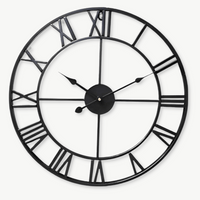

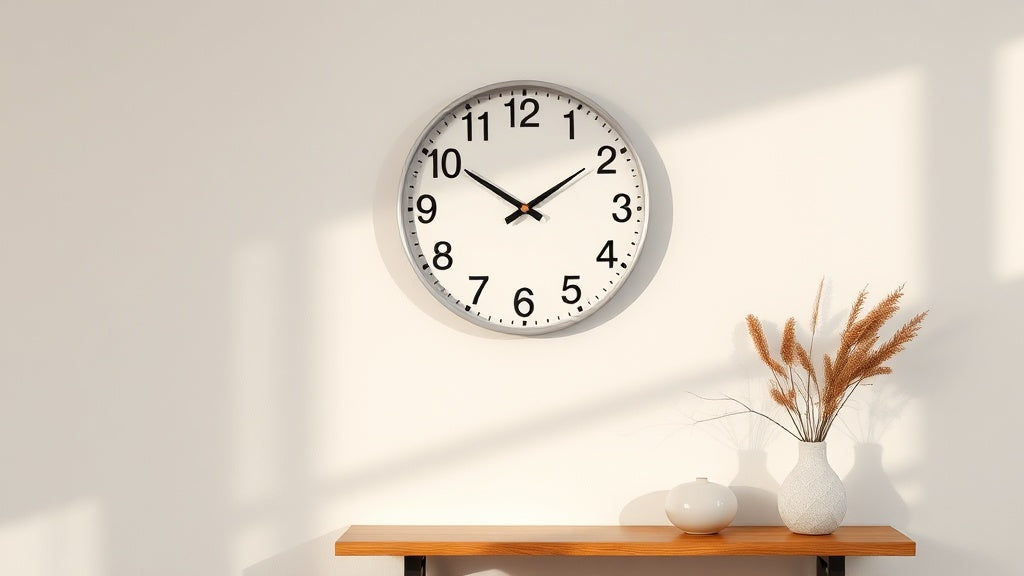
There's something quietly confident about a clock face that just says what it means. No deciphering, no mental translation, the number 3 is the number 3. A wall clock with Arabic numerals and a clean design does exactly that: it reads fast, sits comfortably in almost any room, and doesn't need to shout to be noticed.
That readability isn't a small thing. It changes how a clock feels on a wall, less ornamental puzzle, more grounded presence. And right now, in interiors that lean Scandinavian, Japanese minimalist, or just quietly modern, that directness is exactly what people are after. If you've been hunting for a wall clock with Arabic numerals clean design that genuinely works in your space, you're in the right place.
⭐ À retenir
- Arabic numerals are faster to read at a glance than Roman numerals, especially from across a room.
- They work in minimalist, Scandinavian, industrial, and mid-century modern interiors without clashing.
- Dial contrast matters: black numerals on a white face offer the sharpest legibility in any light condition.
- The style of the numeral (serif, sans-serif, stencil) changes the whole personality of the clock.
- Silent quartz movements are the standard pairing for bedrooms and home offices.
Why a Wall Clock with Arabic Numerals Clean Design Feels So Right on a Modern Wall
Roman numerals have their charm, nobody disputes that. But they carry weight. They pull a room toward the classical, the antique, the formal. Arabic numerals, on the other hand, are neutral in the best possible way. They arrived on clock faces in Europe during the late medieval period as a practical alternative, and practicality remains their strongest quality.
The visual simplicity of 1 through 12 means your eye registers the time without engaging in any interpretation. That matters more than it sounds. In a hallway where you're always running five minutes late, in a kitchen mid-recipe, in a bedroom at 6 a.m., clarity is comfort. The glance takes a fraction of a second, and you move on.
From a design standpoint, Arabic numerals also scale better. At 12 inches (30 cm), they're legible. At 24 inches (60 cm), they command the wall without becoming overwhelming. Roman numerals, at larger sizes, can start to feel theatrical. Arabic numerals stay clean. That's exactly the quiet confidence a wall clock with Arabic numerals clean design brings to a room.
The Typography Is Everything: Serif vs. Sans-Serif Numeral Styles
Not all Arabic numeral clocks are built the same. The typeface choice on the dial is one of the most underappreciated design decisions in the whole object, and it completely changes the room it belongs in.
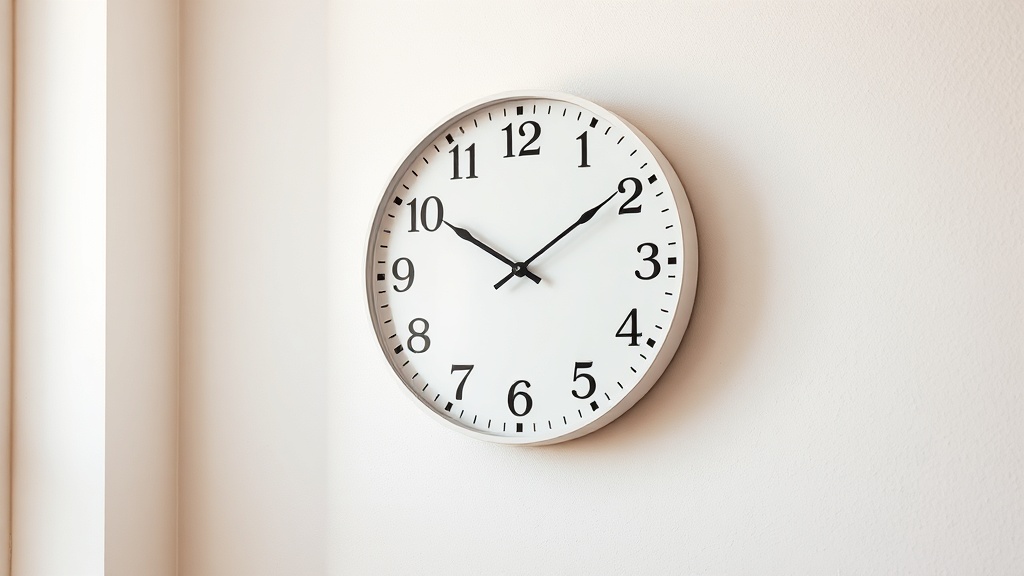
Sans-serif numerals (clean, geometric, no decorative strokes) are the natural fit for Scandinavian, minimalist, and contemporary spaces. Think light birch frames, white walls, the kind of room where every object earns its place. Brands from Nordic design traditions have built entire aesthetic languages around this combination. The clock face reads like good typography on a page: effortless, functional, quiet.
Serif numerals bring warmth and a slight editorial quality, closer to a well-designed magazine masthead than to a clinical readout. They suit mid-century modern interiors, rooms with warm wood tones, or spaces that mix vintage finds with new pieces. The serifs add just enough character to keep the clock from disappearing into a pale wall.
Stencil or cut-out numerals sit somewhere between industrial and artisanal. Often seen on metal-framed clocks with exposed mechanisms or concrete-look dials, they're a strong choice for loft apartments, converted workspaces turned home offices, or any room that's deliberately a little rough around the edges.
💡 Did you know?
The term "Arabic numerals" is a bit of a misnomer. The symbols (0-9) actually originated in India and were transmitted to Europe via Arab mathematicians in the 9th and 10th centuries. When they first appeared on clock faces in the 14th century, they were considered a bold, modern choice. Some things don't change.
Which Wall Clock with Arabic Numerals Clean Design Styles Pair Best with Your Interior
The numeral style tells you a lot about the clock. But the overall design, frame material, dial color, and hand shape tell the rest of the story. Here's what actually works together.
Minimalist Wood Frame Clocks
Pale oak, bamboo, or birch frames with a clean white dial and black Arabic numerals are the classic pairing for Scandinavian-influenced rooms. The warm grain of the wood softens the precision of the numbers. Nothing competes, nothing clashes. These clocks tend to sit between 30 cm and 40 cm (12 to 16 inches), big enough to register on the wall, small enough to stay understated.
If the room already has wooden furniture or floors, a wood-framed clock with Arabic numerals creates continuity rather than a focal point. That's not a downgrade: sometimes the best design decision is the one nobody consciously notices.
Glass and Metal Contemporary Clocks
A glass dial with printed or etched Arabic numerals reads as genuinely contemporary. The transparency creates depth; you see through the face to whatever's behind it, which means the clock visually belongs to the wall rather than sitting on top of it. Paired with a slim brushed metal ring, this style works especially well in home offices and living rooms where the aesthetic runs clean and slightly industrial.
The Designer Glass Wall Clock with Silent Quartz movement captures exactly this balance: European styling, transparent dial, the kind of clock that reads as intentional without announcing itself.
Vintage and Farmhouse Dials
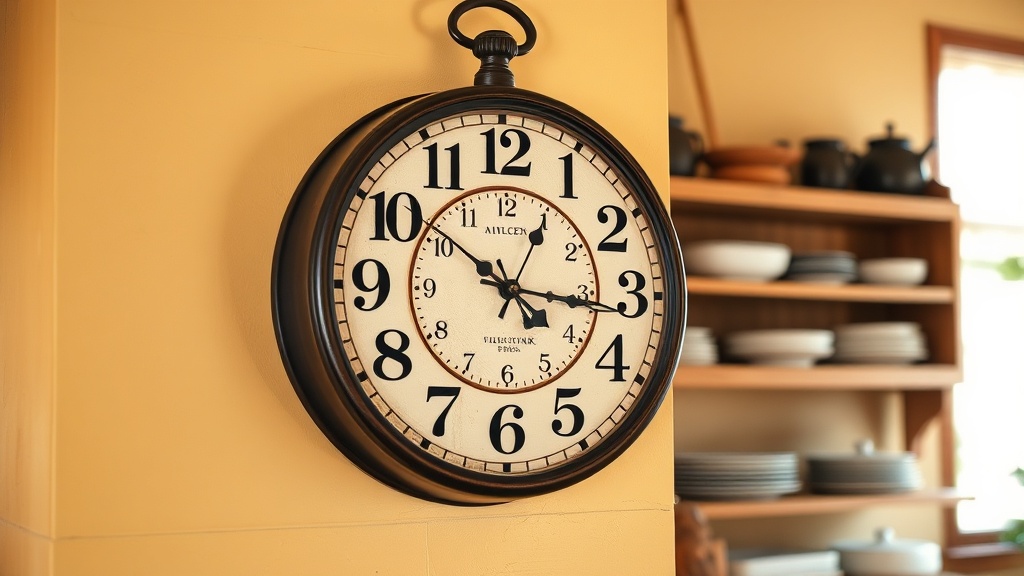
Arabic numerals in an aged or distressed setting? Genuinely underrated. A clock with a crème or off-white dial, slightly worn typography, and a darker frame reads as vintage without leaning fully antique. It works in farmhouse kitchens, eclectic living rooms, and anywhere you're mixing eras. The numerals keep it readable; the finish keeps it warm.
Oversized Statement Clocks
At 50 cm (20 inches) and above, Arabic numerals are almost always the better call over Roman ones. The logic is purely practical: large Roman numerals require more horizontal space per character (especially IV, VIII, XII), which can crowd the dial. Large Arabic numerals scale cleanly, maintain breathing room between figures, and stay sharp at distance. If you're hanging a clock above a sofa or on a dining room feature wall, large-format wall clocks with Arabic numeral dials give the room both presence and clarity.

Readability by Room: Where Arabic Numeral Clocks Perform Best
Every room in your home has a different relationship with time. That affects which clock design makes the most sense, and Arabic numerals happen to suit several specific contexts particularly well.
Kitchen
Speed-reading the time while your hands are covered in flour or you're managing two burners at once: that's the kitchen's reality. A clean Arabic numeral dial on a kitchen wall clock removes any cognitive friction. High contrast (black on white, or white on dark) adds another layer of reliability under varying light conditions, morning sun, overhead LED, or an overcast afternoon.
Bedroom
The bedroom clock gets checked at the worst times: half-awake at 3 a.m., bleary at 6:15 a.m. Arabic numerals win here by a wide margin. A minimalist face with generous spacing between numerals and a silent sweep movement (no ticking) is the setup that works. The silence is non-negotiable for light sleepers, and Arabic numerals make the 3 a.m. squint marginally less painful.
Home Office
Concentration matters in a home office, and that means the clock should give you the time and nothing else. A compact clock, 25-35 cm in diameter, with a clean Arabic dial and a neutral frame color (white, black, or natural wood) keeps the wall uncluttered. The options below from the office clock collection hit this brief exactly, and the glass-dial model in particular earns its place on a desk-facing wall.

Living Room
Here, Arabic numerals have more room to be expressive. A larger diameter, a bolder typeface, a frame material that plays off the furniture: the living room lets the clock be a genuine statement piece while still staying readable. It's where typography-forward designs really shine. Think oversized black numerals on a pale textured dial, or fine-line sans-serif digits on a glass face.
Dial Color and Contrast: Getting the Combination Right
The numeral style is one half of the equation. The dial color is the other. These two elements together determine how the clock reads both functionally and aesthetically.
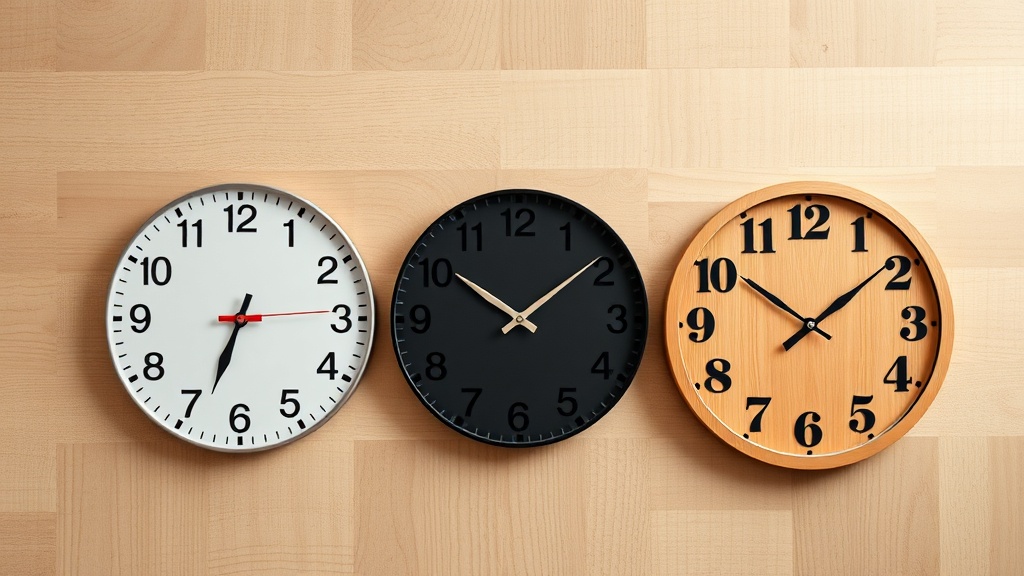
| Dial + Numeral Combination | Best Room Context | Interior Style |
|---|---|---|
| White dial, black numerals | Kitchen, bedroom, office | Minimalist, Scandinavian, modern |
| Black dial, white numerals | Living room, office | Industrial, contemporary, bold modern |
| Cream/off-white dial, dark numerals | Kitchen, living room, entryway | Farmhouse, vintage, eclectic |
| Natural wood dial, dark numerals | Living room, bedroom, study | Scandinavian, boho, organic modern |
| Glass/transparent dial, printed numerals | Office, living room | Contemporary, European modern |
One note on grey dials: they're having a real moment right now. A mid-tone grey face with near-black Arabic numerals sits right at the intersection of warmth and modernity. It doesn't read as stark the way pure white can, and it doesn't demand as much commitment as a black dial. Worth considering for any room where you want the clock to integrate rather than pop.
Frame Materials That Complement a Clean Arabic Numeral Dial
The frame anchors the whole design. A clean dial with the wrong frame can feel inconsistent; the right pairing makes the clock feel like it was always meant to be in that room.
Natural wood frames (oak, walnut, bamboo) are the most forgiving. They pair with almost any dial color and suit multiple interior styles simultaneously. Walnut in particular adds a richness that lifts the clock from functional to genuinely beautiful. The Walnut Wood Wall Clock is a strong example: the handcrafted quality shows in the grain, and the minimalist approach to the face keeps it thoroughly modern.
Matte black metal frames tighten everything up. They work especially well with white or cream dials because the contrast is clean and sharp. In rooms with black fixtures, black furniture legs, or black window frames, a matte black clock ring creates visual coherence, the kind that makes a room feel designed rather than assembled.
Brushed gold or brass frames are the current prestige choice. They read as warm rather than flashy, and they bring a quiet luxe quality to rooms that might otherwise feel flat. On an Arabic numeral dial, a brass frame adds just enough decorative tension to keep the clock from feeling too spartan.

Placement That Makes a Clean Clock Work Harder
Even the best-designed clock can underwhelm with poor placement. A wall clock with Arabic numerals clean design has specific placement strengths worth knowing about.
Height is the first variable. Eye level is the standard advice, but it's not always right. In a living room where most of the viewing happens from a seated position, slightly above eye level (around 5 to 5.5 feet from the floor to the clock center) is often better. In a hallway, higher placement reads as architectural. In a kitchen, the clock often ends up above the countertop line, which is fine as long as it's not so high it strains your neck to check.
Negative space is your friend with clean designs. A minimalist Arabic numeral clock on a crowded gallery wall tends to disappear. Give it a clear zone, ideally at least 20-30 cm of empty wall on all sides. The restraint is what gives the object its presence.
Finally, think about what the wall is doing. A textured plaster wall, a warm brick background, or a painted accent wall all change how a clock reads. A white dial on a white wall can work beautifully if the frame provides definition; on a dark accent wall, it becomes a graphic focal point. Neither is wrong. Both are intentional.
"A clock tells the time. A well-placed clock tells you something about the person who lives there."
Recurring sentiment in home design feedback, and honestly, hard to argue with.
The Design Details Worth Paying Attention To Before You Buy
A few things that don't always show up in product photos but genuinely matter once the clock is on your wall.
Hand design relative to numeral weight. Slim, spindly hands on a bold numeral face look mismatched. Similarly, thick baton hands on a delicate numeral dial overpower the typography. The hands and numerals should feel like they belong to the same design language. When in doubt, needle-style hands in black or dark grey are the safest pairing for clean Arabic numeral dials.
Second hand presence. A lot of minimalist Arabic numeral clocks omit the second hand entirely, or include it in a matching color. Both are fine choices. The classic red second hand feels out of place on a truly minimal design; if the clock includes one, check that it works with the overall palette.
Movement quality. Silent quartz sweep movements have become the standard for good reason: no tick, smooth hand motion. If the product description says "step movement" rather than "sweep movement," expect a faint tick. For bedrooms and quiet home offices, sweep is worth specifying.
Browse the silent wall clock collection if the tick question is non-negotiable for your space. It covers everything from compact bedroom options to large living room pieces.
⭐ Before you commit
Ask yourself three quick questions: Does the numeral weight match the hand style? Does the dial color contrast with your wall (not compete with it)? And does the frame material echo at least one other element already in the room? Tick all three, and you've almost certainly found the right clock.
FAQ
Are Arabic numeral clocks easier to read than Roman numeral ones?+
For most people, yes. Arabic numerals are the digits we use every day for everything from phone screens to price tags. Recognition is essentially instantaneous. Roman numerals require a brief translation step, small, but real. For quick-glance situations (kitchen, hallway, bedroom), Arabic numerals win on pure practicality. That's precisely why a wall clock with Arabic numerals clean design has become a default choice in contemporary interiors.
What interior styles suit a wall clock with Arabic numerals best?+
Arabic numeral clocks are genuinely versatile. They're the default choice for Scandinavian and minimalist interiors, but they also fit industrial, Japanese-influenced, mid-century modern, and contemporary farmhouse aesthetics. The typeface style (sans-serif vs. serif vs. stencil) is what shifts the clock between those categories more than the numerals themselves.
What size Arabic numeral clock works best for a living room?+
For a standard living room wall, 40 to 60 cm (16 to 24 inches) is the range where a clock registers as a statement piece without dominating the space. On a large feature wall or above a wide sofa, 60 cm and above works well. The key is that the clock occupies at least one-third of the wall width it's placed on, otherwise it reads as too small regardless of its actual dimensions.
Is a silent movement worth it for a wall clock with Arabic numerals?+
For bedrooms and home offices, absolutely. A silent sweep quartz movement means no audible tick, and the second hand moves in a smooth continuous motion rather than discrete steps. In a kitchen or hallway where there's ambient noise, it matters less, but silent movements have become the standard for good-quality clocks across all rooms, so it's rarely a premium you need to seek out specifically.
Can Arabic numeral clocks work in a vintage or antique-style room?+
Yes, the key is in the typeface and finish. An aged serif numeral on a cream or distressed dial, set in a dark bronze or patinated frame, reads as vintage with no tension at all. Arabic numerals were used on antique clock faces long before Roman numerals became the ornamental default, so the combination has genuine historical precedent. The vintage wall clock collection includes several models that handle this combination well.
What frame material works best with a clean Arabic numeral dial?+
It depends on your room's existing palette. Natural wood (oak, walnut, bamboo) is the most forgiving and pairs with nearly any dial color. Matte black metal brings sharp contrast and suits industrial or contemporary spaces. Brushed brass or gold adds warmth without feeling showy, and works particularly well in rooms with warm-toned textiles or furniture. The rule of thumb: echo at least one material already in the room, and the clock will feel like it belongs rather than landed.