
You've finally fallen asleep. It's quiet, the room is dark, and then, tick. Tick. Tick. A clock you barely noticed during the day has suddenly become the loudest thing in the house. If that sounds familiar, you're not alone. The wrong bedroom clock is one of the most overlooked sleep disruptors in an otherwise well-designed space, and the fix is simpler than most people think.
The best wall clock for bedroom quiet movement doesn't just look good on your wall. It respects the room's purpose. This guide gets into what actually makes a clock silent, which styles suit a bedroom the best, and how to match your pick to your interior without compromising on either sleep or aesthetics.
⭐ Key takeaways
- Standard quartz clocks tick once per second; sweep movement clocks rotate continuously and silently.
- Silent sweep is the only movement type worth considering for a bedroom clock.
- Materials matter: wood and fabric-backed clocks absorb more ambient noise than metal or glass-faced designs.
- Size, placement, and style all interact, a clock that works in a living room can feel wrong in a bedroom.
- Scandinavian minimalist, natural wood, and soft vintage styles all work particularly well in sleep spaces.
Why "Quiet Movement" Isn't Just Marketing Language
When a clock listing says "silent quartz" or "quiet movement," it's describing something specific about the mechanics, not just a volume claim. Most standard quartz clocks use a stepping motor that advances the second hand in discrete one-second ticks. That audible click is the motor engaging. One tick per second, every second, for as long as the battery lasts.
A silent sweep movement (also called a continuous sweep) replaces that stepping mechanism with a smoother motor that moves the second hand in a near-continuous rotation. No steps, no click. The hand glides around the dial rather than jerking forward. The result is a clock that runs at a sound level somewhere between "barely audible at 30 cm" and "completely inaudible from the bed."
The difference becomes starkest at night. In a quiet bedroom at 2 AM, a standard stepping quartz can register around 30-35 decibels, roughly the same as a whispered conversation in an otherwise silent room. That's enough to pull a light sleeper out of deep sleep, especially if the clock is mounted close to the bed. This is precisely why finding the best wall clock for bedroom quiet movement matters so much more than most people realize when they're shopping.

💡 Did you know?
The sweep second hand was actually a practical tool before it was a design choice. Doctors and nurses originally used sweep-second clocks to measure pulse rates accurately, since the smooth motion made counting beats far easier than following a jerky stepping hand. The silence was a welcome side effect.
Stepping vs. Sweep: A Quick Comparison Before You Buy
| Feature | Stepping Quartz | Silent Sweep Quartz |
|---|---|---|
| Second hand motion | Jerky, 1-step per second | Smooth, continuous glide |
| Audible tick | Yes, noticeable in quiet rooms | No (or near-inaudible) |
| Battery life | 12-18 months typical | 10-16 months typical |
| Best for | Kitchens, hallways, offices | Bedrooms, nurseries, studies |
| Price premium | None | Small to moderate |
Worth noting: a clock described as "silent quartz" almost always uses sweep movement. If a listing doesn't specify, it's worth contacting the seller directly or checking customer reviews that mention sleeping with it nearby.
The Best Wall Clock for Bedroom Quiet Movement: Styles That Actually Work
Function matters, but a bedroom clock still has to belong in the room. The bedroom is the most personal space in any home, and a clock that looks wrong, too industrial, too bold, too cluttered, can throw off the whole atmosphere even if it runs silently. Here's what genuinely works.
Minimalist Wooden Clocks
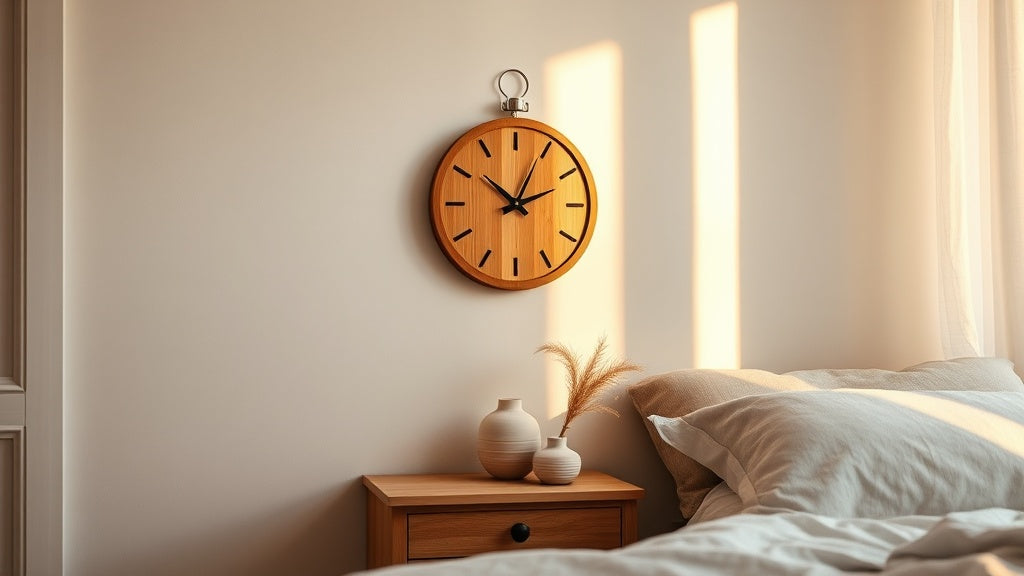
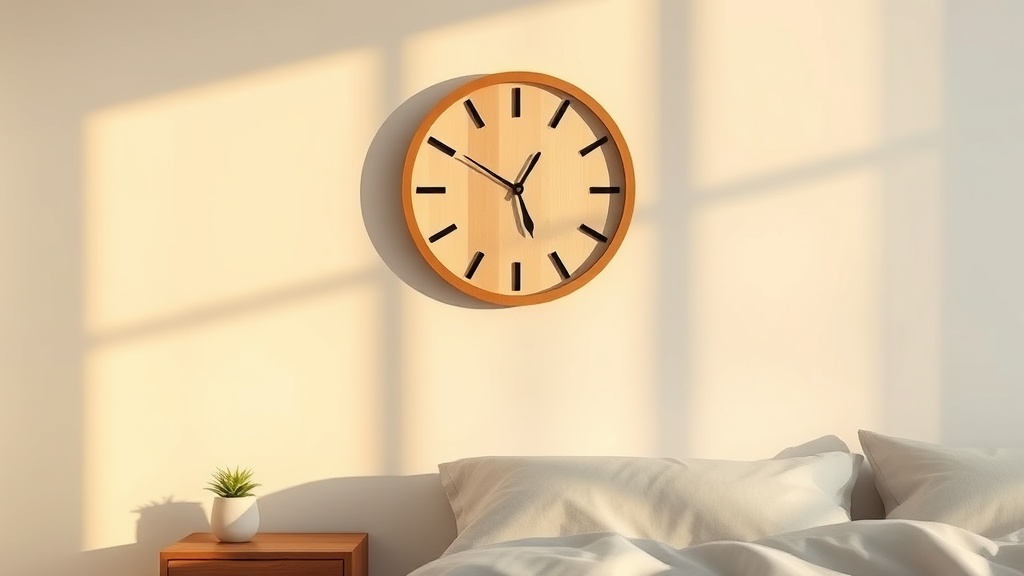
Natural wood is the bedroom's best friend. The grain texture adds warmth without demanding attention, and the material itself has mild acoustic properties: wood absorbs rather than reflects sound, which contributes to a quieter feel in the room overall. A clean, round wooden clock with a white or off-white dial and simple hands is almost impossible to get wrong. It suits Scandinavian interiors, and even warmer earthy palettes without clashing.
It also pairs beautifully with *Japandi* rooms. If you haven't come across the term, *Japandi* is the design philosophy that blends Japanese wabi-sabi minimalism with Scandinavian hygge coziness. Think raw-edge oak furniture, linen in muted stone tones, and a near-complete absence of visual clutter. Elena discovered the style while renovating a narrow Stockholm-inspired bedroom and never went back. A wooden clock with a clean dial is practically the unofficial emblem of the *Japandi* aesthetic.
The sweet spot in terms of size for a bedroom is 30-40 cm (12-16 inches). Big enough to read from bed, small enough to sit as an accent rather than a focal point.

Handcrafted Walnut and Dark Wood Designs
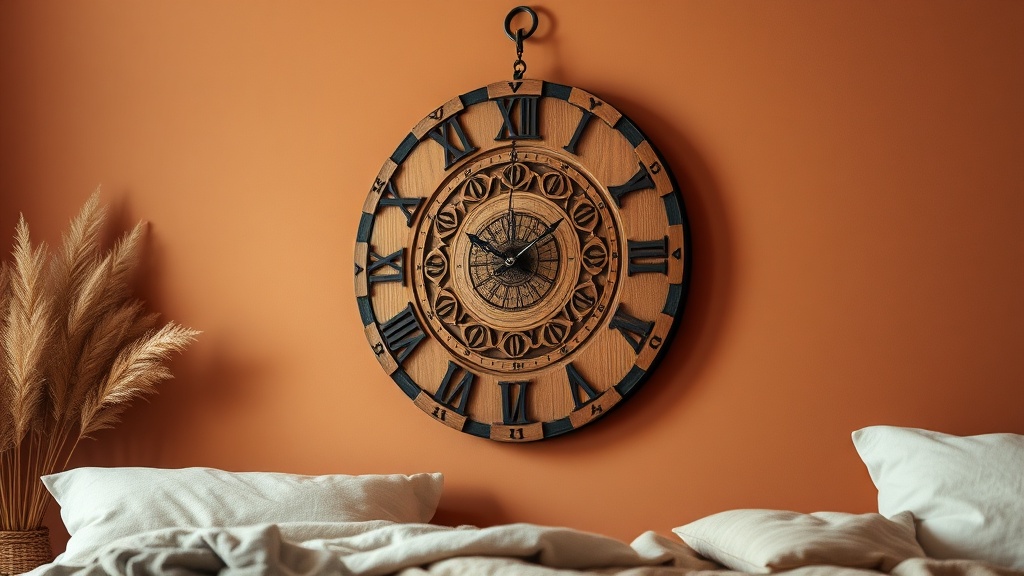
For bedrooms with deeper, warmer color palettes, think terracotta walls, linen bedding in ochre and sage, dark oak furniture: a walnut or dark wood clock brings the kind of grounded richness that lighter designs can't. The industrial-meets-organic feel of real walnut works especially well against warm plaster walls or matte-painted surfaces in colors like deep forest green or iron oxide red. Handcrafted pieces in particular carry a tactile quality you can feel even from across the room. The visible grain, the slight irregularities, the weight of a real wood case: these details make a clock feel chosen, not just placed.
A silent handcrafted bedroom clock in walnut also tends to age well. The wood deepens over the years, and the clock becomes one of those pieces guests ask about.

Soft Vintage and Farmhouse Styles
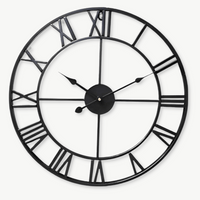
Not every bedroom is minimalist, and that's fine. Vintage-inspired clocks with weathered wood finishes, distressed dials, or classic Roman numerals can feel genuinely at home in cottagecore, French country, or transitional spaces. The key is checking that "vintage aesthetic" doesn't mean "vintage mechanics": older-style designs are now widely produced with modern silent sweep movements, so you get the look without the noise.
Roman numeral dials deserve a specific mention here: they're easier to read in low light than Arabic numeral dials, because the numeral shapes are more distinct at a glance. Practical, and beautiful.
Japanese-Inspired and Japandi Clocks
The *Japandi* interior trend, a blend of Japanese minimalism and Scandinavian *hygge*, has settled into mainstream design for good reason: it prioritizes calm, and bedroom spaces are exactly where calm matters most. Clocks in this style tend to feature clean dials, natural bamboo or acrylic over wood bases, and a near-total absence of decorative noise. The geometry does all the work.
A Japanese-style silent wood and acrylic wall clock pairs well with neutral linen bedding, low-profile furniture, and natural fiber rugs. It's the kind of piece that disappears into the room until someone asks where you got it.
Celestial and Nature-Themed Designs
For bedrooms that lean into a more expressive aesthetic, boho layers, gallery walls, eclectic collected-over-time vibes, a clock with a sun and moon motif or botanical theme can anchor the wall beautifully. The carved or laser-cut wood detailing adds visual texture without the visual noise of a heavily patterned dial. And yes, these come in silent sweep versions too.

Placement Rules That Actually Make a Difference
"A clock is the only object in your bedroom that speaks every single minute you're trying to sleep. It should whisper, not shout."
Elena Rossi, on bedroom design philosophy
Even a perfectly silent clock can feel wrong if it's in the wrong spot. Placement in a bedroom follows slightly different logic than other rooms.
- Across from the bed, not directly above it. You want to read the time from a natural resting position. Mounting a clock directly above the headboard means craning your neck every time you check it, not ideal at 3 AM.
- Avoid the wall directly behind the bed. Acoustically, even a near-silent sweep mechanism can feel louder when mounted on the same wall as your head. A few meters of air distance makes a real difference.
- Height: eye level when standing, not seated. The clock should be visible at a glance when you get up, not just when you're lying down. Aim for 150-170 cm from floor to center of clock.
- Keep it away from windows. Direct sunlight degrades plastic components and battery seals over time. A shaded wall extends the life of any quartz movement significantly.
- Consider the color temperature of your lighting. A warm-toned LED bedside lamp can make a white dial look yellowish at night. Ivory, cream, or natural wood dials tend to read better under warm light than stark white faces.
Size Guide for a Bedroom Wall Clock
Getting the size right is where a lot of people second-guess themselves. The bedroom has a different scale than the living room, and what looks bold and intentional in one space can feel oversized or underwhelming in the other.
Here's a practical framework:
- Small bedroom (under 12 m²): 25-35 cm diameter. A 30 cm clock is almost always the safe bet.
- Standard bedroom (12-18 m²): 30-40 cm diameter. This is the most versatile range. A 35 cm clock reads well from 3 meters.
- Large bedroom or master suite (over 18 m²): 40-50 cm. You can go slightly larger if the wall is empty and you want the clock to hold the space, but anything above 50 cm typically reads as a living room piece.
One honest note: if you're unsure, cut a cardboard circle to the exact diameter and hold it against the wall. Five seconds of effort, zero regret later. Photographs on your phone can also help, snap the wall with the cardboard mock-up and you'll know immediately if the scale is right.
Bedroom Clock Collection
Every clock in this collection is selected specifically for bedroom use: silent movement, appropriate scale, and styles that actually belong in a sleep space.
168 references
Browse the collection →What to Check on Any Listing Before You Buy
Online shopping for clocks has one real pitfall: manufacturers use inconsistent terminology. "Quiet," "noiseless," "non-ticking," and "silent" all appear on listings, and they don't always mean the same thing. Here's what actually matters when reading a product page.
- "Silent sweep" or "continuous sweep": This is the exact phrase you want to see. It confirms the mechanism.
- "Non-ticking quartz": Usually reliable, but worth cross-referencing with customer reviews to confirm.
- Movement brand mentioned (Seiko, Ronda, Hechinger): These are reputable movement manufacturers. If a product specifies its movement brand, it's a good sign the seller knows their product.
- Customer reviews mentioning "bedroom" or "sleep": Real-world noise testing from customers who slept with the clock nearby is the most reliable data point you can find.
- Return policy: A brand confident in its silent movement won't hesitate to offer a return window. If the policy is restrictive, take that as information.
Three Bedroom Styles and the Clocks That Fit Them
Pairing a clock to a bedroom's existing aesthetic is easier when you think in terms of material and finish rather than just color. Here are three common bedroom styles and the clock approaches that work with each.
Scandinavian / Minimalist
White or pale wood walls, linen textiles, low-profile furniture. The clock should almost disappear. Look for: white or birch wood dials, no numerals or very sparse markers, thin minimal hands. A Scandinavian wall clock with a 30 cm bamboo frame and a clean white face fits here perfectly. The less it competes for attention, the more it belongs.
Warm Eclectic / Boho
Layered textiles, plants, mixed materials, personal objects. The clock can carry more character here. Look for: carved wood details, celestial or botanical motifs, natural finishes with visible grain. A sun and moon design or a crackled wood dial adds to the feel without looking out of place.
Classic / Traditional
Upholstered headboard, rich wood furniture, warm lighting. A vintage-style silent clock with Roman numerals in dark wood or aged finish belongs naturally here. The vintage wall clock collection covers this territory well, including pieces with silent sweep mechanisms that deliver old-world aesthetics without old-world noise.
FAQ
What is the best wall clock for bedroom quiet movement?+
The best wall clock for bedroom quiet movement is any clock that uses a silent sweep (continuous sweep) quartz mechanism, paired with a natural wood case for maximum acoustic dampening. Round wooden clocks in the 30-40 cm range consistently score highest for bedroom use: they're readable from bed, acoustically quiet, and versatile enough to suit Scandinavian, *Japandi*, and warmer eclectic aesthetics alike. Check that the listing explicitly mentions "silent sweep" or "continuous sweep" rather than just "quiet."
Is a silent sweep clock truly inaudible, or just quieter?+
In most home environments, a quality silent sweep clock is functionally inaudible from a normal sleeping distance of 1.5-3 meters. At close range (under 30 cm), a very faint motor hum can sometimes be detected, particularly in an otherwise completely silent room. For the vast majority of sleepers, this is a non-issue. If you're an extremely light sleeper, choose a clock for a wall that isn't directly adjacent to your pillow.
Can I use a large wall clock (50+ cm) in a bedroom?+
You can, but it takes the right room and the right placement. A large clock works in a master bedroom or a bedroom with high ceilings and significant wall space: it can serve as the room's focal point rather than a secondary accessory. The risk is that it overwhelms smaller rooms or creates a living-room feeling that works against the bedroom's rest function. If the room is under 15 m², stay at 40 cm or below.
How long do batteries last in a silent sweep movement?+
Most silent sweep movements run on a single AA or AAA battery for 10 to 16 months. The continuous motor draws slightly more current than a stepping mechanism, so battery life is marginally shorter. Using a quality alkaline battery (rather than a budget option) makes a real difference. Lithium batteries last longer still, especially in temperature-variable rooms.
Does wood absorb sound better than metal for a bedroom clock?+
Yes, slightly. Wood has natural acoustic dampening properties, which means a wood-cased clock tends to contain any residual motor vibration better than metal or glass. This difference is small, the movement type matters far more than the case material. But between two clocks with identical mechanisms, the wooden one will consistently be the quieter choice in a bedroom context.
Is there a difference between "silent quartz" and "silent sweep"?+
"Silent quartz" and "silent sweep" are often used interchangeably, but technically "silent quartz" refers to the type of motor (a quartz oscillator without the audible step click), while "silent sweep" refers specifically to the visible motion of the second hand being smooth and continuous. In practice, a clock marketed as either will almost always use the same type of mechanism. Both are what you want for a bedroom.