
You've stared at that blank wall long enough. You know a clock belongs there, something that makes the room feel finished, intentional, like someone actually thought it through. But then you open a browser tab, and suddenly you're drowning in quartz movements, case diameters, silent sweep mechanisms, and Roman numerals versus Arabic, and you close the tab and go make tea instead.
Here's the thing: buying a wall clock doesn't have to feel like a design degree exam. Once you know what to actually look for, and what's just noise, it becomes one of the most satisfying decorating decisions you'll make. A clock is the one piece that's both functional and a genuine statement on your wall, every single day.
Let's break it all down, step by step, no jargon required.
À retenir
- Size is the most common beginner mistake, always measure your wall space first.
- The movement type (quartz vs. mechanical) affects both maintenance and sound, pick based on your lifestyle.
- Style should complement your existing palette, not fight it.
- Placement height matters as much as the clock itself.
- A clock that suits your room and your habits will outlast every trend.
Why a Wall Clock Is a Design Decision, Not Just a Purchase
Think about the rooms you remember feeling genuinely good in. There's usually something anchoring the space, a piece of art, a mirror, or yes, a beautifully chosen clock. Clocks occupy that rare sweet spot where utility and aesthetics overlap completely. You need them to work. You also see them dozens of times a day.
That's why the choice deserves a bit more thought than "does it tell time." A 60 cm brass clock with an open face reads totally differently than a small, silent minimalist disc, even hanging in the exact same room. One becomes a focal point. The other disappears quietly into the wall. Neither is wrong, but only one is right for your space.
First-time buyers often focus on aesthetics alone and overlook practical details like movement noise, battery access, or whether the clock will actually be readable from across the room. Getting both sides right is what separates a clock you love for years from one you quietly take down after six months.
Step One: Figure Out Your Wall and Your Room
Before you look at a single clock, look at your wall. Specifically, measure it. This sounds obvious, but it's the step most people skip, and it's the single biggest source of "it looked so much better online" regret.
A general rule that actually works in practice: the clock's diameter should occupy roughly two-thirds of the visual wall space you're working with. Hanging a 25 cm clock on a 2-metre-wide wall makes it look like a lost button. Going too large on a narrow hallway wall feels claustrophobic.
- Small rooms or tight walls (under 80 cm wide): 25, 35 cm diameter is your sweet spot.
- Average living rooms and bedrooms: 35, 55 cm works beautifully without overwhelming.
- Large feature walls, open-plan spaces, or above a sofa: 55, 80 cm+ makes a proper statement.
Also take stock of what's already on the wall and nearby: furniture color, paint tone, any existing artwork. Your clock doesn't need to match everything, but it needs to belong in the same conversation.
Did you know?
The tradition of placing a clock above a fireplace mantel dates back to 18th-century France, where a mantel clock was a symbol of prosperity and social standing. Today's designers still use that same logic, a clock above a focal point (fireplace, console, sofa) draws the eye upward and anchors the entire room.
Step Two: Understand Clock Movements (The Part Everyone Ignores)
The movement is the engine inside your clock, and it has a direct impact on your daily experience of it, especially at night.
There are three types you'll actually encounter when shopping:
Quartz with a Ticking Step
This is the most common type. The second hand advances in distinct one-second ticks. It's reliable, battery-powered, and inexpensive to maintain. The tradeoff? That tick. In a busy living room it's unnoticeable. In a bedroom at 2am, it can feel like a metronome pointed at your head.
Silent Sweep (Continuous Movement)
The second hand glides in a smooth, continuous motion with no audible tick. It's the same quartz technology underneath, just with a different gear system. If the clock is going anywhere near a bedroom, home office, or reading nook, this is worth specifically looking for, it's listed in product descriptions as "silent sweep" or "sweep movement."
Mechanical or Automatic
These run on springs and gears rather than batteries, requiring periodic winding. They often produce a gentle rhythmic tick that many people find charming rather than annoying, more of a presence than a noise. They need more maintenance but reward you with craftsmanship that feels genuinely different from a battery-powered piece.

| Movement Type | Sound | Maintenance | Best For |
|---|---|---|---|
| Quartz Tick | Audible tick per second | Battery replacement only | Kitchens, living rooms, hallways |
| Silent Sweep | Near-silent | Battery replacement only | Bedrooms, offices, nurseries |
| Mechanical | Soft rhythmic tick | Regular winding required | Statement pieces, traditional rooms |
Step Three: Match the Style to Your Space (Without Overthinking It)
Clock styles don't exist in isolation, they're conversations with the room around them. Here's a quick translation between the design language you'll see in product listings and what it actually means for your home:
Scandinavian / Minimalist
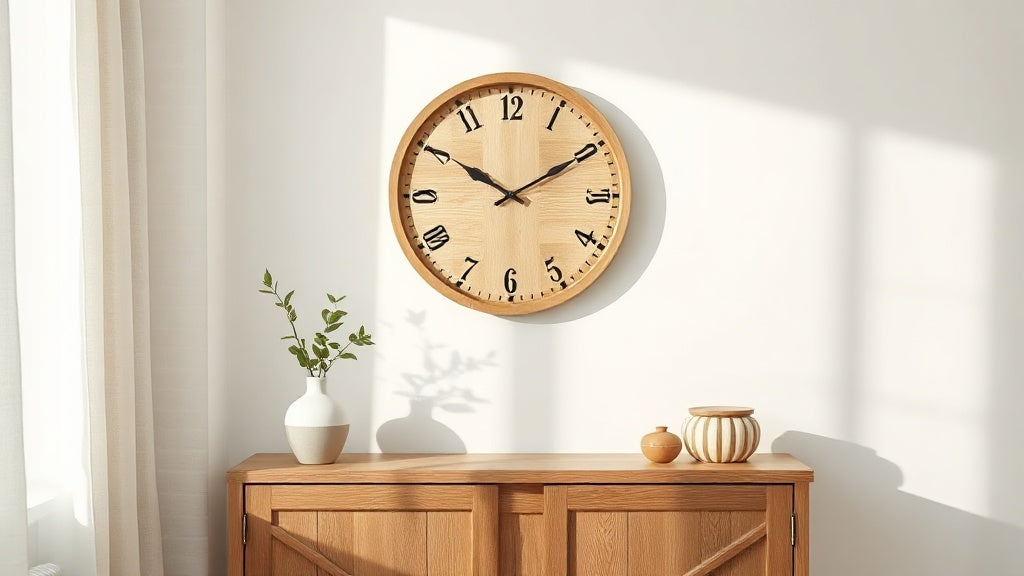
Clean lines, muted tones (white, beige, natural wood), no unnecessary ornamentation. These clocks almost disappear into a well-styled room in the best possible way, they tell time without announcing themselves. Perfect for light, neutral spaces where you want calm over drama.
Industrial
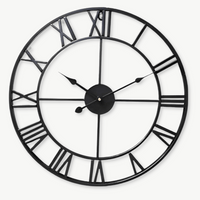
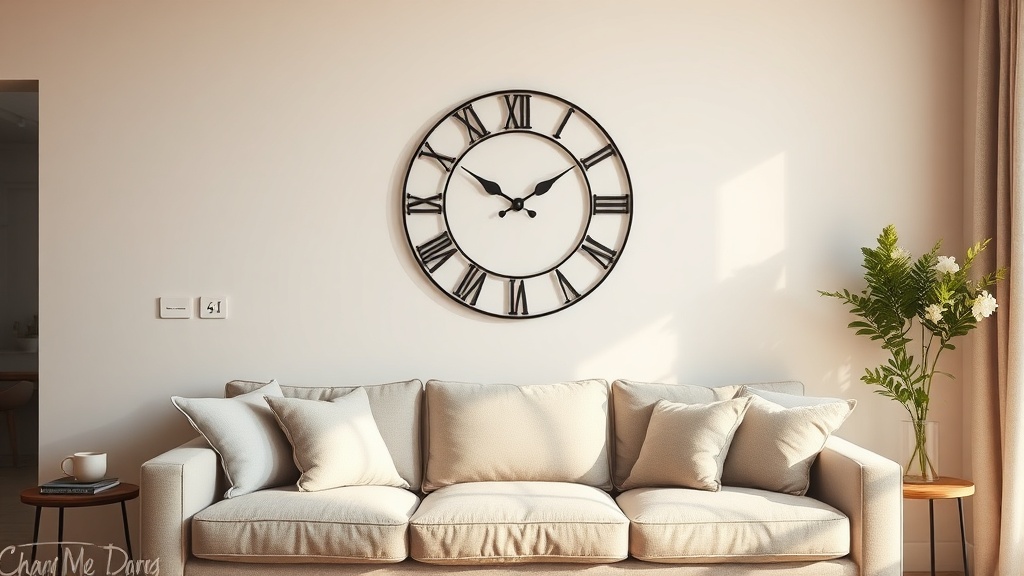
Think exposed metal (often raw steel or aged iron), Roman numerals, open-gear details, and oversized proportions. These work brilliantly in rooms with brick, concrete, dark wood, or leather, anywhere that already has some grit to it. They bring a workshop-meets-loft energy that feels intentional rather than decorative.
Vintage / Antique-Inspired
Ornate frames, warm brass or bronze tones, distressed finishes, and often pendulums or decorative hands. They bring instant warmth and a sense of history to a room. They sit naturally in traditional, farmhouse, or maximalist interiors, but a single vintage clock can also add wonderful contrast in an otherwise modern space.
Contemporary / Modern
Geometric shapes, bold colors (including black, which works in almost every room), mixed materials like marble and metal, and often frameless or floating designs. These are the most versatile option for renters or anyone who moves often, since they tend to be style-neutral enough to travel with you.
Voir la collection
Wall Clocks, The Full Collection
Every style, every size, every room, browse 166 wall clocks to find the one that actually fits your space.
166 références
Discover the collection →Step Four: Think About Material, It's Not Just Looks
The material of a clock affects how it ages, how it feels in the room, and how easy it is to live with. It's worth a few seconds of thought before you commit.
Wood brings warmth and texture that no other material quite replicates. Oak, walnut, and bamboo all age beautifully and work especially well in rooms that already have natural elements, houseplants, linen curtains, rattan furniture. Wooden clocks also tend to feel quieter visually, which suits relaxed, lived-in spaces.
Metal (steel, iron, brass, aluminum) reads as more modern or industrial depending on the finish. Brushed steel is clean and contemporary. Aged brass is warm and refined. Raw iron is bold and textural. Metal clocks tend to be the most durable and are a good choice for high-traffic rooms like kitchens and hallways.
Plastic and acrylic get a bad reputation but can work well in the right context, particularly in children's rooms, rentals where wall damage is a concern, or budget-conscious builds where design matters but cost is a real factor.
Step Five: Placement and Height, Where It Goes Matters as Much as What It Is
A great clock in the wrong spot will never look right. Here's what consistently works:
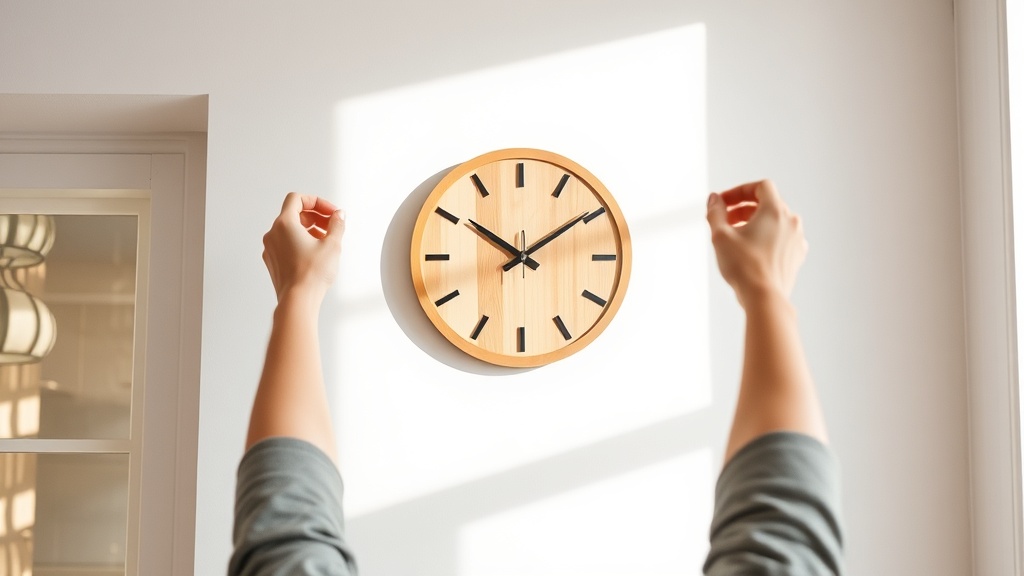
- Eye level, not above the door: The center of the clock should sit roughly at eye level when you're standing, around 150, 165 cm from the floor. Higher than that and it reads as an afterthought. Lower and it competes with furniture.
- Above a sofa or console: Leave at least 20, 25 cm between the top of the furniture and the bottom of the clock. This visual breathing room is what makes the pairing look intentional.
- Gallery walls: If you're mixing a clock with other frames or art, treat it as one of the anchor pieces, let it be one of the larger items in the grouping, or give it the center position. A clock gets lost when it's the smallest thing in a cluster.
- Alone on a statement wall: This is where oversized clocks shine. Give it space. Nothing competing with it. Let the wall do the talking.

Voir la collection
Vintage Wall Clocks
For rooms that deserve warmth and character, clocks with real personality, built to become the most-noticed piece on your wall.
79 références
Discover the collection →The Questions Worth Asking Before You Buy
Once you've narrowed it down to one or two options, run through this quick mental checklist. It takes about two minutes and saves a lot of second-guessing:
- Can I read it from where I'll actually be? Sit in your usual spot in the room and imagine the clock on the wall. If the numerals are tiny or the hands are thin and light-colored against a light face, you'll stop reading it within a week.
- Do I know where the battery goes? Some clocks have battery compartments in awkward spots on the back, requiring you to take the whole thing off the wall for a simple AA swap. Worth checking in product photos.
- What hardware comes with it? Most wall clocks come with a basic nail hook. If you have plaster walls or concrete, you may need to source your own fixings, factor that in.
- Will this still feel right in three years? Trend-driven pieces (ultra-bold colors, very specific pop culture moments) are fun but can date quickly. If you're committing to a large or expensive clock, lean toward something with staying power.
"A clock is the only decoration that keeps giving you something, it tells you the time, yes, but more than that, it marks the rhythm of a room."
A sentiment shared by countless interior designers, and just about every customer who finally found the right one.
Your First Wall Clock: What Actually Matters in 2026
If there's one thing to take away from this entire wall clock buying guide, it's that the "right" clock is the one that answers your room's specific needs, not the trendiest one, not the cheapest, and not necessarily the most elaborate. The beginners who end up happiest are almost always the ones who measured first, thought about sound second, and chose a style that feels like them rather than like a mood board they found online.
Start with the size. Confirm the movement type suits where the clock will live. Pick a material that already speaks to something in the room. Hang it at eye level. That's genuinely it. The rest, the exact finish, the style of hands, Roman or Arabic numerals, that's where your own taste gets to show up. And that's the part that makes it yours.
Frequently Asked Questions
What size wall clock should I get for a living room?+
For most living rooms, a clock between 40, 60 cm in diameter works well. If you have a large feature wall or an open-plan space, going up to 70, 80 cm creates a genuine focal point. As a rule, the clock should fill roughly two-thirds of the wall section it's hanging on, too small and it looks lost, too large and it can feel overwhelming.
Are silent wall clocks actually silent?+
Clocks with a "silent sweep" or "sweep movement" are very close to silent, you won't hear them from across the room or in a normally active space. In a completely quiet room late at night, you might hear the faintest mechanical hum, but it's nothing like the distinct tick-tick-tick of a standard quartz movement. If you're putting a clock in a bedroom or home office, always check that the listing specifically mentions silent sweep.
How high should a wall clock be hung?+
The center of the clock should sit at roughly eye level when standing, typically around 150, 165 cm from the floor. If you're hanging it above furniture like a sofa or console table, leave at least 20, 25 cm of visual space between the top of the furniture and the bottom of the clock. Hanging clocks too high is one of the most common placement mistakes, and it makes even a beautiful clock look like an afterthought.
What's the difference between quartz and mechanical wall clocks?+
Quartz clocks run on batteries and use an electronic oscillator to keep time, they're accurate, low-maintenance, and affordable. Mechanical clocks use a wound spring and gear system that requires periodic hand-winding. They're more complex to maintain but offer a level of craftsmanship and character that battery-powered clocks can't replicate. For most first-time buyers, quartz (especially silent sweep) is the practical starting point.
Can I put a wall clock in a kitchen or bathroom?+
Kitchens are great spots for wall clocks, they're one of the most-visited rooms in any home, and a clock there gets genuinely used. Look for materials that handle humidity and grease well, like metal or lacquered wood. For bathrooms, be more cautious: standard clocks aren't designed for high-moisture environments and will degrade quickly. If you want a clock in a bathroom, specifically look for one rated for humid conditions, or keep it in a well-ventilated area well away from the shower.