
Picture this: it's 9 a.m. and you're about to hop on a call. Your client is in Berlin, your developer is in Singapore, and your manager just moved to São Paulo. You've already opened three browser tabs and typed "time zone converter" for the fourth time this week. There's a better way, and it hangs on your wall.
A wall clock with multiple time zones display does something a smartphone never quite manages: it puts time in your peripheral vision. Glance up, know instantly, get back to what you were doing. No unlocking, no app-switching, no mental math. For remote workers, frequent travelers, or anyone with close relationships spread across continents, it's one of the most quietly useful pieces you can add to a room.
The question isn't really whether you need one. It's which format fits your home, your wall, and the rhythm of your actual day.
⭐ À retenir
- Multi-zone wall clocks come in analog, digital LED, and hybrid formats; each has real trade-offs worth knowing.
- The "gallery of clocks" approach is still the most design-flexible option for homes that care about aesthetics.
- Placement matters as much as the clock itself: the wrong wall kills the functionality.
- Labeling your zones clearly is half the work; even the best clock fails without it.
- Silent quartz movements are non-negotiable in any room where you concentrate or sleep.
Why Multi-Zone Clocks Have Moved from Offices to Homes
Multi-zone wall clocks moved from offices to homes because remote work normalized tracking multiple time zones at home, and designers transformed the institutional bank-of-clocks concept into a genuine interior moment with silent movements and residential-grade materials. Not long ago, banks of clocks showing New York, London, and Tokyo were purely a corporate thing. You'd spot them in trading floors, hotel lobbies, and newsrooms. The aesthetic was purely functional: stark black frames, white dials, uniform size, mounted in a row above a reception desk. Nobody put one in their living room on purpose.
That changed fast. Remote work normalized the idea of tracking multiple time zones at home. At the same time, a generation of designers started treating that bank-of-clocks concept as an actual interior moment. A trio of matching wooden clocks on a gallery wall. A pair of Scandinavian minimalist dials flanking a shelf. Suddenly, what was institutional became intentional.
The other shift is that clock quality caught up. Silent quartz movements meant you could hang three clocks in a bedroom without losing your mind to the tick. Matte metal finishes, solid wood cases, and clean dial designs meant the clocks could hold their own next to art prints and ceramic vases. Function and form stopped being opposites. Today, a wall clock with multiple time zones display is as likely to anchor a living room gallery wall as it is to sit in a trading desk backdrop.

The Four Formats: What Each One Actually Gets Right
The four formats for displaying multiple time zones are: a gallery of individual analog clocks, single-case dual or triple-dial units, digital LED world clocks, and hybrid analog-digital clocks; each trades aesthetic warmth against information density in a different way. Before you commit to anything, it helps to understand how each format works in practice, not just what it looks like in a product photo.
The Gallery of Individual Analog Clocks
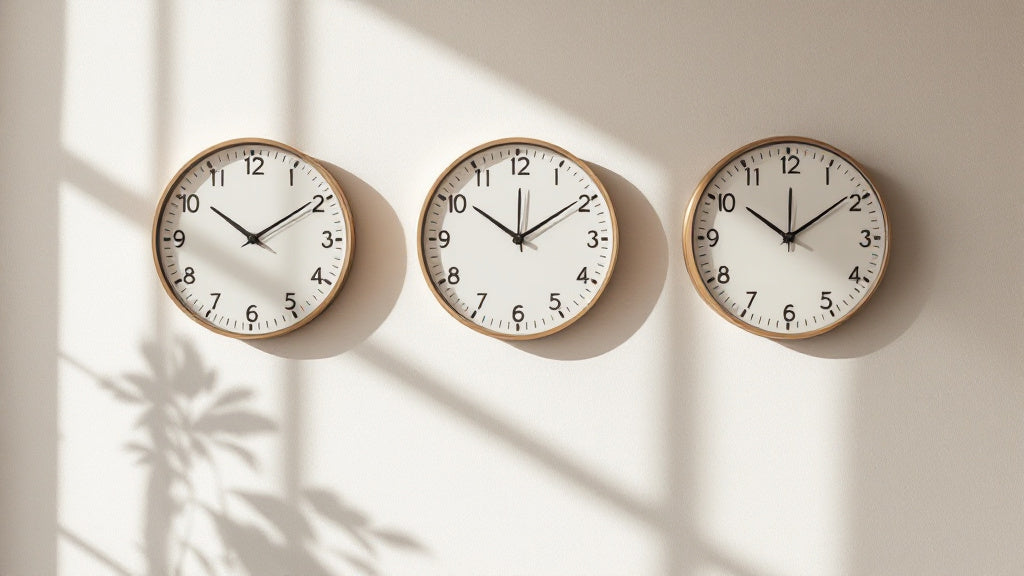
This is the classic approach and, for most homes, still the best one. You hang two, three, or even four matching analog clocks in a row and set each to a different time zone. Label them with small printed cards or custom city name plates underneath.
The upside is enormous flexibility. You can mix sizes slightly for visual interest, space them to fit an awkward wall, and replace a single clock if one zone becomes less relevant (your Berlin contact moves to Paris, for instance). You also get to choose exactly which clocks you love aesthetically, rather than being constrained by what a single multi-zone unit offers.
The practical consideration: analog clocks don't automatically update for daylight saving time. You'll need to manually adjust once or twice a year per clock. Honestly? It takes about two minutes per clock. That's a small price for a display that looks genuinely beautiful rather than corporate. If it still sounds like a dealbreaker, lean toward a digital format.
Single-Case Dual or Triple-Dial Analog Clocks
These put two or three clock faces into one unified frame, often arranged horizontally in a rectangular housing. They're tidy, self-contained, and take up less visual real estate than three separate clocks. The trade-off is that your aesthetic choice is limited to whatever the manufacturer decided, usually a fairly generic modern-industrial look.
They work brilliantly in a home office where clean function matters more than decorative impact. Less ideal in a living room where you want the clock to be a real design statement.
Digital LED World Clocks
Digital displays can show up to seven or eight time zones simultaneously, often with city names, date, and temperature built in. The readability at a distance is excellent; some commercial models are legible from over 15 feet away. They also handle daylight saving automatically.
The honest limitation: most digital multi-zone clocks are designed for commercial or office environments. The aesthetic is hard, glowing, utilitarian. They can feel out of place in a carefully designed home interior. If you work from a dedicated home office and you're prioritizing information density over atmosphere, they're a solid choice. If you want the clock to blend with your decor, they're a tougher sell.
Hybrid Clocks with a Secondary Digital Sub-Display
A growing middle ground: analog clocks that include a small digital window showing a second time zone. You get the warmth of an analog face as the primary display, with a discreet digital readout for your secondary zone. For people who need exactly two zones and want a single cohesive piece, this format is worth hunting for.
💡 Le savais-tu ?
The practice of displaying multiple city times on a single wall dates to the 19th century, when railway stations across Europe began installing "slave clock" systems. A master clock in the station master's office drove a series of synchronized dials, each showing local time for a different city along the route. The concept is over 150 years old; it just got a design upgrade.
Choosing the Right Wall Clock with Multiple Time Zones Display for Your Setup
Choosing the right wall clock with multiple time zones display comes down to three factors: how many zones you genuinely track, whether your interior leans warm or industrial, and how much wall space you have available. This is where the decision gets personal. A wall clock with multiple time zones display isn't one-size-fits-all; the right choice depends on how many zones you genuinely track, whether your interior leans Scandinavian-warm or industrial-minimal, and how much wall real estate you're working with. Here's how to think through it clearly.
| Criterion | Analog (gallery or dual-dial) | Digital LED |
|---|---|---|
| Aesthetic fit | Warm, residential, works in living rooms and bedrooms | Clean, modern, best in offices and commercial spaces |
| Number of zones | 2-4 (practical limit) | Up to 7-8 |
| Daylight saving | Manual adjustment required | Often automatic |
| Readability at distance | Good with large dials (30 cm+) | Excellent (LED visible from 15+ ft) |
| Noise | Silent with quartz movement | Silent |
| Design flexibility | High; mix materials and styles | Low; constrained by the unit |
| Price range | $39 - $300+ per clock | $60 - $500+ per unit |
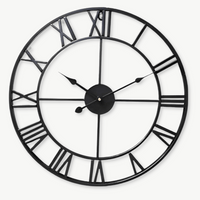
If your home leans toward natural materials and warm neutrals (think light oak floors, linen curtains, muted greens), a gallery of matching wooden-cased analog clocks is almost certainly the right call. If you're working in a more industrial or contemporary space with exposed metal, concrete textures, or high-contrast monochrome, a matte black multi-dial unit or a digital display can feel right at home. The format should serve the room, not fight it.

How to Style a Multi-Zone Clock Wall Without It Looking Like a Bank Lobby
To style a multi-zone clock wall without it looking institutional, treat the clocks as part of a broader composition rather than a uniform lineup: mix them into a gallery wall, choose frames that echo existing materials, and use clocks of at least 30 cm so they read from across the room. This is where most people get stuck. The instinct is to line up identical clocks in a straight horizontal row, perfectly level, equally spaced. It works. But it also looks exactly like the reception desk at an airport hotel.
Here's what works better at home: treat the clocks as part of a composition, not a lineup.
The Gallery Wall Integration
Mix your time zone clocks into a broader gallery wall with prints, mirrors, or small shelves. The clocks carry functional purpose; the surrounding pieces provide visual breathing room. Choose clocks whose frame material echoes something else already on the wall: warm wood tones if you have a wooden shelf, black metal if you have black-framed prints.
Sizing tip: use clocks of at least 30 cm diameter in this context. Smaller ones get visually swallowed by surrounding artwork and lose their readability from across the room.
The Focused Trio Above a Desk
Three matching clocks, hung at eye level above your work surface, spaced about 10-15 cm apart. City name labels underneath, printed in a clean sans-serif font and mounted in matching small frames. This is a genuinely clean, purposeful look: functional without being corporate, because the scale is human and the placement is personal.
The clocks you choose here matter more than in a gallery wall context. They need to be individually beautiful, since they're the only thing on that section of wall. A plain white clock with a cheap plastic frame will feel underwhelming. A well-crafted metal or wood dial with quality hands looks intentional.
The Paired Statement
Two clocks, slightly larger than you'd expect (say, 40-50 cm each), flanking a piece of art or a mirror. This works especially well in a living room where you want one time zone to be your home city and one to be someone you love who lives far away. It's less information, more meaning.

The Labeling Question: City Names, Custom Tags, or Nothing at All
A multi-zone wall clock display without clear labels is a riddle: you'll spend the first week remembering which clock is which, and guests will ask every time, so labels are part of the design, not an afterthought. A multi-zone wall clock display without clear labels is basically a riddle. You'll spend the first week remembering which clock is which, and guests will ask every time. Labels aren't optional; they're part of the design.
Three approaches that actually work:
- Printed city name cards in small frames: the most polished option. Choose a frame that matches your clock cases. Print city names in a clean typeface, size them consistently. Takes 30 minutes to set up and looks like it was professionally designed.
- Laser-cut wooden or metal tags: available from makers on Etsy and similar platforms, customized with any city name. Hang them directly below each clock on a small hook. Adds a handcrafted, considered quality that suits the aesthetic of a premium home.
- Chalk label holders or small blackboard tags: good if your zones change regularly (freelancers whose client mix shifts). Easy to update, and they add a slightly artisanal, café-inspired feel that works in kitchens and casual home offices.
One thing to avoid: adhesive vinyl letters applied directly to the wall under each clock. They look clean in photos and become a commitment you regret within a year when a client or contact moves cities and you're left with a ghost residue that won't come off the paint cleanly.

Room-by-Room Placement: Where Multi-Zone Clocks Actually Belong
Multi-zone clocks belong wherever you naturally look up during the parts of your day when time zone awareness matters most: a home office for remote workers, the living room for families with relatives abroad, the kitchen for those who cook on calls, and the entryway for frequent travelers. The room you put your multi-zone display in determines everything about how useful it is. A clock you never look at solves nothing.
Home Office or Study
The obvious choice, and the right one for most people. Position the clocks in your natural sightline from your desk chair; you should be able to glance at them without turning your head more than 30 degrees. Height-wise, the center of the clock grouping should sit roughly at seated eye level or just above. Going too high forces you to look up constantly, which strains the neck over a full workday. For a home office, a wall clock with multiple time zones display isn't a decorative bonus; it's a productivity tool that pays for itself the first week you stop opening three browser tabs to check the time in Tokyo.
Living Room
Works beautifully when the zones are personally meaningful rather than purely professional. A couple where one partner travels internationally, a family with relatives abroad, or simply someone who tracks international news and sport: these are all cases where a living room two-clock or three-clock arrangement makes real sense. Here, aesthetics carry more weight; choose pieces that hold their own as decor even on a Sunday when no one's on a work call. A pair of solid walnut-cased analog dials in a classic Scandinavian style can anchor a gallery wall as confidently as any art print.
Kitchen
Underrated location. If you cook while taking calls, or if your household has someone who regularly video chats with family in a different country during meal prep, a two-zone display near the kitchen clock wall is genuinely practical. Kitchen-specific wall clocks tend to handle the humidity and temperature fluctuations of that room better than bedroom or office pieces. Metal-cased clocks with sealed dials are your best bet here; wood-cased clocks need more care near a stove.
Entryway
A lesser-used but clever placement for frequent travelers. The entry hall is the last thing you see before leaving and the first on return. A two-zone clock here, home city and a city you visit regularly, creates a small, meaningful moment every time you come and go. Keep the format simple in this space: a pair of slim, minimal dials looks purposeful; a bank of six feels like you've walked into an airline lounge.

The Silent Quartz Requirement: Why It's Not Negotiable
Silent quartz movements are non-negotiable for a multi-zone wall clock display because two or three clocks ticking in sync, or slightly out of sync, creates an auditory texture that becomes genuinely distracting over the course of a workday. One clock ticking is background noise most people tune out. Two or three clocks ticking in sync, or worse, slightly out of sync, creates an auditory texture that becomes genuinely distracting over the course of a workday. The solution is simple: silent quartz movements across all your zone clocks.
Silent quartz (sometimes called "sweep movement" because the second hand moves in a smooth continuous arc rather than a staccato tick-tick) eliminates the sound entirely. The technology is mature, reliable, and now available at every price point. There's no reason to compromise on this. When you're browsing options, "silent" or "sweep movement" in the product description is the phrase to look for.
Battery life varies. Most quality silent quartz clocks run on a single AA battery for 12-18 months. With three clocks on your wall, staggering the battery changes (replacing one every four to six months rather than all three at once) keeps the maintenance minimal and manageable.
"A clock that makes noise in a quiet room isn't keeping time, it's counting it out loud, and nobody asked it to."
Common wisdom among interior designers who work on home office spaces.
Matching Your Zones to Your Life: A Practical Starting Point
Start with the two or three time zones you actually check on your phone right now: those are your real zones, and tracking fewer zones more honestly is far more useful than a full wall of clocks you stop reading within a week. The most common mistake people make when setting up a wall clock with multiple time zones display is tracking too many zones. Six clocks covering every continent you have a vague connection to looks impressive for about a week, then becomes visual static that you stop reading entirely.
A more honest approach: start with the two or three time zones you actually check on your phone right now. Those are your real zones. Everything else is aspirational.
- Remote workers typically need their own time zone plus the one their core team operates in. Two clocks, full stop.
- Freelancers with clients across multiple regions can genuinely use three, but only if those clients are active simultaneously and scheduling calls across them weekly.
- Families with relatives abroad often benefit from a single second zone, showing where the person they call most frequently lives. One extra clock, placed where family conversations happen (kitchen, living room), is more meaningful than a row of six.
You can always add a clock later. A wall that starts with two and grows to three as your work or life changes tells a story. Starting with six because it looks complete is how you end up with a wall that feels like a statement about nothing in particular.
Office Clock
If your multi-zone display is destined for a home office, this collection covers the clean, functional designs that hold up under daily professional use.
26 références
Découvrir la catégorie →Materials That Age Well: Wood, Metal, and Glass Compared
For a cohesive multi-zone wall clock display, wood ages warmly and suits residential interiors, metal handles temperature fluctuations and suits kitchens and contemporary spaces, and glass or acrylic creates visual lightness at the cost of fragility. When you're hanging multiple clocks as a cohesive unit, material consistency matters more than when you're buying a single statement piece. Here's how the main options behave over time.
Wood (Solid or Walnut Veneer)
Warm, quiet, and deeply residential in feeling. Wood tones read particularly well against white or off-white walls, and they age gracefully; the slight patina that develops over years adds character rather than looking worn. The practical note: avoid hanging wood-cased clocks in direct sunlight, where UV exposure will cause uneven fading on the face over time.
For a multi-zone setup, three matching wooden clocks create a cohesive, Scandinavian-adjacent look that works in living rooms, bedrooms, and the warmer end of home office aesthetics. Browse the wooden wall clock collection if this direction calls to you.
Metal (Steel, Aluminum, Copper-Finish)
More versatile in terms of room context. Matte black metal suits industrial and contemporary interiors; brushed silver reads as quietly modern; copper or bronze finishes bring warmth without the organicism of wood. Metal cases hold up exceptionally well in kitchens and home offices where temperature fluctuations are more pronounced. They're also easy to clean, which matters more than most people admit when the clocks are near a cooking area.
Glass and Acrylic
These create an interesting effect in multi-clock arrangements because of the transparency: the hands appear to float on the wall. The visual lightness is genuinely useful in smaller rooms where a row of solid-cased clocks might feel heavy. The trade-off: glass cases are obviously more fragile, and acrylic scratches over time in ways that become visible when light catches it at an angle.
💡 Le savais-tu ?
Walnut is one of the few woods that naturally resists warping in variable humidity environments, which is part of why it's become the default premium choice for Scandinavian and mid-century modern clock makers. A solid walnut case will hold its shape in a home office through seasonal humidity swings that would cause cheaper woods to develop hairline cracks in the frame.
Getting the Spacing and Hanging Height Right the First Time
For a multi-zone clock display, leave a gap between clock edges equal to roughly one clock radius, center the grouping at 150-160 cm from the floor for standing rooms or 130-140 cm for a desk setup, and center-align all dials on the same horizontal plane. Most guides give you a rule and move on. Here's the fuller picture, because this is genuinely where multi-clock displays succeed or fail as a visual moment.
Horizontal spacing between clocks: the gap between clock edges should be roughly equal to one clock radius. So if your clocks are 30 cm in diameter (15 cm radius), leave about 15 cm of wall between each clock edge. Tighter than that and the display starts to feel compressed; wider and the three clocks stop reading as a grouped statement and start looking like three separate decisions.
Height from floor: the center of the clock grouping should sit at approximately 150-160 cm from the floor when the clocks are positioned for standing viewing (entryway, living room, kitchen). For a home office where you'll be seated, drop that to 130-140 cm to match your seated eye line. These are starting points; adjust for your actual height and your specific chair.
Alignment: center-aligning clocks horizontally (so the center of each dial is on the same horizontal plane) is cleaner than aligning the tops or bottoms. It works particularly well with round clocks of the same size. If you're using slightly different sizes intentionally, a slight stepped arrangement (each clock at a subtly different height) can look deliberate and interesting, but the margin for error is slim. If in doubt, keep them level.
For anyone who wants to go deeper on wall placement principles, the living room wall clock collection includes styles that come with specific size and placement recommendations based on room dimensions.
FAQ
Is there a single clock that displays multiple time zones on one face?+
Yes. Single-case dual and triple-dial analog clocks put two or three clock faces in one rectangular frame. Digital LED world clocks go further, displaying up to seven or eight zones simultaneously on a single unit. Hybrid clocks combine an analog face with a small digital sub-display for a second zone. Each format involves trade-offs between information density and aesthetic flexibility; the right choice depends on your room and how many zones you genuinely need.
What is a good wall clock setup for tracking two time zones at home?+
For most home contexts, two matching analog clocks hung side by side, each with a silent quartz movement, is the cleanest solution. Choose clocks of at least 30 cm diameter so they read clearly from across the room. Label each one clearly with a small city name card. This approach gives you full aesthetic control, zero noise, and costs less than most purpose-built dual-zone units while looking far better in a residential interior.
Do analog multi-zone clocks need manual adjustment for daylight saving time?+
Yes. Analog quartz clocks don't automatically adjust for daylight saving. You'll need to move the hands forward or back by one hour on the relevant clocks twice a year. For most people, and most time zone combinations, this is a quick manual task. Note that not all countries observe daylight saving time (Japan, China, and most of the Middle East do not), so some of your clocks may never need seasonal adjustment at all.
How many time zone clocks is too many for a home wall?+
Practically speaking, three is the comfortable maximum for most home walls before the display starts feeling institutional rather than personal. Two is ideal for the majority of remote workers and travelers. Four can work in a large dedicated home office with a long horizontal wall, but requires careful spacing and consistently matching frames. Beyond four analog clocks, the visual weight becomes difficult to manage without the space feeling like a commercial installation.
Where is the best place in a home to hang a multi-zone clock display?+
The best placement is wherever you naturally look up during the parts of your day when zone awareness matters most. For remote workers, that's directly in front of or beside their desk. For families keeping in touch with relatives abroad, the kitchen or living room is often more meaningful than the office. Entryways work well for frequent travelers who want a quick reference as they leave or return. Avoid placing the display behind you at your desk; a clock you have to turn around to read won't get used.
Can a wall clock with multiple time zones display work as a decorative piece, not just a functional one?+
Absolutely, and this is the whole point of the gallery approach. When you choose clocks with well-crafted cases (solid walnut, brushed steel, or matte black metal), pair them with thoughtful labels, and integrate them into a broader wall composition with art or shelving, the time-zone function becomes secondary. What you're really hanging is a personal map of your world: the people, places, and projects that matter to you. That's decoration with meaning baked in.