
You glance at the wall to check the time. Fine. But then you reach for your phone anyway, because you can't quite remember if today is the 14th or the 15th. Sound familiar? A wall clock with date display solves that exact friction point, and it does it without adding another screen to your home. The trick is finding one that actually looks good on your wall rather than like something salvaged from a hospital waiting room.
There are more options in 2026 than ever before, from large LED panels to refined analog faces with a barely-there date window. But more options also means more noise. Here's what genuinely works, and why.
⭐ À retenir
- Date display clocks come in three main formats: analog with a date window, digital LED, and hybrid (analog dial, digital date panel).
- The size of the date readout matters as much as the clock's overall diameter, especially if you'll read it from across a room.
- Digital clocks offer more information density but can feel clinical in design-forward spaces; placement is everything.
- Analog clocks with a small date aperture blend into most interiors more naturally than full digital panels.
- Day-of-week displays add real value in home offices and kitchens; they matter less in bedrooms.
Why a Date Display on a Wall Clock Actually Matters
A wall clock with date display matters most in rooms where you start your day or make decisions, because a single glance tells you both the time and the date without unlocking a phone, touching a laptop, or disturbing anyone around you. It sounds like a small thing until you've lived with it. A wall clock with date display works best in rooms where you start your day or make decisions: the kitchen, a home office, the hallway near the front door. In those spots, a quick scan of the wall tells you the time and the date without you unlocking anything or disturbing anyone.
For remote workers especially, days blur. Without the rhythm of a commute, Tuesday and Thursday can feel identical. Having the date in your peripheral vision grounds you in the week in a way that checking your laptop calendar somehow doesn't. It sounds small. It isn't.
For older family members or anyone who's recovering from illness, the psychological grounding of seeing a clear date display matters even more. It's one of the few genuinely practical upgrades that a well-designed clock can offer without asking you to compromise on how your space looks.

Analog vs. Digital: Choosing the Right Format for Your Interior
The right format depends on where the clock will hang: analog date windows blend naturally into living rooms and bedrooms, while digital and hybrid displays serve kitchens and offices where legibility at distance matters more than aesthetics. This is where most buying decisions go sideways. People focus on the date feature itself and underestimate how much the format changes the visual weight of the clock on the wall. Here's how to think about it honestly.
Analog Clocks with a Date Window or Subdial
These work well in living rooms, bedrooms, and any space where you've put thought into the aesthetic. The date sits in a small aperture, usually near the 3 or 6 o'clock position, sometimes as a rotating day-date subdial. From a distance, you'd barely notice it. Up close, it's genuinely useful.
The downside is legibility. If your clock is mounted high or you need to read it from across a large room, a small date window printed in 8pt text won't cut it. This format works best when the clock hangs at eye level, within 3 to 4 meters of where you're standing.
Digital LED and LCD Wall Clocks
These prioritize function above everything else. A large LED display can show the time in 5-inch numerals alongside the date, day of the week, and even indoor temperature. From a pure readability standpoint, nothing beats them. They're particularly strong in kitchens, garages, workshops, and offices where you need information fast.
The honest aesthetic critique: most digital clocks look like appliances, not decor. Rectangular plastic housing, harsh blue or red LEDs, and busy displays with four or five data fields crowding the face. In a carefully designed living room or bedroom, they can feel like an intruder. That said, a well-sized LED clock in a kitchen with clean-line cabinetry can actually read as intentional and modern rather than clunky.
Hybrid Clocks: The Best of Both?
A growing category in 2026. These combine a traditional analog dial with a separate small digital panel below or beside it, showing the date, temperature, or humidity. They sit somewhere between the two worlds, and honestly, the execution varies wildly. Some look thoughtful; others look like a manufacturer bolted a screen onto a clock body as an afterthought. If you're considering a hybrid, pay close attention to whether the two elements share the same visual language (materials, proportions, color) or whether they're fighting each other.
| Format | Best Room Fit | Date Legibility | Visual Weight |
|---|---|---|---|
| Analog with date window | Living room, bedroom, hallway | Moderate (best under 4m) | Light, blends in easily |
| Digital LED/LCD | Kitchen, office, workshop | Excellent at any distance | Heavy, commands attention |
| Hybrid (analog + digital panel) | Office, kitchen, entry hall | Good if panel is sized right | Medium, depends on execution |
Where to Hang a Date Display Clock for Maximum Usefulness
For maximum usefulness, hang a date display clock in the kitchen, home office, or hallway, where you're already in decision-making mode and a quick wall glance saves you from reaching for a phone every time you need to confirm the date. The room you choose changes everything about which type makes sense. Here's what real placement looks like in practice.
Kitchen
The kitchen is probably the single best room for a wall clock with date display functional enough to read mid-task. You're already in "logistics mode" here: grocery lists, meal planning, kids' schedules. A digital or large hybrid clock above the counter or on the wall opposite the stove lets you check the date without touching anything. Look for one with a clean matte finish that complements your cabinet hardware rather than competing with it. Matte black suits industrial kitchens with open shelving; brushed steel reads well against white Shaker cabinetry; warm wood tones pair naturally with Scandinavian-style kitchens that lean into birch and linen palettes.


Home Office
Date awareness in a home office is genuinely useful for deadline tracking, billing cycles, and scheduling calls. An analog clock with a date subdial works here if you sit within 3 meters of it. A large digital display works if you're often across the room. What you don't want is a clock that creates visual noise when you're trying to focus: avoid flashing indicators, scrolling text displays, or ambient light sensors that shift brightness dramatically throughout the day.
Hallway and Entry
The hallway is underrated for date display clocks. It's the last thing you see before leaving the house and the first thing on re-entry. A compact analog clock with a date window at eye level near the door is one of those details that makes a home feel genuinely organized without looking like a command center.
Living Room
Trickier. Living rooms demand that the clock earns its spot visually, not just functionally. If you want a date display here, go analog and choose a clock where the date window is subtle enough not to interrupt the dial's design. The clock should still read as a piece of decor from across the room; the date is a quiet bonus for when you're closer.

What the Date Display Size Actually Needs to Be
The date display needs numerals of at least 1.5 cm in height to be readable from 2 meters away: anything smaller will be comfortable only at arm's length, which makes it useless for a kitchen or office clock mounted across the room. This doesn't get talked about enough. The date panel or window on most clocks is designed to be legible at arm's length, which means roughly 50-60 centimeters. For a bedside table clock or a piece you pass closely in the hallway, that's fine. For a kitchen clock mounted above a counter 2 meters away, it isn't.
A practical rule: if the date numerals are smaller than roughly 1.5 cm in height on the physical clock face, you won't read them comfortably from more than 2 meters. Digital displays solve this by allowing larger numerals, but at the cost of the aesthetic points discussed above.
If you already own a clock you love but find the date window too small, that's actually a useful signal: you're someone who genuinely uses that feature. It's worth choosing your next clock with date legibility as a primary filter rather than an afterthought.
Style Pairings That Actually Work in 2026 Interiors
Date display clocks are no longer inherently utilitarian: the range available in 2026 covers minimalist Scandinavian, industrial loft, and vintage European styles, making it straightforward to find a clock that fits your interior without sacrificing the date feature. One of the persistent misconceptions about date display clocks is that they're inherently utilitarian, the kind of thing that belongs in a break room rather than a designed home. That's no longer true, and the range of styles available in 2026 makes it possible to match almost any interior direction.
Minimalist and Scandinavian Interiors
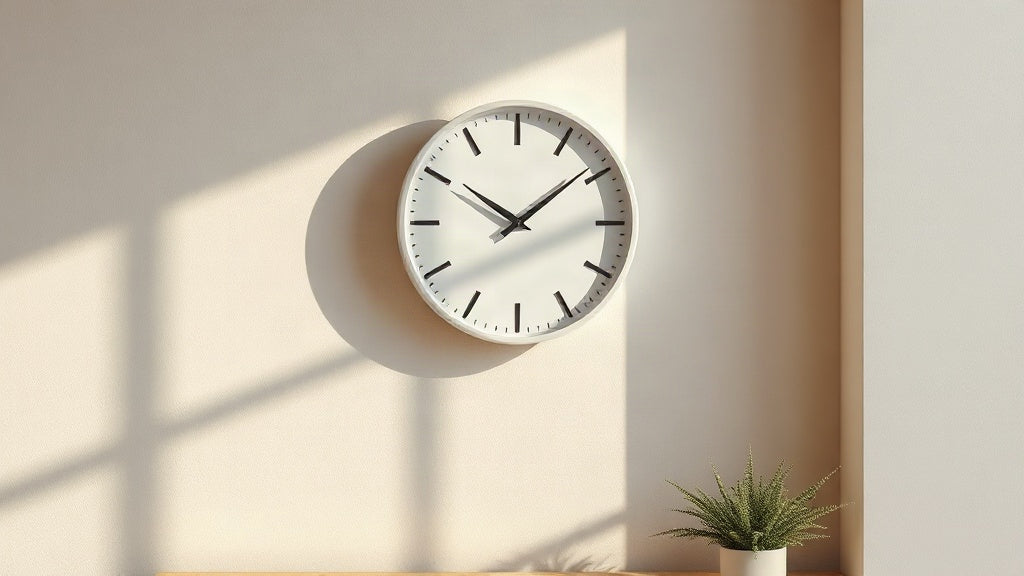
Go for a clean white or light wood dial with minimal numerals and a date window integrated as a small aperture rather than a bold sub-panel. The key is negative space: the date should feel like part of the design geometry, not an addition to it. Thin hands in matte black or brushed steel work well here. Think birch, linen, concrete-effect walls, and a clock face that doesn't fight for attention. The wall clock with date display in this context is the quiet workhorse behind a beautiful wall.
Industrial and Loft Spaces
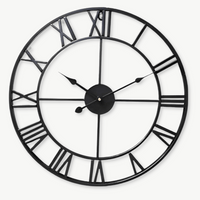
Industrial interiors can absorb more visual information. A clock with a larger date subdial, roman numerals, and a combination of wood and metal reads as intentional here rather than cluttered. The material contrast between aged wood and raw metal is particularly strong in this context.
For a living room or kitchen with exposed brick or concrete, a wooden wall clock with bold proportions carries enough presence to hold the wall without being overshadowed by the texture behind it.
Vintage and European-Influenced Rooms
This is a style direction that was slow to embrace date displays, because a modern aperture can look jarringly out of place on a period-style dial. But several manufacturers have now integrated date windows with period-appropriate typography and cream or aged parchment finishes that genuinely fit. The key rule: avoid any clock where the date display uses a sans-serif digital font against a vintage dial. The mismatch is immediate.
If your space leans vintage or French farmhouse, the vintage wall clock range offers analog options where date details sit naturally within a period aesthetic.


Day-of-Week Display: Worth It or Just Visual Clutter?
A day-of-week display is genuinely worth it in a home office or kitchen, where knowing it's Monday versus Thursday at a glance saves real time, but it tips toward visual clutter in a bedroom or living room where the date alone is already enough. Many date display clocks also show the day of the week, either in abbreviated text (MON, TUE) or as a full word. Whether that's genuinely useful or just noise depends on how you actually use the information.
For anyone working from home, a day display is legitimately valuable. The ritualistic check of "what day is it actually" is a small but real friction point in a work-from-home week. Having MON or WED in the display is faster than parsing a date number and counting back from Sunday in your head.
For a bedroom clock or a purely decorative piece in a living room, the day display often tips the balance toward cluttered. On a 30 cm analog dial, fitting the day of the week alongside the date and the time requires either very small text or a design that looks busy from across the room. Here, the date alone is usually the smarter choice.
💡 Le savais-tu ?
The first mechanical clocks to show the date appeared in the late 16th century, with German clockmakers integrating calendar complications into tower and chamber clocks. Those early mechanisms required manual adjustment for months with fewer than 31 days, a problem that persisted for centuries before "perpetual calendar" movements solved it in the 18th century. Today's quartz date displays face a much simpler version of the same challenge: they still need resetting at the end of short months.
One Detail Almost Everyone Forgets: Month Rollover and Short Months
Analog date window clocks count from 1 to 31 on a fixed disc and do not self-correct for shorter months, so you will need to manually advance the date at the end of February, April, June, September, and November every single year. Here's a practical point that most clock reviews skip over entirely. Analog date window clocks with a rotating date disc typically count from 1 to 31, then cycle back. They don't know that February has 28 days, or that April has 30. At the end of those months, you need to manually advance the date by the appropriate number of days.
On a quality quartz movement, this adjustment takes about 10 seconds: you hold down the crown and turn the date wheel forward. But it's worth knowing going in. If you're someone who genuinely relies on the date display and might forget to adjust it, a digital clock that syncs automatically with an internal calendar will serve you better in practice.
Digital clocks with calendar functions built into the firmware know exactly how many days each month has, and most will self-correct for leap years too. For pure date accuracy with zero maintenance, digital wins. For visual integration with a designed interior, analog wins. That's the honest trade-off, and it's worth making consciously rather than stumbling into it.
Customer Feedback on Functional Date Display Clocks: What Buyers Actually Say
Across hundreds of reviews, the most consistent finding is that buyers underestimate how much they will rely on the date display daily, and the most common regret is choosing a model where the date numerals are too small to read from across the room. Across customer reviews for wall clock with date display functional models in 2025 and 2026, a few themes come up repeatedly.
- Size vs. expectation: The most common complaint is that the date display is smaller than anticipated from product photos. Clocks that look balanced on screen often have a date window that's genuinely hard to read from across the room.
- Night legibility: For bedrooms, buyers who chose digital clocks most often mention appreciating the backlit display at 2am. Buyers who chose analog almost universally say it doesn't bother them that the date isn't readable in the dark, because they weren't checking it at night anyway.
- The "why didn't I do this sooner" moment: A surprisingly consistent pattern in positive reviews is that buyers didn't expect to use the date display much and then found themselves relying on it daily within the first week.
- Battery consumption: Digital date display clocks generally use more power than a simple analog. Clocks with bright LED displays and multiple data panels can go through batteries noticeably faster, especially on higher brightness settings.
For a living room wall clock that reads well from distance without clinical digital styling, looking at larger analog formats with bold hands tends to be the move. The date becomes a detail rather than a selling point, which is exactly the right hierarchy for that room.
Kitchen Clock
The kitchen is where a date display earns its keep most - this collection brings together clocks sized and styled for real kitchen walls.
55 références
Découvrir la catégorie →How to Shop for a Date Display Clock Without Getting It Wrong
To shop for a date display clock without getting it wrong, settle the room and viewing distance first, then use those two constraints to filter by format and date numeral size before you even look at aesthetics. A quick practical framework before you commit to a purchase.
- Decide the room first, then the format. Living room or bedroom: lean analog. Kitchen, office, or workshop: digital or hybrid is worth considering seriously.
- Measure your viewing distance. Stand where you normally are and measure to the intended hanging spot. If it's over 3 meters, a small analog date window will frustrate you.
- Check the date numeral height in product specs. If it isn't listed, ask. Or use the product image scale relative to the clock diameter to estimate.
- Consider your month-rollover tolerance. If you'll forget to adjust it in February, choose digital.
- Look at the clock as a whole object, not a feature list. The date display is 5% of what you'll see every day. The case material, dial color, hand style, and overall proportions are the other 95%.
"A clock that shows the date is useful. A clock that looks wrong on your wall is just noise you can't unhear."
Elena Rossi, on choosing functional decor without compromise
For rooms where quietness matters as much as looks, the silent wall clock range pairs well with date display models: no ticking, no distraction, just clean timekeeping with the bonus of a date you can actually read. That combination, a wall clock with date display functional enough to use daily and quiet enough to disappear into your interior, is genuinely worth hunting for. Most people who find it don't look back.
FAQ
What is the best wall clock with date display for a living room?+
For a living room, an analog clock with a subtle date window is almost always the right call. You want the piece to read as decor from across the room, with the date as a quiet bonus detail rather than a dominant feature. Look for a dial diameter of at least 35 cm so the whole face has visual presence, and choose a date aperture positioned at 3 or 6 o'clock where it feels integrated rather than tacked on. A wall clock with date display in brushed steel or warm wood will blend naturally into most living room palettes.
Are wall clocks out of style in 2026?+
Not at all. If anything, the move away from screens as the primary way to check the time has renewed interest in wall clocks as both functional and decorative objects. In 2026, wall clocks are being treated more deliberately as statement pieces, with buyers paying more attention to materials, proportions, and finish than in previous decades. The category has grown substantially across minimalist Scandinavian, vintage European, and nature-inspired interior styles.
Do analog date display clocks need manual adjustment every month?+
Yes, most analog clocks with a rotating date disc count 1-31 and don't automatically account for shorter months. At the end of February, April, June, September, and November, you'll need to manually advance the date by 1, 2, or 3 days depending on the month. The adjustment is quick (usually a matter of seconds with the crown), but it's worth knowing before you buy. Digital clocks with built-in calendar logic handle this automatically.
Can a date display wall clock work in a bedroom without being disruptive?+
Yes, particularly if you choose an analog model with a silent quartz movement and a subtle date window rather than a backlit digital display. LED and LCD clocks in bedrooms can emit enough ambient light to disturb sleep if the brightness isn't adjustable. Analog date clocks with a non-illuminated dial cause no light disruption at all, though they won't be readable in the dark. For most people, that's a perfectly fine trade-off in a bedroom context.
How large should a wall clock with date display be for a kitchen?+
For most kitchens where you're reading the clock from 2-4 meters away, a diameter of at least 30 cm (12 inches) gives enough scale for the time to be readable at a glance. If you want the date to also be legible from across the kitchen, either choose a digital model with a large date display or an analog clock of 40 cm or more where the date window is proportionally larger. Clocks under 30 cm in a kitchen tend to feel undersized and get overlooked.
Is a hybrid clock (analog dial plus digital date panel) worth buying?+
It depends almost entirely on the execution. A hybrid where the analog and digital sections share the same material palette and proportions can look genuinely intentional, particularly in home offices and entry halls. A hybrid where the digital panel feels bolted on as an afterthought will look exactly like that. Before buying, check whether the frame, color, and typeface of the digital panel visually match the analog body. If they don't, skip it and choose one format decisively rather than compromising on both.