
You're running late, jumping out of the shower, and you have absolutely no idea what time it is. Your phone is charging in the bedroom. Sound familiar? A waterproof wall clock for bathroom use seems like such a simple fix, but step into any specialist bathroom retailer and you'll quickly realize most wall clocks are not built for humid, steamy environments. Materials rust. Printed dials bubble. Movements seize up after a few months of condensation.
Here's the thing: a bathroom clock isn't just about not getting wet. It's about surviving daily humidity cycles, temperature swings, and the occasional direct splash near a sink. Knowing a bit about how clocks are rated, what materials hold up, and where exactly to put one means the difference between a clock that lasts five years and one you're replacing before spring.
⭐ Key takeaways
- IP44 is the minimum protection rating you want for a bathroom clock; IP67 covers direct water immersion.
- Plastic and ABS housings outlast metal and wood in high-humidity zones.
- Placement matters as much as the clock itself: keep it away from direct shower spray.
- Suction-cup mounts work on tiles; adhesive strips work on painted drywall.
- A bathroom clock in a dry zone (Zone 3) can be standard-rated if ventilation is good.
Why Most Wall Clocks Fail in Bathrooms

Most wall clocks fail in bathrooms because they are rated only for dry interiors, leaving the movement, bezel, and dial face exposed to moisture infiltration, corrosion, and condensation that standard materials simply cannot withstand. Standard wall clocks are rated for interior dry conditions. That's it. The moment you hang a regular quartz clock in a bathroom, you're fighting against two main enemies: moisture infiltration and corrosion. The clock movement, which is a tiny assembly of gears, a circuit board, and a battery compartment, is especially vulnerable. A single drop of condensation finding its way inside can short the circuit or cause the hands to seize.
Metal bezels and frames rust faster than you'd expect. Even "chrome-look" plastic frames can delaminate when repeatedly exposed to hot steam. Paper or cardboard dial faces bubble and warp. Clock hands made from bare zinc alloy corrode within months in a poorly ventilated bathroom.
Beyond the mechanical side, there's an aesthetic problem. A clock that looks beautiful on day one but develops rust rings and a warped dial by month three isn't doing your bathroom any favors. So the selection process really has two filters: will it survive, and will it still look good? A proper waterproof wall clock for bathroom use answers yes to both.
Understanding IP Ratings: The Number That Actually Matters
IP ratings are the certified international standard that tells you exactly how well a bathroom clock resists water, and IP44 is the practical minimum you need for any position near a sink or above a bath. IP stands for Ingress Protection, and it's the international standard (IEC 60529) that tells you exactly how well a device resists solid particles and liquids. For bathroom clocks, you're focused entirely on the second digit, the liquid protection number.
| IP Rating | What It Means | Best For |
|---|---|---|
| IP21 | Protected against dripping water from above | Dry zones only (Zone 3) |
| IP44 | Splash-proof from any direction | Bathroom walls, above sinks (Zone 2) |
| IP55 | Water jets from any angle | Shower-adjacent areas |
| IP67 | Submersion up to 1 meter for 30 minutes | Inside the shower enclosure |
IP44 is the sweet spot for most bathroom wall applications. It handles steam, splashes from handwashing, and general humidity without requiring the full shower-proof engineering that bumps the price significantly. If you want the clock literally inside your shower stall or in a wet room, IP65 or higher is non-negotiable.
💡 Did you know?
The IP rating system was first published in 1976 and has been updated several times since. Many budget bathroom clocks claim "waterproof" on their packaging without any certified IP rating at all. If you don't see "IPxx" printed on the product or its specification sheet, that claim is essentially marketing language with no independent verification behind it.
Bathroom Zones Explained: Where Can You Actually Hang a Clock?

Bathrooms are divided into zones based on water exposure risk, and matching your clock's IP rating to the correct zone is the single most important placement decision you'll make. Most countries use a zoning system to classify different areas within a bathroom by water exposure risk. Knowing your zone tells you which IP rating is actually required, and it can save you from an expensive mistake.
- Zone 0: Inside the bath or shower tray itself. Only IP67 or IP68 devices belong here. Realistically, no wall clock should live here.
- Zone 1: Directly above the bath or shower, up to 2.25 m from the floor. IP44 minimum, IP55 recommended.
- Zone 2: The area extending 0.6 m beyond Zone 1 and the area around sinks. IP44 is the standard minimum here.
- Zone 3 (outside zones): The rest of the bathroom, typically the wall opposite the shower, near the door, or above the toilet. A standard IP21 clock can work here, but IP44 is still a smart precaution given how steam travels.
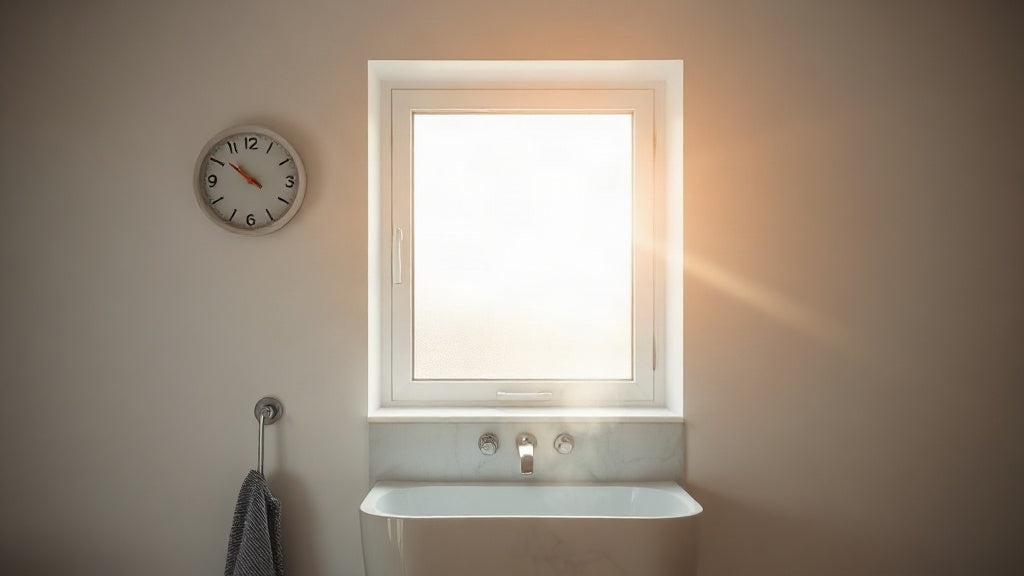
Most people want their bathroom clock in Zone 2 or Zone 3: visible from the shower or the sink, but not directly in the water path. That's exactly where an IP44-rated clock earns its keep. The wall opposite your shower, roughly 1.5 to 2 meters away, is almost always the safest and most readable position.
Materials That Survive Steam: A Practical Breakdown
The housing material is just as critical as the IP rating: ABS plastic and polycarbonate are the most reliable choices for long-term performance, while bare metal and untreated wood degrade quickly in steamy bathroom conditions. The IP rating covers the sealing of the internal movement. But the outer housing, hands, and dial face are equally important for long-term performance and looks. Here's what holds up and what doesn't.
ABS Plastic and Polycarbonate
These are the workhorses of waterproof clocks. ABS (acrylonitrile butadiene styrene) is lightweight, impact-resistant, and completely immune to rust. Polycarbonate offers similar benefits with higher impact resistance. Both take color well, so manufacturers can produce clean white, matte black, or translucent designs without the material degrading. Most IP44 and IP67 shower clocks use one of these two materials for good reason. If you're browsing and a product page doesn't specify the housing material, ask. It matters more than the price.
Stainless Steel
Marine-grade stainless (316 grade) genuinely resists moisture and corrosion. It looks sharp and premium, and in an industrial-style bathroom with exposed pipe fixtures it reads beautifully. The catch is weight: a solid stainless wall clock can be heavy enough that suction-cup mounts won't hold it, so you'll need proper wall fixings. Budget "stainless look" clocks often use 430-grade steel or chrome-plated zinc, which will rust at the edges within a year in a steamy bathroom. Always check the grade.
Treated Wood
Here's where it gets nuanced. Raw or lightly finished wood absorbs moisture and will warp, crack, or grow mold in a bathroom. Some manufacturers use resin-impregnated wood or heavily lacquered bamboo composites that do significantly better. But even these aren't a first choice for Zone 1 or Zone 2 placement. If you love the warmth of a wooden clock, keep it in Zone 3 with good ventilation, and check that the movement is sealed. Scandinavian-style bathrooms with shiplap paneling and natural palettes are where a properly treated wood-composite case can look genuinely intentional rather than risky.
Tempered Glass Faces
Tempered glass dials are genuinely moisture-resistant and won't bubble or warp like paper or cardboard dials. They're also far easier to clean: a damp cloth removes toothpaste splatter or soap film without damaging the face. If you're choosing between a clock with a printed cardboard dial (even sealed in plastic) and one with a glass dial, the glass wins every time for bathroom use.
After researching materials carefully, it's worth seeing what a quality tempered-glass dial actually looks like in practice. The product below is a solid example of how a glass face translates into real-world bathroom durability without sacrificing a clean European aesthetic.

Analog vs. Digital: Which Works Better in a Bathroom?
For most bathrooms, analog wins: simpler internals mean fewer moisture failure points, longer battery life, and a wider range of styles, digital makes sense only if you specifically want a shower timer or humidity display. Both formats have their place, but they have different vulnerabilities in high-humidity settings.
Analog clocks with sealed movements are simpler mechanically. Fewer electronic components mean fewer things to fail when moisture eventually finds a gap. A good quartz analog movement inside a properly sealed ABS housing is genuinely long-lived. The main concern is the battery compartment: look for a rubber-gasketed compartment door rather than a simple snap-close lid.
Digital clocks do more: temperature readout, humidity display, countdown timers (handy for actually tracking shower time). But they have more circuitry, more potential failure points, and LCD displays that can develop condensation between the glass and the display layer over time. If you want a digital clock in a Zone 1 or Zone 2 position, the IP rating is even more important than it is for analog.
For most bathrooms, a clean analog design is the lower-maintenance, longer-lasting choice. Digital makes more sense if you specifically want a shower timer or temperature monitoring as a functional feature.
| Feature | Analog | Digital |
|---|---|---|
| Moisture resilience | High (simpler internals) | Medium (more circuitry) |
| Extra functions | Time only | Temp, humidity, timer |
| Readability at a glance | Very good (clear hands) | Excellent (large digits) |
| Aesthetic range | Wide (minimalist to classic) | Mostly functional/modern |
| Maintenance | Battery every 12-18 months | Battery every 6-12 months |
Mounting Methods: What Actually Sticks in a Bathroom

The right mounting method depends entirely on your wall surface: suction cups grip smooth tiles reliably, bathroom-rated adhesive strips suit painted drywall, and wall anchors are the most permanent solution for heavier clocks. Even the best waterproof wall clock for bathroom use fails if it falls off the wall. Bathroom surfaces are notoriously tricky: glazed tiles repel most adhesives, steam cycles weaken adhesive strips over time, and drilling into tiles risks cracking them. Here's what works in practice.
Suction Cups
The simplest solution for smooth, non-porous tiles. Modern suction-cup mounts can hold clocks weighing up to around 500g reliably on ceramic or glass. The key is cleaning the tile surface with rubbing alcohol before applying, and pressing out every air bubble. Re-press the suction cup every few months; steam cycles gradually reduce the seal. Not suitable for textured, matte, or micro-cement tiles where the surface isn't smooth enough for a good seal.
Adhesive Strips (Command-Style)
Marine-grade or bathroom-rated adhesive strips work reasonably well on painted drywall and some smooth tiles, but check the weight limit carefully. Many standard strips derate significantly in humid conditions. Look for strips specifically labeled for "bathroom" or "outdoor" use, which use a different adhesive chemistry designed to maintain grip in moisture.
Wall Anchors and Screws
The most reliable mounting for heavier clocks. Yes, drilling into tiles is intimidating, but with a diamond-tipped tile drill bit and painter's tape over the drill point (it prevents slipping), it's very manageable. A properly anchored clock isn't going anywhere, and for a clock you intend to keep for years, it's worth the 20 minutes it takes.
Over-the-Door Hooks
Overlooked but genuinely practical for renters. A clock hung over a bathroom door (inside face) is usually in Zone 3, stays dry, and requires zero wall damage. The door does need to be solid enough not to rattle the clock every time it closes.
Size and Readability: Getting the Scale Right for Your Bathroom
For a standard family bathroom, a 25-30 cm diameter clock with high-contrast numerals is the right call: large enough to read clearly from the shower, small enough not to overwhelm the wall. A common mistake is choosing a clock that looks great online but is simply too small to read from across the bathroom. A clock with a 20 cm (8 inch) diameter is fine for a compact en-suite where you're never more than 2 meters away. For a larger family bathroom where you might be reading the time from the shower while your partner is at the sink, 25-30 cm (10-12 inches) with high-contrast numerals is a better call.
High contrast matters more in bathroom conditions than in any other room. Steam reduces clarity. Backlighting on digital clocks helps a lot here. For analog clocks, black or dark navy hands on a white or pale dial are the most legible combination. Avoid silver-on-white or gold-on-cream dials if readability is a priority.
Also think about whether you need to read the time in the middle of the night. Some bathroom trips happen at 3 am. A backlit digital clock, or an analog clock with luminous hands, earns its value in those moments.
Style Without Sacrificing Function: Can a Bathroom Clock Look Good?
Yes, a bathroom clock can absolutely look good: the market now offers IP44-rated designs in matte black, brushed stainless, and clean Scandinavian lines that treat the clock as part of the room's design rather than a utility afterthought. Absolutely, and this is where most guides stop too short. The assumption seems to be that waterproof clocks are inherently utilitarian, cheap-looking plastic affairs. That's increasingly not true. The market has moved, and there are now IP44-rated clocks in matte black ABS with clean Scandinavian lines, minimalist white designs with slim bezels, and even brushed stainless options with proper 316-grade corrosion resistance.
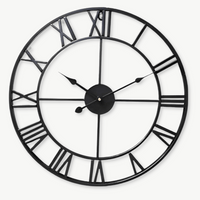
For a minimalist or spa-style bathroom, a round white dial with no numerals (just dot markers) and a slim profile reads as intentional design rather than an afterthought. For industrial-style bathrooms with exposed pipe fixtures and concrete or micro-cement walls, a matte black case with bold Arabic numerals fits the aesthetic perfectly. The material and finish choice should echo something else already in the room: your tap hardware, your towel rail, your mirror frame.
The trick is treating the clock as part of the overall scheme rather than a purely practical addition. It sits on the wall all day. It's one of the first things you see in the morning. It deserves the same consideration as your towel rail finish or your tap hardware.
What the "Waterproof" Label on Cheap Clocks Really Means
"Waterproof" on a budget clock listing without an accompanying IP rating is a marketing claim, not a technical specification, and a clock without certified protection will almost certainly fail in Zone 1 or Zone 2 within months. This is worth saying plainly: the word "waterproof" on a product listing without an accompanying IP rating is a marketing claim, not a technical specification. Plenty of clocks sold as "waterproof shower clocks" online have no certified rating, no rubber gaskets, and no sealed battery compartment. They might survive six months; they might fail in three weeks. There's no way to know.
A clock sold under a budget label for under $10 that claims to be waterproof is almost certainly using "waterproof" to mean "the plastic body won't dissolve if water hits it." The movement inside is almost certainly not sealed. These can work fine in Zone 3 with good ventilation. They are not reliable in Zone 1 or Zone 2.
Spending $25-50 on a properly IP44-certified clock from a manufacturer who can produce documentation pays off quickly. One failed $8 clock per year costs more than one good $35 clock that lasts five years.
⚠️ Heads up
Never install any clock, regardless of IP rating, directly above a shower head or in a position where it receives direct water spray unless it is rated IP65 or higher. Even IP67-rated clocks have limits on how long they can tolerate submersion, and continuous daily spray is harder on seals than a single brief immersion test.
Extending the Life of Your Bathroom Clock: Simple Habits That Help
Even a properly rated bathroom clock lasts significantly longer with a few simple habits: good ventilation after showers, annual battery changes, and monthly wipe-downs are all it takes to protect your investment. Even a well-chosen, properly rated clock benefits from a little care. These aren't complicated rituals, just small habits that add years to the clock's life.
- Ventilate the bathroom properly after showers. An extractor fan running for 10-15 minutes after you finish dramatically reduces the total moisture load on every surface, including your clock.
- Check and replace the battery before it leaks. Battery acid damage inside a clock movement is almost always fatal. Change the battery annually whether it needs it or not; it's cheaper than a new clock.
- Wipe the clock face and case monthly with a dry or barely-damp cloth. Soap film and limescale build up on clock surfaces just as they do on taps and tiles, and a gentle regular wipe prevents the buildup from becoming a cleaning problem.
- If you remove the clock to clean behind it, let the battery compartment air out for a few minutes with the door open before reassembling.
- Re-check suction cup mounts every three months. Steam cycles degrade the seal gradually; better to catch a weakening mount before the clock hits the floor.
"A clock that tells the time reliably for ten years is worth more than three beautiful clocks that each fail in two."
A philosophy that applies equally well to bathroom hardware.
When a Dedicated Bathroom Clock Isn't the Right Answer
A dedicated waterproof bathroom clock isn't always necessary: a quality analog clock placed sensibly in a well-ventilated Zone 3 position can outlast cheaper rated alternatives in many real-world bathrooms. Sometimes the real solution isn't a bathroom-specific clock at all. If your bathroom has excellent ventilation, sits in a dry climate, and you want a specific design that only comes in a non-waterproof version, placing it in Zone 3 with a good extractor fan running can work reliably for years. Plenty of people have non-rated wall clocks in their bathrooms that have outlasted cheaper "waterproof" alternatives simply because they're placed sensibly.
The honest answer is: the less moisture your specific bathroom generates, and the further from the shower the clock lives, the less critical the IP rating becomes. A well-ventilated Zone 3 position in a bathroom that sees light use is genuinely low-risk for a quality analog clock with a sealed movement.
That said, if you have young children, a power shower, or a small poorly-ventilated bathroom, don't cut corners. Get the proper rating.
Choosing by Bathroom Style: A Quick Reference
The right bathroom clock depends as much on your interior style as the humidity level: match the case finish to one existing metal in the room and choose a diameter that suits your viewing distance. The right clock depends as much on your bathroom's aesthetic as its humidity level. Here's a fast reference based on common interior styles.
- Minimalist or spa-style bathroom: Go round, white or matte black, no numerals or simple dot markers. Thin bezel. ABS or polycarbonate housing. A 25 cm diameter hits the sweet spot between visible and understated.
- Industrial or urban loft bathroom: Matte black with bold numerals, exposed screws on the bezel, stainless accents. A heavier clock (wall-anchored) works here. Contrast is the point.
- Coastal or nautical bathroom: White housing, navy or teal hands, possibly with porthole-inspired framing. IP44 minimum given the deliberate "wet" atmosphere these spaces try to evoke.
- Farmhouse or rustic bathroom: Shiplap walls, vintage feel. A resin-sealed wood-composite case in Zone 3 works here and adds warmth. Keep it away from direct steam.
- Scandinavian bathroom: Clean lines, natural materials, restrained palette. A white or birch-toned sealed clock with a sweep movement (no ticking) fits naturally. The silent quartz movement is especially welcome in a tiled room where sound bounces.

Beyond the Bathroom: When Your Clock Habit Spreads to Other Rooms
Once you've been through the process of properly choosing a moisture-rated bathroom clock, you start applying the same thinking everywhere, material, mounting, scale, and finish become the questions you ask for every room. Here's something that happens more often than you'd think. You go through the effort of properly choosing a bathroom clock, you get serious about IP ratings and placement and materials, and you suddenly look at your other rooms differently. The kitchen clock that's been there since you moved in. The bedroom wall that's been empty for two years. Once you start thinking about clocks as real design decisions rather than afterthoughts, it's hard to stop.
For rooms beyond the bathroom, the constraints relax considerably, and the aesthetic options open up. Silent wall clocks are a natural next step for bedrooms and reading rooms where a ticking movement would be genuinely irritating. Living room wall clocks can afford to be larger and more statement-oriented, since there's no IP rating required and size is purely a design choice. If you've been building a home where every detail is considered, a designer wall clock in the right room can be the piece that ties a whole space together.
A waterproof wall clock for bathroom use is, in a way, the strictest test case for clock buying: you have real constraints, real failure modes, and real consequences if you get it wrong. Getting it right builds a kind of confidence that carries over. You start asking the same questions everywhere: what's the material, how is it mounted, does it fit the room's character, will it still look good in five years?
And if that thinking has also made you realize the kitchen is overdue for an upgrade, the kitchen clock collection covers durable, practical designs built specifically for high-use rooms where moisture and temperature swings are part of daily life.
Putting It All Together: Your Bathroom Clock Checklist
Run through these five checkpoints before you buy any waterproof bathroom wall clock: IP rating for your zone, housing material, sealed battery compartment, diameter for your viewing distance, and one finish that echoes the room. Before you hit purchase on any waterproof wall clock for bathroom use, run through these five checkpoints. They take two minutes and have saved many people from a disappointing return.
- Confirm the IP rating matches your zone. Zone 2 (near sink or above bath): IP44 minimum. Zone 1 (directly above shower): IP55 or higher. Zone 3 (dry area, good ventilation): IP21 or higher, ideally IP44 anyway.
- Check the housing material. ABS or polycarbonate for humidity resistance. 316 stainless for premium metal look. Lacquered or resin-impregnated composites for wood aesthetics in Zone 3 only.
- Inspect the battery compartment description. "Rubber gasket" or "sealed compartment" are the phrases you want. "Snap-close lid" is not enough for Zone 1 or Zone 2.
- Size it to your viewing distance. 20 cm for compact en-suites up to 2 m. 25-30 cm for standard family bathrooms. 35 cm or more for large wet rooms.
- Match one finish element. Case color or material should echo something already in the room: tap hardware, towel rail, mirror frame. One echo is enough.
FAQ
Can you put a regular wall clock in a bathroom?+
It depends on where in the bathroom you're placing it. A standard (non-rated) wall clock can work well in Zone 3 - the area outside the direct steam path - if the bathroom is well-ventilated. It won't survive placement near the shower or directly above a sink where steam concentration is high. For those positions, an IP44 or higher rated clock is the practical minimum.
What is the best waterproof bathroom wall clock?+
The best waterproof wall clock for bathroom use combines a certified IP44 or higher rating, an ABS or polycarbonate housing, a sealed battery compartment with a rubber gasket, and a dial large enough to read from your shower position (typically 25-30 cm for a standard bathroom). Beyond the technical specs, the best clock for your bathroom is one that matches your interior style and mounting surface. A technically superior clock mounted poorly will fail faster than a slightly lower-rated one mounted correctly with proper ventilation.
How do you make a clock waterproof for bathroom use?+
You can improve a standard clock's moisture resistance but you can't fully retrofit it to a certified IP rating. Practical steps include: sealing the case seams with clear silicone sealant, replacing the battery cover with one that has a rubber gasket, applying a thin coat of lacquer to exposed metal parts, and mounting it in the lowest-humidity position possible. These modifications help but aren't a substitute for a factory-rated clock if you need reliability in Zone 1 or Zone 2.
What size clock works best in a bathroom?+
For most standard bathrooms (2.5-4 meters long), a clock with a 25-30 cm (10-12 inch) diameter is the practical sweet spot. It's large enough to read clearly from the shower without dominating a small wall. In a large family bathroom or a wet room where you might be reading from 4+ meters away, a 35 cm (14 inch) diameter with high-contrast numerals or hands is a better choice. Scale it to the viewing distance, not the wall size.
How often should I replace the battery in a bathroom clock?+
For analog quartz movements, once a year is a safe interval regardless of whether the clock is still running. Batteries in humid environments discharge slightly faster than in dry conditions, and the real risk is a leaking battery rather than a dead one - battery acid ruins clock movements permanently. Mark the change date on the battery itself with a marker pen so you don't have to remember. For digital bathroom clocks with larger current draws, every 6 months is a more reliable schedule.
What is the difference between IP44 and IP67 for a bathroom clock?+
IP44 means the clock is splash-proof from any direction, which covers steam, condensation, and incidental splashes from handwashing or a nearby sink. IP67 means the clock can be submerged in up to 1 meter of water for 30 minutes and survive. For wall mounting in Zone 2 (near the sink or above the bath), IP44 is sufficient and covers the vast majority of bathroom scenarios. IP67 is only necessary if you're mounting the clock inside a shower enclosure where it will receive direct water spray on a daily basis. The jump from IP44 to IP67 also typically involves a significant price increase, so it's worth matching the rating accurately to your actual placement rather than over-specifying.