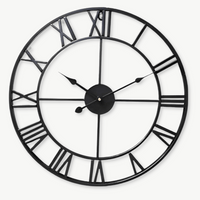


There's a particular kind of calm that settles into a room when every object earns its place. No clutter, no visual noise, just clean surfaces and materials that feel honest. That's the Scandinavian premise, and a minimalist wall clock for Scandinavian interior design is one of the few pieces that can actually reinforce that feeling rather than interrupt it. Get it right, and the clock disappears into the room. Get it wrong, and it fights everything around it.
So what makes a clock genuinely fit that Nordic sensibility? It's not just about buying something "white and round." There's a real logic behind Scandinavian design choices, and once you understand it, picking the right timepiece becomes a lot more intuitive.
⭐ Key takeaways
- Scandinavian design prioritizes function, natural materials, and restraint over decoration for its own sake.
- A minimalist wall clock should anchor a room without dominating it: think clean dials, natural wood or white finishes, and silent quartz movements.
- Placement matters as much as the clock itself. Wall area, ceiling height, and surrounding furniture all affect how the piece reads.
- Hygge isn't about coldness. Warm wood tones and soft textures belong just as much as stark whites in Nordic interiors.
- Silent sweep mechanisms are a non-negotiable for bedrooms and quiet living spaces.
What Scandinavian Design Actually Asks of a Minimalist Wall Clock for Scandinavian Interior Spaces
A minimalist wall clock earns its place in a Scandinavian interior by doing less: a sparse dial, honest natural materials, and a silent quartz movement are what Nordic design logic demands of any timepiece on these walls. Nordic design didn't emerge from aesthetics alone. It came from a practical response to long winters, limited light, and a deeply held belief that well-made everyday objects genuinely improve quality of life. That ethos, form follows function, sounds familiar because it is, but try applying it honestly to a clock and you'll quickly see how many clocks spectacularly fail the test.
A clock that clutters the eye with too many numerals, elaborate hands, or ornamental bezels isn't serving its function. It's asking you to work harder to read the time. Scandinavian design logic says the opposite: the face should communicate time instantly, with the least possible visual effort. That's why the most iconic Nordic clocks lean toward sparse dials, often omitting numerals entirely in favour of minimalist index markers.

Material honesty is the other pillar. Birch, oak, ash, bamboo, white-painted MDF: these are the textures that feel native to Nordic interiors because they reference the natural world outside. Plastic that mimics wood, or chrome that pretends to be steel, violates that honesty at a glance. When you're choosing a wooden wall clock for a Scandinavian space, it matters that the grain is real and the finish is matte or lightly oiled rather than high-gloss.
And then there's the silence. Scandinavian interiors are deliberately quiet environments. A ticking clock in a Nordic living room is the acoustic equivalent of a dripping tap in a bathroom: persistent, low-level, and entirely avoidable. Silent quartz sweep movements exist precisely for this purpose, and any clock recommended for these spaces should have one as a baseline specification rather than a premium upgrade.
💡 Did you know?
The Danish word hygge (pronounced roughly "hoo-gah") has no direct English equivalent, but it describes a quality of cosiness and convivial warmth. Interestingly, it applies to objects as much as situations: a hygge object is one that feels good to be around, that doesn't demand attention but rewards it when you give it. A quiet wooden clock on a white wall is, by that standard, a very hygge object.
The Six Design Traits That Actually Make a Clock Scandinavian
A clock is genuinely Scandinavian when it combines a clean uncluttered dial, natural or neutral materials, proportional scale, a slim profile, silent sweep movement, and a monochrome or warm-neutral palette, all six together, not just one or two. Not every minimal clock qualifies. There are plenty of sparse-looking clocks that still feel wrong in a Nordic room because they're missing one or two of these specifics.
1. A clean, uncluttered dial
The face should communicate fast. That means either no numerals at all (pure hands on a plain surface), simple index lines, or Roman numerals kept to a slim, elegant weight. Arabic numerals in a bold font can work in a more contemporary Scandinavian context, but chunky print or skeuomorphic details don't belong here.
2. Natural or neutral materials
Light wood (birch, ash, light oak), white or off-white painted finishes, and occasionally pale concrete or frosted glass sit naturally in Nordic rooms. Dark stains can work in a hygge bedroom context, where walnut and charcoal create warmth against white walls. What doesn't work: anything that reads as imitation or synthetic.
3. Proportional scale
Nordic interiors tend toward white walls with large open planes. A 12-inch clock on a wide wall looks lost. The right minimalist wall clock for Scandinavian interior settings is typically 30 cm (12 in) for smaller walls like bedroom alcoves, or up to 40-50 cm for main living room walls. Scale is how a clock communicates confidence without shouting.
4. Slim profile
Depth matters. A clock that protrudes 4-5 cm from the wall creates a shadow and a visual weight that disrupts the flatness Nordic rooms prefer. Look for profiles under 3 cm whenever possible.
5. Silent movement
Already mentioned, but worth repeating as a hard rule: silent sweep quartz is the only mechanism that truly belongs in a Scandinavian bedroom or living room. The sweep hand (continuous rotation rather than step-by-step ticking) is also aesthetically smoother to watch, which matters when the clock is your only wall feature.
6. Monochrome or warm-neutral palette
White, cream, natural wood, pale grey, soft black. These are the Scandinavian clock colours. Occasional muted blue or sage green can work in a more hygge-leaning kitchen or bathroom, but the primary living spaces want restraint.

Room by Room: Where to Hang a Minimalist Wall Clock for Scandinavian Interior Designs
Each room in a Nordic home calls for a different size and placement: living rooms need a 40-50 cm clock centred at eye level, bedrooms a quieter 30 cm piece above the headboard, and kitchens a compact 25-30 cm clock on an uncluttered wall. The same clock reads very differently depending on the wall, the light, and the furniture around it. Here's what actually works in each space.
Living room
The living room is where scale matters most. You want the clock to anchor the wall without competing with art or the television. The classic Scandinavian move is to hang a single clock on a feature wall that's otherwise bare, letting it serve as the sole focal point. Aim for the horizontal centre of the wall, with the clock face sitting at roughly eye level when standing (around 155-165 cm from the floor to the centre of the clock).
For living rooms with ceilings above 2.8 m, a 40-50 cm clock doesn't look oversized. In fact, it looks right. Anything smaller risks looking like a mistake. The living room wall clock category is the one place where going slightly larger than feels comfortable is usually the correct call.

Bedroom
Hygge lives here. The bedroom clock should be warm, quiet, and readable without needing to sit up. A 30 cm (12-inch) piece in light wood or white is the bedroom standard for Nordic rooms. Hang it on the wall facing the bed, roughly 20-30 cm above the headboard height, so it's visible from a lying position without sitting directly overhead (that overhead weight disrupts the room's calm in a way that's hard to articulate but immediately felt).
Silent movement is absolutely critical here. A ticking clock at 3am is its own kind of problem. For an elevated option in natural material, the Walnut Wood Wall Clock brings a richer, darker warmth to a bedroom wall without any of the visual noise.
Kitchen
Scandinavian kitchens are functional above everything else, but that doesn't mean cold. A slightly smaller clock (25-30 cm) in a pale wood or white finish reads well above a backsplash or on the wall beside open shelving. Avoid cluttered dials here because kitchen walls already have a lot happening. Simple index markers over a clean face keep things legible when your hands are full. For a kitchen that leans into the warmer, more textural side of Nordic design, a light ash or birch finish ties in beautifully with timber shelving or linen cabinet fronts.
Home office
The Nordic approach to workspace design is about removing distraction, not eliminating personality. A clock in a home office should sit on the peripheral wall (not directly in your sightline while working) at a size where you can glance at it rather than search for it. 30 cm is typically right. A dedicated office clock in pale wood or white blends into a clean desk setup without adding cognitive load. If your home office already has warm timber tones in the shelving or flooring, a mid-oak or light ash finish will tie the space together far better than a plain white alternative.
Wood Tones and Finishes: The Hygge Variable
The wood finish you choose sets the emotional temperature of the room: white painted wood reads airy and classic Nordic, light birch or ash feels fresh and contemporary, mid-oak is warm and versatile, and dark walnut brings the cosy richness that defines a true hygge space. One thing that surprises people when they move into a Nordic-inspired space is how warm it can actually feel. The stereotype is cold and clinical, all white and grey. The reality, especially in hygge-focused interiors, is that natural wood tones do a huge amount of work bringing warmth to those white walls.
Here's the practical breakdown for clock finishes:
| Finish | Best room pairing | Mood it creates |
|---|---|---|
| White painted wood | Entryway, bedroom, kitchen | Airy, clean, classic Nordic |
| Light natural birch/ash | Living room, office, kitchen | Fresh, organic, contemporary |
| Mid-tone oak | Living room, dining area | Grounded, warm, versatile |
| Dark walnut | Bedroom, study | Cosy, rich, hygge-forward |
| Pale grey / concrete-look | Home office, modern kitchen | Urban, cool, industrial-Scandi |
Walnut is particularly interesting for hygge bedrooms because it brings the warmth of a darker wood without the rustic or traditional associations of pine. It's a grown-up, calm material that reads as sophisticated rather than decorative. The handcrafted walnut wall clock is worth serious consideration here: real open-grain walnut, silent movement, and a dial that genuinely lets the material do the talking rather than layering decoration over it.

The Scandinavian Clock and the Rest of Your Wall
In a Nordic room, a single clock on an otherwise bare wall is the strongest compositional choice: it signals intentional restraint, which reads as confidence rather than emptiness. A clock doesn't live in isolation. It shares the wall with art prints, mirrors, shelving, and the visual weight of furniture below it. Getting the relationship right is what separates a wall that feels curated from one that feels assembled.
The Nordic approach is typically to resist the gallery wall impulse. Where other design traditions would cluster frames around a clock, Scandinavian rooms tend to give each object its own space. A single clock on a bare white wall, nothing else competing for attention, is a statement of confidence. It says: this object is enough.
If you do want the clock in a grouped arrangement, the rule that works best in Nordic interiors is to combine it with a maximum of two other elements (a small print and a single shelf, for instance) and keep all three within a tightly defined vertical zone. Spreading objects too far apart on a wall makes a room feel sparse rather than intentional. The distinction is subtle but real: intentional restraint has clear axes and alignments; accidental sparseness doesn't.

"Simplicity is not the absence of clutter, that's a consequence of simplicity. Simplicity is somehow essentially describing the purpose and place of an object and product."
Jony Ive, on design philosophy shared across Nordic and modernist traditions
What to Look for Beyond the Clock Face: Practical Buying Criteria
Beyond style, a Scandinavian wall clock lives or dies on four practical details: silent sweep movement, accessible battery compartment, a flush-fitting single hanger, and hand contrast strong enough to read at a glance. Once you know what style you want, the practical details are what separate a clock you'll love in five years from one you'll quietly take down after six months.
- Movement type: Silent quartz sweep is the standard. Step-motor quartz (the kind that ticks) is cheaper but incompatible with quiet spaces. Mechanical movements are beautiful but require winding and aren't silent.
- Battery access: Check that the battery compartment is reachable without removing the clock from the wall. Some designs make this remarkably annoying.
- Hanger type: A single central keyhole hanger is easiest to level. Multiple hangers require more precision. Make sure the hanger is recessed enough that the clock sits flush against the wall.
- Weight relative to diameter: Lightweight clocks (under 500 g for a 30 cm piece) stay on standard picture hooks without drama. Heavier clocks need wall anchors, which means committing more seriously to the placement decision.
- Hand visibility: This sounds obvious, but test it: can you read the hands against the dial at a glance? Hands that are the same colour as the face (trendy in some minimal designs) sacrifice legibility for aesthetics. Contrast matters.
Scandinavian Wall Clocks
Every clock in this selection is chosen with Nordic restraint in mind: clean dials, natural materials, silent movements, and proportions that work in real Scandinavian rooms.
18 references
Browse the collection →Five Placement Mistakes That Are Easier to Avoid Than Fix
The five most common Nordic clock placement errors are hanging too high, choosing too small a diameter for the wall, competing with a mirror, ignoring ambient light, and putting a ticking clock in a bedroom, every one avoidable before the nail goes in. These come up again and again, and each one is completely avoidable with a moment's thought before the nail goes in.
- Hanging too high: The most common error. Clocks hung near the ceiling read as decorative afterthoughts rather than considered pieces. Eye level when standing (or slightly above, around 170 cm to the centre) is the baseline. Go higher only when the wall composition deliberately leads the eye upward.
- Choosing too small for the wall: A 20 cm clock on a 3-metre wall looks like a punctuation error. When in doubt, go one size up from what feels instinctively right.
- Competing with a mirror: Clocks and mirrors both demand attention as single objects. Placing them on the same wall usually means one wins and one looks wrong. Give each its own wall, or at minimum ensure clear space between them.
- Ignoring ambient light: A clock with a white dial on a north-facing wall that gets no direct light will look flat and grey. A clock with natural wood tones will warm up in that same light. Think about how the finish reads in your specific room's light conditions before buying.
- Putting a ticking clock in a bedroom: Worth saying one final time. The tick registers in your peripheral consciousness even when you stop consciously hearing it. It's cumulative. Silent quartz is not a luxury option for bedrooms; it's the correct specification, full stop.
Frequently asked questions
What size minimalist wall clock works best for a Scandinavian living room?+
For most standard living rooms (walls around 3-4 m wide), a clock between 35 and 50 cm in diameter reads as intentional rather than lost. Rooms with high ceilings (above 2.8 m) can support up to 60 cm without the clock feeling oversized. The key check: stand across the room and ask whether the clock anchors the wall or floats on it.
Do all Scandinavian-style clocks need to be white or light wood?+
Not at all. Hygge interiors use dark walnut, charcoal, and deep navy with great success, particularly in bedrooms and studies. The rule isn't about specific colours but about the quality of materials and the absence of decoration for decoration's sake. A dark walnut clock on a white wall is classic Nordic. A white clock with gold embossing and ornamental hands is not, regardless of its colour.
Is a silent sweep movement worth the extra cost compared to a standard quartz?+
Yes, consistently. The price difference is usually modest (rarely more than 10-15 USD on a comparable clock), and the quality-of-life difference in a bedroom or quiet living room is significant. A step-motor quartz ticks every second, audible in silence. A sweep motor runs continuously and produces no perceptible sound. For Scandinavian spaces designed around calm, this isn't a luxury upgrade; it's the correct specification.
Can a minimalist Scandinavian clock work in a maximalist or eclectic room?+
Often it works better than a complex clock would. A minimal clock acts as visual breathing room in a busy room. It gives the eye somewhere to rest. The practical guideline: if your room already has a lot of pattern and colour, a plain light-wood or white clock provides contrast without adding more visual complexity. It becomes the quiet moment in the composition.
How do I choose between birch, ash, and oak for a Nordic interior?+
Birch is the lightest and palest of the three, with a fine, even grain that reads almost white in northern light. It's the most classically Nordic option and suits minimalist, bright spaces particularly well. Ash sits just slightly warmer and has a more visible grain character, making it a good fit for contemporary Scandinavian rooms that want a little more texture. Oak is the most versatile: its mid-warm tone bridges lighter Scandi palettes and darker hygge settings comfortably. If you're unsure, a mid-oak finish is almost always the safe and satisfying call.
How do I clean and maintain a wooden wall clock without damaging the finish?+
A dry microfibre cloth is the standard approach for dust. For fingerprints or light marks on oiled or matte wood finishes, a barely damp cloth (wrung out thoroughly) followed immediately by a dry cloth works well. Avoid spray cleaners and wax polishes, which can build up on natural wood and alter the finish over time. The glass face, if present, can be cleaned with a standard glass cloth. Battery replacement (typically AA or AAA) is the only regular maintenance the movement requires.