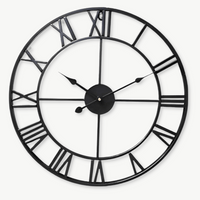


You've rearranged the sofa twice. You've swapped out cushions, tried three different throws, and repainted one wall. The room still feels like something's missing. Nine times out of ten, that something is a modern wall clock for the living room - one that actually means something visually, not a thin plastic disc that reads 11:15 and disappears into the wall.
A well-chosen clock changes the entire energy of a room. It creates a natural eye-level anchor, signals intention in your decor, and gives guests something to look at beyond the TV. The best ones do all of this without shouting. Here's how to find yours.
⭐ Key Takeaways
- Size matters more than style: a clock too small for the wall reads as clutter, not decor.
- Silent quartz movement is worth prioritizing in a living room where you actually sit and relax.
- The clock's material should echo at least one other material already in the room.
- Placement at eye level (roughly 57-60 inches from the floor to center) works in almost every layout.
- A clock as a focal point replaces the need for additional wall art in the same zone.
Why the Living Room Is the Right Room for a Modern Wall Clock
The living room is the right room for a modern wall clock because it's the space guests actually see, a well-proportioned clock creates a natural focal point that holds the wall, reads clearly from a distance, and works without competing with the furniture. Bedrooms and kitchens have their own clock logic - practicality first, personality second. The living room flips that. It's the space where you host, where you decompress, and where your design choices are actually noticed. A clock placed here isn't consulted every two minutes; it's seen continuously, from the couch, from the doorway, from across the dining table.
That's exactly why a modern wall clock for the living room used as a focal point works so well in this space. It holds the wall without competing with furniture the way a large painting might. It reads clearly from a distance. And because it has a functional purpose baked in, it never feels like you tried too hard.
Think of it less as decoration and more as architecture for your wall. A well-proportioned Scandinavian wood dial or an open-frame industrial piece does something art can't quite replicate: it grounds the room while remaining quietly purposeful. That's a combination worth designing around. If you're still building out the rest of your space, our guide on how to choose a wall clock covers the full decision framework.

Getting the Size Right for Your Modern Wall Clock for the Living Room (Before You Fall in Love with a Style)
Getting the size right means your clock's diameter should cover roughly one-third to one-half of the wall or furniture width it sits above, for most living rooms, that means a minimum of 50 to 60 cm, and going larger is rarely a mistake. Most people choose a clock that's too small. It's the single most common mistake, and it's understandable - a 30 cm clock looks enormous in a shop or on a screen, then arrives and floats on a wall like a polite suggestion.
Here's a practical framework: measure the width of your intended wall (or the furniture piece the clock will sit above). Your clock's diameter should cover roughly one-third to one-half of that width. Above a 180 cm sofa, a 60-70 cm clock is usually the minimum that reads properly. On a narrow accent wall of 90 cm, a 35-40 cm piece can work beautifully.
- Small rooms or accent walls: 30-40 cm diameter. Suits focused, minimal compositions.
- Standard living rooms: 40-60 cm. The sweet spot for most spaces.
- Open-plan or high-ceiling rooms: 60 cm and above. Go bold or the clock disappears.
Don't be afraid of going large. A 60 cm clock with a clean face reads as confident, not overwhelming. A 30 cm clock in the same spot reads as an afterthought. If you're shopping specifically for a bigger statement, our large wall clock collection is a good starting point - sizes go up to 80 cm and beyond.
💡 Did you know?
The modern preference for oversized wall clocks as statement pieces traces back to mid-20th century Scandinavian design studios, particularly in Denmark, where large-format analog clocks became a central element of hygge interiors long before the trend went global. Some of those original designs from the 1950s and 1960s are still in production today.
Modern Styles That Actually Work as a Modern Wall Clock for the Living Room
The styles that actually work are the ones that speak the same design language as the rest of the room, minimalist Scandinavian, industrial mixed-material, organic Japanese, or bold contemporary each suit different interiors, and internal coherence matters more than trend. The word "modern" covers a lot of ground. It can mean a brushed metal industrial piece with exposed Roman numerals, or a Japandi-inspired wood slice with minimal hour markers, or a clean white Scandinavian dial with no numbers at all. None of these is wrong. What matters is internal coherence - the clock needs to speak the same design language as the rest of the room.
Minimalist and Scandinavian
Thin hands, neutral tones, clean numerals or none at all. Works best in rooms where the palette is already restrained - whites, greys, natural linen. The clock's power here comes from its form, not its ornamentation. A silent white wood clock at 30 cm in a carefully edited room can carry enormous weight precisely because everything around it is quiet too. Think birch veneer faces, matte finishes, and second hands so slim they're almost invisible - that's the Scandinavian promise.
Industrial and Mixed Materials
Wood combined with black or aged metal. Roman numerals on a distressed face. Visible gear motifs or open-frame designs. This style brings texture and contrast into rooms that might otherwise feel a little flat. If your living room has exposed brick, raw shelving, or leather seating, an industrial-style clock gives the space something to anchor around. The Wood and Metal Wall Clock with Roman Numerals is a good example of how these two materials can coexist without fighting for attention.
Japanese and Organic
Natural bamboo or walnut with asymmetric or minimal markings. Suits interiors with organic materials - rattan, stone, jute, ceramic. The goal is warmth without nostalgia. These clocks tend to read as calm rather than decorative, which is exactly what you want in a room where people actually try to relax. If your sofa is linen and your shelves hold a few ceramics, a walnut-face clock in the 40-50 cm range will feel like it was always there.
Bold Contemporary
A large-diameter metal or mixed-media clock with a strong graphic presence. World map dials, oversized gear mechanisms, deep dome profiles. These are conversation pieces. They work when the rest of the room can afford a moment of drama - and when the surrounding furniture gives them room to breathe. Pair a bold contemporary clock with a neutral sofa and bare walls, and the clock does all the talking it needs to.

The Material Question: Why It Shapes the Whole Room
The material shapes the whole room because it adds tactile logic to your wall, the practical rule is that your clock's material should echo at least one other material already present in the space, not match exactly, just echo. A clock's material does something that color alone can't: it adds tactile logic to your wall. A polished metal clock above a velvet sofa creates deliberate contrast. A walnut wood clock above a reclaimed-wood sideboard creates a sense of continuity. Neither approach is wrong - but neither is accidental in a room that feels considered.
The practical rule: your clock's material should echo at least one other material already present in the space. Not match exactly - echo. If you have brass lamp fixtures, a clock with any warm metal element will feel like it belongs. If your shelving is oak, a wood-dial clock pulls the room together without trying.
For living rooms in 2026 that lean into biophilic design trends - lots of natural textures, plants, stone surfaces - wooden wall clocks are particularly strong. They have a visual warmth that painted metal simply doesn't replicate. A solid walnut dial in a room full of linen and ceramics feels less like decor and more like the room finally exhaled.
Silent Movement: Not Optional in a Living Room
Silent movement is not optional in a living room because a standard quartz clock ticks audibly once per second, that sound is essentially harmless in a busy kitchen but deeply intrusive when you're watching a film, reading, or having a conversation. This is the specification that most first-time buyers underestimate. Traditional quartz clocks produce a tick-tock sound with every second hand step - that sound is essentially inaudible in a busy kitchen and deeply intrusive in a living room where you're trying to watch a film, read, or have a conversation at normal volume.
A silent (or "sweep") quartz movement uses a continuous, friction-controlled gear mechanism instead. The second hand glides rather than stepping. No tick. No tock. Just clean timekeeping.
If you spend time in your living room in quiet - evening reading, morning coffee, background music at low volume - a silent wall clock isn't a luxury. It's the baseline you should start from. And honestly? Once you've lived with one, you'll wonder how you tolerated the stepping tick for so long.
| Feature | Standard Quartz | Silent Sweep Quartz |
|---|---|---|
| Sound level | Audible tick per second | Virtually silent |
| Second hand motion | Stepped (jumps each second) | Continuous glide |
| Best suited for | Kitchen, hallway | Living room, bedroom, office |
| Battery life | 12-18 months typically | 12-24 months depending on motor |
| Visual impact | Neutral | Often paired with higher-design cases |
Where to Hang It: Placement Logic for Living Rooms
The best placement for a living room wall clock is at eye level, with the center of the face at roughly 57 to 60 inches from the floor, that's the height that reads naturally from both a standing and a seated position, and avoids the floating effect of clocks hung too high. The most common placement mistake isn't choosing the wrong wall - it's hanging the clock too high. Clocks hung near the ceiling feel like they're floating away from the room rather than belonging to it. The center of the clock face should sit at roughly 57 to 60 inches from the floor. That's eye level for a standing adult, and it reads naturally when you're seated too.
From there, a few placements work particularly well:
- Above the sofa: The most classical position. Leave at least 8-10 inches between the top of the sofa and the bottom of the clock. If there's already art in this zone, the clock competes - choose one or the other as the anchor.
- On a bare accent wall: A larger-format modern wall clock for the living room (60 cm or more) can be the sole element on an accent wall. No need for surrounding art. The scale does the work.
- Above a fireplace: Strong symmetry, high visibility. Works best when the clock's proportions are generous enough to balance the mantelpiece below.
- Flanked by floating shelves: A clock centered between two shelves creates a composed vignette. The shelves provide context; the clock provides the focal point.
One thing to avoid: hanging a clock directly above or beside a TV. Eyes naturally track toward both, and they compete. If the TV wall is your only option, position the clock clearly off-center so the two don't fight for the same sightline.

Matching Your Clock to Your Living Room Style
Matching your clock to your living room style means checking that it speaks the same design language as the room's existing materials, proportions, and tones, a Scandi room calls for natural wood and clean dials, while an industrial space suits open-frame metal or wood-and-gear designs. Rather than a rigid rule, think of this as a compatibility check. Your living room already has a language - a set of materials, proportions, and tones that give it its character. The clock you add either speaks that language fluently, or it sticks out in a way that doesn't feel intentional.
If your room leans Scandi or Japandi: reach for natural wood, muted tones, clean dials. If it's mid-century modern: look for geometric forms and warm metals - brushed brass or black steel. If you've built a boho or organic interior: textured materials, irregular shapes, and naturalistic motifs (sun, moon, compass) will feel at home. If the room is more urban-industrial: an open-frame metal clock or a wood and gear design with exposed mechanics brings exactly the right grit.
The only living room style where almost any clock works? Transitional - rooms that blend traditional and contemporary elements. Because the clock can lean either way, and both readings feel right.
"A clock is the one piece of decor that visitors unconsciously look at multiple times per visit. That's a lot of earned attention - use it."
Elena Rossi, on choosing living room focal points
When One Clock Isn't Enough: Gallery Walls and Clock Clusters
When one clock isn't enough for a large or open-plan wall, a cluster of two or three clocks in different sizes, arranged asymmetrically with consistent finishes, creates a gallery wall effect with built-in functionality and clear visual interest. A single statement clock is the cleaner solution. But for larger walls - especially in open-plan spaces where a single 60 cm clock might still feel small - a cluster approach works well and is more common than you might think.
The basic principle: two or three clocks of different sizes, arranged asymmetrically, create the illusion of a gallery wall with built-in functionality. Try a 60 cm anchor piece flanked by a 35 cm and a 25 cm in a loose triangular composition. The key to pulling this off is finish consistency: all metal, all wood, or all the same tone, even if the forms vary. Mix brushed brass with polished chrome and you'll get visual noise instead of visual interest. And resist the urge to synchronize them to exactly the same time if they'll read primarily as art - a deliberate offset adds a certain studied calm.
If you're building a mixed gallery wall that combines art prints, photography, and a clock, let the clock be the largest element. It grounds the arrangement and prevents the wall from reading as random. Frame choices around it - don't bury it inside them. A rule of thumb: the clock should occupy the visual "center of gravity," with lighter pieces radiating outward. Mirrors in the cluster can amplify light and make the whole composition feel more intentional without adding more wall mass.
For rooms where the living area transitions into a dining space, a large-format wall clock visible from both zones does double duty - it anchors the living side while serving the dining table's sightlines. One piece, two rooms, zero effort. That's efficient and genuinely considered design.
Living Room Wall Clock
154 pieces curated specifically for living room placement - from minimal Scandinavian dials to bold contemporary statement clocks.
154 references
Browse the Category →The Practical Checklist Before You Click "Buy"
Before you click buy, run through five checks: wall material and fixing needs, clock diameter against the wall width, confirmed silent sweep movement, battery type, and whether the clock's material echoes something already in the room. You've found something you like. Before committing, run through these:
- Wall material check: Is the wall plaster, drywall, brick, or concrete? Each needs a different fixing approach. Most clocks above 1.5 kg need a wall anchor, not just a nail.
- Diameter vs. wall width: Has the clock's diameter been measured against the intended wall? Tape out the circle on paper first if you're unsure.
- Movement type confirmed: Is it a silent sweep mechanism? If the listing doesn't specify, it's probably not.
- Battery type: Most modern quartz clocks run on one AA battery, but check. AA batteries are easier to find and last longer than AAA in most movements.
- Material coherence: Does the clock's material echo something already in the room? Even one shared element is enough.
💡 Did you know?
The "silent sweep" mechanism was originally developed for recording studios and broadcast environments in the 1970s, where any audible ticking near a microphone was a technical problem. Interior designers eventually recognized the same logic applied to living spaces - and the mechanism became a standard feature in premium home clocks by the early 2000s.
Frequently Asked Questions
What size modern wall clock works best for a standard living room?+
For a standard living room wall (around 3.5-4 meters wide), a clock between 40 and 60 cm in diameter usually reads well. Above a typical sofa, 50-60 cm is the sweet spot. Anything under 35 cm tends to feel like it's floating rather than anchoring. If you have high ceilings or an open-plan space, go larger - 60 cm or above.
Is a silent wall clock noticeably different from a standard quartz clock?+
Yes, noticeably. A standard quartz clock ticks audibly once per second - it's subtle but cumulative, especially in quiet moments. A silent sweep mechanism produces virtually no sound; the second hand moves in a continuous glide. In a living room where you spend time reading or watching television at low volume, the difference is significant and worth the upgrade.
Where exactly should I hang a clock in the living room?+
The center of the clock face should sit at around 57-60 inches (145-152 cm) from the floor - this is standard eye level and reads naturally from both standing and seated positions. Above a sofa, leave at least 8-10 inches of clearance between the sofa back and the bottom of the clock. Avoid placing it directly beside or above a television, as both compete for the same visual attention.
Can a wall clock really serve as the main focal point of a living room?+
Absolutely. A clock at 60 cm or larger, placed at eye level on a clean wall or above a sofa, draws attention in a way that most art pieces can't quite replicate - because it has both visual scale and recognized purpose. The combination makes it easier for the eye to lock onto it as an anchor. Rooms with a strong clock focal point often need less additional wall decoration, not more.
What materials work best for a modern living room wall clock?+
It depends on your interior style. Walnut or bamboo wood suits Scandi, Japandi, and organic interiors beautifully. Mixed wood-and-metal constructions work well in industrial or transitional rooms. Brushed metal or world-map designs in metal suit contemporary and eclectic spaces. The key principle: let the clock's material echo at least one other material already present in the room - not match exactly, but echo.
How do I build a clock cluster or gallery wall without it looking messy?+
Keep finishes consistent (all wood, all metal, or the same tone family) even if sizes vary. Use an asymmetric triangular layout with your largest clock as the anchor. Let the clock be the biggest element if mixing with art prints or photography - it grounds the composition. Lay everything out on the floor first to test the arrangement before you put a single nail in the wall. It saves a surprising amount of patching.