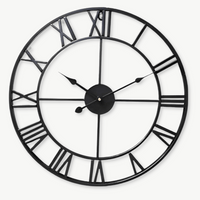


There's a particular kind of quiet in a cottage. The kind where the creak of a floorboard and the sound of rain on old glass are enough. The last thing that space needs is a sharp, clinical timepiece staring down from the wall. A wall clock for a cottage or country house should feel like it belongs, not like it arrived from a furniture showroom. It should look as though it has always been there, ticking softly while bread rises on the counter.
Getting it right means thinking past the dial. It means thinking about patina, texture, and whether the clock speaks the same language as the room. I've spent years hunting down clocks that actually fit these spaces rather than just tolerating them, and the difference is always in the details. Here's what actually works, room by room and style by style.
⭐ Key takeaways
- Cottage clocks work best in natural materials: solid wood, cast iron, or aged metal.
- The dial style matters as much as the case. Roman numerals and painted enamel faces read as genuinely old.
- Silent quartz movements preserve the atmosphere without sacrificing the charm of an analog face.
- Scale is often underestimated: a large statement clock can ground a big farmhouse wall without extra decoration.
- The kitchen, hallway, and living room each call for a slightly different clock character.
Why the Right Clock Changes the Whole Room
The right cottage wall clock becomes invisible in the best possible way: it settles into a room's layers of worn textiles, rough plaster, and collected objects so naturally that the space feels complete rather than decorated. A country house interior is built on layers. Worn textiles, rough plaster, wood beams, collected objects that don't match but somehow agree with each other. A clock that clashes with that language creates visual noise. One that fits becomes part of the story, the kind of thing visitors notice without quite knowing why the room feels so settled.
The clocks that feel right in these spaces share a few things. They tend to be made from real materials: solid wood rather than MDF with a wood-effect film, metal that has been given an aged or burnished finish rather than a high-gloss coat. The dials often use Roman numerals, open-face designs, or hand-painted details. The hands are usually ornate rather than straight batons. And there's a satisfying weight to them, physically and visually, that cheap reproductions never quite manage.
That doesn't mean you need an antique. It means the clock has to carry a sense of craft, even if it came off a production line. The eye knows the difference between a clock designed to evoke a feeling and one designed to fill a box at a warehouse. When you're choosing a wall clock for a cottage or country house, trust that instinct: if it feels considered, it probably is.

The 7 Clock Styles That Work in a Cottage Setting
Seven clock styles consistently work in cottage and country house settings: aged wood dials, farmhouse metal faces, enamel station clocks, pendulum clocks, vintage schoolhouse clocks, distressed painted cases, and oversized farmhouse clocks, each suits a different room and mood.
1. The Aged Wood Dial
This is probably the most classic choice. A solid wood case with a distressed or lightly washed finish, Roman numerals, and a simple quartz movement inside. The grain of the wood does most of the decorative work. Oak and pine both read well in cottage interiors. Walnut feels slightly more refined, good for a country house that skews traditional rather than rustic.
Look for visible wood grain on the face itself, not just the frame. A clock where the dial is painted MDF loses the warmth immediately. The hands should be black or aged brass, never chrome. I'd choose oak over pine nine times out of ten for a living room; pine tends to feel more casual and works better in a kitchen or utility space.
2. The Farmhouse Metal Face
An iron or steel dial with a hammered or matte finish, exposed numerals, and nothing glossy. These often come in oversized formats, which suits the large open walls of a barn conversion or an old stone farmhouse. The proportions that look wrong in an apartment feel exactly right above a reclaimed oak console or beside a cast-iron range.
Finishes to seek out: aged bronze, antique black, or raw iron. Avoid anything brushed-silver or mirror-polished. Those finishes belong in a different kind of home. The best farmhouse metal clocks have a slight irregularity to the surface treatment, a sign that the finish was applied by hand rather than sprayed uniformly in a factory.
3. The Enamel Station Clock
Inspired by railway station clocks from the late 19th century, these have a white enamel or cream painted dial inside a simple round metal case. The numbers are clean, bold, and easy to read from across a room. They carry a utilitarian honesty that suits cottage kitchens and laundry rooms particularly well.
The original station clocks were made in France and Germany to standardize train departure times across national rail networks. That history of precision and public use gives the style a satisfying plainness. No ornament for its own sake: just a clear face and a reliable movement. If you're fitting out a kitchen and you want something that works hard without demanding attention, the station clock is almost always the right call.
💡 Did you know?
The standardized station clock face was introduced across French railways in 1893, and the design has barely changed since. When you hang one of those round enamel-dial clocks in your kitchen, you're looking at a design that's more than 130 years old and still readable from 10 meters away.
4. The Pendulum Wall Clock
There is something about a swinging pendulum that suits a slow Sunday morning in a cottage in a way no other clock can match. The visual rhythm of the pendulum adds life to a wall without noise or movement from a screen. It works especially well in hallways and sitting rooms where there's wall height to spare.
Traditional pendulum wall clocks often come in a wood case with a glass panel showing the pendulum below the dial. The tick is part of the appeal for many people, though silent pendulum designs are now available if the household prefers quiet. Browse the pendulum clock collection for both traditional and quieter contemporary options. I'd put a pendulum clock in a hallway before anywhere else in the house: it's the first thing you hear when you walk in, and it sets the whole tone of the place.
Pendulum Wall Clock
Traditional swing, classic wood cases, and both ticking and silent options: the pendulum clock collection covers every cottage hallway and sitting room.
Browse sizes from compact wall-mounted to full-height statement pieces
Browse the collection →5. The Vintage Wooden Schoolhouse Clock
Long, narrow, with a rounded top and a pendulum visible through a lower glass panel. This is the schoolhouse clock, and it has been made in more or less the same way since the 1870s. It belongs in a cottage dining room, a study lined with books, or a kitchen with high ceilings. The vertical format is its great advantage: it fills a tall narrow wall space that a round clock can't address.
Original American schoolhouse clocks were made by manufacturers like Seth Thomas and Ansonia. Most modern versions use those same proportions and a similar dark-stained wood case, though the internal movement is now a quartz battery. The look holds. If you've got a wall between two windows in a dining room with nothing to hang there, measure it: a schoolhouse clock is probably the answer.

6. The Distressed Painted Case
A clock with a painted wood case that has been lightly distressed, showing the underlying wood at the edges. White, cream, duck-egg blue, or sage green are the most common colors. This style suits cottages with painted furniture, reclaimed pieces, and a generally layered, imperfect aesthetic that feels lived-in rather than staged.
The key is that the distressing looks earned rather than machine-applied. Run your hand along the edge: if the paint chips are at the high points where wear naturally happens (corners, edges, the area around the hanging point), it reads as authentic. If the chips appear in random patterns across flat surfaces, it looks like a factory process. The difference is subtle in a photo and obvious in person.
7. The Oversized Farmhouse Clock
Large-scale country house wall clocks are having a long moment, and for good reason. A clock with a diameter of 60 cm or more can anchor an entire wall in a barn conversion or an open-plan kitchen-dining room. It reduces the need for other wall art because it becomes the focal point by itself.
The format works best when the clock face is relatively simple: large clear numerals, bold hands, minimal decoration. The scale does the visual work. Pair it with a wall that has texture (exposed brick, rough plaster, reclaimed timber cladding) and the effect is immediate. I once hung a 70 cm iron-faced clock on the end wall of a barn kitchen and the room went from unfinished to intentional in a single afternoon.
Wooden Wall Clock
Natural wood grain, warm finishes, and honest craftsmanship: everything a wall clock for a cottage or country house should be.
73 products
Browse the collection →How to Match a Clock to Each Room in a Cottage
Match the clock to the room's primary job: prioritize legibility in the kitchen, visual presence in the living room, and readability in lower light for the hallway, and adjust size, material, and style accordingly.
The Kitchen: Practicality First, Character Second
The kitchen clock gets read dozens of times a day. Legibility matters: choose a face with clear contrast between the dial background and the numerals. A cream enamel face with black Roman numerals is about as readable as a clock gets. The station clock or aged-dial farmhouse style both work here.
Size-wise, something in the 30-40 cm range fits most cottage kitchens without overwhelming the wall. If the kitchen is large with exposed beams and a central island, push toward 50-60 cm. I'd avoid anything below 28 cm in a kitchen; you end up squinting at it from the stove, which defeats the purpose entirely. The kitchen clock collection covers the full range of sizes suited to this room.
Kitchen Wall Clock
Enamel faces, farmhouse dials, and legible numerals built for a working kitchen. Everything from compact 30 cm rounds to bold 55 cm statement pieces.
Practical styles in wood, metal, and enamel
Browse the collection →The Living Room: The Room That Earns a Statement Piece
In the cottage living room, the clock can do more visual work. A pendulum clock above the fireplace, an oversized farmhouse dial beside a low bookshelf, or a schoolhouse clock flanking a window. The living room is where guests linger and where you spend time looking at the walls rather than glancing at them.
Think about what the wall can support. A heavy cast-iron clock needs a solid fixing, not a plaster anchor. If the wall is lath and plaster (common in cottages built before the 1950s), locate a stud before you hang anything heavier than about 1.5 kg. And think about the sight lines: the clock should be visible from wherever people naturally sit, not tucked into a corner you only see when you stand up.
The Hallway: First Impression, Ticking
The hallway of a country house is the first thing guests see and the last thing you pass on the way out. A clock there serves a practical purpose: it's where you check the time before leaving, which makes function important. The face needs to be readable in lower light, since hallways often have limited natural light.
A tall schoolhouse clock or pendulum clock suits a hallway with enough ceiling height. For a narrow entrance with a low ceiling, a simple round clock at eye level works better than a tall case fighting for space with coat hooks and boot storage. If the hallway has a flagstone floor and thick plaster walls, I'd lean toward something dark and substantial: aged oak or cast iron rather than a pale painted frame.
Materials That Belong in a Country House and Ones That Don't
Solid wood, cast iron, matte steel, and enamel on metal all belong in a country house clock; brushed chrome, acrylic, and MDF with wood-effect film fight the aged surfaces and natural textures these rooms are built around.
| Material | Works in a cottage? | Why |
|---|---|---|
| Solid oak or pine | Yes | Natural grain reads warm; ages gracefully |
| Cast iron or matte steel | Yes | Industrial heritage suits barns and farmhouses |
| Painted wood (distressed) | Yes | Matches painted cottage furniture beautifully |
| Enamel on metal | Yes | Station-clock heritage; highly legible |
| Brushed chrome or mirror metal | No | Reads as contemporary; jars with aged surfaces |
| Acrylic or clear plastic | No | Lacks depth; looks cheap against stone or plaster |
| MDF with wood-effect film | Avoid | The grain pattern repeats; eye catches it immediately |

The Tick Question: Silent Movement or Classic Sound?
For most cottage rooms a ticking clock adds warmth and atmosphere, but a silent quartz movement with a sweep second hand is the better choice for bedrooms, home offices, or any space where repetitive sound becomes an irritant. This one divides opinion more than any other clock decision. The tick of a mechanical clock is part of the cottage atmosphere for many people. It marks time in a way that feels alive. Guests notice it. Children fall asleep to it.
But for people who are sensitive to repetitive sound, or for rooms where concentration matters (a home office in a converted outbuilding, for example), the constant tick becomes a source of low-level irritation rather than charm. Modern silent quartz movements use a sweep second hand that glides rather than steps. The clock looks identical to a traditional ticking model. The silence is the only difference. Honestly, I keep a ticking clock in the kitchen and a silent one in the bedroom; it's worth having both options depending on the room.
The silent wall clock collection brings together options in wood, metal, and distressed finishes that keep the cottage character without the sound. Worth checking if you're unsure.
Getting the Scale Right: Cottage Proportions Are Unpredictable
As a practical rule, the clock face diameter should be roughly one third to one half of the width of the wall space it occupies, and cottage ceiling heights, which vary wildly even within a single building, should always guide that choice first. Cottages are not built to standard proportions. Ceiling heights vary wildly, even between rooms in the same building. A room with a 2.1 m ceiling needs a smaller clock than one with a 2.8 m ceiling, even if the floor areas are the same. Low ceilings make large clocks feel oppressive rather than impressive.
The rule that most people find useful: the clock face diameter should be roughly one third to one half of the width of the wall space it occupies, not the wall itself but the defined zone where it hangs. A clock above a 120 cm-wide fireplace surround works best between 35 and 55 cm. A clock on an open gable wall with no furniture below can push to 70-80 cm without looking wrong.
For a barn conversion or an open-plan country house kitchen where the walls are genuinely large, the large wall clock collection is worth a proper look. Some of those designs were built specifically for spaces where a standard clock would simply disappear.
Hanging a Cottage Clock: The Practical Side
Old cottage walls are unpredictable: always check the wall type before drilling, use a masonry bit and rated plug for stone or brick, and locate a wooden lath before fixing into lath-and-plaster surfaces to avoid a failed fixing or a damaged wall.
Wall Type and Fixings
Old cottage walls are not always what they appear. Stone walls may have a layer of lime render or old lath and plaster on top. Brick walls may have been plastered multiple times. Before drilling, check what you're working with. A magnet finds steel studs or old iron fixings embedded in the plaster. A battery-powered detector finds both studs and cables.
For solid stone or brick, use a masonry drill bit and a plug rated for the weight. For lath and plaster, find a wooden lath (not the gap between them) by tapping until the sound changes from hollow to solid. Drive a screw into the lath itself for anything up to about 2 kg. Above that, find a stud or use a proper cavity anchor rated for the load.
Height and Eye Line
The centre of the clock face should sit at roughly eye level when you're standing, which usually means the centre lands between 155 cm and 170 cm from the floor. Above a piece of furniture, keep the gap between the top of the furniture and the bottom of the clock to around 15-25 cm. Smaller than that and the clock and furniture look like they're fighting each other for space.
"A house without a clock is a house without a heartbeat."
Traditional English saying, cited in regional craft traditions
One Clock or Several: How Country Houses Handle Multiples
In a country house, multiple clocks across different rooms are part of the character, they don't need to match, but they do need to speak the same broad language of material and tone to feel like a household rather than a collection of accidents. In a city apartment, one clock per room is the rule. In a country house, especially an older one, multiple clocks in different rooms are part of the character. The kitchen clock, the hall clock, the one in the study that belonged to a grandparent: each tells a slightly different story and they don't need to match.
What they do need is to speak the same broad language. All wood, or all aged metal, or a mix of the two in a consistent color palette. Warm tones (brass, bronze, honey wood, cream enamel) hold together across rooms. Cold tones (chrome, black metal, pure white plastic) feel intentional in one room and accidental everywhere else.
There's something deeply satisfying about a country house where each room has its own clock personality but they're all clearly part of the same household. The living room has the pendulum, the kitchen has the enamel station dial, the study has the dark walnut schoolhouse. None of them match exactly, but they're all fluent in the same language. That's the version I'd aim for when choosing a wall clock for a cottage or country house.
If you're building a collection for a cottage over time rather than fitting it out all at once, the full wall clock collection lets you browse across styles side by side, which makes it easier to see what holds together and what doesn't.

What to Avoid: The Styles That Fight the Cottage Mood
High-gloss finishes, LED digital displays, bold sans-serif numerals, and ultra-thin wire frames all fight the cottage mood, each carries a contemporary or clinical association that clashes with aged plaster, open fires, and natural materials. A few things come up regularly when people ask why a clock doesn't look right in their cottage. These are the patterns worth knowing.
- High-gloss finishes. Lacquered wood and polished metal reflect light in a way that reads as contemporary. In a room with low ceilings and aged plaster, the reflection creates a false note.
- LED digital displays. The blue or white light from an LED readout is visually cold. It works in a tech-forward apartment or a home office. In a room with an open fire and linen cushions, it looks like a hotel alarm clock that got left behind.
- Oversized Arabic numerals in a sans-serif font. This is the visual signature of the contemporary minimalist clock. It suits Scandinavian interiors and modern open-plan spaces perfectly. In a cottage, Roman numerals or no numerals at all are almost always the better call.
- Very thin metal frames. Ultra-thin wire-frame clocks look elegant in the right context, but they read as fragile and minimal in a cottage setting. The walls in these houses tend to be thick, the furniture heavy; a clock with some visual weight holds its own better.
Frequently asked questions
What size wall clock works best in a cottage kitchen?+
For most cottage kitchens, a clock between 30 and 45 cm in diameter hits the right balance between legible and proportionate. If the kitchen is large with exposed beams and high ceilings, you can go up to 55-60 cm without it overwhelming the space. The key test: stand at the point where you most often check the time (usually the cooker or sink) and make sure the numbers are readable at a glance.
Are silent wall clocks available in rustic or farmhouse styles?+
Yes. Silent quartz movements are now fitted in a wide range of traditional-looking designs, including distressed wood, aged metal, and enamel-face styles. The movement is inside the case and invisible from the front. The only visible difference is that the second hand sweeps smoothly rather than stepping. You get the look of a traditional clock with none of the tick.
How do I hang a clock on a thick stone cottage wall?+
Use a masonry drill bit rated for stone or hard brick. Drill at a slow speed with light pressure to avoid cracking the mortar or stone face. Insert a nylon masonry plug sized to your screw, and use a screw rated for at least twice the weight of the clock. For very heavy clocks (above 3 kg), use two fixing points rather than one. Always check for cables and pipes before drilling into any wall.
Can a pendulum clock work in a low-ceilinged cottage room?+
It depends on the size of the clock. A large grandfather-style pendulum clock needs ceiling height. But there are wall-mounted pendulum clocks with a compact case that fit comfortably in rooms with ceilings as low as 2.2 m. Measure the total height of the clock (case plus pendulum length below the case) before buying and leave at least 15-20 cm clearance below the pendulum swing.
Do Roman numeral clocks look better in cottages than Arabic numeral ones?+
Generally, yes. Roman numerals have a classical weight that reads as traditional, which fits the aged and layered aesthetic of most cottages. Arabic numerals in a serif font also work well in this context. The clocks that tend to look out of place are those with large, bold sans-serif Arabic numerals, which carry a contemporary minimalist association that clashes with older interiors. That said, a plain station-clock face with Arabic numerals in a traditional style is a clean choice for a kitchen.
What's the best style of wall clock for a country house living room with an open fireplace?+
Above an open fireplace, you want a clock with visual presence. A large cast-iron or aged-metal dial between 45 and 65 cm works well; the material echoes the weight and warmth of the hearth below it. A pendulum clock on the wall beside the fireplace is another strong choice, especially in rooms with higher ceilings. The pendulum's movement complements the fire's flicker without competing with it. Avoid light-colored or thin-framed clocks above a fireplace: they tend to disappear against the visual noise of the chimney breast.