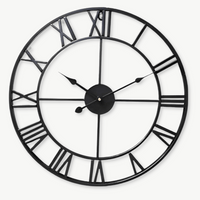


Steam curls off the surface of a warm bath. The room smells like eucalyptus. Everything is quiet, uncluttered, intentional. And then your eyes land on a plastic clock with oversized neon numbers, ticking loud enough to echo off the tile. Mood: gone.
A wall clock for a Zen minimalist bathroom should feel like it belongs in that moment of calm. Not invisible, not loud, just present. The right one tells time without breaking the spell of a spa-like space. The wrong one turns your sanctuary into a waiting room. Here's what works, what to avoid, and where to hang it so it actually looks good.
⭐ Key takeaways
- Silent quartz movement is non-negotiable for a Zen bathroom; ticking breaks the calm
- Materials matter more here than in any other room: choose moisture-resistant wood, glass, metal, or sealed bamboo
- Minimalist dials (no numerals or simple markers) reinforce the uncluttered feel
- Placement should be at eye level on a dry wall, away from direct steam exposure
- Stick to a muted palette: white, sand, stone grey, matte black, or natural wood tones

Why a Bathroom Even Needs a Clock (and Why Most People Skip It)
A bathroom clock gives you passive awareness of time without reaching for a screen: one glance at a silent, well-placed dial is all it takes to stay grounded during a morning routine or a long soak. Bathrooms are the overlooked room when it comes to wall decor, and clocks especially. Most people assume a phone or a smartwatch handles the time. That's true, until you're soaking in the tub and your phone is deliberately out of reach (the whole point of a Zen bathroom, right?). A wall clock gives you passive awareness of time. You glance up, register the hour, and look away. No screen, no notifications, no interruption.
There's a practical side too. Morning routines run tighter than most of us admit. Knowing you have twelve minutes before you need to leave, without picking up a device, keeps you grounded in the physical space. For a Zen-style bathroom designed around presence and simplicity, that matters. And honestly? There's something quietly satisfying about a room that functions beautifully without relying on a single screen.
Think of the wall clock for a Zen minimalist bathroom the same way you'd think of a single ceramic vase or a folded linen towel: it's a purposeful object that earns its place. If it doesn't earn it, it shouldn't be there.

Moisture, Steam, and Materials: What Actually Survives a Bathroom
The materials that survive a bathroom are sealed or coated ones: sealed wood, powder-coated metal, tempered glass, quality ABS plastic, and resin composites all resist the humidity that warps, corrodes, or fogs cheaper alternatives. The bathroom is a hostile environment for clocks. Humidity can fog a glass lens, corrode cheap metal, warp untreated wood, and kill a quartz movement if moisture reaches the circuit board. That doesn't mean you need some industrial waterproof instrument. It means you need to be intentional about materials.
Materials That Hold Up Well
- Sealed or coated wood (bamboo, teak, walnut with polyurethane finish): naturally warm, resists humidity when sealed properly
- Powder-coated metal: durable, minimal, and available in matte finishes that suit Zen aesthetics
- Tempered glass dials: fog-resistant, easy to wipe, and they catch soft light beautifully
- ABS plastic with matte finish: lightweight, moisture-proof, and modern ABS can look surprisingly refined
- Resin or composite frames: mimic stone or concrete textures without the weight or porosity
Materials to Avoid
- Untreated MDF or particle board: swells and warps within weeks in a steamy room
- Exposed iron or uncoated steel: rust is inevitable
- Paper or cardboard dials: moisture destroys them, and they look it fast
- Fabric-covered frames: absorb moisture, develop mildew, and smell
💡 Did you know?
Bamboo is naturally more moisture-resistant than most hardwoods because of its high silica content. In East Asian bathhouses (sento in Japan, jjimjilbang in Korea), bamboo has been used for centuries in humid environments. A bamboo-framed clock in a bathroom isn't just an aesthetic choice; it's rooted in real material logic.
The Silent Movement Rule: No Ticking Allowed
A silent sweep quartz movement is the only acceptable choice for a Zen bathroom: ticking echoes off tile and glass, turning a small room into a room where calm is simply impossible to hold. This one is worth its own section because it's the single fastest way to ruin a Zen bathroom. A ticking clock in a small, tiled room doesn't just tick. It echoes. Tile and glass amplify sound. A mechanical tick-tick-tick that you'd barely notice in a carpeted living room becomes intrusive in a bathroom.
The fix is simple: choose a silent quartz sweep movement. The second hand glides continuously instead of jumping from mark to mark. No audible click. Some clocks are marketed as "silent" but still produce faint noise; look for "sweep" or "continuous movement" in the product description for confidence. Battery-operated quartz is the standard, and a single AA cell typically lasts 12 to 18 months.
Design Language: What "Zen Minimalist" Actually Looks Like on a Clock
A Zen minimalist clock dial is nearly bare: no numerals or the slimmest possible markers, a round frame between 8 and 12 inches, and a muted palette of white, sand, stone grey, or natural wood. The phrase "Zen minimalist" gets thrown around loosely, so here's what it translates to in concrete design terms for a bathroom clock.
Dial and Numerals
The cleanest look is a numberless dial with simple hour markers: thin lines, small dots, or nothing at all. If you prefer numerals, choose a typeface that's slim and sans-serif. Avoid ornate Roman numerals or oversized bold digits; both pull attention and add visual noise. The goal is a dial that communicates the time at a glance and then recedes into the wall. When in doubt, less really is more.
Frame Shape and Proportion
Round is the natural choice. It's the softest geometric shape, and it echoes mirrors, basins, and towel hooks already in most bathrooms. A diameter between 8 and 12 inches suits the average bathroom wall. Anything bigger risks overwhelming a small space; anything smaller might get lost. Square and hexagonal frames can work in a more contemporary Zen setting, but they introduce sharper geometry, so they need to be balanced with curved elements elsewhere in the room.
Color Palette
Think of the colors you'd see in a Japanese rock garden or a Scandinavian sauna: white, off-white, warm grey, sand, pale wood, matte black. These tones absorb into a Zen bathroom rather than compete with it. Avoid high-contrast color blocking (a bright red frame on a white wall, for example). Metallic accents in brushed brass or matte copper can add warmth, but keep them limited to hands or edge details.

| Feature | Zen-Friendly | Avoid |
|---|---|---|
| Dial | Numberless, thin markers, minimal text | Ornate numerals, brand logos, busy patterns |
| Frame | Round, 8-12 in, natural or matte finish | Oversized, glossy, metallic shine |
| Color | White, sand, stone grey, pale wood, matte black | Neon, bright primaries, high-contrast combos |
| Movement | Silent sweep quartz | Audible tick, mechanical chime |
| Material | Sealed wood, glass, coated metal, bamboo | Untreated MDF, exposed iron, fabric |
Where to Hang a Clock in a Minimalist Bathroom
The best spot for a minimalist bathroom clock is the wall opposite the mirror, at eye level around 57 to 60 inches from the floor, well away from direct shower steam and with at least 6 inches of clear space on all sides. Placement can make or break the whole thing. A perfectly chosen clock hung in the wrong spot either goes unnoticed or dominates the room. Neither outcome fits the Zen ethos.
The Best Spots
The wall opposite the mirror is the most natural position. You see it reflected when you're at the vanity, and directly when you step back from the sink. It creates a visual anchor without competing with the mirror itself. Another strong option: the wall above the towel rail or beside a floating shelf. This keeps the clock at eye level, integrated into the room's rhythm rather than floating in isolation.
Spots to Avoid
Don't hang a clock directly above the shower or bathtub. Even moisture-resistant clocks struggle when they're hit by direct steam every day. The wall behind the toilet is technically visible, but psychologically it's not where your eye wants to rest. And the back of the door? You only see it when the door is closed and you're already inside; not ideal for a glance-able timepiece.
Height and Spacing
Center the clock at roughly 57 to 60 inches from the floor (standard gallery height). In a bathroom, the eye level may shift depending on whether you're standing at the vanity or seated in a tub, so favor the standing sightline. Leave at least 6 inches of clear wall space on all sides; a clock crowded by shelves or fixtures loses its visual breathing room.


Zen Bathroom Clock Styles Worth Knowing
The four styles that fit a Zen minimalist bathroom clock are wabi-sabi inspired, Scandinavian clean-line, industrial minimalist, and frameless floating, each with a distinct aesthetic that still shares the same core values of silence, restraint, and natural materials. Not every minimalist clock carries the same energy. Here are the main style families that fit a Zen minimalist bathroom clock setup, and what each one brings to the room.
Japanese Wabi-Sabi Inspired
Clocks with intentionally simple, slightly imperfect aesthetics. Think unfinished wood edges, muted earth tones, and dials that use dots instead of numbers. Wabi-sabi design values impermanence and incompleteness, which translates to a clock that feels organic and handmade rather than mass-produced. These tend to be on the smaller side (8 to 10 inches) and pair beautifully with stone basins, raw concrete, or linen textiles. If your bathroom already has a pebble soap dish or a rough-hewn wood shelf, this style fits right in.
Scandinavian Clean-Line
White dial, slim black hands, no numerals, birch or ash frame. This is the hygge-era archetype, but done well it's genuinely timeless. Scandinavian-style clocks work in almost any Zen bathroom because they're designed to disappear into the room while still being functional. The frame is usually thin, the proportions balanced, and the color palette neutral. If your bathroom leans cooler (grey tiles, chrome fixtures, polished concrete floors), this style bridges the gap between warmth and modernity with almost no effort.
Industrial Minimalist
Matte black metal frame, open dial, exposed or visible hands against a white face. This approach works when your bathroom mixes Zen softness with harder materials like concrete flooring, black hardware, or steel-framed mirrors. The clock becomes a deliberate contrast piece: structured industrial form within a soft, retreat-like environment. Keep the size moderate (10 to 12 inches) so the industrial element doesn't overpower the room's calm. Pair it with a matte black towel bar and you've created an intentional material story.
Frameless or Floating
A clock with no visible frame at all. Just a dial, hands, and a mounting point. These can be 3D sticker-style clocks where the numerals or markers adhere directly to the wall, or ultra-slim discs that appear to hover. The frameless look is perhaps the purest expression of minimalism: time without a container. The trade-off is that some models lack moisture protection around the movement, so check the product specs before committing.

Protecting Your Clock from Bathroom Humidity
The most effective way to protect a bathroom clock from humidity is to run the exhaust fan during and for 15 to 20 minutes after every shower, seal the battery compartment, and mount the clock at least 3 feet from any water source. Even a well-chosen clock needs a little help in a humid room. Here are concrete steps that extend the life of any bathroom timepiece.
- Ventilation first. Run the exhaust fan during and for 15 to 20 minutes after every shower or bath. Good airflow benefits the clock, the paint, the grout, and everything else.
- Seal the battery compartment. A small strip of silicone sealant around the battery cover keeps moisture out of the movement. Don't seal it permanently; you'll need to change the battery. Just a thin bead you can peel off when needed.
- Wipe it down monthly. A dry microfiber cloth across the glass and frame removes condensation residue and prevents mineral buildup.
- Avoid the splash zone. Mount the clock at least 3 feet from the shower head or tub edge. Water droplets carry minerals that leave deposits.
- Check the battery yearly. Dying batteries can leak acid, and a humid environment accelerates that. Swap the battery on a set schedule rather than waiting for the clock to stop.
⚠️ Heads up
If your bathroom has no exhaust fan and no window, humidity levels can stay high for hours after a shower. In that environment, even moisture-resistant clocks will degrade faster. Consider a small wall-mounted dehumidifier or a humidity-absorbing sachet near the clock's mounting area.
How a Zen Clock Changes the Feeling of a Room
A Zen bathroom clock does more than tell time: a round, quiet, muted dial on a clean wall creates a visual resting point that makes the whole room feel deliberately finished, not just decorated. There's something worth saying that goes beyond function. A clock in a Zen bathroom isn't just a time-telling device. It anchors the room's visual tempo. A round, quiet, muted clock on a clean wall creates what designers call a "resting point" for the eye. In a room designed for calm, that resting point matters. Your gaze moves from the basin, to the mirror, to the clock, and each transition feels soft and intentional.
"Simplicity is the ultimate sophistication."
Often attributed to Leonardo da Vinci
A customer once wrote that adding a single, clean clock to her bathroom made the whole room feel "finished." Not decorated, not styled. Finished. That's the Zen effect. One deliberate object in the right spot, and the room clicks into place. It's the same principle behind a perfectly folded bath towel or a single orchid on the windowsill: restraint is the design move.
Silent Wall Clock
Browse the full range of silent-movement clocks, all built around sweep quartz for zero audible ticking.
179 products
Browse the collection →Picking the Right Size for Your Bathroom Wall
Bathroom clock size should match the room: 6 to 8 inches for small bathrooms under 50 square feet, 8 to 12 inches for most mid-size bathrooms, and 12 to 16 inches for large or master bathrooms over 90 square feet. Bathrooms come in wildly different dimensions, and what looks proportionate in a 100-square-foot powder room can vanish in a master bath. Here's a rough sizing framework.
- Small bathroom (under 50 sq ft): 6 to 8 inches. Anything larger will feel oversized relative to the vanity mirror and fixtures.
- Medium bathroom (50 to 90 sq ft): 8 to 12 inches. This is the sweet spot for most homes. The clock reads clearly from a few feet away without dominating.
- Large or master bathroom (over 90 sq ft): 12 to 16 inches. You have the wall space, and a tiny clock will look like an afterthought.
One trick that helps: cut a circle out of paper the same diameter as the clock you're considering. Tape it to the wall. Stand at the doorway and at the vanity. Does it feel right from both distances? That five-minute test saves a lot of returns.
Coordinating the Clock with Your Bathroom's Existing Design
The clock should echo at least one material already in the bathroom: pale wood and white for natural palettes, matte grey or black for concrete and stone, matte black frame with a cream dial for bathrooms with black fixtures. A Zen bathroom usually has a tight material palette. Two or three materials, repeated intentionally. The clock should echo at least one of them. Think of it as a material conversation rather than a styling exercise: the clock listens to the room before it speaks.
If Your Bathroom Is Mostly White and Wood
Choose a clock with a light wood frame (birch, bamboo, pale oak) and a white dial. The clock becomes a visual extension of the vanity or shelving, not a separate design element. Avoid chrome or brass accents here; they'd introduce a fourth material and break the palette discipline that makes Zen spaces feel so composed.
If Your Bathroom Is Concrete or Stone
A matte grey or matte black frame grounds the clock in the room's earthy vocabulary. Resin frames that mimic concrete texture are a particularly good match. The dial can stay white for contrast or go soft grey for a tonal, almost monastic effect.
If Your Bathroom Has Black Fixtures
Matte black frame, hands in a slightly warmer tone (dark bronze or graphite), and a white or cream dial. This mirrors the fixture-and-surface relationship already present in the room. It's a simple alignment that creates cohesion without effort. The clock doesn't announce itself; it simply belongs.
Keeping It Simple: A Zen Bathroom Clock Checklist
Before buying a Zen minimalist bathroom clock, confirm it has all seven essentials: silent sweep movement, moisture-resistant materials, minimal dial, neutral palette, appropriate diameter, round or soft frame, and battery operation. Before you buy, run through these points. If the clock checks all of them, it belongs in your Zen space.
- Silent sweep quartz movement (no audible tick)
- Moisture-resistant materials (sealed wood, coated metal, glass, or quality plastic)
- Clean dial with minimal or no numerals
- Muted, neutral color palette that matches your bathroom's material vocabulary
- Diameter appropriate for your wall size (8 to 12 inches for most bathrooms)
- Round or softly geometric frame (no ornate or complex shapes)
- Battery-operated for easy, cord-free installation
If a clock fails even one of these criteria, it might still work in a bedroom, a kitchen, or a hallway. But a Zen minimalist bathroom clock demands all seven. That's what makes it Zen: nothing extra, nothing missing. Every object in the room has earned its place, and the clock is no exception.
Frequently asked questions about bathroom clocks
Can you put a wall clock in a bathroom?+
Yes, as long as you choose a clock built with moisture-resistant materials and mount it away from direct water spray. Sealed wood, coated metal, tempered glass, and quality ABS plastic all perform well in humid environments. The key is proper ventilation: run an exhaust fan during showers to reduce sustained humidity around the clock.
What is a good water-resistant clock for the bathroom?+
Look for clocks with a sealed battery compartment, a glass or acrylic lens (not open dials), and a frame made from powder-coated metal, bamboo, teak, or high-grade plastic. Silent quartz clocks with these features handle daily bathroom steam without degrading. A light silicone bead around the battery cover adds an extra layer of protection.
What clock style works best in a Zen or meditation space?+
A silent clock with a numberless or lightly marked dial, a round frame in natural or matte finish, and a neutral color (white, sand, grey, or natural wood). The goal is a timepiece that communicates the hour without adding visual or auditory clutter. Wabi-sabi and Scandinavian-style clocks both fit this profile beautifully.
Which wall clock is considered lucky for a home?+
In feng shui tradition, round and oval clocks are considered auspicious because they symbolize continuity and smooth energy flow. Metal or wooden frames in gold, bronze, or warm wood tones are preferred. Placement on the north, east, or west wall of a room is often recommended. Whether or not you follow feng shui, these guidelines happen to align well with Zen bathroom aesthetics: soft shapes, natural materials, and intentional positioning.
How often should I replace a bathroom clock battery?+
Most quartz wall clocks run 12 to 18 months on a single AA battery. In a bathroom, swap it proactively around the 12-month mark. Humidity accelerates battery corrosion, and a leaking battery can damage the movement permanently. Mark the installation date on a small label inside the battery compartment so you don't have to guess.
How do I choose between a wood-framed and a metal-framed bathroom clock?+
Start with what's already in the room. Wood frames (sealed bamboo, pale oak, teak) add warmth and suit bathrooms with natural stone, linen, or earthy tones. Metal frames (powder-coated black or matte grey) suit bathrooms with concrete surfaces, black hardware, or steel fixtures. When in doubt, a thin black metal frame is the most versatile choice: it's neutral enough to work with almost any palette without competing for attention.