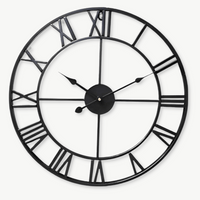


There's a moment, just before you fall asleep or right after you wake up, when the bedroom either feels like a refuge or it doesn't. You can't always put your finger on why. The lighting, maybe. The color of the walls. The small things on every surface. And then, quietly, that clock on the wall, because it's always part of the picture, whether you've thought about it or not.
A white minimalist wall clock for bedroom decor is one of those purchases that earns its place twice: once as a practical timekeeper, and once as a visual choice that shapes the mood of the whole room. Get it right and it disappears into the wall in the best possible way, present but never loud. Get it wrong and it competes with everything else around it.
Here's what actually works, based on real design principles and the questions I get asked most about bedroom clocks.
⭐ À retenir
- White clocks work in almost any bedroom palette precisely because they reflect, not absorb, surrounding color.
- Silent (sweep) quartz movement is non-negotiable for a bedroom clock. Ticking destroys sleep quality.
- Size matters more than most people expect: a 30 cm (12 in) clock reads perfectly in a standard bedroom; go larger only above a statement headboard.
- Placement height should put the clock face at eye level when you're sitting upright in bed.
- The frame material, even on a white clock, changes the feeling: bare wood reads warm, metal reads crisp, acrylic reads airy.
Why Minimalism and the Bedroom Are Such a Natural Pair
Minimalism and the bedroom work together because a clutter-free, visually quiet space actively lowers cortisol and helps the brain shift into rest mode, making every deliberate design choice, including your clock, part of the sleep environment itself. Sleep researchers have known for years that visual clutter raises cortisol levels. A busy room, full of competing patterns, textures, and objects of different visual weights, keeps the brain in a low-level alert state. It's not dramatic. You probably don't notice it consciously. But you feel it as a vague sense that the room never quite lets you exhale.
Minimalism, in interior terms, isn't about emptiness. It's about intentionality: every object pulls its weight visually, and nothing fights for attention. A white minimalist wall clock for bedroom decor fits that logic perfectly. Its job is to be readable without being remarkable. Clean numeral markers or bare indices. A white or off-white face. A frame that's either white, natural wood, or matte metal, nothing that glints or shouts.
The result is a room that feels lighter. Not sparse, just resolved. There's a real difference between a bedroom that's been thoughtfully edited and one that's just been emptied, and a well-chosen clock sits squarely in the first category. Think of the wabi-sabi principle: beauty found in simplicity and restraint, never in excess.

What "White Minimalist" Actually Means in Clock Design
A genuinely white minimalist clock has a flat white face, slim high-contrast hands, clean numerals or simple indices, a thin frame in white, natural wood, or matte metal, and a silent sweep quartz movement, not just a white finish applied to a busy design. It's worth being specific here, because "white" and "minimalist" are labels that get stretched by retailers to cover very different things. A clock with a white face covered in decorative flourishes, ornate hands, and a chunky baroque frame isn't minimalist. And a technically minimalist clock with a cream or warm-gray face might not actually read as white against your wall.
The hallmarks of a genuinely minimalist white bedroom clock:
- Face: flat white or soft white, no texture patterns, no unnecessary sub-dials.
- Numerals or markers: clean Arabic numerals, slim Roman numerals, or simple indices (lines or dots). Nothing decorative.
- Hands: slim, high-contrast against the white face, usually black, dark gray, or natural wood tone.
- Frame: thin profile, ideally 2 cm or less in depth. White lacquer, raw birch or bamboo, or brushed steel all work. Avoid thick injection-molded plastic frames, they look cheap at any price point.
- Movement: silent sweep quartz. Not stepping quartz, which produces the classic tick-tock. The sweep motor runs continuously, no sound.
💡 Did you know?
The minimalist clock aesthetic traces directly to Scandinavian design movements of the 1950s, particularly the work of Danish designers who believed that functional objects should create no visual "noise." The round white clock face on a plain wall became something of a manifesto piece, proof that utility and beauty weren't competing values.
Choosing the Right Size for Your Bedroom Wall
For most bedrooms, a 30-35 cm clock is the right starting point: large enough to read from bed, small enough to stay proportional on a standard wall without overwhelming the space. This is where most people go wrong, usually by going too small. A clock that's too petite for the wall reads as an afterthought, not a considered design choice. And honestly, if you've spent time curating a calm, intentional bedroom, the last thing you want is a white minimalist wall clock for bedroom decor that gets lost on the wall. Here's a rough guide based on common bedroom configurations.
| Wall context | Recommended diameter | Why it works |
|---|---|---|
| Small bedroom, solo wall | 25-30 cm (10-12 in) | Proportional to the wall, readable from bed without dominating |
| Standard bedroom, above nightstand | 30-35 cm (12-14 in) | Holds presence beside a lamp and a few objects |
| Above a headboard (wide bed) | 40-50 cm (16-20 in) | Anchors the focal wall without competing with the headboard shape |
| Large master bedroom, feature wall | 50-60 cm (20-24 in) | Becomes the room's statement piece; keep everything else minimal |
A useful trick: tape a paper circle of the target diameter to the wall before you buy. Live with it for a day. You'll immediately know if it's too small or larger than expected. I've talked people out of a 25 cm clock and into a 35 cm one using exactly this method, and not once have they regretted it.

Where to Hang It: Placement That Actually Makes Sense
The best placement puts the clock face at eye level from bed, centered on a wall with clear space around it, opposite the bed for easy morning glances, on a side wall in corner layouts, or centered above a low headboard as the room's focal anchor. The bedroom has three meaningful walls for a clock. Each works differently.
The Wall Opposite the Bed
This is the instinctive choice and often the right one. When you wake up and lift your head from the pillow, the clock is exactly where your eyes land. Hang it so the center of the face sits roughly 160-170 cm from the floor, which is comfortable viewing height whether you're sitting up or standing. Keep at least 40 cm of clear wall above and below it; isolation is what makes a single clock feel intentional.
The Side Wall, Away from the Window
Works well in L-shaped rooms or when the bed is pushed into a corner. The key is avoiding direct light competition: if morning sun hits that wall at an angle, a white clock face with glossy finish can create glare. Matte faces, or ones with a slight texture to the surface, handle this better.
Above the Headboard
The most dramatic option. It works when the headboard is relatively low (under 100 cm) and the clock is sized generously. A white minimalist wall clock for bedroom decor hung above the headboard becomes the room's visual anchor, the first thing anyone notices when they walk in. Keep the surrounding wall completely bare; this isn't a gallery wall moment.

How a White Clock Interacts with Different Bedroom Color Palettes
White is one of the most flexible anchor colors in bedroom design because it reflects the tones around it rather than absorbing them, adapting gracefully across all-white rooms, warm neutrals, dark feature walls, and soft pastels alike. White is genuinely one of the most flexible anchor colors in interior design, but it isn't neutral in the way that beige or gray is. It reflects light and bounces the tones around it back into the room. That makes it responsive to what surrounds it.
All-White or Soft White Rooms
The clock almost vanishes into the wall, which sounds like a problem but isn't. The hands and numerals become the focal point, floating against a continuous white surface. This works best with high-contrast hands (matte black or charcoal) so the clock stays readable. The effect is very Scandinavian: calm, resolved, a little sparse in the best way.
Warm Neutral Rooms (Cream, Warm Greige, Terracotta Accents)
A pure white clock provides a gentle contrast that reads as crisp without being cold. It works like white trim on warm-painted walls: it organizes the palette and keeps things from feeling muddy. Pair it with natural wood elements elsewhere in the room (a nightstand, a bedframe) and the combination feels grounded. This is also where a bamboo-framed white minimalist wall clock for bedroom decor really shines: the warm grain of the frame bridges the gap between the cool white face and the amber tones of the room.
Moody or Dark-Walled Bedrooms
This is where a white minimalist clock becomes a genuine design decision, not just a functional one. Against navy, forest green, or deep charcoal, a white clock face glows. It acts as a light source without being one. If your bedroom leans this direction, size up slightly: a 35-40 cm clock holds its own against a dark wall in a way that a 25 cm piece simply can't.
Blush, Sage, and Soft Pastels
White clocks here create a clean, uncluttered focal point in what can otherwise become overly soft and undefined spaces. The clock does the work of adding structure without introducing a harsh element. Think of it as punctuation: it gives the eye somewhere to rest.

The Noise Problem: Why Silent Movement Isn't Optional in a Bedroom
A standard stepping quartz movement ticks once per second and is clearly audible in a quiet bedroom at night; only a silent sweep quartz motor, which advances the hand in a continuous, click-free motion, belongs in a sleep environment. This one's worth dwelling on, because it's the single most common mistake people make when buying a bedroom clock online. The product description says "quartz movement" and they assume that's fine. It often isn't.
Standard stepping quartz movements advance the second hand in discrete steps: one click per second, 60 per minute, all night, every night. In a quiet bedroom at 2 a.m., that tick is audible from across the room. Sleep researchers note that repetitive low-level sounds, especially rhythmic ones, can interfere with light sleep stages even when you don't consciously register them.
Sweep quartz motors, sometimes called "continuous sweep" or "silent movement," advance the hand in a smooth, continuous motion. No steps, no clicks. The movement itself produces near-zero sound. This is the standard in silent wall clocks designed for sleep environments, and it's the only type worth considering for a bedroom.
When you're shopping, look for these phrases in the product spec: "silent sweep," "continuous sweep," "no tick," or a decibel rating of under 20 dB. If the listing doesn't mention movement type, ask before you buy.

Styling Around the Clock: What to Keep, What to Lose
A white minimalist clock needs breathing room: keep adjacent walls for art, limit nightstand objects to a few, use muted natural textiles, and avoid gallery walls, floating shelves, or light sources that crowd the clock face. A white minimalist clock does its best work when the wall around it has room to breathe. That said, "minimalist" doesn't mean the bedroom has to become a hotel room. Here's where the balance actually sits.
What pairs well
- A single piece of framed art or a print hung on an adjacent wall (not the same wall as the clock).
- A nightstand with clean lines, one lamp, and two or three small objects at most.
- Textiles in muted or natural tones: linen, cotton, undyed wool. These add warmth without visual noise.
- A curated bedroom clock that sits alone on its wall, with 30+ cm of clear space on each side.
What to reconsider
- Gallery walls on the same surface as the clock. They compete. Pick one concept per wall.
- String lights or LED strips near the clock face. The light bleeds onto the face and makes it harder to read at night.
- Floating shelves directly below the clock, especially if they're loaded with objects. The clock loses its visual separation and becomes just another item in a cluster.
"Perfection is achieved, not when there is nothing more to add, but when there is nothing left to take away."
Antoine de Saint-Exupéry, a principle that applies as much to interior design as to writing.
Frame Materials: How They Change the Feeling of a White Clock
Two clocks with identical white faces can read very differently depending on their frame: natural wood adds warmth, white-lacquered metal reads crisp and cool, and acrylic creates an airy floating effect, each suits a different bedroom mood. Two clocks can have identical white faces and read very differently on the wall, because the frame material carries its own visual temperature. Understanding this saves a lot of return shipping.
Natural wood frames (birch, bamboo, walnut with white face): these introduce warmth even on a white clock. The grain adds texture without pattern. In a bedroom with warm-toned textiles or wooden furniture, a wood-framed white clock ties everything together. It leans Scandinavian or Japanese minimalist depending on the frame shape.
Bamboo specifically is worth calling out: it's slightly lighter in tone than birch, with a fine, almost architectural grain. It reads very cleanly on a white wall and works well in bedrooms that are going for an airy, spa-like quality. It's also sustainably harvested, which matters to a lot of people making considered purchases for their home.
White-lacquered or painted metal frames: the crispest option. Zero visual warmth, which isn't a flaw, it's a characteristic. In an all-white or cool-toned bedroom (white walls, gray linen, silver accessories), a metal-framed clock has perfect internal consistency. It reads as a deliberate architectural element.
Acrylic or transparent frames: these create a floating effect where the face appears to sit directly on the wall. Very contemporary, and particularly good in small bedrooms because they don't "fill" the wall the way a solid frame does. The downside: they show fingerprints and can look cheap at lower price points. Worth investing in a quality piece here.
For an overview of how different materials behave across clock designs, the wooden wall clock collection and the Scandinavian wall clock range both show the spectrum clearly.
Bedroom Clocks
Every clock in this collection is chosen specifically for sleep environments: silent movement, calm aesthetics, and sizes that work on real bedroom walls.
168 references
Browse the collection →When a White Clock Becomes the Statement (Not the Background)
A larger white clock, 40-50 cm, on a rich saturated wall with deliberately understated furniture around it stops being background and becomes the room's intentional focal point, pure, geometric, and unmistakable. Most of this guide assumes you want the clock to recede, to serve the room's calm without drawing attention to itself. That's the most common brief for a bedroom, and it's a good one. But some bedrooms want a focal point. Here's when to flip the logic.
If your bedroom walls are a rich, saturated color, and most of the furniture is low-profile and understated, a larger white clock (40-50 cm) can become the room's intentional center. It works like a moon in a dark sky: pure, geometric, unmistakable. The key is that everything else stays deliberately quiet so the clock has room to perform.
In that configuration, consider a clock with slightly more visual detail: a wooden frame with visible grain, slim hands in a warm metal, or index markers in a contrasting tone. Just enough texture to reward a close look, while still reading as clean from across the room. This is the difference between a clock that's a statement piece and one that's merely decorative. You can browse options curated for exactly this effect in the Scandinavian wall clock range, which leans into that bold-yet-restrained aesthetic particularly well.
FAQ
Does a white clock actually show up against a white wall?+
Yes, as long as the hands and numerals are high-contrast (matte black or dark gray work best). The clock face doesn't need to contrast sharply with the wall, the hands do the visual work. Many people find this look more refined than a contrasting frame precisely because the clock integrates into the wall surface.
How do I know if a clock is truly silent? Do I really need sweep quartz?+
Yes, sweep quartz is genuinely non-negotiable for a bedroom. Standard stepping quartz ticks once per second; in a silent room at 3 a.m., you'll hear it. Sweep (or "continuous sweep") motors advance the hand in a fluid, unbroken motion that produces near-zero sound. Look for "silent sweep" or "continuous sweep" in the product description. If the listing only says "quartz movement" without specifying sweep, it's likely a stepping motor. Customer reviews are a reliable secondary check: people are very specific about noise when it's kept them awake.
What's the difference between birch and bamboo frames on a white minimalist clock?+
Both read as natural and warm, but they have distinct personalities. Birch has a slightly broader, more varied grain pattern and a warmer honey tone, which leans Scandinavian. Bamboo is finer-grained, lighter in color, and almost architectural in its precision, which makes it feel more *wabi-sabi* or Japanese minimalist. If your bedroom already has warm oak or pine furniture, birch integrates more seamlessly. If your aesthetic is lighter and more paired-back, bamboo tends to disappear more gracefully into the wall.
Can I use a white minimalist clock in a bedroom with warm lighting?+
Absolutely, and it often looks better than in neutral or cool lighting. Warm bulbs (2700-3000K) bathe a white clock face in a soft amber that reads as cream rather than stark white. It integrates beautifully with warm wood furniture and linen textiles. If the clock has a matte face rather than a glossy one, it absorbs the warm light rather than reflecting it back, giving a softer overall effect.
Is 30 cm (12 inches) enough for a standard bedroom?+
For most bedrooms under 15 square meters, yes. A 30 cm clock is readable from 4-5 meters in daylight conditions, which covers most bedroom dimensions. Where it falls short is in large master bedrooms or when the clock is hung on a very wide wall, say 4 meters across, where it can look undersized. The tape-circle test described earlier is the most reliable way to check before you buy.
What's the best height to hang a bedroom clock?+
Center the clock face at roughly 155-170 cm from the floor for the most comfortable sightline from both standing and sitting-in-bed positions. If the clock is going above the headboard, allow at least 20-25 cm of gap between the top of the headboard and the bottom of the clock frame. Closer than that and it reads as crowded.