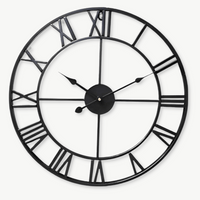

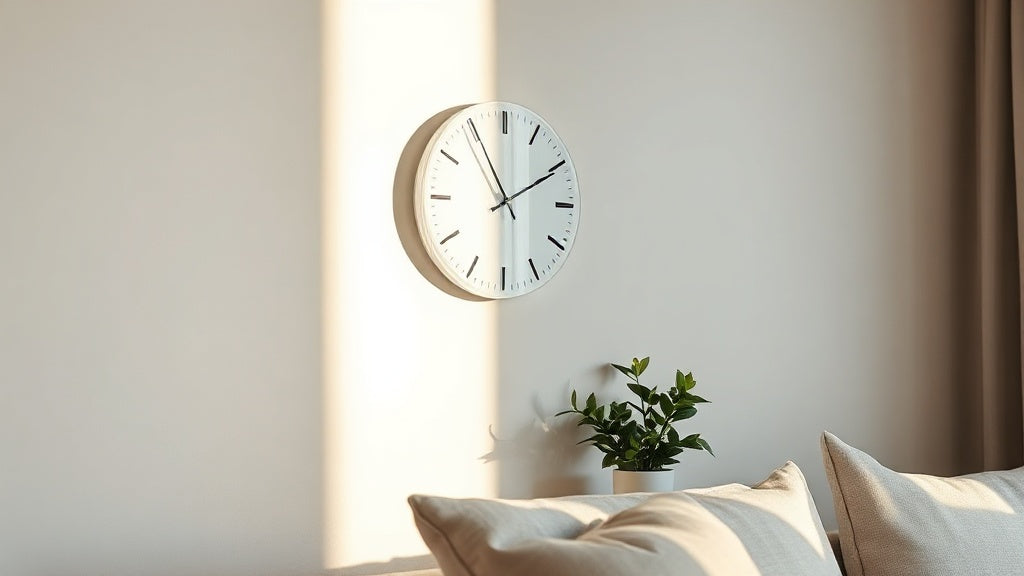
You found the perfect spot for a clock. The wall is freshly painted, the lease says no big holes, and you really don't want to deal with a power drill at 9 pm. Sound familiar? Acrylic wall clocks were practically designed for this situation: lightweight enough to hang with a strip of adhesive, transparent enough to suit almost any décor, and striking enough to actually mean something on the wall.
This isn't about settling for something "good enough because it's light." The best acrylic wall clocks are genuinely beautiful objects. The material just happens to solve about four practical headaches at once, which is why renters, first-time decorators, and even seasoned interior design enthusiasts keep gravitating toward them.
At a glance
- Acrylic clock faces typically weigh between 200 g and 600 g, far lighter than metal or ceramic alternatives
- Most can be hung with adhesive strips, small nails, or even a single picture hook
- The transparent or semi-transparent face makes them visually neutral on almost any wall color
- Acrylic is impact-resistant and won't shatter the way glass does if knocked off the wall
- They're available in minimalist, modern art, and 3D sticker styles to suit very different interiors
What Makes Acrylic So Practical as a Clock Material
Acrylic, also called *polymethyl methacrylate* (PMMA), is a synthetic polymer that's been used in design since the 1930s. It's roughly half the weight of glass for the same thickness, and it's far more impact-resistant. In clock design, that translates to a face that you can genuinely hang without stressing about structural support.
A typical 30 cm glass-faced wall clock can weigh close to 1.5 kg. An acrylic version of the same diameter? Often under 400 g. That difference might not sound dramatic until you're standing on a step stool trying to get a hook to hold in rental plasterboard.

There's another thing worth knowing: acrylic has a natural optical clarity that lets designers do interesting things with layering. That's exactly how 3D sticker-style clocks work, with separate acrylic numeral layers floating slightly off the dial face to create depth and shadow. The effect looks far more expensive than the price suggests, and it weighs next to nothing.
Did you know?
Acrylic glass was first commercialized under the trade name *Plexiglas* in 1933, and within a decade it was being used in aircraft cockpit canopies during World War II. Its optical clarity and shatter resistance made it invaluable then - and those same properties are exactly why it works beautifully as a clock face material today.
The Renter's Reality: Why Weight Actually Matters
Rental agreements vary, but a lot of them cap "acceptable" wall damage at small nail holes. Anything heavier than about 1 kg generally needs a proper wall anchor, and proper wall anchors leave marks bigger than a nail hole. So if your clock weighs 2 kg and you're renting, you're in a gray area before you've even picked a spot.
An acrylic wall clock lightweight enough to hang with adhesive sidesteps this entirely. Adhesive mounting strips rated for 1 kg - which covers almost every acrylic model on the market - leave no residue when removed correctly, and they hold reliably for years on smooth painted surfaces. That's a real, practical difference when you're thinking about your security deposit.

There's also the mobility factor. Renters move. Sometimes you move within the same apartment, shifting the clock from the living room to the bedroom because the light changed or the furniture layout evolved. With a lightweight acrylic clock, that's a two-minute task. With a heavy cast-iron model, it becomes a project.
How Acrylic Clocks Fit Different Interior Styles
The transparent base of an acrylic clock face is genuinely useful from a design perspective. Unlike a solid white or black dial, a clear acrylic face lets the wall color or texture show through, which means the clock reads differently depending on where you put it. On a sage green wall, it takes on warmth. On exposed brick, the contrast feels industrial and considered. On a plain white wall, it looks clean and almost architectural. Think of it like adding a sculptural detail to a Scandinavian minimalist or Japandi-inspired room: it's present without being loud.
That said, acrylic clocks aren't one-size-fits-all in terms of style. Here's how the main types break down:
| Style | What it looks like | Best room fit |
|---|---|---|
| 3D Sticker / Floating Numerals | Layered acrylic digits that cast subtle shadows on the wall behind them | Living room, hallway, home office |
| Modern Art / Abstract Dial | Geometric or artistic face, often with minimal or no numerals | Bedroom, studio, open-plan living space |
| Vintage / Novelty Acrylic | Cut acrylic in themed shapes - teapots, leaves, characters | Kitchen, children's room, café-style nook |
| Scandinavian Minimalist | Clean lines, muted colors, often paired with wooden hands or accents | Bedroom, reading corner, Japandi-style living room |
The 3D sticker style, in particular, has built up a loyal following among people who want something that looks custom-made. Separate numeral layers are mounted individually on the wall, with the clock mechanism hidden behind the center point. The result is a sculptural, floating look that reads more like wall art than a functional timepiece. If that kind of impact is what you're after, the product below is a strong starting point.
Silent Movement: The Other Reason Renters Love Acrylic Clocks
Weight isn't the only thing renters think about. Noise is just as real. Older clocks with a standard quartz stepping movement produce that familiar tick-tock sound - charming in a country kitchen, genuinely irritating in a bedroom or a home office where you're trying to concentrate.
Almost every modern acrylic wall clock uses a silent sweep quartz movement, where the second hand glides continuously rather than stepping. No tick. No tock. Just time moving forward, quietly. In a studio apartment where the bedroom is eight feet from the living room wall, that's not a small detail.
The quartz mechanism itself is also compact and battery-operated, which keeps the overall assembly light. Most acrylic wall clocks run on a single AA battery for 12 to 18 months, so there's no wiring, no installation complexity, just a battery swap once a year.

What to Actually Look For When Buying a Lightweight Acrylic Clock
Not every acrylic clock is equally well made. Here's what separates the ones worth buying from the ones that look tired six months later:
- Thickness of the acrylic panel: thicker panels (4-6 mm) feel more substantial and are less prone to warping in rooms with temperature fluctuations, like kitchens near a stove.
- Movement quality: look for a silent sweep mechanism from a reputable brand like Seiko, Citizen, or Hàojué. It's often listed in the product specs.
- Hand visibility: on transparent acrylic faces, hands need strong contrast to be readable. Matte black or brushed metal hands against a clear dial work well; pale gold against clear can disappear in bright light.
- Hanging hardware included: a well-designed lightweight clock should come with its own mounting hook or pre-punched hanger. If you're buying for a rental, check whether the manufacturer specifies an adhesive-compatible weight.
- Size relative to wall space: a 30 cm clock on a large living room wall gets lost. A 40-50 cm acrylic clock in the same space reads as a genuine focal point without adding meaningful weight.
If you want a single model that checks every one of those boxes right out of the box, the Modern Art Wall Clock below is one to look at closely. Its 12-inch acrylic face pairs a contemporary geometric dial with a silent sweep movement, and the matte black hands stay legible against the clear face even in low light.
Placement Ideas That Make a Lightweight Clock Feel Intentional
One thing I've noticed from helping people style their spaces: a lightweight clock often gets underused. It gets hung in the first obvious spot, at eye level above a sideboard, and that's it. Which is fine, but acrylic's transparency opens up placement options that heavier materials simply don't.
Try these:
- Above a gallery wall: because the transparent face doesn't fight with the frames below, a floating-numeral acrylic clock can sit at the top of a picture arrangement without visually dominating it. It becomes part of the composition rather than a separate object.
- In a kitchen corner: most kitchens don't have a natural "statement wall," but a small acrylic clock in the 25-30 cm range near the window reads cleanly against tile or painted brick without adding visual clutter.
- In a rental bathroom: bathrooms almost never have clocks, and they really benefit from them. An acrylic face is moisture-resistant in a way that wood isn't, and the lightweight means a single adhesive hook holds it fine on tile.
- Opposite a mirror: a transparent acrylic clock mounted opposite a large mirror creates a subtle doubled effect. The reflection catches the floating hands and numerals from a different angle. It sounds like a small thing; it looks genuinely interesting.
"I was convinced I needed something heavier to turn my wall into a talking point. Then I put up a 3D sticker clock in my living room and it's the first thing every visitor notices. It looks like it belongs in a design shop."
Customer review, shared with permission
Acrylic vs. Other Lightweight Clock Materials: How They Actually Compare
Acrylic isn't the only lightweight option, so it's worth knowing where it sits relative to the alternatives. Bamboo and thin wooden clocks are also light, but wood reacts to humidity over time - it can warp slightly in bathrooms or near exterior walls in humid climates. Plastic composite clocks are light and cheap, but they often look it; the surface catches fingerprints and the finish tends to yellow over years of UV exposure.
Acrylic sits between those extremes. It's more durable than most plastics, doesn't warp with moisture, and maintains optical clarity for years. It does scratch more easily than glass, so it's worth handling the face with care during installation. A soft microfiber cloth is all you need to keep it looking sharp.
For renters who want something that genuinely looks considered, an acrylic wall clock tends to be the most honest answer. It doesn't pretend to be what it isn't. The material is contemporary, the installation is genuinely simple, and the end result is a clock that reads as a design choice rather than a practical afterthought. Whether your room leans toward industrial loft or softly layered *wabi-sabi*, there's a style in the range that fits.
Wall Clocks - Full Collection
If you're comparing styles and materials side by side, the full wall clock collection covers everything from acrylic and bamboo to metal and glass, all in one place. It's a good next step if you want to see how different acrylic styles sit alongside other materials before committing.
166 references
Browse the collection →Caring for an Acrylic Clock So It Stays Pristine Long-Term
Acrylic needs slightly different care than glass or metal. The good news: it's simple. A soft damp cloth removes dust and fingerprints without issue. What to avoid: paper towels (they micro-scratch the surface over time), alcohol-based cleaners (they can cloud the acrylic finish), and abrasive sprays. A mild soap solution on a microfiber cloth is all it takes.
For 3D sticker-style acrylic clocks with floating numerals, a soft brush or compressed air works well for getting into the gaps between layers where dust can accumulate. It takes about two minutes once a month and keeps the depth effect looking sharp.
Battery replacement is the other maintenance moment. When you swap the AA battery, take the mechanism off the wall, lay the clock flat, and use the opportunity to wipe both the face and the back of the body. Quartz movements that run on fresh batteries are accurate to within about 15 seconds per month, so don't be surprised if you need to reset the hands by a minute or two when you change the battery.
The Bottom Line: A Clock That Works as Hard as You Do
Here's the thing about acrylic wall clocks: they remove almost every practical obstacle between you and a wall that genuinely feels finished. No drill. No structural anxiety. No ticking at midnight. And because the transparent face borrows from whatever color or texture sits behind it, the clock feels native to your space rather than dropped into it.
Whether you rent a studio flat, own a house mid-renovation, or just want something that looks thoughtful without a complicated install, an acrylic clock earns its spot on the wall. Pick the style that fits your room, hang it in the spot you'd normally overlook, and see what a single well-chosen timepiece does to the feel of the whole space. You might be surprised how much that one decision changes everything.
Frequently asked questions
How heavy is a typical acrylic wall clock?+
Most acrylic wall clocks in the 25-40 cm range weigh between 200 g and 600 g, depending on the thickness of the panel and the weight of the clock mechanism. This puts them well within the capacity of standard adhesive mounting strips rated for 1 kg, making them genuinely drill-free options for most rental walls.
Can I hang an acrylic clock without drilling a hole in the wall?+
Yes, for clocks under roughly 600 g. Use adhesive mounting strips rated for at least 1 kg on smooth painted walls. Clean the surface with a dry cloth first, press firmly for 30 seconds, and wait one hour before hanging the clock. Avoid textured or wallpapered surfaces, where adhesive bonds are less reliable. For 3D sticker clocks, each floating numeral typically mounts on its own small adhesive pad, so no drilling is needed at all.
Is acrylic better than glass for a wall clock face?+
For most home uses, acrylic has two clear advantages over glass: it's roughly half the weight, and it doesn't shatter on impact. If a glass-faced clock falls off the wall, it breaks. An acrylic clock typically survives the fall intact. Glass does resist scratching better, so in high-traffic areas where the clock face might be touched frequently, glass holds up marginally better. For wall-mounted clocks at normal heights, acrylic's weight and safety advantages outweigh the scratch difference by a wide margin.
Will an acrylic clock work in a bathroom or kitchen?+
Acrylic itself is moisture-resistant and won't warp or swell the way wood can in humid conditions. The limitation is usually the clock mechanism: standard quartz movements aren't waterproof, so you want to avoid positioning the clock directly above a sink where it could get splashed. On a dry bathroom wall, opposite a shower or above a towel rail, an acrylic clock works well. In kitchens, keep it away from steam sources like a kettle or stovetop vent.
How do I clean an acrylic wall clock without scratching it?+
Use a soft microfiber cloth, slightly damp, with a drop of mild soap if needed. Avoid paper towels, which micro-scratch the surface over time, and avoid alcohol-based or abrasive cleaners, which can cloud or craze the acrylic. For 3D sticker clocks with floating numerals, a soft brush or a short burst of compressed air clears dust from the gaps between layers without touching the surface.
What size acrylic clock works best for a living room?+
For a typical living room wall, a 40-50 cm diameter clock reads as a genuine focal piece without overwhelming the space. A 30 cm clock tends to look undersized unless it's grouped with other wall elements. If you're going with a 3D sticker style where the numerals spread out beyond the central mechanism, the effective visual diameter is often larger than the listed size, so a 35 cm model can read closer to 50 cm in practice.