
Walk into almost any home and there's a clock on the wall. But lately, more people are pausing before they buy, because the choice between an analog vs digital wall clock for home turns out to be more loaded than it first appears. It's not just about numbers vs. hands. It's about what you want your wall to say, how your household actually reads the time, and whether that clock works as a design anchor or quietly disappears into the background.
Both formats have genuinely devoted fans, and both have real blind spots. So let's get into it, room by room and style by style, the way a friend who's spent way too much time thinking about clocks would break it down for you.
Key takeaways
- Analog clocks read as art; digital clocks read as information.
- The "right" choice depends on room function, not personal preference alone.
- Readability at a glance, glare, noise, and style coherence all matter more than format.
- Plenty of spaces work best with one of each, placed intentionally.
- Material and size decisions apply to both formats equally.
What "Analog" and "Digital" Actually Mean for a Wall Clock
An analog wall clock uses rotating hands on a face to represent the passage of time. The face might show Roman numerals, Arabic numerals, minimalist markers, or nothing at all. The movement inside is usually quartz (battery-powered) or mechanical (weight or spring-driven), and the sweeping or ticking second hand is part of the visual experience.
A digital wall clock displays time as numerals on a screen or panel, most often LED, LCD, or flip-card. Some models show only hours and minutes; others add seconds, date, temperature, humidity, or alarm functions. The display can be backlit for night reading, auto-dimming, or even voice-activated.
That core difference, a moving visual metaphor versus a direct numerical readout, drives almost every aesthetic and practical consequence that follows. And honestly, once you understand it, the whole "which should I pick?" question starts answering itself.
The Aesthetic Case for Analog: Why It Still Dominates Living Rooms
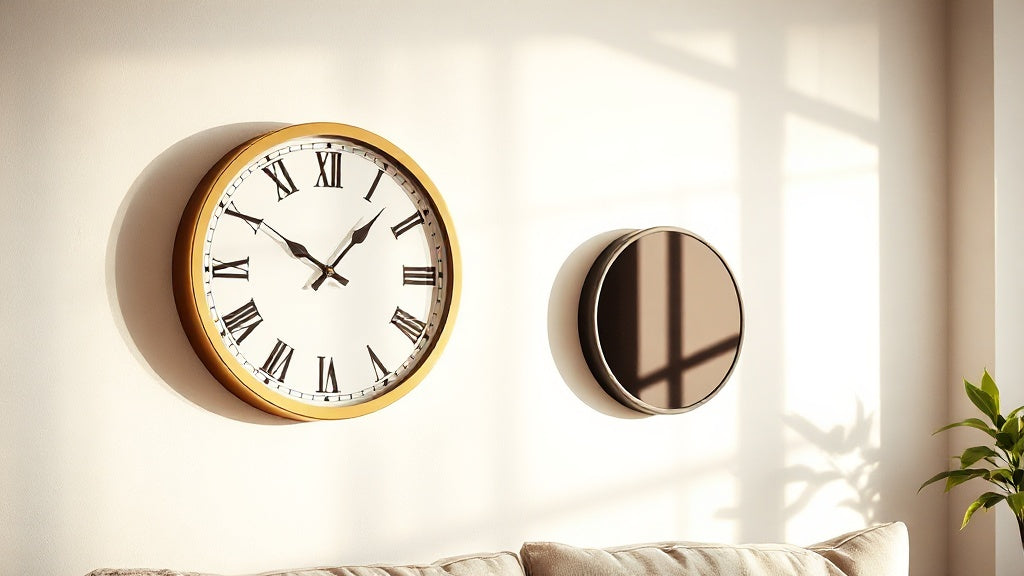
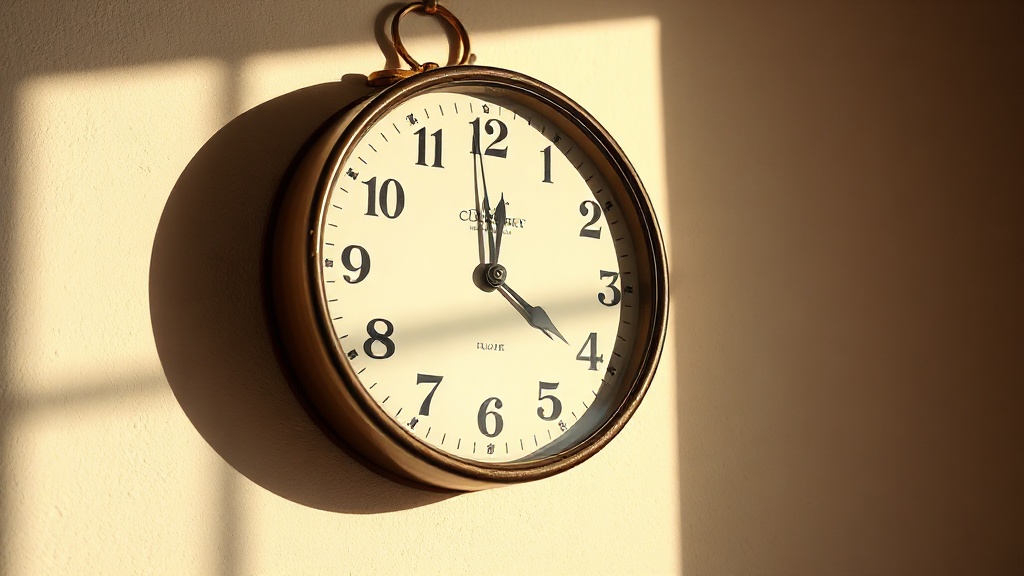
There's a reason the overwhelming majority of decorative wall clocks sold today are analog. A clock face with hands is a composition: it has a center, a radius, movement, and geometry. Hung on a wall, it behaves more like a piece of art than a utility object. A 50 cm round clock in brushed walnut or aged brass creates a visual focal point the way a framed print does. It earns its place on the wall even when nobody's checking the time.
Analog clocks are particularly strong in these interior styles:
- Scandinavian minimalism: Clean round faces, no numerals, slim hands in black or natural wood. The clock disappears into the wall design while still anchoring the room. Think pale ash frames with matte hands, nothing superfluous.
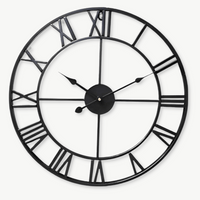
- Industrial loft: Oversized metal faces with exposed mechanisms, Roman numerals, raw iron frames. The clock becomes sculptural, the kind of piece that reads as intentional from across a big open-plan space.
- Warm traditional or vintage: Antique-finish cases, pendulums, wood surrounds. These read as heirlooms even when brand new. They bring history into a room without trying too hard.
- Transitional and eclectic: Analog clocks bridge old and new because the circular form is genuinely timeless. A modern matte-black analog clock sits comfortably next to mid-century furniture without creating visual tension.
The format also scales gracefully. A 70 cm analog clock on a wide living room wall looks intentional and confident. That same wall space with a digital display requires very specific styling to avoid looking like a departure lounge screen.
See the collection
Wall Clocks
166 analog and decorative wall clocks, from Scandinavian minimalism to bold industrial statement pieces.
166 références
Browse the collection →The Practical Case for Digital: Where It Genuinely Wins
Digital wall clocks have a reputation problem in decor circles. They're often dismissed as "functional but ugly." That's fair for bargain-bin LED displays with garish red numerals, but it misses what a well-chosen digital clock actually brings to a home. Done right, a digital wall clock can be just as considered a choice as any analog piece, especially in spaces built around function.
Here's where digital clearly outperforms analog:
- Kitchens: You're multitasking. A glance across the room needs to return an instant, unambiguous reading. Digital clocks do that in half a second without requiring you to calculate hand positions. When there's a pot boiling and a toddler asking questions simultaneously, you'll appreciate that.
- Home offices and studios: When you're tracking billable hours or managing back-to-back calls, precision matters. A large-digit digital display mounted near your monitor keeps you honest without breaking focus.
- Bedrooms (for some): Night-reading is effortless on a backlit digital display. No squinting at a face you can barely see at 3am. Auto-dimming models solve the "too bright to sleep" problem neatly.
- Children's rooms: Before a child has learned to read clock hands (typically around age 6-7), a digital clock is simply more useful. Once they've learned, flipping to analog can actually help reinforce that skill.
Multi-function digital clocks, those that show date, indoor temperature, and humidity alongside the time, earn their wall space in rooms where that data genuinely gets used: a laundry room, a home gym, or a covered patio area. If you're someone who checks the indoor humidity every morning before deciding whether to open windows, that's not a gimmick, that's genuinely useful information delivered at a glance.
Did you know?
The very first digital clock designed for domestic use was patented in 1956 by Josef Pallweber, an Austrian clockmaker, long before LED displays existed. His design used small numbered cards on rotating discs, the same principle behind flip clocks. Digital timekeeping in the home is older than most people assume.
See the collection
Digital Wall Clocks
From sleek LED displays for modern kitchens to multi-function panels for home offices, find digital clocks that don't sacrifice style for practicality.
Browse the collection →Noise: The Detail Nobody Talks About Until It's Too Late
Tick. Tick. Tick.
For some people, that sound is comfort, the quiet rhythm of a home that's alive. For others, it's a slow-motion form of torture during a work call or a light-sleep night. This is genuinely worth thinking about before you buy, because it's one of those things you only notice after the clock is on the wall.
Analog clocks vary widely here. Older mechanical movements and some cheaper quartz movements produce a sharp, audible tick every second. Sweep-movement quartz clocks (sometimes labeled "silent movement" or "continuous sweep") move the second hand in a smooth arc with almost no sound. If noise is a concern, look specifically for sweep or silent-movement models in the product specs.
Digital clocks are essentially silent. No mechanical parts means no ticking. That's a real advantage in bedrooms, nurseries, reading rooms, and home offices where concentration matters.
Style Compatibility: A Room-by-Room Breakdown
| Room | Analog | Digital |
|---|---|---|
| Living room | Strong choice: anchors the wall, works as decor | Harder to style; works in modern/tech-forward interiors |
| Kitchen | Works well; farmhouse and vintage styles are particularly strong | Excellent for fast readability and multi-function displays |
| Bedroom | Great if silent-movement; avoid loud ticking near the bed | Auto-dimming display is ideal for night-reading |
| Home office | Fine; adds warmth to a functional space | Strong for precision time-tracking; seconds visible at a glance |
| Kids' room | Good for learning to tell time once the skill is there | Easier for young children to read independently |
| Hallway / entryway | High-impact statement piece if the wall is wide enough | Functional for quick checks when heading out |
The Readability Question: It's More Nuanced Than You Think
People assume digital clocks are always easier to read. That's not quite right, and it's worth pushing back on. A well-designed analog face with bold numerals and high-contrast hands is perfectly readable from across a large room. Many people, especially those who grew up reading analog clocks, actually process hand positions faster than they parse two- or four-digit numbers.
Where digital genuinely wins on readability: low light, distance beyond about 4-5 meters, and situations where you need an exact minute count rather than a rough "about half past" read.
Where analog wins: peripheral glance reading. Because the clock face is a circle with a constant orientation, your brain picks up hand angles without a full focused look. You can be mid-conversation, glance sideways at the wall, and know it's "just past two" without stopping. Digital requires a half-second more of conscious attention, which is fine for most contexts but subtly different in a way you'll notice once you're aware of it.
One underrated factor: font size on digital displays. A digital clock with 5 cm high numerals mounted 4 meters away is easy to read. The same clock with 3 cm numerals is not. Check the actual display dimensions in the specs before buying, not just the overall clock size. Manufacturers love listing the frame dimensions prominently and burying the digit height.

See the collection
Nixie Clocks
Glowing retro tubes that bridge digital precision and analog warmth, for spaces that refuse to be boring.
8 références
Browse the collection →The "Neither Fully Fits" Category: Hybrid and Specialty Clocks
The analog vs digital wall clock for home framing, while useful, misses a third territory that's genuinely worth knowing about.
Flip clocks display digits via rotating physical cards. Technically digital in output (you read numerals), but entirely mechanical in operation, with no screen, no backlight, and a warm retro visual character that fits easily into mid-century modern, bohemian, or industrial spaces. The quiet flip every minute is pleasant rather than distracting.
Nixie tube clocks use cold-cathode glass tubes filled with neon gas to display numerals in a warm amber-orange glow. They're popular in home offices, studios, and design-forward living rooms. The glow is soft enough to not disrupt a room's atmosphere after dark, and warm enough to feel right at home next to exposed brick or reclaimed wood shelving.
Pendulum clocks belong firmly in the analog world, but they add kinetic drama that a standard round clock can't match. The visible swing of a pendulum turns a wall into something alive. A good pendulum clock in a hallway or dining room makes guests stop and look.
Cuckoo clocks are another category entirely: mechanical, theatrical, deeply rooted in craft tradition. They fit specific interior styles (alpine, rustic, eclectic) and are worth considering if you want a clock that has genuine personality and doesn't take itself too seriously.
Price, Maintenance, and Long-Term Ownership
Analog clocks span an enormous price range, from under 20 euros for a basic quartz movement to several thousand for a quality mechanical or hand-finished piece. At the mid-range (50-200 euros), you'll find well-made quartz movements in solid wood, metal, or ceramic cases that will run reliably for many years on a single battery. Higher-end mechanical movements require periodic servicing but offer heirloom longevity, the kind of clock you hand down rather than replace.
Digital clocks are generally more affordable at the entry level and offer more functions for the price. The trade-off is that screens and electronics have finite lifespans. A backlit display may dim or fail after 5-10 years of continuous use. An analog clock with a quality quartz movement can run for 20+ years with nothing more than occasional battery changes.
Think of it this way: for a central wall that anchors a room, the longevity argument leans toward analog. For a functional space where the clock is purely a utility object, digital usually gives you more for less. Neither is wrong; they're just different investments.
Watch out
LED digital clocks with bright red or blue displays can cause real sleep disruption if mounted in or near a bedroom. Blue-spectrum light specifically interferes with melatonin production. If you want a digital clock in a bedroom, look for warm amber or red-spectrum displays, or choose a model with auto-dimming that reduces brightness after a set hour.
Making the Final Call: Questions That Actually Help
Instead of starting from "analog or digital?", start from your room. Here's what Elena actually asks clients:
- What's the primary function of this room? Social and aesthetic spaces (living rooms, dining rooms) favor analog. Functional and task-oriented spaces (kitchens, offices) often favor digital.
- Who reads this clock most often? Young children and anyone who prefers instant number readouts will do better with digital. Anyone who's been reading clock hands their whole life will find analog equally fast.
- What's already on the wall? A clock needs to work with your existing art, shelving, and furniture. A large analog face can tie a gallery wall together; a digital display needs very specific framing to not look out of place among prints and soft furnishings.
- Does noise matter? If yes, go silent-movement analog or digital. Full stop.
- Is this clock decorating or informing? If you want a statement piece that your guests notice and comment on, analog (or a specialty format like a vintage wall clock or a mechanical wall clock) is almost certainly your answer. If you want clean, quick time-reading with extra data, digital is more honest about what it does.
"A clock should fit the room it's in the way furniture does: functionally right, visually considered, never an accident."
Elena Rossi, on clock placement
When One Room Genuinely Benefits From Both
This isn't a cop-out answer: some homes work best with both formats, placed with intention rather than compromise.
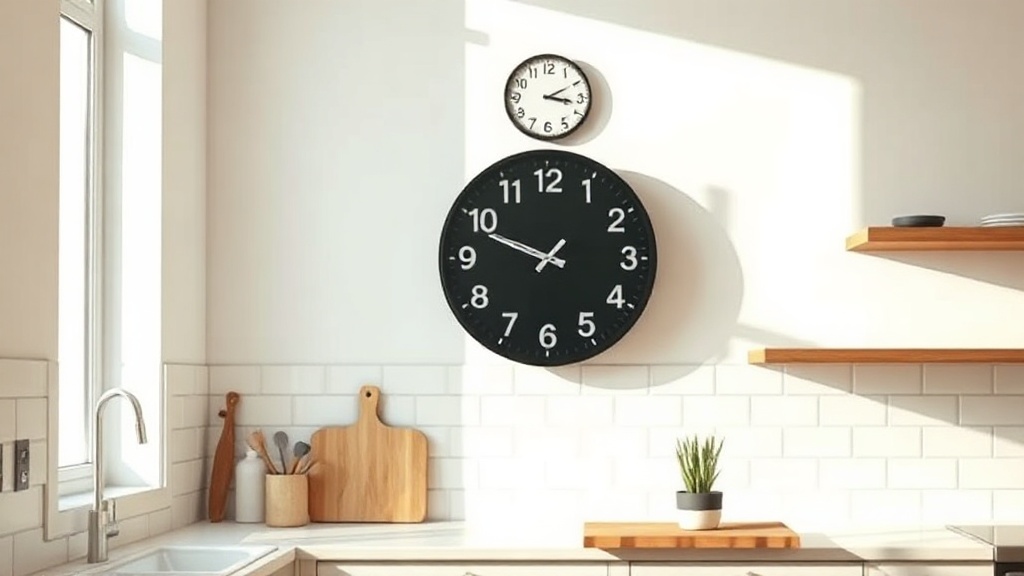
A kitchen might have a decorative analog clock above the window for visual warmth, plus a small digital display near the oven for cooking timers and quick checks. A home office might center around a large analog clock as a design anchor on the main wall, with a desktop digital clock on the work surface showing seconds for precise timing.
The key is that each clock has a defined role. Two clocks fighting for attention in the same sightline creates visual noise. Two clocks serving different purposes, one aesthetic and one functional, in naturally separate zones creates a home that actually works without apology.
The analog vs digital wall clock for home debate rarely has one universally correct answer. What it always has is a right answer for your specific walls, your rooms, and how you actually move through your home each day. Start there, and the choice becomes obvious faster than you'd expect.
FAQ
Are analog wall clocks harder to read than digital ones?+
Not necessarily. Most adults who grew up reading clock hands process analog displays as quickly as digital ones, often faster for approximate time-telling because hand angles are processed peripherally. Digital clocks do have a readability edge in low light, at long distances, and for exact minute counts. The gap narrows significantly with a well-designed analog face: bold numerals, high-contrast hands, and a clean dial.
Do all analog wall clocks tick loudly?+
No. The audible tick comes from step-movement quartz mechanisms, where the second hand advances one position per second with a small mechanical click. Sweep-movement (also called continuous-movement or silent-movement) clocks rotate the second hand in a smooth, near-silent arc. Most clock listings will specify which movement type is used. If noise is a concern for a bedroom or office, always check the specs for "silent movement" or "sweep movement" before buying.
Which type of wall clock is better for a living room?+
Analog clocks dominate living room decor for good reason: the circular face, the moving hands, and the wide range of materials and styles (solid wood, brushed metal, ceramic, aged brass) make them inherently decorative. A large analog clock above a sofa or fireplace functions like a piece of art. Digital clocks can work in very modern or tech-forward living rooms, but they require careful styling to avoid looking utilitarian. If your living room has any warmth or softness to the decor, analog is almost always the stronger choice.
What is a flip clock and how does it compare to analog or digital?+
A flip clock displays time using numbered cards that physically rotate on a spindle, producing a soft mechanical flip sound every minute or hour. The output is numerical (like digital), but the mechanism is entirely mechanical (like analog), with no screen or backlight. Visually, flip clocks have a warm retro character that bridges both formats. They're particularly popular in mid-century modern, industrial, and eclectic interiors, and they work well for people who want instant number readability without the cold look of an LED display.
How long do analog wall clocks last compared to digital ones?+
A quality analog wall clock with a standard quartz movement can run reliably for 15-25 years with only battery replacements. Mechanical analog clocks, properly serviced, can last generations. Digital wall clocks have a more finite lifespan tied to their electronic components and display screens, typically 5-15 years depending on usage and build quality. If you're buying a clock for a central space where longevity and timelessness matter, analog is generally the more durable long-term investment.
Can a digital wall clock actually look good in a stylish home?+
Absolutely, but it takes a little more intention. The key is choosing a digital clock whose housing is as considered as its display. A matte-black metal frame with amber LED numerals can feel right at home in an industrial loft or Scandinavian-influenced kitchen. Flip clocks and Nixie tube clocks take this even further, combining digital readability with materials and mechanisms that feel genuinely warm and tactile. Avoid cheap plastic casings and overly bright blue-white displays if aesthetics matter to you in the space.