
A wall clock does something quietly powerful. It holds a room together. You walk into a space, and if the clock is right, you barely notice it consciously. You just feel like the room works. Get it wrong, and something always seems slightly off, even if you can't name what. Choosing from the best wall clock brands for home decor isn't about chasing names or trends. It's about understanding what different brands actually do well, and matching that to your wall.
This guide covers the brands worth knowing in 2026, across every major design territory: industrial metal, Scandinavian wood, vintage European, luxury statement, and modern minimalist. For each category, here's what customers consistently say, what the materials actually mean for daily life, and where the price makes sense.
À retenir
- Design style should come first: match the clock's material and silhouette to your existing furniture, not just your color scheme.
- Silent quartz movements matter more than people think, especially in bedrooms and open-plan living spaces.
- Size is the most common mistake: most people buy too small. A 30 cm clock on a 3-meter wall disappears.
- Premium doesn't always mean expensive. A well-constructed bamboo or metal clock at $60-$110 consistently outperforms flashy plastic pieces twice the price.
- The best brands hold their finish. Check for powder-coated or lacquered metal and solid wood joinery, not veneer over MDF.
How to Actually Judge a Wall Clock Brand (Before Price Even Enters the Picture)
There's a question worth asking before looking at any brand page: what problem is this clock solving? For a bedroom, tick volume matters more than size. For a kitchen, easy-read numerals and grease-resistant materials beat decorative flourishes. For a living room statement wall, scale and visual weight are everything.
The brands that consistently get recommended in design communities share three traits. First, they use movements sourced from established manufacturers, primarily Seiko and Taiwanese quartz mechanisms, rather than no-name internals that drift noticeably within six months. Second, their finishes hold up: powder-coated metal resists humidity, solid bamboo and hardwood won't warp under moderate temperature changes the way MDF does. Third, they're honest about size. A brand that only shows close-up product shots and vague "approximately 30 cm" copy is hiding something.

Industrial and Metal Wall Clocks: The Brands That Get Raw Materials Right
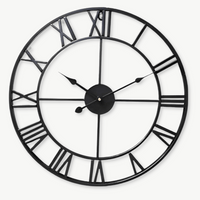
Industrial-style clocks remain one of the most searched categories in home decor, and it's not hard to see why. A well-executed metal clock with visible gear details or an exposed Roman numeral face reads as both timeless and architectural. It works in loft apartments, in kitchens with open shelving, in home offices, and on the dark-painted accent walls that have become a fixture of contemporary interiors.
The key differentiator between industrial brands is whether the metal actually looks aged or just printed to look aged. Genuine powder-coated finishes with hand-applied patina take longer to produce and cost more. The payoff is a surface that genuinely improves with time rather than peeling away after two years.
Brands to watch in this category tend to favor oversized formats (50 cm and above), because industrial aesthetics are built around scale. A small industrial clock looks like a prop. At 50 cm or 60 cm, the same design becomes a genuine focal point. Copper and blackened iron are the most requested finishes. Copper, in particular, photographs beautifully and warms up neutral-toned rooms without adding pattern or color complexity.
La reco de Elena
Industrial Copper Red Wall Clock - Metal Quartz Silent
The copper-red metal finish here does exactly what good industrial design should: adds warmth and weight to a neutral wall without needing anything else around it.
À partir de 105.00 USD
Voir le produit →Scandinavian and Wooden Wall Clock Brands: Minimalism That Actually Delivers
Scandinavian design is one of those aesthetics that gets referenced constantly and executed poorly just as often. Real Scandinavian minimalism isn't bare walls and cold rooms. It's warm materials, functional forms, and nothing that doesn't earn its place. A Scandinavian wall clock should feel like it belongs. Clean lines, a restrained face, natural wood or matte black, and proportions that don't fight the surrounding furniture.
Bamboo has become the material of choice for brands working in this space, and there are good reasons beyond the obvious environmental argument. Bamboo is dimensionally stable, meaning it resists the expansion and contraction cycles that cause cheaper wooden clocks to crack or warp near windows and heating vents. It also takes minimal finishing, which is perfect for a category that prizes the look of natural surfaces.
Did you know?
Bamboo technically isn't wood at all. It's a grass, and it grows to full height in roughly 3-5 years compared to 20-50 years for most hardwood trees. Some bamboo species reach 30 meters in height. For clock manufacturing, its hardness rivals many traditional hardwoods, which is why brands invested in longevity increasingly prefer it over pine or MDF-backed veneers.
The brands that stand out in this category tend to offer both black-stained and natural-finish variants of the same model. That's a good sign: it means the underlying form is strong enough to carry multiple colorways, rather than relying on a single finish to hide structural weaknesses. Natural bamboo pairs well with linen, rattan, and plaster-effect walls. Black bamboo reads well against white walls and raw concrete alike.
One thing customers consistently flag about Scandinavian-style clocks: the hand contrast matters. A natural wood face with hands in the same tone forces you to squint. Brands that add a matte black or deep charcoal hand on a light face solve this elegantly without adding visual noise. Worth checking before you buy.

La reco de Elena
Black Nordic Wooden Wall Clock - Scandinavian Bamboo Design
This black bamboo design hits the sweet spot between Scandinavian restraint and genuine visual presence, at a price that makes sense for the material quality.
67.00 USD
Voir le produit →Vintage and European-Style Brands: When You Want Character, Not Just Decoration
Vintage wall clock design covers a lot of ground. French station clocks with Arabic numerals on cream dials. Roman numeral faces framed in aged brass or patinated iron. Art Deco silhouettes with geometric hands. What connects them is a sense of history: these are clocks that look like they've accumulated meaning over time, even when they're brand new.
The brands worth paying attention to in this category are those that use genuine metal casting rather than plastic shells with metallic spray finishes. The weight difference is obvious when you handle the piece: a well-made vintage-style clock in cast iron or solid brass feels planted when hung, whereas a lightweight plastic imitation shifts and tilts with any wall vibration.
Roman numeral faces deserve their own mention. The proportioning of Roman numerals across the dial face is one of the hardest things to get right. Too tightly spaced, and the clock reads as cluttered. Too far apart, and the face looks like it's missing something. Brands with experienced typographic and product design teams tend to produce faces where the numeral spacing feels immediate and natural. Those with more generic catalog approaches often reuse the same numeral templates across every face, and it shows.
For rooms with existing antique furniture, aged bookshelves, or exposed brick, a vintage wall clock collection gives you more design flexibility than any single contemporary piece. The tonal range, from pale cream dials to deep mahogany-framed faces, is wide enough to find something that reads as part of the room rather than placed on it.
Comparing Wall Clock Brands by Price Range and What You Actually Get
Price point is where a lot of buying decisions go wrong. Not because people overspend, but because they underestimate what the mid-range actually offers versus the budget tier. Here's what the bands look like in practice:
| Price Range | Typical Materials | Movement Quality | Best For |
|---|---|---|---|
| Under $50 | Plastic, thin MDF, acrylic | Generic quartz, often audible tick | Temporary spaces, rentals, utility rooms |
| $50 - $120 | Bamboo, solid wood, powder-coated metal | Silent quartz (Seiko-grade), reliable | Bedrooms, living rooms, kitchen focal points |
| $120 - $250 | Cast metal, hardwood, glass dial covers | Precision silent quartz, multi-year lifespan | Statement walls, open-plan living, gifting |
| $250 and above | Brass, resin sculpture, luxury metals | Premium or mechanical movement options | Luxury interiors, architectural centerpieces |
The $50-$120 band is where value peaks for most buyers. You get materials that last, silent movements that won't keep you awake, and design ranges wide enough to cover most interior styles. Spending more than $120 is absolutely justified for large-format pieces (60 cm and above), where scale demands heavier materials and more precise construction. Below $50, the trade-offs are real: movements are rarely silent, finishes chip and dull faster, and proportions tend to be generic.
Designer and Statement Wall Clock Brands: When the Clock IS the Room
Some clocks aren't decorative accessories. They're the entire design conversation of a room. A 60 cm gold circle clock on a plaster-grey wall. A sculptural deer-head resin piece above a fireplace. A steampunk gear clock in a home office with dark paneling and leather. These are pieces where the surrounding decor is built around the clock, not the other way around.
Brands working at this scale typically offer limited production runs and hand-finishing on their metalwork. The visual vocabulary is more specific: these aren't catalog pieces. They're objects that will read differently in every room because they carry enough visual weight to respond to their surroundings.

The practical question with statement clocks is always placement before purchase. A 60 cm piece needs roughly 80-90 cm of unobstructed wall on all sides to read properly. Too close to a doorframe, window, or adjacent furniture, and the scale advantage collapses. The clock starts to look crowded rather than commanding. If you're unsure, cut a piece of cardboard to the clock's exact dimensions and tape it to the wall for 24 hours. You'll immediately see whether the proportions work.
At this price point, finish longevity is worth scrutinizing. Ask whether gold-toned pieces are lacquered (protects against tarnishing) or raw brass (develops a patina, which some buyers prefer). Black metal finishes in statement pieces are almost always powder-coated, which is the right choice for durability. Brushed chrome and nickel at this tier should carry manufacturer warranties against surface degradation.
La reco de Elena
Gold Circle Design Wall Clock - 60 cm Metal Dial
At 60 cm, this gold metal piece has enough physical presence to anchor an entire wall without competing furniture. The circular geometry keeps it versatile across room styles.
209.00 USD
Voir le produit →Quiet Movements: The Feature Most Buyers Only Care About After the First Night
Here's what almost nobody mentions before buying and almost everyone mentions in reviews: tick noise. A standard quartz movement produces a tick-tock at roughly 40-45 decibels, which sounds harmless until it's 2 am and the clock is on the wall opposite your bed. Or you're on a work call and the mic picks it up. Or you're watching something with the volume low.
Silent sweep movements, sometimes labeled "sweep second hand" or "silent quartz," use a continuous motor rotation rather than the step-by-step mechanism that creates the tick. The second hand moves fluidly rather than clicking around the face. More importantly, the movement is genuinely inaudible beyond about 30 cm. Not quieter. Inaudible.
Brands that specify "silent quartz" explicitly are telling you something real about their sourcing. Those that describe a clock as "quiet" without the sweep qualifier are often using the same standard movements as budget options. The word matters. Silent quartz wall clocks with sweep movements are appropriate for any room in the home. Standard quartz movements should stay in hallways, garages, or utility spaces where ambient noise masks the tick.
Voir la collection
Wall Clock
166 wall clocks spanning every style, material, and size, giving you the range to find exactly what fits your space rather than settling.
166 références
Découvrir la catégorie →What Customer Reviews Actually Tell You About Wall Clock Brands
Reading reviews for wall clocks is a specific skill. Most positive reviews say "looks great" and most negative reviews say "stopped working." Neither tells you much. The reviews worth reading fall into a narrower category: customers who describe their space, mention the wall color or room type, and explain what they tried before this clock. That context turns a five-star rating into genuinely useful data.
Patterns that signal a trustworthy brand: multiple reviewers mentioning the same specific detail without any obvious prompting (the hands are well-balanced, the hanger is solid, the glass cover is clear not greenish). That kind of independent corroboration is hard to fake and tells you the design team sweated the details.
Red flags: lots of photos showing the clock out of the box but almost none on actual walls. Reviews that focus exclusively on packaging. A large number of reviews mentioning battery drain faster than expected (often a symptom of a low-quality movement drawing excess power). Any brand with a high proportion of reviews that arrive within the first week of product launch and then abruptly stop warrants a closer look at the sourcing.
For best-selling clock models specifically, look for at least 30-40 reviews spread across a 6-month window. That's enough volume and time spread to reflect real ownership experience rather than launch-period enthusiasm. It's also enough to see whether quality consistency holds across production batches.
Choosing by Room: Matching Brand Specialties to Where the Clock Will Actually Live
Bedroom clocks need silent movements above all. The design range is wide, but if a clock makes any audible sound, it has no business being in a room where you sleep. Bamboo and wood-frame pieces work well here because their natural tones support the soft textures that most bedrooms already contain. Size is typically moderate, 25-40 cm, because bedrooms rarely have the wall spans that justify larger formats.
Kitchen and dining spaces are where vintage, industrial, and bold-face designs earn their place. Legibility from across the room matters: a clock above a kitchen doorway needs to be readable from the far counter, not just up close. Brands with strong kitchen-specific design ranges tend to emphasize high-contrast dials, larger numeral sizing, and finishes that resist humidity, which eliminates most untreated wood options.
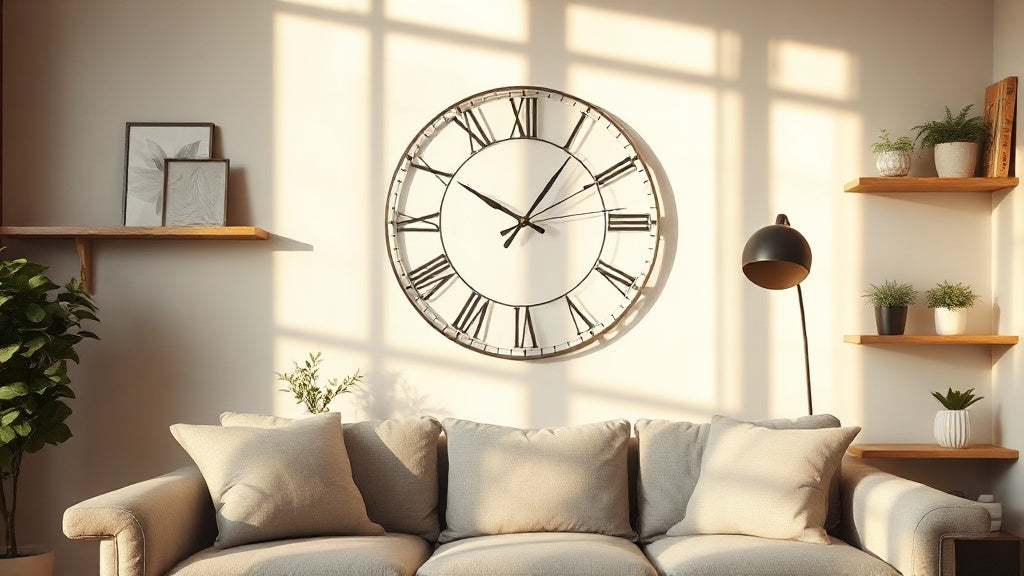
Living rooms give you the most latitude and the highest stakes. This is the wall most visitors actually see. An industrial wall clock with visible metal construction works as an anchor piece for contemporary rooms. A large vintage pendulum face reads as warm and European. A geometric gold or black metal design supports modern and transitional interiors without leaning too heavily into a single era.
Home offices have become a proper design space in their own right, and the clock category reflects that. Steampunk and mechanical-aesthetic pieces (3D gears, exposed movements) suit the technical and creative ambiance of a dedicated workspace. They also provide a focal point that isn't a screen, which matters for mental context-switching during long days.
"A clock is the one piece of decor you look at dozens of times a day without ever really seeing it. That's exactly why it has to be right."
Elena Rossi, on the underrated importance of clock placement
The Brands That Get It Right Across Multiple Style Registers
Most clock brands own one aesthetic very well and struggle everywhere else. The industrial brand that pivots to Scandinavian minimalism often produces something that feels like neither. The vintage specialist that adds a "modern" line tends to create pieces that look like they're trying too hard to be young. Recognizing this pattern saves real money.
The exception is brands that build their range around movement quality and material honesty, then let the design respond to those foundations. A brand committed to silent sweep movements and real wood construction can credibly offer both a black Nordic bamboo piece and a warm natural-finish version, because the underlying quality is consistent. What changes is the surface expression, not the structural approach.
When a brand covers five or six distinct design families and all of them look plausible, that's a signal they're sourcing from quality-consistent manufacturing partners rather than dropping whatever sells this season. For the buyer, that means you can trust the less-reviewed models in their catalog, not just the bestsellers.
Finding the right wall clock for your home decor ultimately comes down to one honest question: does this piece belong in the room, or is it just placed there? The brands that consistently produce pieces that belong, regardless of price point, are the ones worth returning to when you're furnishing a new space or replacing something that never quite worked. Start with material, then scale, then style. In that order.
Questions about wall clock brands, answered
What's the most important factor when comparing wall clock brands?+
Movement quality is the foundation. A beautiful clock with a noisy or unreliable movement will disappoint quickly. After that, material authenticity: real wood, real metal, and genuine powder coating vs. paint over plastic make a significant difference in how the piece holds up over 5-10 years. Design can be personal, but those two factors are non-negotiable.
Are silent wall clocks actually completely silent?+
Yes, within normal room conditions. Silent sweep quartz movements produce no audible tick. The second hand moves in a continuous glide rather than clicking from second to second. In a silent room, you might hear a very faint hum from within a few centimeters of the movement itself, but at any practical viewing distance, the sound is absent. This is meaningfully different from "quiet" movements that still tick, just more softly.
How do I choose the right size wall clock for my room?+
The general rule used by interior designers is that a clock's diameter should be between one-third and one-half the width of the wall section it occupies, not the full room. For a 90 cm section of wall between two windows, that means a 30-45 cm clock. Most buyers choose too small. A quick practical test: cut cardboard to the intended clock size and tape it to the wall. Live with it for a day before committing.
Is bamboo a durable material for wall clocks?+
More durable than most buyers expect. Bamboo has a hardness rating comparable to many hardwoods and is significantly more dimensionally stable than pine or MDF-core products. It resists warping and cracking under moderate temperature and humidity changes, which is exactly what wall pieces near windows or heating vents need to handle. The main caution: avoid direct sunlight exposure over years, which can lighten the finish unevenly.
What's the difference between industrial and vintage wall clock styles?+
Industrial design emphasizes raw materials, structural honesty, and scale. Think exposed metal, visible hardware, bold numerals, and oversized formats. The aesthetic references factories, workshops, and urban spaces. Vintage design, particularly European vintage, is warmer: aged brass, Roman numerals, cream or parchment dials, ornate hands. It references domestic and civic spaces. The two sometimes overlap (an aged-iron clock with Roman numerals works in both categories), but their emotional register is different: industrial is bold and cool, vintage is intimate and warm.