
Choosing the right wall clock for your home sounds simple until you're standing in a room with a tape measure in one hand and a browser tab open to 200 different clocks. Too small and it vanishes. Too ornate and it fights everything else. Wrong material and the ticking keeps you up at night. It's one of those decisions that touches size, style, material, and placement all at once, and getting even one of those wrong is immediately obvious every time you walk into the room.
This guide breaks it all down. Not in vague "consider your aesthetic" terms, but in practical, specific steps you can use today, whether you're furnishing a brand-new space or replacing a clock that's never quite worked.
À retenir
- Wall clock diameter should be roughly one-third to two-thirds of the wall width behind it.
- Match the clock's movement type to the room: silent quartz for bedrooms, any movement for hallways.
- Material choice (wood, metal, glass) affects how the clock ages and interacts with light.
- Style should complement your room's existing palette, not match it exactly, but rhyme with it.
- Placement height: center the clock at roughly eye level (57, 60 inches from the floor) unless it's above furniture.
The Size Question: Why Most People Get It Wrong
The most common mistake? Buying a clock that's too small. It happens because a clock looks substantial in a product photo or on a shelf in a shop, then disappears on a wall. Walls have a way of swallowing things.
Here's a reliable starting point: measure the width of the wall (or the furniture piece the clock will hang above), then aim for a clock diameter that falls between one-third and two-thirds of that measurement. A wall section 90 cm wide works well with a clock between 30 and 60 cm across. Going smaller usually reads as an afterthought.
That said, rules bend with intention. A single large clock, 50 to 60 cm or more, used as a solo statement on a wide open wall is a legitimate design choice. So is a cluster of three smaller clocks grouped asymmetrically. What doesn't work is one small clock centered on a big wall with nothing else around it.

High ceilings change the equation too. In a room with 3-meter ceilings, standard 30 cm clocks read visually "low" and insignificant. Push to 45, 60 cm, or hang slightly higher than you normally would, to keep the vertical proportions balanced.
Did you know?
The "one-third rule" for wall art sizing originally came from interior design schools in the 1970s, applied to paintings. Designers later borrowed it for clocks, mirrors, and other wall-hung objects, and it holds up remarkably well across room sizes and styles.
Clock Styles by Interior: Finding What Actually Fits
Style is where things get personal, but it's also where having a clear framework helps. Rather than thinking "what style do I like," think "what conversation does this clock need to have with the room it's going into?" A clock doesn't need to be a twin of your furniture, it needs to belong in the same sentence.
Scandinavian and minimalist interiors
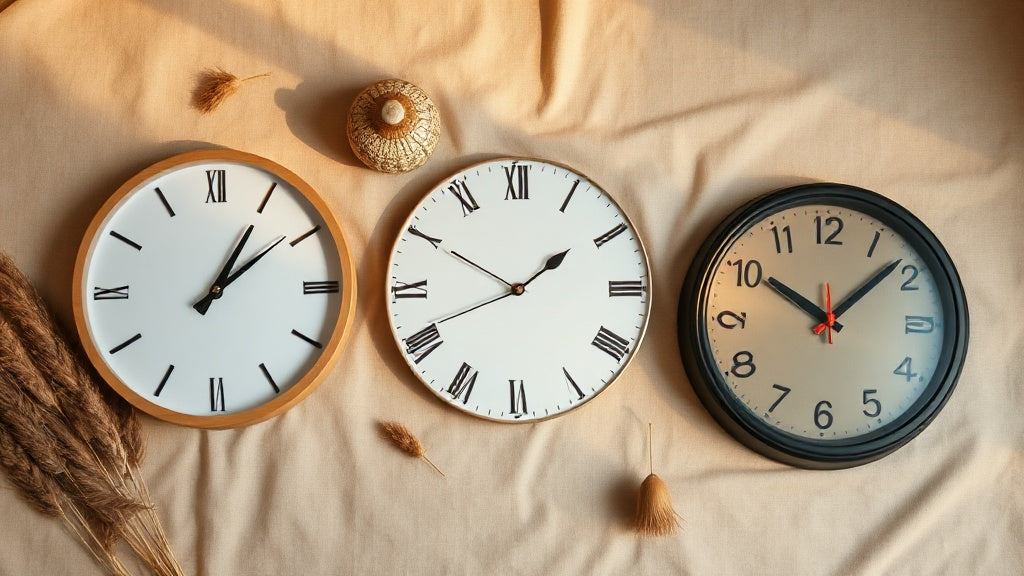
Clean lines, natural materials, restrained color palettes. These rooms thrive on clocks that feel considered rather than decorative. Bamboo or light wood cases, simple hands, minimal or no numerals, neutral tones (black, white, natural oak). A clock with too much visual noise, ornate frames, multiple sub-dials, bold colors, will clash with the deliberate calm these rooms work hard to create.
The Scandinavian wall clock collection is worth a look if this is your direction. The key feature to check: are the hands readable without the clock demanding attention? That's the Scandinavian sweet spot.
Industrial and loft aesthetics
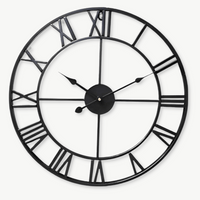
Exposed brick, concrete, raw metals, dark woods. These spaces have texture and weight, so a delicate clock will feel out of place. You want metal frames, iron, steel, copper, open-face designs where the mechanism is visible, Roman numerals, and finishes that reference workshop or factory heritage. Aged brass and matte black both work well here.
Elena's pick
Industrial Copper Red Wall Clock - Metal Quartz Silent
Copper-finished metal and an open industrial frame, exactly the visual weight that raw brick and concrete walls need.
From $105.00
See the product →Classic, traditional, and European styles
Rich wood tones, ornate frames, Roman numerals, pendulums. These clocks carry heritage, they're pieces that feel like they've always been there. A well-chosen traditional clock in a classic interior reads as a natural anchor point, not a decoration added later. Look for quality in the face finish and the movement; in these styles, details show.
Contemporary and eclectic spaces
More freedom here, but also more risk of choosing something that feels random. Contemporary rooms often respond well to clocks that have one strong design feature, an unusual material (acrylic, glass), an unexpected shape, or a graphic face, rather than clocks that try to do several things at once. One bold move, confidently executed.

Materials: What They Look Like, Sound Like, and How They Age
Material choice isn't just visual. It affects the weight and installation, the sound the clock makes, and how it will look in five years. Here's a practical breakdown of the main options.
| Material | Visual character | Best suited for | Watch out for |
|---|---|---|---|
| Wood / Bamboo | Warm, organic, natural grain texture | Scandinavian, Japandi, rustic interiors | Can warp in high-humidity rooms (bathroom, above stoves) |
| Metal (iron, steel) | Strong, graphic, often open-frame | Industrial, modern, loft spaces | Weight, ensure wall fixings are appropriate |
| Metal (brass, copper, gold) | Warm metallic, aged or polished finish | Classic, Art Deco, eclectic rooms | Polished finishes show fingerprints; patina develops over time |
| Glass | Light, refined, transparent or frosted | Contemporary, European, minimalist spaces | Fragile; avoid high-traffic corridors |
| Acrylic / Resin | Lightweight, graphic, can be translucent | Modern, sculptural, playful interiors | Can yellow with UV exposure over many years |
One material note worth mentioning: bamboo clocks have had a genuine surge in the past few years, and not just for trend reasons. Bamboo grows fast, finishes beautifully, and produces a lighter clock that's easier to hang on plaster walls without heavy fixings. If you're in a rental and working with picture hooks, bamboo is practical as well as good-looking.
Movement Types: The Difference Between a Peaceful Night and a Sleepless One
This is the detail most buyers only think about after they've made their purchase. The movement, the mechanism that drives the hands, determines whether your clock quietly marks time or audibly announces every second.
Silent quartz (sweep movement)
The hands move in a continuous sweep rather than a tick-tock step. No sound whatsoever in a quiet room. This is the right choice for bedrooms, home offices, and anywhere you spend focused time. A silent quartz movement is a practical non-negotiable if the clock goes anywhere near where you sleep or work.
Standard quartz (step movement)
The familiar tick-tock, one step per second. Perfectly fine in kitchens, hallways, or living rooms where ambient noise masks it. Some people actively like the sound, it can add a sense of life to a quiet house. Just know what you're choosing.
Mechanical and pendulum movements
These are the clocks you wind, maintain, and live with over decades. They have a sound, a presence, and a personality that quartz simply can't replicate. A pendulum clock ticking in a hallway is a specific kind of home comfort. The trade-off: they need occasional maintenance and are less accurate than quartz. For most people, that's absolutely worth it for a piece they're genuinely attached to.
If you're drawn to that kind of craftsmanship, the pendulum clock collection is worth spending time with, 21 references ranging from traditional to contemporary interpretations.
Room-by-Room: Where to Put It and Why It Matters
The same clock reads completely differently depending on the room. Here's what actually works in each space.
Living room
This is where size pays off. A living room can take a 40, 60 cm clock without hesitation, especially above a sofa or fireplace. Think of it as the room's focal point, not just a timekeeper. Style flexibility is high here: industrial, vintage, contemporary, statement pieces all have a place. The one thing to avoid is a clock so small it looks like it wandered in from another room.
Elena's pick
Large Roman Numeral Wall Clock - Metal, Silent Quartz
A large-format metal clock with Roman numerals that anchors a living room wall the way a great piece of art does, with quiet authority.
$219.00
See the product →Kitchen
Practicality leads here. The clock needs to be readable from across the room, large, clear numbers or hands, good contrast. It also needs to handle humidity and the occasional cooking splatter without deteriorating. Metal and sealed wood both work. Avoid anything with a fabric or paper face in a kitchen environment. Vintage-style or industrial kitchen clocks with bold faces are a strong choice because the kitchen's functional character suits their directness.
Bedroom
Silent quartz. Full stop. The bedroom clock can be smaller and more intimate, 25 to 35 cm is often enough. Style-wise, this room rewards clocks that feel personal rather than statement-making: natural wood, soft finishes, restrained design. The goal is a clock that you notice pleasantly when you look for the time, not one that competes with the room.

Hallway and entryway
A hallway clock is one of the most underrated placement decisions in a home. It's the first thing you see when you arrive and the last before you leave, glancing at the time as you head out is an action almost everyone does. A well-chosen vintage-style wall clock in a hallway does double duty as a functional piece and a first impression of your home's personality. Proportions here depend on corridor width: narrow hallways (under 1 m wide) suit 25, 35 cm; wider entry halls can carry 40, 50 cm easily.
Home office
Silent movement is important here for the same reason as the bedroom: concentration. Beyond that, this room gives you latitude to express personal taste more than any other. A collector's piece, a sculptural clock, something slightly unexpected, the home office is often a private space, so you can afford to be bold with style in a way you might not in a shared living area.
"A room without a clock feels unmoored. A room with the wrong clock feels cluttered. A room with the right clock feels complete."
A perspective shared by more than a few interior designers, and honestly, hard to argue with.
Placement and Hanging: The Details That Seal the Deal
You've chosen the clock. Now where exactly does it go on the wall?
The standard guidance for wall art applies here: hang the center of the piece at roughly eye level, which for most people falls between 57 and 60 inches (145, 152 cm) from the floor. This feels natural when you're standing in the room. The exception is when the clock goes above a piece of furniture, a sofa, sideboard, or fireplace mantel, where you should hang it 15 to 20 cm above the top of the furniture rather than calculating from the floor.
- Above a sofa: 15, 20 cm gap between sofa back and clock bottom. Clock width should be roughly two-thirds of the sofa width.
- Above a fireplace: centered on the chimney breast, high enough to clear the mantel comfortably. This is often a focal point, so size up.
- Isolated on a feature wall: center the clock on the wall both horizontally and at eye level. Use painter's tape to mock up the position before you drill.
- In a gallery wall: treat the clock as you would any art piece. Odd-number groupings (3 or 5 items) tend to feel more balanced than even numbers.
Matching Your Clock to Your Color Palette (Without Overthinking It)
This trips people up more than it should. The goal isn't to match the clock to your wall color or your furniture finish exactly, that leads to a clock that blends in and disappears. The goal is contrast with coherence.
A few frameworks that actually work:
- Complement a dominant material: if your room has lots of warm wood tones, a clock in the same wood family but slightly lighter or darker reads as intentional. A clock in a completely different material (matte black metal, for example) creates contrast, also good, but a different effect.
- Pick up an accent color: if your room has gold or brass accents (light fixtures, cabinet handles, cushion trim), a clock with a brass or gold face finish will feel like it belongs rather than arrived from elsewhere.
- Use the clock to introduce a new tone: a copper clock in a neutral grey-and-white room pulls in warmth that the room might have been missing. One strong piece can shift a room's emotional temperature.
For rooms with very busy wallpapers or strong pattern work, lean toward clocks with simpler, cleaner faces. Let the clock be readable rather than competing. For plain painted walls, you have full permission to go bold on the clock design, this is your moment.
Elena's pick
Black Nordic Wooden Wall Clock - Scandinavian Bamboo Design
Matte black on natural bamboo: one of the cleanest color contrasts you can put on a warm-toned or neutral wall without overcomplicating anything.
$67.00
See the product →Budget, Quality, and What You're Actually Paying For
Wall clocks span a wild price range, from $30 to well over $400, and the difference between price points is real, but not always where people expect it.
At the lower end, you're usually paying for a standard quartz movement in a lightweight plastic or thin MDF frame. Fine for a rental kitchen or a child's room. At the mid-range ($60, $150), the frame materials step up significantly: genuine wood, solid metal, quality finishing. The movement is often silent quartz. These clocks look substantially better and last considerably longer.
Above $150, you're often paying for scale (large formats cost more to ship and frame), premium materials (solid cast metal, real bamboo, hand-finished surfaces), or distinctive design. A $250 statement clock for a living room focal point is a different category of purchase, closer to art than to utility, and priced accordingly.
One honest note: the movement inside most quartz clocks, regardless of price, is broadly similar. A German Quartz movement or Japanese Miyota movement (both used in quality timepieces) will outperform generic mechanisms, but even mid-range clocks with standard movements keep accurate time for years with one AA battery. What you pay for above the basics is frame quality and design, not significantly better timekeeping.
Browse the full wall clock collection to compare styles and price points across 160+ references, it's a useful way to see what your budget gets you at different size and material levels.
Frequently asked questions
What size wall clock do I need for my living room?+
For most living rooms, aim for a clock between 40 and 60 cm in diameter. The key reference point is the wall or furniture behind it: the clock should measure roughly one-third to two-thirds of that width. For large rooms with high ceilings, push toward the upper end of that range or larger. When in doubt, go bigger, it's far more common to choose a clock that's too small than one that's too large.
What is a silent wall clock and do I really need one?+
A silent wall clock uses a "sweep" quartz movement, where the second hand moves in a continuous smooth rotation rather than ticking once per second. There's no audible tick. For bedrooms and home offices, this is genuinely worth prioritizing, a standard ticking clock in a quiet room at night is much more noticeable than people expect. In kitchens or hallways where background noise is higher, a standard tick is usually fine.
How high should I hang a wall clock?+
The standard is to hang the center of the clock at eye level, typically 57, 60 inches (145, 152 cm) from the floor. When hanging above furniture, a sofa, console table, or fireplace mantel, position the bottom of the clock 15 to 20 cm above the top of the furniture rather than calculating from the floor. For gallery walls, treat the clock like any other framed piece and balance it visually with the surrounding items.
Which clock style works in multiple rooms without looking out of place?+
Minimalist designs in neutral finishes, matte black, natural wood, brushed metal, tend to work across the widest range of interiors. A simple round face with clean hands and no or minimal numerals reads well in Scandinavian, contemporary, and transitional spaces without demanding the room adjust to it. If you want one clock that can move rooms with you, this is the safe and aesthetically sound choice.
Can I use a wall clock as the main focal point of a room?+
Yes, and it's a strong design move when done deliberately. A large-format clock (50 cm or more) on a clean wall, with minimal competing elements, can function exactly as a focal point in the same way a painting or mirror would. Statement clocks with sculptural frames, bold metalwork, or unusual materials (like a deer-head resin clock or a spherical rings design) work especially well in this role. The key is giving the clock space, don't crowd it with other wall pieces.