
A large vintage Roman numeral wall clock is one of those pieces that design trends simply can't touch. Minimalism peaks, maximalism returns, Scandinavian becomes boho, and yet there it is, still hanging in the most beautiful rooms, looking completely at home. There's a reason for that. Roman numerals carry centuries of visual weight, and when you scale them up on a clock face, something almost architectural happens to your wall.
Choosing the right one, though, takes more than scrolling through options and picking the prettiest. Size relative to your wall, frame material against your existing palette, placement height, the room it goes in, all of it matters. Here's what actually works.
⭐ Key takeaways
- Large Roman numeral clocks (18 in / 45 cm and above) work best as solo focal points, not as part of a gallery wall.
- The dial style, open-face vs. framed, raised numerals vs. printed, changes how formal or casual the piece feels.
- Frame material is the fastest way to match a clock to an existing interior style without redecorating.
- Silent quartz movements are non-negotiable in bedrooms and home offices; the ticking matters more than most people realize.
- Placement height should center the clock roughly at eye level when standing, not ceiling height, a common mistake.
Why Roman Numerals on a Clock Face Still Read as Timeless in 2026

Roman numerals have appeared on clock faces since the first mechanical tower clocks of 14th-century Europe. That's not a trivial fact, it means the design language of I, IV, VIII, and XII has been associated with time-telling for over 700 years. At this point, it's less a stylistic choice and more a cultural reflex. When you see Roman numerals on a dial, your brain reads "clock" before it reads anything else.
What makes them interesting from a design standpoint is the contrast they create. Arabic numerals are efficient, compact, modern. Roman numerals are expansive; they take up space on the dial, they create visual rhythm with their varying widths (think of the satisfying heaviness of VIII compared to the slenderness of II). On a large vintage Roman numeral wall clock face, that rhythm becomes genuinely decorative. You're not just telling time; you're hanging something with real graphic presence.
There's also a reason so many vintage-style and industrial-style interiors lean into Roman numeral clocks. The numerals feel like they belong to a world of workshops, libraries, and railway stations, spaces where craftsmanship was taken seriously. That association is hard to manufacture with a generic dial. It either reads as authentic or it doesn't.
💡 Did you know?
Early clock makers in medieval Europe actually used IIII instead of IV on clock faces. The theory most historians favor: it created better visual symmetry on the dial, balancing the VIII on the opposite side. Many traditional and vintage-style clocks still use IIII today, it's not a mistake, it's a 700-year-old design decision.
Getting the Size Right: What "Large" Actually Means for Your Wall
The word "large" gets used loosely in clock descriptions. Anything labeled large in a product listing might be 14 inches or 32 inches, a significant difference on your wall. Here's a practical framework.
| Clock Diameter | Best Wall Width | Ideal Room |
|---|---|---|
| 12-14 in (30-35 cm) | Under 6 ft (180 cm) | Kitchen, hallway, small bedroom |
| 16-20 in (40-50 cm) | 6-9 ft (180-270 cm) | Living room, dining room, home office |
| 22-28 in (55-70 cm) | 9-12 ft (270-360 cm) | Open-plan living, large living rooms |
| 30 in+ (75 cm+) | 12 ft+ (360 cm+) | Statement walls, loft spaces, commercial interiors |
The practical rule: your clock should occupy roughly one-third to two-thirds of the wall width it hangs on. Any less and it floats, looking like an afterthought. Any more and it competes with the architecture itself. A 20-inch clock on an 8-foot wall feels proportionally right. That same clock on a 14-foot feature wall disappears.
For open-plan rooms, where the "wall" is often implied by a sofa or a console table rather than defined by two corners, the furniture arrangement defines the scale reference. A clock hanging above a 6-foot sofa has a natural width limit of about 6 feet to fill well, meaning a 24-28 inch clock hits the sweet spot without overwhelming the seating area beneath it.
| Frame Material | Interior Style Match | Dial Pairing |
|---|---|---|
| Aged metal / wrought iron | Industrial, French country, loft | Weathered white, parchment |
| Brushed brass / antique bronze | Traditional, heritage, maximalist | Cream, ivory, aged linen |
| Natural wood (walnut, oak) | Scandinavian, cottagecore, organic | Warm white, natural linen |
| Open-face / skeleton (no frame) | Minimalist, contemporary, eclectic | Wall surface becomes the dial |
Frame Materials and What They Actually Signal in a Room
The frame is where a large vintage Roman numeral wall clock either connects with your interior or fights it. Roman numeral dials are classic enough to work across many frame types, but the wrong material in the wrong room creates a jarring note, the design equivalent of wearing the right outfit to the wrong event.
Aged Metal and Wrought Iron
This is the most common pairing with Roman numeral dials, and for good reason. Dark aged metal, whether cast iron, steel with a patinated finish, or blackened metal, reinforces the historical association of Roman numerals. It reads as industrial, slightly formal, and genuinely vintage. Works beautifully in exposed brick rooms, raw concrete lofts, and even traditional French country kitchens where the weathered look has a long heritage.
Brushed Brass and Gold Tones
Brass frames shift the entire mood. Where dark metal says "workshop," brass says "library" or "old European hotel lobby." Paired with cream or ivory dials, a brushed brass Roman numeral clock has genuine warmth without feeling fussy. It sits well in rooms with warm wood tones, camel leather, or dusty terracotta walls.
Natural Wood
A wooden frame softens the formality of Roman numerals considerably. This combination suits Scandinavian-influenced spaces, cottagecore aesthetics, and any room where you want the clock to feel organic rather than architectural. Walnut and oak frames in particular have enough grain interest to add their own visual texture without competing with the dial.
Open-Face and Skeleton Styles
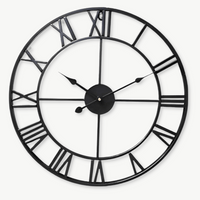
Some of the most striking large Roman numeral clocks use no frame at all, just metal hands and Roman numeral markers mounted directly on the wall. This open-face or *skeleton* approach works particularly well on textured walls (exposed brick, patterned plaster, wood paneling) because the wall itself becomes part of the clock's visual field. It's a confident choice. It reads as modern and minimal despite the traditional numeral style.

Room-by-Room: Where a Large Vintage Roman Numeral Clock Works Best

The Living Room
This is the natural home for a large statement clock. The living room gives you wall scale, it benefits from a clear focal point, and guests actually see it. Above the sofa, above the fireplace, or on a dedicated feature wall, all three placements work, with slightly different effects.
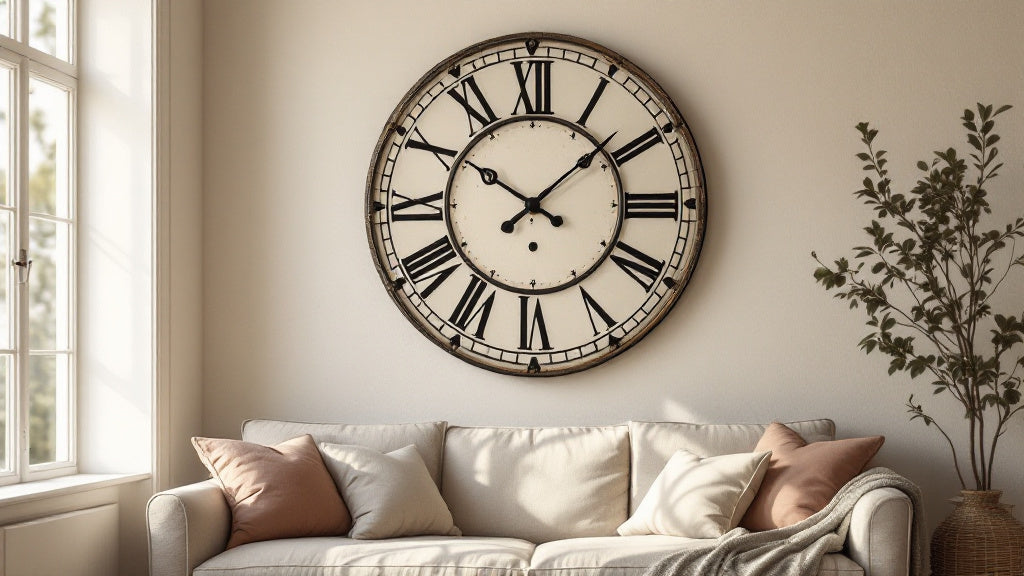
Above the sofa, a large clock acts as an anchor, pulling the seating arrangement together visually. Above the fireplace, it becomes a centerpiece with built-in architectural context, the mantelpiece below frames the clock almost automatically. On a standalone feature wall with nothing else, a 24-inch or larger Roman numeral clock can carry the entire wall on its own. That's a bold move, but when it works, it really works.
The Kitchen
Kitchens and clocks have a longstanding relationship for obvious reasons. But a large vintage Roman numeral wall clock in a kitchen shifts the feeling from "utility" to "character." Position it on a wall visible from both the cooking area and the dining table. Keep it high enough that steam from the hob doesn't affect it over time. In a kitchen with open shelving, a cream or ivory dial clock echoes the warmth of wood and ceramic without competing with the objects on the shelves.
The Dining Room
Slightly underused as a clock placement, the dining room actually offers ideal conditions for a vintage large-format clock. The walls are often bare, the room has good height, and people spend extended time seated there, meaning they genuinely look at the walls. A dark metal Roman numeral clock above a sideboard or buffet creates a hotel-lobby atmosphere that works brilliantly for anyone who takes their dinner parties seriously.
The Home Office
Here, function matters as much as form. A large Roman numeral clock in a home office keeps you oriented during long work sessions without requiring a phone check, which, let's be honest, always leads to a 10-minute detour. The vintage aesthetic softens the utilitarian feel of a workspace. One crucial point: go silent quartz. A ticking clock in a quiet room becomes the only thing you can hear within 20 minutes, and concentration is hard enough without a metronome you didn't ask for.

The Detail That Separates Good Vintage Clocks from Great Ones

Most people focus entirely on the dial and frame when choosing a clock. The details that actually determine whether a piece feels premium or cheap are subtler, and they're worth knowing before you buy.
Hand Design
On a vintage Roman numeral clock, the hands are doing serious visual work. Spade or sword-style hands in blackened metal are the most traditional pairing, they have a weight and presence that feels proportional on larger dials. Thin baton hands can look elegant on smaller clocks but tend to feel flimsy on anything above 20 inches. If the product listing doesn't show a clear detail shot of the hands, ask or look elsewhere. The hands make or break the piece at this scale.
Dial Texture and Finish
A flat, printed dial reads as modern. A textured, slightly aged, or linen-finish dial reads as genuinely vintage. The difference is more pronounced in person than in product photography, so if possible, look for customer photos. Aged parchment, cream linen, and weathered white are all more interesting in a room than a plain flat white, which tends to look clinical against warm-toned walls.
Movement Quality and Silence
Quartz movements have improved considerably. High-quality silent quartz uses a step-motor mechanism that eliminates the audible tick of a standard quartz movement. This is sometimes called a "sweep" movement (the second hand moves continuously rather than ticking in discrete steps). For any room where silence matters, bedroom, study, baby's room, this is the specification to check before buying. It's also the spec that separates a clock you'll love from one you'll eventually banish to the garage.
"A clock is the one piece of decor you interact with every single day, not just when guests come over."
A frequent observation from customers who switched from decorative to functional-first clock choices
Styling Roman Numeral Clocks Across Different Interior Aesthetics
One of the most practical things about large vintage Roman numeral wall clocks is how adaptable they are. The same clock can read differently depending on what surrounds it. Here's how to make that work intentionally rather than accidentally.
Industrial and Raw Loft Spaces
Dark metal frame, open-face design, oversized numerals. The clock becomes part of the industrial vocabulary, alongside exposed pipes, concrete, and aged wood. No additional styling needed on the wall. Let it stand alone, negative space is your friend here. A 26-inch wrought iron Roman numeral clock against a raw brick wall is a complete sentence.
Traditional and Heritage Interiors
A cream dial, brushed brass or antique bronze frame, and a slightly ornate hand design fits naturally in rooms with crown molding, rich textiles, and warm color palettes. Consider pairing with framed prints or portraits in the same wall zone, the clock can anchor a more complex wall arrangement here. Think English manor library meets updated living room.
Scandinavian and Modern Minimal
Keep the frame simple: thin black metal or natural light wood. A clean Roman numeral dial on a white or pale gray background feels contemporary despite the traditional numeral style. The contrast between the classical dial language and the minimal surroundings is where the tension gets interesting, and interesting is always better than safe.
Bohemian and Eclectic Rooms
Roman numeral clocks sit surprisingly well in eclectic interiors, particularly when the frame has some organic texture, woven rattan edging, distressed wood, hammered metal. The vintage numeral style has enough warmth to feel at home alongside plants, layered textiles, and collected objects. Think of it as the one piece in the room that quietly holds everything else together.
Placement Height and Practical Hanging Tips
The most common mistake people make with large wall clocks is hanging them too high. A clock at ceiling height feels disconnected from the human scale of the room. The center of the clock should sit at approximately 57-60 inches (145-150 cm) from the floor in rooms with standard 8-foot ceilings, roughly eye level when standing. This is the same guideline used for hanging framed art, and it applies equally to clocks.
In rooms with higher ceilings (10 feet or more), you can move slightly higher, perhaps 65-70 inches to the clock center, but resist the urge to push it toward the ceiling. The clock needs to stay in conversation with the furniture below it, not float up into architectural territory. If there's a sofa, console, or mantel beneath it, that furniture is setting the baseline for the whole composition.
For hanging, most large clocks above 20 inches have reinforced hanging points designed for wall anchors. If your wall is drywall without a stud at the exact spot you need, use toggle bolts rated for at least twice the clock's weight. A 24-inch metal clock can weigh 6-10 pounds, wall anchors for picture hooks won't hold that reliably over time. A 20-minute installation done properly beats a 2-minute one that ends with a clock on the floor.

Beyond the Living Room: Unexpected Placements That Actually Work
Bedrooms, hallways, and staircases are all underused locations for large clocks, and Roman numeral styles in particular translate well to these spaces.
In a bedroom, a large Roman numeral clock above the bed or on the wall opposite the bed creates a focal point that reads as both functional and considered. The key: it must be silent. A bedroom clock that ticks will become the subject of a 2 AM complaint within a week, and no clock is worth that.
Hallways reward bold scale choices. A narrow corridor with a 20-inch clock at eye level transforms from a transitional space to a room with its own character. People slow down. They notice the clock on the way in and on the way out. If you have art in other rooms, the hallway clock can be its own statement, no need to compete, no need to hang anything else alongside it.
Stairwells are genuinely great for oversized clocks. The vertical wall space created by a staircase is often the largest uninterrupted surface in a home, and a 28-30 inch vintage clock at mid-staircase height becomes something people comment on every time they visit. It's the kind of detail that makes a house feel like it was put together with thought rather than convenience.
For anyone who wants to explore the full range of options across sizes and styles, the large wall clock collection covers everything from understated to genuinely architectural. The living room wall clock selection is also worth browsing if you're working specifically on a main living space, it's organized with scale and focal point placement in mind.
FAQ
What size should a large vintage Roman numeral wall clock be for a living room?+
For most living rooms with standard 8-9 foot ceilings, 20-28 inches (50-70 cm) hits the right scale. The clock should span roughly one-third to two-thirds of the wall width it occupies. Above a sofa, a 24-inch clock on an average sofa wall feels proportionally strong without dominating. For larger open-plan spaces or rooms with double-height ceilings, you can comfortably go up to 30-36 inches. When in doubt, tape a paper template to the wall at the exact size before you order.
Where should you hang a large wall clock in a room?+
Center the clock at approximately 57-60 inches (145-150 cm) from the floor in rooms with standard ceilings, that's roughly standing eye level, the same guideline used for framed art. In rooms with ceilings of 10 feet or more, you can raise it slightly to 65-70 inches. The most common mistake is hanging too high: a clock needs to stay in visual conversation with the furniture below it, not drift up toward the ceiling where it loses connection with the room's human scale. Above a sofa, fireplace, or sideboard are the three strongest anchor positions.
What do you call a clock with Roman numerals?+
There's no single formal name, they're typically referred to as Roman numeral clocks or classical dial clocks. In horological terms, the dial featuring Roman numerals is called a "chapter ring," and the style itself is one of the oldest in clockmaking, dating to the earliest mechanical tower clocks of 14th-century Europe. In everyday conversation, "vintage Roman numeral clock" covers the style most people are looking for.
What is the largest practical size for a wall clock at home?+
For most residential spaces, 24-28 inches (60-70 cm) is the upper limit of what works proportionally in standard rooms with 8-9 foot ceilings. Beyond that, clocks start to feel more architectural than decorative, which works well in loft spaces, open-plan areas with double-height ceilings, or commercial settings. The practical rule is that the clock's diameter should not exceed two-thirds of the wall width it occupies. For very large spaces, clocks up to 36-40 inches exist and can be genuinely striking when the architecture supports the scale.
Why do some Roman numeral clocks use IIII instead of IV?+
This is one of the most common questions about Roman numeral clocks, and the answer is more interesting than "someone made a mistake." The IIII convention on clock faces predates standardized Roman numeral usage and likely persisted for visual balance reasons, IIII occupies a similar visual weight on the dial to VIII on the opposite side, creating symmetry. There's also a practical theory: clock dial engravers could arrange their type sets more efficiently using four I characters than the I and V combination. Many traditional clockmakers still use IIII intentionally as a mark of historical authenticity.
Can a large vintage clock work in a modern or minimalist interior?+
Yes, and often better than people expect. The key is choosing a frame that speaks the same visual language as the room. In a minimalist interior, an open-face Roman numeral clock (where the numerals and hands mount directly on the wall without a face plate) creates classical-meets-minimal contrast that feels intentional rather than out of place. In a modern space with warm wood tones, a slim walnut-framed Roman numeral clock bridges the gap naturally. The dial style is classical; the presentation can be entirely contemporary.