
Your garage hits 110°F in July. Your sunroom swings from a frosty 28°F on a January morning to a greenhouse-warm 95°F by noon. And that covered porch? It deals with humidity, condensation, and the occasional blast of cold air that would make most timekeepers give up entirely. Finding a wall clock that works in extreme temperatures isn't just about picking something that looks good. It's about understanding which materials, movements, and construction choices actually hold up when conditions get punishing.
Most standard wall clocks are designed for the comfortable 65-75°F bubble of a climate-controlled living room. Push them outside that range and things start to go wrong fast: batteries drain in the cold, plastic cases warp in the heat, quartz movements drift, and acrylic faces crack when thermal expansion has nowhere to go. Here's what actually works, and why.
Key takeaways
- Metal cases (steel, aluminum, cast iron) handle thermal expansion far better than plastic or acrylic.
- Standard alkaline batteries fail below 14°F (-10°C); lithium batteries keep working down to -40°F.
- Quartz movements are reliable between roughly 32°F and 104°F; beyond that range, accuracy suffers.
- Sealed or gasketed clock backs prevent condensation from reaching the movement - critical in sunrooms and covered patios.
- UV-stabilized materials matter for any clock exposed to direct or intense indirect sunlight.
Why Temperature Extremes Break Ordinary Wall Clocks
Before jumping to solutions, it helps to understand what's actually failing. A wall clock that works in extreme temperatures is a small system of interdependent parts: a case, a dial, a movement, a battery, and often a lens or cover. Each of those components responds to heat, cold, and humidity differently. When one fails, the whole clock fails.
Heat is the more aggressive villain. At sustained temperatures above 104°F (40°C), the lubricating oils inside a standard quartz movement start to thin and migrate away from the gear train. The gears wear faster, timekeeping drifts, and eventually the movement stops altogether. Plastic cases soften slightly under sustained heat, which can cause the back plate to warp and allow dust or moisture inside. Acrylic lenses are particularly vulnerable: they expand and contract at rates that put stress on the frame, leading to cracks or a permanently bowed surface.
Cold introduces a different set of problems. Alkaline batteries (the type that ships with most clocks) lose roughly 50% of their effective capacity at 32°F (0°C) and perform almost not at all below 14°F (-10°C). The battery isn't dead, exactly; it just can't deliver sufficient current in the cold. The clock stops, you replace the battery, and it stops again a week later. The battery isn't the issue: the temperature is.

Humidity and condensation compound both problems. Sunrooms, covered porches, and garages with poor ventilation experience significant daily temperature swings, and that swing pulls moisture out of the air onto every cold surface. Water and clock movements don't mix. Even a small amount of condensation on the circuit board or gear train accelerates corrosion and causes premature failure.
Did you know?
Quartz oscillators are rated by their temperature coefficient, a measure of how much their frequency drifts per degree of temperature change. Consumer-grade quartz crystals typically have a temperature coefficient around ±20 ppm across their full operating range. That translates to roughly ±1 minute per month under stable conditions, but the drift compounds quickly when temperatures swing outside the rated range. In a sunroom that swings from 55°F overnight to 95°F by afternoon, you can see your clock gain or lose several minutes a week purely from thermal drift. Not broken, just thermally stressed.
The Best Materials for Temperature-Resistant Clock Cases
The case is your clock's first line of defense. Get this right and you've solved half the problem before you even think about the movement.
Steel and Powder-Coated Metal
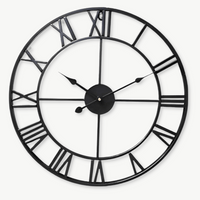
Heavy-gauge steel is the gold standard for temperature-resistant clock cases. Steel conducts heat evenly rather than building up hot spots, and it doesn't warp or creep under sustained thermal load the way plastics do. Powder coating adds a layer of UV and moisture protection that bare metal doesn't have. Worth noting: a well-built industrial-style steel clock typically weighs 3-5 lbs, which matters when you're mounting into drywall or a wooden fence post. Use the right anchor hardware and it's a non-issue; ignore it and you'll be patching a hole in the wall after the first windy day.
Look for cases with a full-wrap powder coat rather than a spray-paint finish. Powder coat bonds to the metal through an electrostatic process and cures in an oven, creating a film that's 2-4x thicker than liquid paint and far more resistant to peeling, chalking, or bubbling under heat. It's one of those details you can feel when you pick the clock up: a quality powder-coated finish has a slightly textured, almost matte depth that cheap spray paint simply can't replicate.
Aluminum and Cast Aluminum
Aluminum is lighter than steel and naturally corrosion-resistant, which makes it popular for outdoor and semi-outdoor clocks. The trade-off is that aluminum has a higher thermal expansion coefficient than steel (roughly 24 µm/m·°C vs. 12 µm/m·°C for steel), so frames can rack slightly over time if the construction doesn't account for that movement. Cast aluminum (poured into a mold rather than stamped from sheet stock) is denser and more dimensionally stable than sheet aluminum. It's worth the extra cost for a permanent installation on a covered porch or pool house wall.
Materials to Avoid in Extreme Conditions
Standard ABS plastic, polystyrene, and untreated acrylic all struggle above 90°F with direct sun exposure. Wood, including bamboo, handles moderate temperature variation reasonably well but is highly susceptible to humidity cycling: it absorbs moisture, expands, dries out, and contracts, which eventually loosens joints and warps faces. Wood clocks are genuinely beautiful in controlled indoor spaces, including sunrooms with year-round climate control, but they're a poor fit for unheated garages or any space open to outside air. Save the Scandinavian oak minimalism for the living room where it belongs, and reach for cast metal when the environment gets tough.
| Material | Heat tolerance | Cold tolerance | Humidity resistance | Best use case |
|---|---|---|---|---|
| Powder-coated steel | Excellent | Excellent | Good (sealed) | Garages, covered patios |
| Cast aluminum | Very good | Very good | Excellent | Outdoor walls, porches |
| Bamboo / natural wood | Moderate | Good | Poor | Climate-controlled sunrooms only |
| ABS plastic | Poor above 90°F | Moderate | Moderate | Indoor use only |
| Acrylic / glass lens | Poor (cracks) | Poor (cracks) | Moderate | Avoid in uncontrolled spaces |
Quartz vs. Other Movements: What Handles Temperature Best
The movement is the heart of any clock, and it's where temperature most directly affects performance. Here's a practical breakdown of what you're actually choosing between.
Standard Quartz Movements
The vast majority of wall clocks sold today use a quartz battery movement. Think of it as a miniature electronic heartbeat: a tiny quartz crystal vibrates at 32,768 Hz when voltage is applied, a chip divides that frequency down to one pulse per second, and that pulse drives the gear train. It's elegant in its simplicity. The practical operating range for most consumer quartz movements sits between 32°F and 104°F (0°C to 40°C). Step outside that window and the crystal's oscillation frequency starts to shift, so the clock either gains or loses time, sometimes dramatically.
For a garage or sunroom that stays within that range most of the year, a quality quartz movement is perfectly fine. The key word is "quality": Miyota and Seiko Instruments (TMI) movements, both made in Japan, are noticeably more robust and accurate than the no-name movements that go into the cheapest clocks on the market. If a listing doesn't mention the movement's origin at all, that's usually a sign it's using the lowest-cost option available. You get what you pay for, and in an extreme environment you'll feel that difference within the first winter.

High-Torque Quartz Movements
Some larger metal clocks, particularly those with heavy metal hands in an industrial or Bauhaus aesthetic, use high-torque quartz movements rated for heavier loads. These are built to closer tolerances, which typically translates to slightly better temperature resilience. They're also more reliable long-term in dusty environments like garages, because the motor isn't straining against friction from a heavy hand. If you're choosing a clock with hands longer than about 7 inches, confirm it uses a high-torque movement; a standard movement paired with heavy hands will wear out significantly faster in any challenging environment.
Mechanical Movements
Fully mechanical movements (spring-wound or weight-driven) handle temperature variation differently from battery quartz: they don't rely on battery chemistry at all. A wound mechanical clock keeps ticking in the cold as long as it has stored energy, which is genuinely impressive when the mercury drops below zero. The real trade-off is that the lubricating oils inside mechanical movements are also temperature-sensitive. A clock running in a 110°F garage will need servicing every 2-3 years rather than the 5-7 years you'd expect in a climate-controlled room. If you're someone who enjoys the ritual of winding a clock and doesn't mind occasional maintenance, mechanical wall clocks make a surprisingly practical choice for a garage or workshop where the aesthetic fits.
The Battery Question: Lithium vs. Alkaline
This single swap fixes more temperature-related clock failures than any other change. Lithium AA batteries (Energizer Ultimate Lithium is the most widely available benchmark) are rated to operate from -40°F to 140°F (-40°C to 60°C). That covers virtually every real-world extreme temperature scenario a wall clock that works in extreme temperatures will encounter. They're about 3-4x the price of alkaline batteries, but they last 2-3x longer in normal conditions and continue working where alkaline batteries simply quit. Over a two-year period in a cold garage, the math usually favors lithium even on pure cost.
Sunrooms: The Humidity-Heat Combination That's Hardest on Clocks
Sunrooms present a genuinely tricky environment because they combine intense UV exposure, high heat buildup (a south-facing glass sunroom can hit 100°F on a summer afternoon), and significant humidity swings as the glass cools overnight. A clock sitting in direct afternoon sun faces UV degradation on its dial, thermal stress on its case, and enough glare that you can't actually read it anyway.
For sunrooms, the practical answer is a metal-cased clock positioned on a wall that receives indirect rather than direct sun. The north or east wall of a sunroom is almost always cooler and less UV-exposed than the south or west. This simple placement shift can extend clock life by years without requiring you to buy a specialized product. It's the kind of detail a good interior designer knows intuitively but rarely writes down.
If the sunroom is climate-controlled (meaning it has heating and cooling that keeps it within roughly 60-80°F year-round), almost any well-built clock will work. That opens up genuinely beautiful options: wooden wall clocks with their warm natural grain look exceptional in sunroom settings. Bamboo in particular handles modest humidity cycling better than dense hardwoods like walnut or oak, because its cellular structure is more uniformly distributed and less prone to directional warping.
Garages and Workshops: Dust, Vibration, and Wide Temperature Swings
A garage is the most demanding clock environment in any home. Temperatures can swing 70+ degrees between a winter night and a summer afternoon. Dust settles into every crevice. Power tools send vibration through walls and shelves. And most garage clocks spend years ignored, which means battery replacement often happens only after the clock has already stopped. Sound familiar?
For garages, prioritize these features in roughly this order:
- Metal case with a sealed back: Dust infiltration is the most common cause of garage clock failure. A gasketed or tight-fitting back plate keeps the movement clean. This matters more in a garage than almost any other environment.
- Open-face or mineral glass lens rather than acrylic: Acrylic scratches from dust abrasion over time; mineral glass doesn't. Open-face designs (no lens at all) eliminate the thermal stress problem entirely, and they look fantastic in an industrial or minimalist aesthetic.
- Simple, legible dial: A garage is a functional space. Large Arabic numerals or bold index markers read from across the room without squinting. A Bauhaus-style dial with high-contrast numerals is both more readable and more durable than a decorative one.
- Lithium AA battery: Already covered above, but worth repeating as the single most cost-effective upgrade for any clock living in an unheated space.
Industrial-style metal clocks built for loft or workshop aesthetics translate naturally into actual workshop and garage settings. The industrial wall clock category is worth browsing specifically for this use case: the design language matches the environment, and the construction (heavy metal cases, large dials, minimal decoration) aligns exactly with what makes a wall clock that works in extreme temperatures durable in tough conditions. It's a rare case where form and function genuinely point in the same direction.

Outdoor-Adjacent Spaces: Covered Porches, Pool Houses, and Screened Rooms
Covered porches and screened enclosures occupy a middle ground between indoor and outdoor. They're protected from direct rain but exposed to ambient temperature, wind-driven moisture, and indirect UV. What works here depends heavily on the specific exposure: a deep covered porch on the north side of a house is nearly as gentle as an indoor environment, while a shallow overhang on a south-facing wall in Arizona is genuinely punishing from May through September.
The practical rule for these spaces: if condensation visibly forms on surfaces in the morning, treat the whole space as an outdoor environment and choose accordingly. That means a sealed metal case, lithium batteries, and no lens materials that crack under thermal cycling. When in doubt, go with cast aluminum or powder-coated steel, full stop.
"A clock on a covered porch isn't just a timekeeper - it's part of how that space feels like a real room. Get the material right and it lasts a decade without a thought."
Elena Rossi, on designing outdoor-adjacent spaces
For clocks designed for outdoor use, look for IP-rated or explicitly weather-resistant specifications. True outdoor clock ratings account for rain splash, UV degradation, and temperature cycling as a combined stress test rather than separate criteria. An IP44 rating (protected against solid objects over 1mm and water splashing from any direction) is adequate for a covered porch. IP65 adds dust-tight sealing and water jet protection, which suits a more exposed installation like a pool house wall that catches spray.
Practical Placement Tips That Extend Clock Life in Any Extreme Environment
The right clock in the wrong spot will still fail early. These placement habits make a real difference:
- Keep it off the floor level: Heat pools near ceilings; cold settles near floors. Mount a garage clock at eye height (5-6 ft) to keep it in the more moderate middle zone of the room's temperature gradient.
- Avoid direct airflow from HVAC vents or fans: Rapid temperature changes stress movements more than sustained extreme temperatures. A clock that cycles from 60°F to 90°F ten times a day degrades faster than one that sits at a steady 95°F.
- East or north walls in sunrooms: Direct afternoon sun on a clock face accelerates UV fade, warms the case dramatically, and creates glare. Moving to the cooler side of the room is free and takes five minutes.
- Check battery contacts annually: In humid environments, alkaline batteries can leak potassium hydroxide onto the contacts. Clean with a dry cotton swab annually, or switch to lithium to reduce leak risk significantly.
- Leave an air gap behind the clock: A clock mounted flush against an uninsulated exterior wall conducts outdoor temperature directly into the case. Even a half-inch gap, created with standoff mounting hardware, meaningfully moderates that effect and extends movement life.
Note on humidity
Pool houses and enclosed spaces near water features can sustain relative humidity above 80% on warm days. At that level, even sealed metal cases aren't fully protective over the long term. A practical fix: tuck a silica gel desiccant pack behind the clock, replace it annually, and you'll absorb ambient moisture before it reaches the movement. It costs almost nothing and adds real protection in high-humidity spaces.
How to Read a Clock Spec Sheet for Temperature Tolerance
Most consumer clock listings don't prominently advertise operating temperature ranges. You often have to hunt for it, and occasionally you won't find it at all. Here's what to look for and where.
The movement specification is the critical number. Search for the movement brand and model (Miyota 2035, Seiko NH35, UTS movement, etc.) and find its technical datasheet. Consumer quartz movements typically list an operating range; if a listing doesn't mention the movement at all, assume it's a generic movement with a narrow tolerance window and plan accordingly.
For metal cases, the spec to check is the surface treatment: "powder-coated," "electroplated," or "lacquered" all mean different things in practice. Powder coat is the most durable for outdoor-adjacent use. Lacquer over bare metal peels in freeze-thaw cycles, sometimes within the first winter.
IP ratings (Ingress Protection) are worth understanding: IP44 means protected against solid objects over 1mm and water splashing from any direction, adequate for a covered porch. IP65 adds dust-tight sealing and water jet protection, suitable for more exposed installations. Most decorative wall clocks don't carry IP ratings at all, which tells you plainly they're designed for indoor use regardless of how rugged they look on a product page.
FAQ
What temperature range do standard quartz wall clocks operate in?+
Most consumer quartz movements are rated for 32°F to 104°F (0°C to 40°C). Outside that range, the crystal oscillator drifts and the clock loses accuracy. Cold also drains alkaline batteries rapidly. For spaces that go below freezing or above 104°F regularly, switch to lithium batteries and choose a clock with a higher-grade movement such as a Miyota or Seiko TMI unit.
Can I use a wood or bamboo wall clock in a sunroom?+
Yes, if the sunroom is climate-controlled (heated and cooled to stay within roughly 60-80°F year-round) and the clock isn't in direct sun. Bamboo handles modest humidity swings better than dense hardwoods like walnut or oak, because its cellular structure is more uniform and less prone to directional warping. Avoid wood clocks in unheated sunrooms or any space where temperature and humidity vary widely through the day.
Why does my garage clock keep stopping in winter?+
Almost certainly the battery. Alkaline batteries lose the ability to deliver sufficient current below about 32°F. The battery isn't fully dead; it just can't power the clock in the cold. Swap to lithium AA batteries (Energizer Ultimate Lithium is the most widely available option) and the problem almost always disappears. If it persists after that swap, the movement itself may have cold-weather sensitivity issues and it's time to replace the clock entirely with a metal-cased model built for tougher conditions.
Is an industrial metal wall clock actually more durable than a decorative one?+
Construction quality varies by manufacturer, not style label. That said, industrial-aesthetic clocks tend to use heavier metal cases, open or mineral glass faces, and simpler internal designs, all features that correlate with better temperature tolerance. They're also less likely to use fragile decorative acrylic elements that fail in heat or cold. Check the specific case material and surface treatment rather than relying on the style name alone.
Can I mount a wall clock directly on an exterior wall inside a garage?+
You can, but the exterior wall conducts outdoor temperature more strongly than an interior wall. In winter, an uninsulated exterior garage wall can be several degrees colder than the air in the center of the garage. Using standoff mounting hardware to leave a small air gap (even 0.5 inches) between the clock back and the wall surface helps moderate this effect and genuinely extends clock life over a few seasons.
Which clock materials resist UV fading best in a sunroom or covered porch?+
Powder-coated metal is the most UV-stable option available in decorative wall clocks. The cured powder coat layer resists chalking and color shift far better than painted or lacquered finishes. For dial faces, printed metal or anodized aluminum resists UV far longer than paper-based or plastic dials. If a clock listing doesn't mention UV-stabilized materials, assume the dial will fade noticeably within two or three summers of indirect sun exposure.