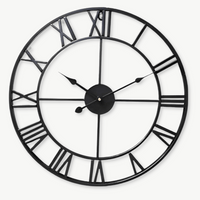


There's a moment when a room clicks. The furniture is right, the light is good, the colors hold together. Then you look at the wall and something is still missing. Not a painting, not a shelf. Something that carries weight without adding bulk. A glass wall clock with a modern elegant design does exactly that: it holds the eye, tells the time, and somehow makes the room feel more considered.
Glass is not a trend in clock design. It's a deliberate material choice with specific consequences for the way a room reads. This piece looks at those consequences honestly: what glass does well, where it falls short, and how to think about placement so the clock actually earns its spot on your wall.
Key takeaways
- Glass adds optical lightness: it reflects ambient light and visually opens up tight or darker walls.
- The dial design beneath the glass face carries the aesthetic; the glass amplifies it, not replaces it.
- Silent quartz movements are especially compatible with glass cases, since glass transmits sound more than wood or metal.
- European-style glass clocks (12 in / 30 cm) work well in both compact apartments and large living spaces.
- Placement height matters more with glass clocks: eye level or just above reads best when the material reflects light from across the room.
Why Glass Works Differently From Metal or Wood
Glass wall clocks behave differently from metal or wood because their transparent face keeps the wall visible behind the clock, giving the room optical lightness instead of visual mass, while the reflective surface changes appearance with the room's shifting light throughout the day. Walk into a room with a solid black metal clock on the wall. Your eye lands on it immediately. That's intentional: industrial and metal clock designs are built to command attention, to anchor a wall with mass and contrast. A glass wall clock with a modern elegant design does the opposite. It announces itself gently, almost reluctantly.
The transparency of the glass face means the wall behind it stays partially visible. The clock occupies space without consuming it. In rooms that are already well-furnished, that restraint is genuinely useful. You get the presence of a statement piece without the visual crowding that can come from heavy materials.
There's also what happens with light. Glass reflects it, scatters it across the room at different times of day. Morning sun catches the face one way; afternoon turns it almost milky. The clock changes with the room's light conditions, which gives it a quiet dynamism that static materials simply can't replicate.

Did you know?
Glass clock faces became popular in European clockmaking workshops during the late 19th century, particularly in France and Austria. Watchmakers discovered that a mineral glass cover over the dial not only protected the hands from dust but added a perceived depth to the face, making the clock appear more like a miniature window than a flat object. That layered, three-dimensional quality is still exactly what draws people to glass designs today.
The Anatomy of an Elegant Glass Clock: What to Actually Look At
An elegant glass wall clock earns its look through the relationship between the glass face and the dial beneath it: glass thickness, dial legibility, frame material, and a silent quartz movement all shape how the finished piece reads on your wall. When people search for a glass wall clock with a modern elegant design, they often focus on the frame or the color finish. Those matter, but the more telling detail is the relationship between the glass face and the dial beneath it.
A thick, beveled glass cover adds depth: the numbers appear to sit inside the clock, not on its surface. A flat, thinner glass pane gives a flatter, more graphic effect that suits contemporary minimalist rooms. Neither is wrong; they just communicate differently.
Here's what to check before buying:
- Glass thickness and finish: Mineral glass (thicker, with slight depth) vs. acrylic or standard glass (lighter, more budget-friendly). The difference is visible in how light refracts across the face.
- Dial legibility: Roman numerals on a glass-face clock have a particularly classical feel. Arabic numerals tend to read more cleanly in low light. For bedrooms, prioritize legibility over aesthetics.
- Frame material: Metal frames (brushed silver, matte gold, black powder-coat) with glass faces are the dominant pairing in European-style modern clock design. Wood-framed glass clocks lean warmer and work better in Scandinavian or hygge interiors.
- Movement type: Silent quartz is strongly recommended for glass-faced clocks. Glass transmits vibration and tick sound more efficiently than wood or heavy metal, so a standard ticking movement becomes noticeably audible in a quiet room.
Where Glass Clocks Actually Belong: Room-by-Room Thinking
Glass clocks work best where their transparency can integrate with the wall rather than interrupt it, living rooms with neutral palettes, open-plan kitchens that pick up warm light, and bedrooms where a silent quartz movement keeps the space calm. The lightness of glass isn't universally an advantage. It depends entirely on the wall and the room context.
Living Rooms: The Glass Clock as a Quiet Centerpiece
A living room wall with a neutral palette, warm white, soft gray, pale sage, is the natural home for a glass clock. The transparency lets the wall color read through the face, so the clock integrates rather than interrupts. If your living room already has several visual focal points (a gallery wall, a large mirror, a TV console with objects), a glass clock is the right call over a heavy metal piece. It contributes without competing.
Size matters here. A 12-inch glass clock reads well above a console or between wall art. For a full feature wall with nothing else on it, step up to something in the 16-20 inch range to prevent the clock from looking apologetic on a large expanse of wall.
Kitchens: Practicality Meets the Café Aesthetic
Glass-face clocks have a long history in café and restaurant interiors. That aesthetic translates well into domestic kitchens, particularly open-plan spaces where the kitchen flows into a dining area. The glass face is easy to wipe clean. The reflective surface picks up warm kitchen light and bounces it around pleasantly.
In kitchens, slightly smaller formats (10-12 inches) tend to work better; the scale feels appropriate against tiles or cabinets rather than overwhelming the space.
Bedrooms: Only If It's Silent
Glass clocks in bedrooms come down entirely to one variable: the movement. A silent quartz mechanism in a glass case is genuinely quiet, suitable for light sleepers. A standard ticking movement amplified by a glass face is not. Don't compromise on this in a bedroom. Scandinavian-style wall clocks with glass elements often pair silent movements with clean dial designs that keep the bedroom feeling calm rather than stimulating.

Pairing Glass Clocks with Interior Styles: What Actually Works
Glass is a chameleon material that pairs with most interior styles when the frame and dial are chosen to match: matte metal for minimalist rooms, beveled brass for European interiors, light wood for Scandinavian spaces, and raw iron for industrial lofts. Glass is a chameleon material. That's its strength and its challenge. Here's how it interacts with four common interior styles in 2026:
| Interior Style | Glass Clock Finish That Fits | What to Avoid |
|---|---|---|
| Modern Minimalist | Flat glass face, matte metal frame (black or brushed silver), clean Arabic numerals or bare hands-only dial | Ornate Roman numerals, decorative scrollwork frames |
| European / Classical | Beveled mineral glass, brass or antique gold frame, Roman numerals, aged patina finishes | Ultra-thin acrylic faces, cold chrome finishes |
| Scandinavian / Nordic | Light wood frame with glass face, sparse dial, natural hour markers instead of numerals | Heavy industrial frames, dark bronze tones |
| Industrial / Loft | Glass face behind a raw iron or black metal cage frame, exposed movement visible through glass | Delicate gold-toned frames, floral or ornamental dials |
The Placement Variables Most People Skip
The variables most people skip, mounting height, wall color, and what surrounds the clock, determine whether a glass clock's reflective quality actually reads from across the room or disappears into the wall. Choosing the clock is the enjoyable part. Getting the placement right is where most people lose confidence. A few variables are worth thinking through before you pick up the drill.
Height
Eye level, roughly 57 to 60 inches from the floor to the clock's center, is the standard for wall art and wall clocks alike. For glass clocks specifically, this height also maximizes the light-reflection effect: the glass catches ambient light at the angle most visible to someone standing in the room. Mounting too high pushes the reflective quality upward and out of your field of view.
Wall Color and Backdrop
A glass clock face takes on some of the quality of the wall behind it. Against a bright white wall, the clock reads crisply and graphically. Against a deep-toned wall (navy, forest green, charcoal), the glass creates a beautiful contrast; the transparency becomes more dramatic against the dark background. Avoid positioning a glass clock directly in front of a window unless you want a near-invisible silhouette effect (which can actually be intentional and striking in the right context).
Grouping Glass Clocks with Other Objects
Glass clocks pair well with mirrors; both share the same reflective, light-amplifying quality, and they create a coherent sensory group on a wall. They also work alongside framed art with light-colored matting. What doesn't work: placing a glass clock directly adjacent to very busy, pattern-heavy art. The restraint of the glass gets lost, and neither piece reads clearly.

Glass Clock Care: Keeping That Face Looking Sharp
Glass wall clock faces need only a microfiber cloth every couple of weeks to stay sharp; the main rules are to avoid ammonia-based cleaners near the frame seal and to check the back plate periodically in humid environments. Glass wall clocks need less maintenance than wooden or upholstered pieces, but the face collects fingerprints and fine dust in ways that matte surfaces don't show. A quick wipe with a microfiber cloth every couple of weeks keeps the reflective surface doing its job.
Avoid ammonia-based glass cleaners on framed glass clock faces; the cleaning fluid can seep under the frame seal and cloud the interior. A lightly damp cloth is enough for most situations. For stubborn smudges, a drop of diluted white vinegar on the cloth works well without risking the frame finish.
One more thing: if the clock is in a kitchen with steam or a bathroom-adjacent hallway with humidity fluctuations, check the back plate periodically. Condensation can work its way into the case over time if the seal degrades. Most quality glass-face clocks are sealed well, but it's worth checking after the first six months in a humid environment.
"The clock is the one piece on the wall that everyone checks, which means everyone also notices it. Make it worth noticing."
A sentiment shared by many customers who chose a glass-face designer clock for the first time
When to Choose a Glass Clock Over Other Materials
Choose a glass-face clock when the room already has strong visual elements and needs a piece that adds presence without competing, when good natural or artificial light can animate the reflective surface, or when a compact space would feel weighed down by a solid-material clock. Glass is not the right answer for every room. Here's the honest breakdown of when it earns its place, and when another material might serve better.
Choose a glass-face clock when:
- The room already has strong visual elements and you need a clock that adds presence without competing for attention.
- You want to play with light: the room has good natural light or interesting artificial lighting that the glass can work with.
- You're drawn to European or luxury clock aesthetics where the layered, three-dimensional quality of glass against a dial feels appropriate.
- The space is compact and a solid-material clock would feel heavy or oppressive on the wall.
Consider a different material when:
- The room needs a strong anchor point. A large metal or wooden clock creates a visual center of gravity that glass rarely achieves.
- The space has very low light, where glass reads as flat and loses its reflective quality.
- You want something with obvious tactile warmth. Bamboo, natural wood, or patinated metal carry warmth that glass, by nature, doesn't.
Designer Wall Clocks
If glass isn't quite what your wall needs, browse the full designer clock range: 166 references spanning every material, finish, and scale.
166 references
Browse the collection →Reading a Room Before You Buy: Three Questions Worth Asking
Before buying, ask what the wall does for the rest of the room, what the dominant texture palette is, and how the clock will be lit, those three questions determine whether a glass clock's reflective quality will actually work in context. After a lot of conversations with people who've replaced a clock they loved in the shop but regretted at home, the pattern is consistent: they made the choice looking at the clock in isolation, not in context. These three questions pull the decision back into context.
What does the wall do for the rest of the room? If it's a supporting wall, one that frames a sofa, a bed, or a dining table, a glass clock reinforces that framing without disrupting it. If it's the visual climax of the room, you might want something with more material weight to match the moment.
What's the dominant texture palette in the room? Linen, cotton, natural fiber: glass works beautifully alongside organic textures because the contrast is interesting without being jarring. Against an all-matte, all-wood palette, glass introduces a welcome note of precision. Against an already-reflective room (high-gloss surfaces, lacquer, large mirrors everywhere), a glass clock can tip the balance toward cold and hard.
How will it be lit? A glass wall clock with a modern elegant design positioned next to a pendant light catches that light and scatters it pleasantly. One sitting in a corner that never gets direct light reads flat and loses its most distinctive quality. Position the clock where it has at least one reliable light source, natural or artificial, within a few feet.
FAQ: Glass Wall Clocks
Is a glass wall clock fragile? Can it break easily during installation?+
Quality glass-face wall clocks use mineral glass or tempered glass covers that are significantly more resilient than standard window glass. The cover is not the vulnerable point during installation; the frame mount is. Use the supplied wall anchors, confirm the hook or screw rating matches the clock's weight, and the piece will be stable. Drop risk during hanging is the main concern; get a second pair of hands for anything heavier than 3 lbs.
Will the glass face create a glare problem in a sunny room?+
Direct sunlight hitting a glass-face clock at a perpendicular angle can create a glare that makes the dial hard to read for parts of the day. The fix is simple: angle the clock slightly downward (1 to 2 degrees) using a small bump pad or washer behind the bottom of the frame. This shifts the reflection away from eye level. Alternatively, position the clock on a wall that doesn't receive direct sunbeams during peak hours.
What size glass wall clock works best for a standard living room?+
For a standard living room with 8 to 9 ft ceilings and a sofa wall of 8 to 12 ft, a 12-inch (30 cm) glass clock reads clearly without overwhelming the space. If the wall is large and otherwise bare, 14 to 16 inches works better. The European design tradition favors 12-inch formats for most interior applications, partly because the glass face at that diameter has enough surface area to reflect light visibly from across the room.
Can I use a glass wall clock in a bathroom or near a kitchen with steam?+
Glass-face clocks are not rated for direct steam exposure. In a bathroom or above a stove, sustained humidity will eventually compromise the seal and fog the interior. A hallway adjacent to a bathroom is generally fine. If you specifically need a clock for a steamy kitchen or bathroom wall, look for a clock rated for outdoor or humid use rather than a standard glass-face decorative piece. It's also worth wiping down the frame lip every few months if the room runs warm and humid.
Do glass wall clocks suit rental apartments where I can't make large wall holes?+
Most glass-face wall clocks in the 10 to 14 inch range weigh under 2 lbs. At that weight, heavy-duty adhesive picture-hanging strips rated for 3 to 5 lbs hold them securely on painted drywall without a drill. Remove-and-reuse strips from brands like Command work well, and they leave minimal residue on walls. Confirm the weight of the specific clock before committing to adhesive strips rather than a nail.
How do I clean a glass wall clock face without damaging the frame or dial?+
A dry or lightly damp microfiber cloth is all you need for routine cleaning. Avoid ammonia-based sprays: they can seep under the frame seal and leave a cloudy residue on the interior side of the glass. For stubborn fingerprints, a small amount of diluted white vinegar on the cloth clears them without damaging powder-coat, brass, or brushed-metal frames. Never spray liquid directly onto the clock face; apply it to the cloth first.