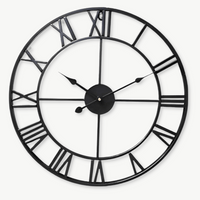


You know that feeling when a room is almost right but something's missing? Nine times out of ten, it's the wall. A bare stretch of paint, a lone shelf, or a clock that blends into the background like it's trying not to be noticed. The wall clock with natural wood and metal combo fixes that. It brings warmth from the wood, structure from the metal, and a kind of quiet confidence that neither material pulls off alone.
This pairing has been building momentum for a few years now, and in 2026 it's not slowing down. Designers kept choosing it, and customers kept buying it because it works across styles. Scandinavian living rooms, industrial lofts, Japandi kitchens, transitional bedrooms, the wood and metal wall clock fits where other statement pieces would clash.
Here's what actually matters when you're choosing one.
Key takeaways
- Wood grain and metal contrast create visual depth without adding visual noise to a room.
- The type of metal finish (matte black, brushed steel, aged brass) changes the mood of the same wood dramatically.
- Clock size relative to wall area matters more than most people think. Interior designers estimate that roughly 70% of first-time buyers choose a diameter that's too small for their wall. Oversizing is usually the braver, better choice.
- Silent quartz movements are non-negotiable in bedrooms and home offices.
- Mixed-material clocks sit at the intersection of Scandinavian, industrial, and Japandi aesthetics, all three are still design-forward in 2026.
Why Wood and Metal Work So Well Together on a Wall
Wood and metal work so well together on a wall because they are true opposites: one absorbs light while the other reflects it, one feels warm to the touch while the other reads as cool and precise, and together they stop competing and start completing each other. Architects have been pairing raw timber with steel for over a century, and it's not nostalgia keeping the combination alive. The two materials are opposites in almost every meaningful way: one is grown, the other is forged; one absorbs light, the other reflects it; one feels warm to the touch, the other reads as precise and cool. Put them together and they stop competing. They start completing each other.
On a wall clock, this contrast plays out in a focused space, maybe 30 to 60 centimetres of diameter. The wood face or frame carries the organic softness that makes a room feel lived-in rather than staged. The metal hands, ring, or case structure adds the kind of clean line that stops the whole thing from looking purely rustic. The result sits in that sweet spot between cozy and contemporary that most people are actually trying to hit when they say they want a "timeless" interior.

It also happens to photograph beautifully, which matters when a clock is on a feature wall. The grain catches light differently at different times of day. The metal adds a glint or a shadow depending on the finish. A purely wooden clock can read flat in photos and in real life. A purely metal one can feel cold. Together, they have texture and life.
Did you know?
The Bauhaus school, founded in Weimar in 1919, was one of the first design movements to formally champion the combination of natural wood with industrial metal in everyday objects. Their principle: form follows function meant nothing was decorative without also being purposeful, a philosophy that maps perfectly onto the modern wood and metal wall clock.
The Four Main Styles of Wood-and-Metal Wall Clocks
Wood-and-metal wall clocks fall into four distinct styles, each shaped by the ratio of wood to metal, the type of wood, and the metal finish, and knowing which style fits your space prevents a lot of costly returns. Not all mixed-material clocks are built the same way. The ratio of wood to metal, the type of wood, and the metal finish each pull the piece toward a different design territory. Getting clear on which style fits your space saves a lot of returns.
Scandinavian: Wood Face, Minimal Metal Hands
This is the most restrained version. A solid bamboo or light oak face, clean Arabic or Roman numerals, and slender metal hands in matte black or brushed steel. No fuss. The wood does most of the work, the metal just marks the time. It fits perfectly with white walls, linen textiles, and natural-fiber rugs. If your space already has wood tones in the flooring or furniture, this style extends that palette up onto the wall without overpowering it.
Industrial: Metal Frame, Wood Dial or Inset
Here the proportions flip. A heavy metal ring or open-frame case holds a wood element at the center or inset into the dial. Think matte black iron or raw steel with a walnut or reclaimed-look face. This reads bolder and suits darker walls, exposed brick, or spaces with leather furniture and Edison bulb lighting. It's a clock that holds its own in a room with strong character. If your kitchen has open steel shelving or your living room leans toward dark tones and tactile surfaces, this is your style.
Japandi: Bamboo or Pale Wood, Brass Metal Accents
Japandi, the Japanese-Scandinavian hybrid aesthetic that refuses to leave the conversation, favors lighter woods like bamboo and pairs them with aged brass or warm gold metal. The effect is quiet and considered. Nothing shouts. It works in rooms where every object has been chosen slowly and deliberately, which is exactly the kind of room Japandi is designed for.
Steampunk or Vintage Industrial: Weathered Wood, Aged Metal Gears
The most expressive end of the spectrum. Distressed or dark-stained wood combined with visible gear mechanisms, copper tones, or Roman numeral dials. This isn't a background piece, it's the room's focal point. It suits libraries, home bars, offices with personality, and any space where "minimal" feels like a missed opportunity.

| Style | Wood Type | Metal Finish | Best Room |
|---|---|---|---|
| Scandinavian | Bamboo, light oak | Matte black, brushed steel | Living room, bedroom |
| Industrial | Walnut, dark stain | Raw steel, matte black iron | Open-plan kitchen, loft |
| Japandi | Bamboo, pale birch | Aged brass, warm gold | Bedroom, reading nook |
| Vintage Industrial | Reclaimed look, dark walnut | Copper, aged bronze | Home office, library, bar |
Choosing the Right Size: The Rule Most People Get Wrong
The single most common mistake with wall clocks is choosing a diameter that is too small: a 30 cm clock on a 3-metre wall has no presence, and interior stylists say the fix almost always means going at least 15 cm wider. The most common mistake with wall clocks, any wall clock, wood-and-metal or otherwise, is going too small. A 30 cm clock on a 3-metre wall looks like a coin dropped on a bedsheet. It has no presence, no authority. The clock disappears and the wall still looks empty. Anecdotally, interior stylists say the majority of their clock-related corrections involve swapping a too-small piece for one at least 15 cm wider. The lesson: if you're torn between two sizes, pick the bigger one.
Here's what actually works: for a standard living room or bedroom wall, start at 40 cm and go up from there. A 50 to 60 cm diameter is often the sweet spot for walls between 2.5 and 3.5 metres wide. For a very large feature wall or an open-plan space, a clock of 70 cm or more becomes a genuine art piece, and there's nothing wrong with that.
A useful practical test: cut a piece of kraft paper or newspaper to the size of the clock you're considering and tape it to the wall. Live with it for a day. You'll know immediately if it's the right scale.
Which Metal Finish to Pair with Which Wood Tone
The right metal finish depends entirely on your wood tone: light woods suit matte black or brushed brass, mid-tone woods work best with dark metals like bronze or gunmetal, and dark woods need copper or aged brass to provide real contrast. This is where most buying decisions stall. The clock looks great in the product photo but you're not sure if it'll work with your existing furniture. Here's a framework that cuts through the guessing.
Light woods, bamboo, blonde oak, beech, birch, are flexible. They pair naturally with matte black metal for a clean Scandinavian contrast, or with brushed brass for a warmer, Japandi-adjacent feel. Avoid polished chrome with very pale wood; the combination reads clinical rather than cozy.
Mid-tone woods, natural walnut, teak, medium oak, work best with dark metals. Matte black, dark bronze, or gunmetal finishes echo the depth already in the wood without competing with it. A brass accent on a walnut-toned clock adds just enough warmth without tipping into the ornate.
Dark woods, ebonized finishes, very dark walnut, dark-stained bamboo, need metal with real personality. Copper, aged brass, or raw steel all hold their own against a dark wood background. Matte black on a very dark wood can disappear; you need the metal to provide actual contrast.
Room-by-Room Placement Guide for Wood-and-Metal Clocks
Living Room: The Feature Wall Play
Where you place a wood-and-metal clock changes how it works: the living room calls for a full statement, the kitchen rewards easy readability, the bedroom demands a silent movement, and the home office benefits from strong visual presence on video calls. The living room is where a mixed-material clock gets to be a full statement. Mount it above a sofa on a gallery wall, or let it stand alone on a bare plaster or limewash wall. If you're building a gallery wall, anchor it with the clock as the largest piece and build outward with smaller prints and objects. The natural grain of the wood reads as "art" in this context, not just timekeeping hardware.
For rooms with exposed brick or concrete, lean toward the industrial side of the wood-metal spectrum, darker wood, heavier metal framing. For lighter rooms with white walls and natural textiles, a bamboo-and-matte-black combination sits beautifully without dominating.
Kitchen: Practical Beauty Above the Work Zone
Kitchens are often overlooked as clock destinations, which is a mistake. A wood and metal wall clock above a kitchen counter or opposite a window adds a layer of material warmth that kitchen surfaces, tile, stone, laminate, rarely provide on their own. Size matters here too; a kitchen clock should be easy to read from across the room. Aim for at least 30 cm, preferably 40.
For kitchens with warm wood cabinetry, choose a clock where the metal dominates, it adds contrast without clashing. For kitchens that are already heavy on metal (stainless appliances, industrial shelving), a wood-forward clock softens the space considerably. See more options in the wooden wall clock collection, where several designs work particularly well in kitchen settings.
Bedroom: Silence Is the Feature
In a bedroom, the visual choice matters, but the acoustic one matters more. A ticking clock in a quiet room becomes unbearable by 2 a.m. Silent quartz movement is the only option worth considering for a bedroom clock. Fortunately, most quality wood-and-metal designs now come standard with silent mechanisms.
For placement, the wall opposite the bed is best, you can read the time without turning your head. Keep the size moderate (35 to 50 cm) unless the bedroom is very large. A lighter wood like bamboo or pale oak keeps the room from feeling heavy, especially in bedrooms with darker upholstered furniture.
Home Office: Functionality Meets Design Authority
A home office clock does double duty: it keeps you on schedule and it signals to everyone on video calls that your space is considered, not improvised. A wood-and-metal clock behind you in a video call frame reads far better than a blank wall or a cheap plastic clock. Choose something with strong visual presence, the steampunk or vintage industrial styles work especially well in this context.

What to Look For Beyond the Surface: Construction Details That Matter
A wood-and-metal clock can look right in the product photo and still disappoint at home if the movement ticks in a quiet room, the wood is printed paper over MDF, or the metal hands are plastic painted to look metallic. A clock can look right and still disappoint. Here's what to check before committing.
- Movement type: Silent quartz (also called "sweep" or "non-ticking") uses a continuous motor rather than a stepping mechanism. This eliminates the audible tick entirely. Essential for bedrooms and offices. Standard for any wood-and-metal clock above about $60.
- Wood treatment: Bamboo is naturally dense and resistant to warping. Solid oak or walnut needs to be kiln-dried properly to avoid cracking near heat sources. Avoid clocks with veneered wood on low-quality substrates, they delaminate over time in rooms with humidity variation (kitchens, bathrooms).
- Metal hardware quality: Hands should be metal, not plastic painted to look metallic. Lightweight plastic hands wobble under their own movement over time and lose their alignment. A quality clock has hands that feel substantial when you hold them.
- Mounting hardware: The wall mount should be fixed to the clock body, not an afterthought. Check that it distributes the weight across at least two points for larger clocks (over 40 cm).
- Battery access: It sounds trivial, but rear-loading battery compartments require you to take the clock off the wall every time you change the battery. Front-access or side-access designs are meaningfully more convenient for larger, heavier pieces.
Watch out
If a wood-and-metal clock is priced under $30, the wood element is almost certainly printed paper or thin veneer over MDF, not solid wood. The grain pattern repeats if you look closely. This isn't always a dealbreaker for a temporary rental space, but it won't age well and the material contrast that makes this style work disappears quickly once the finish starts to wear.
How to Style Around a Wood-and-Metal Clock
A wood-and-metal wall clock works best when the room echoes at least one of its materials elsewhere: the wood tone picked up in a nearby textile or side table, the metal finish repeated in a lamp base or cabinet hardware nearby. The clock works best when the room picks up at least one of its materials elsewhere. If the clock has a bamboo face, a rattan side table or linen cushion nearby echoes the organic material palette. If the clock has a matte black metal frame, dark metal lamp bases or cabinet hardware on a nearby console reinforces the choice.
You don't need to match exactly, that reads as try-hard. The goal is resonance, not repetition. A walnut-and-steel clock in a room with white oak flooring and brushed nickel taps connects without copying. The eye catches the relationship and the room feels like it was planned rather than assembled.
Wall color matters more than most people expect. A mid-tone wood clock on a warm white wall reads clean and fresh. The same clock on a deep sage green or charcoal wall reads dramatically different, more anchored, more deliberate. If you're painting a feature wall, choose the clock first and let the paint selection respond to it rather than the other way around.
"A clock is the only object in a room that asks you to pay attention to it every single day. Make sure it's worth looking at."
Interior design principle, often cited in Scandinavian design practice
Gallery Walls and the Wood-Metal Clock as Anchor
A mixed-material clock makes the strongest gallery wall anchor because it brings what surrounding art prints cannot: physical dimension, a textured wood face, a raised metal frame, and the functional meaning that draws the eye every single day. A mixed-material clock is one of the strongest anchors for a gallery wall precisely because it brings something the surrounding art prints can't: dimension, depth, and functional meaning. Prints are flat. A clock with a raised metal frame and a textured wood face has physical presence on the wall.
The arrangement that works most reliably: clock centered at eye level (roughly 145 to 155 cm from the floor to center), with prints and smaller objects radiating outward. Keep a consistent gap of 8 to 10 cm between pieces. Mix frame materials, some natural wood frames, some metal, some bare-edge prints, and let the clock be the piece that ties them together.
For a more minimal approach, a single large wooden wall clock with metal accents on an otherwise bare wall needs nothing else. The grain, the hands, the slight shadow it casts, that's enough. Not every wall needs a gallery. Sometimes one well-chosen piece is the most confident statement you can make. Browse the full wooden wall clock collection for options across all size ranges and wood types.
Caring for Your Wood-and-Metal Clock Over Time
Natural wood in a mixed-material clock will gradually change color over time, darkening with age and UV exposure, and this is the material behaving correctly rather than a flaw, so position it away from direct sunlight only if that bothers you. The wood element in a mixed-material clock will change. That's not a flaw, it's the material behaving as it should. Natural wood darkens slightly with age and UV exposure. Bamboo shifts from very pale to a warm honey tone over a few years. If that bothers you, position the clock away from direct sunlight. If it doesn't, let it happen, the patina makes the piece look less like a product and more like something with a history.
For cleaning, a dry microfiber cloth handles both materials without risk. Avoid any moisture or cleaning spray near the wood, water can raise the grain and damage the finish. Metal parts (hands, rings, hardware) can be gently cleaned with a barely damp cloth and dried immediately. No polish, no solvents.
Bamboo and solid hardwood are both dimensionally stable in normal interior conditions, but large temperature or humidity swings, a room that goes from 15°C to 28°C seasonally, or a kitchen with a lot of steam, can cause minor movement in the wood. Mount the clock with this in mind; give the hanger a slight amount of tolerance rather than fixing it absolutely rigid.
For more on caring for wood-finish timepieces and understanding movement types, the wall clock collection pages include specific material notes on each product.
Frequently asked questions
What size wall clock with wood and metal should I choose for a living room?+
For most standard living rooms, a diameter between 40 and 60 cm works well. Larger rooms with high ceilings or long feature walls benefit from 60 cm and above. The paper-template test, cutting the approximate diameter from newspaper and taping it to the wall, is the most reliable way to check scale before buying.
Is bamboo a good material for a wall clock?+
Yes, bamboo is denser and harder than most conventional woods, making it naturally stable and resistant to warping. It's also a fast-growing grass (technically not a wood), which makes it one of the more sustainable material choices. Its pale color and fine grain pair extremely well with dark metal hands and frames.
Can I use a wood and metal wall clock in a kitchen or bathroom?+
Kitchens are fine for most wood-and-metal clocks, provided the clock isn't mounted directly above the stove or sink where steam can reach it consistently. Bathrooms are riskier, the humidity cycling between wet and dry conditions accelerates wear on both the wood and the metal hardware. A sealed finish helps, but it's not a complete solution for high-humidity bathrooms. If you do place one in a bathroom, choose a clock with solid bamboo (more moisture-resistant than oak or walnut) and a powder-coated metal rather than bare steel.
What's the difference between silent quartz and standard quartz movement?+
Standard quartz movements use a stepping motor that clicks the second hand forward once per second, that's the ticking sound. Silent (or "sweep") quartz uses a different motor that moves the second hand in a continuous rotation with no audible click. Both keep accurate time. The only practical difference is noise, which matters considerably in bedrooms and quiet offices.
Which metal finish pairs best with a light bamboo or oak wood clock?+
Matte black is the most versatile, it creates clean contrast with pale wood without adding color temperature conflict. Brushed brass works well for warmer, more organic aesthetics (Japandi, boho-Scandi). Polished chrome can read as too clinical against pale wood unless the surrounding space is also very contemporary and minimal.
How do I know if a wood and metal wall clock is made from real solid wood?+
The clearest tell is the grain pattern. On a printed paper or thin-veneer clock, the grain repeats in a visible tile pattern if you look closely. On solid or thick-cut wood, the grain runs continuously and varies naturally. Weight is another indicator: a solid bamboo or walnut clock in the 40-50 cm range should feel noticeably heavy, not hollow. If the product listing doesn't specify "solid wood" or cite the material thickness, assume it's veneer over MDF.