
Some pieces earn their place on the wall just by looking good for a season. A metal wall clock durable and stylish, though, is a different animal entirely. It stays relevant through three apartment moves, two paint jobs, and whatever mood you're in when you redecorate the living room next spring. That's the real appeal, and it's why so many people, once they switch to metal, never really look back.
The conversation around metal clocks tends to split into two camps: people who want raw, industrial character, and people who want something refined enough to anchor a gallery wall. Good news: the material handles both. What changes is the finish, the diameter, and how you hang it. Get those three things right, and a metal wall clock durable and stylish does more decorative lifting than almost any other single piece in a room.
À retenir
- Metal clocks resist warping and humidity better than wood or plastic alternatives.
- Finish (matte black, brushed gold, copper, raw iron) determines which interior styles it suits.
- Diameter matters: under 30 cm works for kitchens and bedrooms; 50-60 cm becomes a true focal point in living rooms.
- Silent quartz movements are non-negotiable in bedrooms and home offices.
- Industrial and Scandinavian interiors are where metal clocks shine brightest, but a well-chosen piece fits mid-century and even bohemian spaces too.
What Makes Metal the Right Material for a Wall Clock
Metal is the right material for a wall clock because it resists humidity, holds its shape through seasonal changes, ages with character, and outlasts wood or plastic alternatives by years with almost no special maintenance required. Wood looks warm. Plastic costs less. But metal simply performs better over time. The core reason is dimensional stability: metal doesn't expand and contract with seasonal humidity swings the way timber does. A wooden clock face can subtly warp after a few years near a kitchen window; a steel or cast-iron frame holds its shape regardless. That's precisely what makes a metal wall clock durable and stylish worth the investment over cheaper alternatives.
Beyond that, the surface finishes available on metal age in ways that actually add character. A brushed brass bezel develops a gentle patina. A powder-coated matte black frame stays crisp for a decade without chipping or peeling, especially on quality pieces where the coating is applied at high temperature. That's not a marketing line; it's basic metallurgy.

Corrosion resistance varies by alloy. Stainless steel and aluminium are naturally resistant. Cast iron and mild steel, used on many industrial-style clocks, are typically treated with a lacquer or powder coat. Check that the coating is at least 60-80 microns thick on pieces intended for kitchens or bathrooms where steam is a factor. A thin decorative spray will start to bubble within two years in a humid environment.
Did you know?
The earliest metal clock faces date to 15th-century European tower clocks, where wrought iron was used precisely because it could withstand outdoor weather for generations. The logic hasn't changed, only the scale has shrunk to fit your wall.
Five Interior Styles That Actually Work with a Metal Wall Clock Durable and Stylish
Metal wall clocks work across industrial, Scandinavian, mid-century modern, contemporary, and bohemian interiors because the right finish, whether matte black, brushed gold, copper, or raw iron, speaks the visual language of each style naturally. The versatility claim gets thrown around a lot, so here's what it actually looks like in practice, room by room, style by style.
Industrial and Loft Spaces
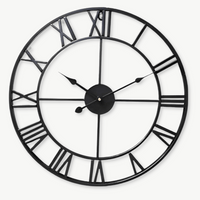
This is the natural home of a metal clock. Exposed brick, concrete floors, raw timber shelving: every surface already reads "honest material," and a clock with a blackened steel frame or visible gear details fits without any decoration gymnastics. Clocks in the 50-60 cm range work perfectly here because the scale matches the proportions of high-ceilinged loft spaces. Roman numerals or open-face designs (where the movement is visible) reinforce the mechanical aesthetic without feeling contrived.
Scandinavian and Minimalist Interiors
The trick with Scandi spaces is restraint. A matte black metal clock with a clean dial, no unnecessary ornamentation, and a slim profile reads as intentional rather than decorative. Anything too ornate or too large disrupts the breathing room that makes this style feel calm. Aim for 30-40 cm, clean hands, and either no numerals or minimal Arabic markers. The clock becomes part of the composition rather than a statement on its own. Think Muuto-level simplicity: every detail earns its place, or it doesn't exist.
Mid-Century Modern
Brushed gold and brass tones are where mid-century and metal meet comfortably. A clock with a circular metal frame in a warm gold finish sits naturally alongside walnut furniture and mustard soft furnishings. The key is avoiding anything too rustic or too industrial; clean curves, geometric details, and warm metallics are the language of this aesthetic. It's the kind of piece that would look at home in a room furnished with Eames chairs and teak sideboards.
Contemporary and Transitional Homes
These spaces are the most forgiving. A large metal wall clock with a designer finish, say, a 60 cm gold circle design or a crossed-circle motif, functions as standalone art in a transitional room. It bridges the gap between a home that has some traditional furniture and some modern pieces, because the metal itself carries enough visual weight to anchor both sides of that conversation.
Eclectic and Bohemian Rooms
Copper and aged bronze finishes are the connective tissue in maximalist or bohemian spaces. They echo terracotta tones, rattan textures, and mixed textiles without looking like they wandered in from a different planet. A clock in a warm copper-red finish placed above a gallery wall of prints and mirrors becomes part of the collection rather than competing with it.

Choosing the Right Finish for Your Metal Wall Clock Durable and Stylish
Choose your metal wall clock finish by matching it to the hardware already in the room: matte black for cool neutrals, brushed gold for warm woods, copper red for earthy tones, and raw iron for industrial or loft spaces. Finish selection is where most people hesitate. The options look overwhelming online, but in practice they narrow quickly once you know what's already on your walls and furniture. The finish isn't just an aesthetic choice; it also determines how easy the clock is to maintain over time and how it ages in different humidity conditions.
| Finish | Best Pairing | Room Fit |
|---|---|---|
| Matte Black | White walls, light wood, concrete | Living room, kitchen, office |
| Brushed Gold / Brass | Velvet, walnut furniture, warm tones | Living room, dining room, bedroom |
| Copper Red | Terracotta, rattan, exposed brick | Kitchen, bohemian living room |
| Raw / Dark Iron | Concrete, steel, aged wood | Loft, industrial kitchen, garage studio |
| Silver / Chrome | White, grey, glass surfaces | Bathroom, modern kitchen, office |
One practical shortcut: look at your existing hardware. Door handles, light switch plates, curtain rods. Whatever finish you've chosen there is the one your eye is already calibrated to. Match the clock to those metal accents and the room reads as intentional without any effort.
Size and Placement: Getting the Scale Right
For most rooms, match clock diameter to wall width: 25-35 cm for walls under 2 meters, 40-50 cm for walls between 2-3 meters, and 55-60 cm for wider walls or rooms with ceilings above 2.7 meters. A clock that's too small on a large wall reads as an afterthought. Too large in a compact space and it crowds everything out. Here's the sizing logic that consistently works.
For walls under 2 meters wide, 25-35 cm (roughly 10-14 inches) is the sweet spot. These fit kitchens, hallways, and bedrooms without dominating the composition. For walls between 2-3 meters, 40-50 cm starts to feel appropriately scaled. Walls wider than 3 meters, or rooms with ceilings above 2.7 meters, can carry 55-60 cm with ease.
Placement height is less discussed but equally important. Eye level is the default rule: hang the center of the clock at roughly 155-165 cm from the floor. In a dining room where you spend most of your time seated, drop that 15 cm. Above a sofa, the bottom of the clock should sit approximately 25-30 cm above the back cushions to read as connected to the furniture group rather than floating independently.
One thing people often overlook: the wall's visual competitors. If you're placing a clock above a fireplace mantel already crowded with objects, you'll want to size up (50 cm minimum) so the clock holds its own. On a bare, uninterrupted white wall, even a 35 cm piece can command real presence because there's nothing competing for attention.
The Movement Inside: Quartz, Silent, or Mechanical?
Standard quartz movements are accurate and affordable but tick audibly; silent sweep movements run without any sound and are essential for bedrooms and offices; mechanical movements add horological character for those who want a timepiece as much as decor. Metal frames get most of the attention, but what's running inside matters just as much for day-to-day livability. Here's the honest breakdown.
Standard quartz movements are accurate to within 15 seconds per month and run on a single AA battery for 12-18 months. Fine for most rooms. The issue is the ticking. In a quiet bedroom or a focused home office, a standard quartz movement ticking once per second adds up to real noise irritation over time.
Silent (or sweep) quartz movements solve this. Instead of a stepping mechanism that clicks with each second, they use a continuous sweep motion. No tick. The hand moves smoothly. If you're placing a metal wall clock in a bedroom, study, or nursery, a silent movement is non-negotiable. It's a small price difference that completely changes how the clock lives with you.
Mechanical and automatic movements add genuine horological character. The slight variation in tick rhythm, the visible escapement on open-face designs, the ritual of winding: these are features for people who want the clock to be a conversation piece as much as a timekeeper. They require more maintenance but reward attention. If that appeals to you, our mechanical wall clock collection is worth exploring separately.

Metal Wall Clocks in Specific Rooms: What Actually Works
Each room has a different brief: living rooms need a bold statement piece at 50-60 cm, kitchens need a legible practical clock at 25-35 cm, bedrooms need a silent movement, and home offices benefit from an industrial style that signals focus.
Living Room
The living room is where a large, statement metal clock earns its keep. Think 50-60 cm, bold finish, placed above a console table or as the single anchor piece on a feature wall. Avoid clustering too many decorative objects around it; the clock needs negative space to read as intentional. A clean wall with one large metal clock often outperforms a busy gallery arrangement in terms of visual impact.
Kitchen
Kitchens need practicality. A metal clock here should be 25-35 cm, legible from across the room (which means clear numerals and contrasting hands), and finished in something that wipes clean easily. Powder-coated matte finishes are ideal; they don't show fingerprints and handle the occasional steam splash without any special treatment. Placement above the doorway or above open shelving keeps it readable without cluttering the workspace.
Bedroom
Silent movement, always. Beyond that, the bedroom clock works best when it contributes to the room's atmosphere without demanding attention. A slim metal frame in a finish that echoes your bedside lamp or curtain rod, sized at 30-40 cm, positioned on the wall you see when you first wake up. Functional, grounding, and quietly beautiful. That's the brief.
Home Office
Industrial-style metal clocks in matte black or raw iron suit home offices well. The material signals seriousness and focus, which is exactly the psychological cue a productive workspace benefits from. Keep it at 30-40 cm, mount it within your natural sight line so you can track time without craning, and pair it with other functional objects (desk lamp, leather accessories) rather than soft decoratives.
"A clock on the wall is the one piece of decor you look at dozens of times a day. It might as well be worth looking at."
A recurring observation from customers who upgraded from plastic to metal.
Pairing Metal Clocks with Other Wall Decor
Metal clocks integrate into gallery walls, pair naturally with mirrors, and work as standalone anchors; the key is placing the clock off-center, matching surrounding tones to the finish, and leaving enough breathing room between pieces. The standalone clock is powerful, but it's not the only way to use one. Metal clocks integrate well into gallery walls, especially when there's already metal in the frame collection. The clock becomes an active element rather than a passive one, its hands moving while everything else stays still. That contrast is genuinely interesting.
If you're building a gallery wall around a metal clock, keep the clock off-center rather than in the middle. The asymmetry feels more curated, less staged. Surround it with prints in similar tones (black-and-white photography pairs naturally with matte black metal; botanical prints in earthy tones complement copper or brass), and leave breathing room between each piece.
Mirrors and metal clocks are another pairing that consistently works. The reflective surface of a mirror and the matte or brushed finish of a metal clock create a tactile contrast that reads as sophisticated. Position them on the same wall with 40-50 cm between them, and let the light do the rest. If you're curious about how different clock silhouettes interact with gallery arrangements, our full wall clock collection lets you filter by shape and finish side by side.
Long-Term Care for a Metal Wall Clock
Metal wall clocks need very little upkeep: dust with a dry microfiber cloth, change batteries annually before they leak, avoid abrasive cleaners on powder-coated surfaces, and check the wall anchor once a year on any piece heavier than 2 kg. Metal clocks need very little maintenance. That's part of the value proposition. Still, a few habits keep them looking sharp over years rather than just months.
- Dust with a dry microfiber cloth, not a damp one. Moisture trapped in decorative cutouts or gear details can cause surface oxidation on untreated metals.
- Battery changes matter more than you'd think. A failing battery doesn't just stop the clock; it can leak. Change batteries annually rather than waiting for the clock to stop.
- For powder-coated surfaces, avoid abrasive cleaners. A drop of mild dish soap on a damp cloth, dried immediately, handles any marks without stripping the coating.
- Brushed brass or copper finishes develop a patina over time. Some people love this; others prefer to maintain the original sheen with a metal polish applied every 12-18 months.
- Check the wall anchor annually, particularly for clocks above 40 cm and 2 kg. Seasonal humidity affects plaster walls, and a screw that was tight in winter can work slightly loose by summer.
If you want to explore the full range of industrial metal wall clocks or compare styles side by side, the collection pages are a good starting point. Filter by size and finish to cut through the noise quickly.
FAQ
Are metal wall clocks heavier than wooden ones?+
It depends on the construction. A thin-gauge stamped steel frame can weigh as little as 400-600 grams at 30 cm diameter, which is comparable to a bamboo clock of the same size. Cast iron and thick structural metal designs in larger sizes (50-60 cm) typically run 2-4 kg. Always check the product weight and use the appropriate wall anchor for your wall type.
Can I use a metal wall clock in a bathroom?+
Yes, with caveats. The clock needs a moisture-resistant coating (powder coat or lacquer), and it should be positioned away from direct water spray. Most quality metal clocks with a sealed quartz movement handle bathroom humidity without issue. Chrome and stainless finishes are naturally more resistant than raw iron or untreated copper in these conditions.
What's the difference between a silent quartz and a standard quartz movement?+
A standard quartz movement steps the second hand once per second, producing an audible tick with each step. A silent (sweep) quartz movement drives the hand in a continuous, smooth rotation with no audible click. Both are accurate to within 15-20 seconds per month. The silent version costs slightly more but is noticeably better for bedrooms, offices, and any quiet room.
How do I match a metal clock finish to my existing decor?+
Start with your existing hardware: door handles, curtain rods, light fixtures. Match or echo that finish. If you have mixed metals in the room already, anchor to the dominant one. As a general rule: matte black suits cool neutrals and concrete; brushed gold suits warm woods and jewel tones; copper suits terracotta and botanical palettes; raw iron suits industrial or rustic spaces.
How large should a metal wall clock be for a living room?+
For a standard living room wall (2-3 meters wide), 40-50 cm is a solid starting point. If the wall is wider or the ceiling higher than 2.7 meters, a 55-60 cm clock carries the space better. As a visual check: the clock should occupy roughly one-third to half the visual width of the wall section it anchors. Anything smaller tends to disappear; anything larger can overwhelm.
How do I install a metal wall clock safely?+
For clocks under 1 kg, a standard picture hook into a wall stud or drywall anchor is sufficient. For clocks between 1-3 kg, use a proper drywall anchor rated to at least double the clock's weight, or ideally screw directly into a stud. Clocks above 3 kg (typically large cast-iron designs over 50 cm) should always be anchored into a stud or a masonry plug if you have a brick or concrete wall. Check the hanging hardware supplied with the clock: if it feels flimsy relative to the weight, replace it before mounting.