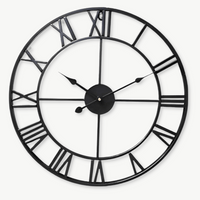


Most landlords think about paint colors, appliance finishes, and lighting fixtures. The wall clock? It's an afterthought. But here's the thing: a clock is one of the first objects a tenant actually looks at every single day, and the wrong one can make an otherwise well-furnished room feel cheap, dated, or just off. Picking the right wall clock for a rental property comes down to four things: material durability, movement type, visual neutrality, and size. Get those four right, and you've got a piece that works for a young professional, a family of four, and everyone in between.
Key takeaways
- Silent quartz movements are non-negotiable in bedrooms and living rooms
- Metal and bamboo frames outlast plastic by years in a high-turnover setting
- Neutral dials (white, black, grey) work across the widest range of tenant aesthetics
- For most rooms, 30-40 cm is the sweet spot; living rooms can go up to 50-60 cm
- Single-nail or keyhole mounting keeps walls intact between tenancies
Why a Wall Clock Actually Matters in a Rental
A wall clock matters in a rental because tenants interact with it daily: a ticking bedroom clock triggers noise complaints, a cracked plastic frame signals neglect, and a well-chosen timepiece signals care that shapes how tenants treat the property. Tenants notice the small stuff more than landlords realize. A ticking clock in the bedroom is a one-star review waiting to happen. A plastic clock with a cracked frame signals that the landlord cut corners everywhere. Conversely, a thoughtfully chosen timepiece tells tenants that the property was furnished with care, which sets a tone that filters into how they treat the space.
There's also a practical side. A clock in the kitchen means the tenant doesn't have to unlock their phone every time they're mid-recipe. A clock in the living room anchors the wall visually, breaking up empty painted surfaces. It earns its place twice over. And when you're thinking about how to pick a wall clock for a rental property that genuinely serves both functions, the practical and the aesthetic, you'll find the options narrow very quickly to a clear shortlist of reliable choices.

The One Feature You Can't Skip: Silent Quartz Movement
Silent quartz movement is the single non-negotiable feature for a rental clock: it eliminates the ticking noise that makes bedrooms and open-plan living areas unbearable for light sleepers and is the most complained-about clock issue in tenant feedback. Before anything else, the movement type. This is the single most complained-about clock feature in rental reviews and tenant feedback forums. A loud ticking clock in a bedroom or open-plan living area isn't just annoying; for light sleepers, it's a genuine problem that affects the perception of the entire property.
Silent quartz (sometimes called sweep quartz) uses a continuous motor rather than a step-by-step tick mechanism. The second hand glides smoothly. No tick. No tock. The room stays quiet. Every bedroom clock and every living room clock in a rental should run on a silent quartz movement, full stop.
Elena's pick
Classic Silent Wall Clock - Analog Quartz, 10 in
A clean, 10-inch analog face with confirmed silent quartz movement, ideal for rental bedrooms where noise complaints start.
50.00 USD
View product →Materials That Hold Up Between Tenancies
Metal frames and bamboo consistently outlast other materials in rental settings because they resist knocks, humidity, and age without cracking, yellowing, or swelling, making them the most cost-effective choice for a high-turnover property. Rental clocks take more handling than clocks in owner-occupied homes. They come down for painting, get knocked during moves, and sit in storage between tenancies. Material durability isn't a nice-to-have; it's a cost-saving decision.
Here's what consistently holds up in a high-turnover context:
- Metal frames (powder-coated or brushed steel): resistant to knocks, don't yellow with age, wipe clean easily. The best all-round rental choice for both minimalist and industrial-style interiors.
- Bamboo and solid wood: lightweight, warm-looking, and surprisingly tough. Bamboo in particular resists humidity better than most softwoods, which matters in kitchens and bathrooms. It's a staple of Scandinavian rental furnishing for good reason.
- Acrylic (high-grade): works well for statement pieces in living areas; lighter than glass, less prone to shattering if knocked off the wall.
- Avoid: thin plastic frames (crack over time), glass faces without protective acrylic backing (breakage risk), and painted MDF (chips and swells with humidity).
Did you know?
Bamboo has a tensile strength comparable to mild steel by weight, which is why furniture-grade bamboo clocks resist warping and cracking far better than equivalent pine or MDF pieces. It's one reason Scandinavian interior designers have leaned on bamboo accents for decades, even in rental-spec projects.

Choosing the Right Style: Broad Appeal Without Being Boring
The right style for a rental clock is one nobody actively dislikes: minimalist, Scandinavian, or classic analog designs in neutral frames consistently test well across the widest range of tenant demographics without looking generic. This is where landlords tend to go wrong in two opposite directions. Some choose something so generic it looks like a hotel room prop. Others choose something they personally love (oversized rustic barn clock, highly decorative cuckoo-style face) that immediately polarizes tenants. The goal isn't a clock you love. It's a clock that nobody actively dislikes.
Three aesthetic categories consistently test well across diverse tenant demographics:
Minimalist and Scandinavian
Clean dial, simple numerals or minimal markers, neutral frame in black, white, or natural wood. This reads as "thoughtfully furnished" to both minimalist and more traditional tenants. It doesn't fight with any color scheme. A black Nordic bamboo clock or a simple white-dial metal frame fits virtually every painted wall. This is also one of the safest answers when landlords ask themselves how to pick a wall clock for a rental property without overthinking the style decision: lean Scandinavian and you'll rarely put a foot wrong.
Industrial with Restraint
Metal construction, Roman numerals or open-face design, aged or brushed finish. This works well in urban apartments, loft conversions, and properties with exposed brick or concrete features. The key word is restraint: a 30 cm kitchen metal clock reads as stylish; a 60 cm heavily distressed gear clock reads as a personal statement that may not suit every tenant.
Classic Analog
Simple round face, Arabic or Roman numerals, black-on-white or white-on-black contrast. Timeless in the most literal sense. Works in every room, never dates, and is the easiest choice if you're uncertain. Tenants who love minimalism see it as clean. Tenants who prefer traditional interiors see it as familiar. Nobody complains.
Elena's pick
Black Nordic Wooden Wall Clock - Scandinavian Bamboo Design
Bamboo build, black Scandinavian finish: broad-appeal style that fits a minimalist apartment or a classic furnished rental equally well.
67.00 USD
View product →Getting the Size Right for Each Room
Size the clock to roughly one-third of the wall width it hangs on: 25-30 cm for bedrooms, 30 cm for kitchens, 40-60 cm for living rooms, and 50-60 cm for open-plan spaces where the clock must anchor a large shared area. Size is one of the most concrete decisions in this whole process, and there's a simple rule that works: the clock face diameter should be roughly one-third of the wall width it's sitting on. That said, here are the room-by-room numbers that work in practice:
| Room | Recommended diameter | Why it works |
|---|---|---|
| Bedroom | 25-30 cm (10-12 in) | Readable from bed without dominating a smaller wall |
| Kitchen | 30 cm (12 in) | Clear readability across the room during cooking |
| Living room | 40-60 cm (16-24 in) | Holds visual weight on a large feature wall |
| Hallway / entryway | 25-35 cm (10-14 in) | Functional glance-point without crowding a narrow wall |
| Open-plan living/dining | 50-60 cm (20-24 in) | Acts as a visual anchor in a large shared space |
One thing worth noting: in a rental, slightly larger tends to be safer than smaller. A clock that reads as "just a bit too small" makes a room feel under-furnished. You can't go very wrong nudging one size up.
Placement and Mounting: Keep the Walls Intact

Use a single keyhole mount or single-nail hook to minimize wall damage between tenancies, every extra hole is potential deposit friction and repainting cost that adds up quickly across a high-turnover property. Wall damage between tenancies is a real cost. Every extra hole is potential deposit friction. The best rental clocks use a single keyhole mount or a single-nail hook, leaving one small fixing point that takes seconds to fill and repaint.
Placement matters too. For living rooms, eye level at roughly 150-160 cm from the floor is the standard, but above a sofa or sideboard works equally well, centering it on the piece of furniture below it. In kitchens, the area above the door frame or to the side of upper cabinets keeps it visible from the cooking area without competing with cabinet space.
Avoid placing any clock directly above a heat source (radiator, oven range) or in direct sustained sunlight: both degrade quartz movements and fade printed dials faster than expected. In a rental context, you want a clock that needs zero maintenance across multiple tenancies.
Color and Finish: What Actually Reads as Neutral
Black, white, brushed silver, and natural wood tones are the finishes that genuinely read as neutral in a rental: they work across warm and cool palettes, don't clash with tenant furniture, and photograph cleanly for listing images. Black, white, brushed silver, and natural wood tones are the safest finishes for a rental. They work across warm and cool interior palettes. They don't clash with tenant-added textiles and furniture. And they photograph cleanly for listing photos, which is its own practical reason to care.
Gold and copper can work in the right context: a kitchen with warm brass hardware or a living room with earthy tones will carry a copper-finish clock well. The risk with metallic finishes is that they clash hard when the rest of the space shifts. If your tenants tend to move in with their own furniture, stick to matte black, brushed steel, or natural bamboo for the safest results.
"The best rental decor is the kind that disappears into the background for the tenant who doesn't care, and quietly impresses the tenant who does."
Interior furnishing principle, rental staging consultants
Budget Thinking: What to Spend Per Room
For rental properties, spend $45-70 on bedroom clocks, $50-80 on kitchen clocks, and $70-150 on living room clocks, the sweet spot where silent movement and durable construction both appear consistently without overspending for a tenant-occupied space. Rental clock budgeting works differently from buying for your own home. You're not buying something to love for fifteen years; you're buying something that holds up, looks good, and doesn't need replacing every two tenancies. That calculates out to a different sweet spot than you might expect.
For bedrooms, $45-70 covers the range where quality construction and silent movement both show up consistently. For living rooms, $70-150 gets you a piece that reads as intentional decor, not an afterthought. Kitchen clocks sit comfortably in the $50-80 range with metal construction and a 30 cm face.
Going below $35-40 usually means either a loud movement, a plastic frame, or both. Going above $200 for a rental context rarely makes financial sense unless the property is at the premium end of the market and the clock genuinely serves as a design statement rather than just a timekeeper.
Elena's pick
Kitchen Wall Clock - Silent Quartz Metal Clock 30 cm
Metal construction, silent quartz, 30 cm: hits the rental kitchen sweet spot on every single criteria without going over budget.
60.00 USD
View product →What to Avoid: The Rental-Property Clock Shortlist of Mistakes
The most common rental clock mistakes are loud tick movements in sleeping areas, oversized novelty designs, clocks that require specialty batteries, and multiple mounting points, each one generates a specific, avoidable complaint from tenants or extra cost at changeover. A few patterns come up again and again in tenant feedback and property management forums. These are the ones worth actively sidestepping:
- Loud tick movements in any sleeping area. Already covered, but worth repeating: this is the number-one noise complaint about furnished rentals.
- Highly personalized or novelty designs. A clock shaped like a bicycle wheel or featuring vintage beer branding might suit a specific tenant perfectly. It will actively put off a large percentage of others.
- Oversized clocks in small rooms. A 60 cm clock on the wall of a 10 sqm bedroom feels oppressive. Size to the room, not to your living room aesthetic.
- Clocks that require specialty batteries. Standard AA or AAA batteries mean any tenant can replace them without a trip to a specialist shop. Lithium coin cells or uncommon sizes create a small but real friction point.
- Multiple mounting points on plaster. More holes mean more patching. Stick to single-point mounting wherever possible.
A Quick Room-by-Room Checklist for How to Pick a Wall Clock for a Rental Property
Use this checklist before every tenancy changeover: match diameter to room size, confirm silent quartz movement, choose a neutral finish, verify single-point mounting, and specify standard AA or AAA batteries for every clock in the property. If you want a fast reference you can revisit before every tenancy changeover, this is the distilled version. How to pick a wall clock for a rental property room by room really does come down to a handful of repeatable decisions, and once you've made them once, the second and third property get much faster.
- Bedroom: 25-30 cm diameter, confirmed silent quartz or sweep movement, neutral dial (white or grey preferred), single-nail mount, AA or AAA battery. Minimalist or classic analog style. No numbers-free dials in this room since the glance-read needs to be instant in the dark.
- Kitchen: 30 cm diameter, metal frame for humidity resistance, high-contrast dial for cross-room readability, silent quartz, positioned above door frame or beside upper cabinets (never above the hob). Budget: $50-80.
- Living room: 40-60 cm depending on wall width, Scandinavian, minimalist, or restrained industrial style, matte black or brushed steel or natural bamboo finish, single keyhole mount, silent movement. This clock doubles as a decor piece, so it can carry a bit more visual weight than the bedroom or kitchen version.
- Hallway / entryway: 25-35 cm, practical over decorative, classic analog works perfectly here. Tenants catch it in passing, so legibility trumps aesthetics.
- Open-plan space: 50-60 cm visual anchor, choose a frame that bridges the living and dining zones tonally (natural wood works well here), confirm silent movement since the open space amplifies sound.
Browse the collection
Wall Clock Collection
166 wall clocks spanning every style, size, and finish. Use the material and movement filters to narrow it down to exactly what your rental property needs, whether that's a silent quartz bamboo clock for a Scandinavian-style bedroom or a 50 cm metal anchor for a loft living room.
166 references
Browse the collection →When the Property Is at the Premium End of the Market
At the premium end, a $150 clock outperforms a $60 one visibly: tenants at that level notice the difference and read it as curation, making a higher-spec timepiece part of the overall impression the property creates at viewing. If you're furnishing a high-spec rental, the calculus shifts slightly. Tenants paying at the top of the market notice the difference between a $60 clock and a $150 one, and they notice it in the way you hope: they feel the property was curated rather than assembled. In that context, a luxury wall clock with a metal or designer finish becomes part of the overall impression the property makes at viewing.
The principle still applies: silent movement, durable materials, neutral palette. But you have more latitude on size (larger statements work well in premium living rooms), on finish (brushed gold or copper reads as intentional in a high-spec space), and on visual complexity (an open-gear design or a sculpted metal frame adds a layer of detail that premium tenants specifically look for).
For properties in this tier, also consider Scandinavian wall clocks with clean architectural lines, which photograph particularly well for listing images on premium rental platforms.
Frequently asked questions
Do I legally need to provide a clock in a furnished rental?+
In most jurisdictions, a wall clock is not a legally mandated item in a furnished tenancy. However, it typically appears on standard furnished-property inventory lists, and its absence in a kitchen or living room is often flagged by tenants as a missing basic amenity. Including one is a low-cost, high-goodwill decision.
What's the difference between silent quartz and sweep movement?+
They refer to the same thing: a quartz movement where the motor drives the second hand in a continuous glide rather than a stepped tick. Both terms appear on product listings. The key check is that the listing explicitly says "silent" or "sweep"; standard quartz movements still produce an audible tick with each second step.
How many wall clocks should a furnished rental have?+
At minimum: one in the kitchen and one in the main living space. A bedroom clock is optional but appreciated in longer-term rentals. Hallway and bathroom clocks are a bonus, not a baseline. For short-term or vacation rentals, kitchen plus living room covers virtually every practical need.
Can I use a decorative clock with no numbers in a rental?+
You can, but it adds a small usability risk. Some tenants find numberless or minimalist-marker dials harder to read at a glance, especially for kitchen use. If you want a cleaner aesthetic, Arabic or Roman numerals in a thin, minimal font strike the right balance: readable without looking heavy.
How do I keep wall clocks from becoming a maintenance issue between tenancies?+
Three habits help: replace batteries at every changeover (AA alkaline batteries cost almost nothing and prevent the "clock stopped" complaint), photograph the mounting point on the inventory walk-through, and keep one spare clock of similar size in storage so you can swap immediately if one is damaged rather than leaving a wall bare while waiting for a replacement.
Is bamboo or metal a better frame material for a rental property clock?+
Both are excellent rental choices, and the decision mostly comes down to the room. Metal (powder-coated or brushed steel) wins in kitchens and hallways where humidity and handling are higher. Bamboo is ideal in bedrooms and living rooms where you want warmth without weight. If in doubt, a powder-coated metal frame in matte black covers virtually every room type without looking out of place.