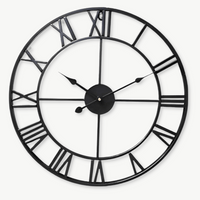


A brass pendulum clock ticking softly above a fireplace mantel. A matte-black disc with no numerals centered on a stark white wall. Both tell time. Both reshape a room. Choosing between a vintage clock vs modern clock for home decor isn't really about hours and minutes; it's about the mood you want to walk into every single day.
I've spent years pairing clocks with interiors, and the honest truth is that neither style wins outright. What works depends on your room's architecture, your existing palette, and the kind of atmosphere you're building. So here's what actually works, room by room, material by material, with the trade-offs nobody likes to talk about.
⭐ Key takeaways
- Vintage clocks anchor rooms with warmth, texture, and narrative; modern clocks sharpen a space with geometry and restraint.
- Material matters more than era: brass and walnut read vintage, glass and steel read modern, and wood can go either way.
- Mixing both styles on the same wall is absolutely possible when you match finish temperature (warm with warm, cool with cool).
- Maintenance profiles differ dramatically, and ignoring that leads to buyer's remorse.
- Room function should drive the decision: a kitchen needs legibility; a living room rewards personality.

What Makes a Clock "Vintage" and What Makes It "Modern"?
A vintage clock typically dates from the 1920s through the 1980s, featuring Roman numerals, ornate bezels, patinated brass, or carved wood, while a modern clock strips those details down to geometry, matte finishes, and minimal or absent numerals. Labels get thrown around loosely, so let's pin them down. A vintage clock vs modern clock for home decor debate starts here: a vintage clock typically dates from the 1920s through the 1980s, or faithfully reproduces the design language of that period. Think Roman numerals, ornamental bezels, exposed gears, patinated brass, carved wood casings, and sometimes a visible pendulum. The movement might be mechanical (spring-driven or weight-driven) or quartz dressed in period-appropriate housing.
The Vintage DNA: Ornamentation and Story
Vintage pieces carry visual density. Every scroll, every hand-painted numeral, every chip in the enamel dial tells a story of use and age. That density pairs well with rooms that already have texture: exposed brick, plaster walls, linen upholstery, layered rugs. The clock doesn't compete with those elements; it converses with them.
Materials lean toward natural and heavy: solid walnut, oak, mahogany, cast iron, brass, and occasionally mother-of-pearl inlays. The weight is real. A mid-century sunburst clock from the 1960s might weigh well over a kilogram, and that heft translates into a feeling of permanence on the wall.
The Modern DNA: Reduction and Intention
Modern clocks strip away everything that doesn't serve the core function. Arabic numerals shrink to dashes or disappear entirely. Bezels flatten or vanish. Materials shift to brushed aluminum, powder-coated steel, tempered glass, acrylic, and engineered composites. Hands become needle-thin. Color palettes narrow to monochromes, matte blacks, whites, and the occasional accent.
This restraint is the point. A modern clock acts like punctuation on a wall: it creates a focal point through contrast with empty space rather than through ornamentation. In a Scandinavian-style hallway with pale wood floors and white walls, a single round clock with a clean face becomes the visual anchor precisely because nothing else is fighting for attention.

Materials Side by Side: Brass, Wood, Metal, and Glass
Material choice instantly signals whether a clock reads vintage or modern: brass and dark-stained wood lean vintage, while brushed steel, glass, and acrylic lean modern, with natural wood sitting comfortably in both camps depending on finish and numeral style. Material choice is the fastest way to read whether a clock leans vintage or modern. But certain materials sit on the fence, and that's where the most interesting design decisions happen.
| Material | Vintage Expression | Modern Expression |
|---|---|---|
| Wood | Carved casing, dark stain, visible grain, sometimes inlaid | Raw or light-stained disc, no casing, laser-cut numerals |
| Brass / Bronze | Polished or patinated bezel, filigree detail, heavy | Brushed flat ring, satin finish, geometric shape |
| Iron / Steel | Wrought iron frame, Roman numerals, industrial or rustic | Powder-coated minimal frame, open-face skeleton design |
| Glass / Acrylic | Beveled crystal cover over enamel dial, domed glass | Flat tempered glass face, frameless mount, LED backlight |
| Ceramic / Resin | Hand-painted Delft or Majolica-inspired face | Molded sculptural form, matte monochrome finish |
Here's where it gets interesting: wood bridges both columns. A natural wood wall clock with a light birch or walnut disc and minimal markings reads unmistakably modern, while the same wood species carved into a mantel clock with turned columns reads vintage. If you're torn between the two aesthetics, wood is your safest entry point because you can nudge it in either direction simply by changing the finish and the numeral style. I've seen clients with mid-century living rooms fall in love with a raw walnut disc because it echoed their teak sideboard without copying it. That kind of quiet conversation between pieces is what makes a room feel curated rather than decorated.

Room-by-Room Pairing: Where Each Style Performs Best
Each room type favors a different clock style: living rooms reward vintage personality and ornate character, kitchens demand legibility above all, bedrooms need silent movements, and home offices benefit from clean, readable faces that don't compete with focused work. General advice only goes so far. A clock that looks stunning in a living room photo shoot can feel out of place in a narrow kitchen. Here's a room-by-room breakdown based on what I've seen work (and fail) in real homes.
Living Room: The Statement Wall
Living rooms tolerate the widest range of clock styles because they're designed for personality. A large vintage clock with exposed gears above a fireplace creates a natural conversation piece. A slim modern disc above a low media console keeps the eye moving horizontally. The key variable here is wall space. Vintage clocks with ornate frames need breathing room; crowd them against shelves and art, and the ornamentation starts to feel cluttered. Modern clocks handle tighter gallery walls better because their visual footprint is lighter.
If your living room already features a bold sofa or patterned wallpaper, a modern clock in a neutral tone adds structure without overwhelming. If your room is more restrained (white walls, neutral upholstery, a single accent rug), a vintage clock can become the focal point the room has been missing.
Kitchen: Legibility Wins
Kitchens are functional spaces first. You glance at the clock with flour on your hands or while timing a simmer. Vintage clocks with Roman numerals and ornate hands can be beautiful, but they slow down that glance. Large Arabic numerals or bold hour markers work better for quick reads. A modern clock with a clean face and high-contrast hands tends to serve the kitchen context more effectively.
That said, a retro-styled clock (think a round chrome diner clock from the 1950s aesthetic) can add immense charm to a kitchen with open shelving and checkered tiles. The trick is choosing a retro design that still prioritizes readable numerals.
Bedroom: Silence Is Non-Negotiable
This is where vintage clocks hit their biggest practical hurdle. Mechanical movements tick. Some people find it meditative; others find it maddening at 2 a.m. If you love the look of a vintage clock in the bedroom, look for vintage-styled pieces fitted with a silent quartz movement. You get the aesthetic without the auditory trade-off.
Modern clocks in the bedroom tend to lean toward backlit digital displays or ultra-slim analog designs. The advantage is clear: silent sweep hands, ambient-light-friendly faces, and sometimes built-in temperature or humidity readouts. For a bedroom, functionality quietly edges ahead of pure aesthetics.

Home Office: Precision Meets Personality
Your home office is a room where you spend focused hours, so the clock needs to stay readable from a seated position across the room. A mid-century modern clock with a 12-inch diameter and clean numerals pairs well with a desk, bookshelves, and warm-toned wood. An industrial-style clock with wrought iron and exposed gears suits a loft or a creative studio. A minimalist modern clock with a matte black face works in just about any contemporary office setup.
Here's a nuance I rarely see discussed: digital clocks in a home office remove the mental conversion step ("the big hand is on the 7, so it's...35 minutes past"). For task-oriented work where you're tracking time blocks, a digital display saves cognitive micro-effort. It's a small thing, but it adds up over an 8-hour day.
Entryway and Hallway: First Impressions
The entryway clock is the first decor piece guests register. A vintage wall clock here sets a warm, collected tone: "this home has history and personality." A modern clock sends a different signal: "this home is intentional and contemporary." Neither is better. Both are strategic. The deciding factor is usually scale. Hallways tend to be narrow, so a clock with deep dimensional relief (thick casing, protruding gears) can feel imposing. Flat-profile clocks, whether vintage-styled or modern, tend to sit more comfortably in tight corridors.
💡 Did you know?
The tradition of placing a clock in the entryway dates back to 18th-century European homes, where a longcase (grandfather) clock near the front door served a dual purpose: greeting visitors with a sign of prosperity, and giving the household a reliable time reference at the most-used threshold. That's why even today, an entryway clock feels instinctively "right."
The Honest Trade-Offs Nobody Likes to Mention
Vintage clocks demand periodic servicing, carry more weight, and drift on accuracy, while modern clocks risk feeling generic and may date faster than styles built from enduring materials like brass, solid wood, or iron. Every decor choice comes with compromise. Vintage and modern clocks each have friction points that are worth acknowledging before you commit.
Vintage: Maintenance, Weight, and Accuracy
A genuine vintage clock with a mechanical movement needs periodic servicing. Springs wear out, lubricants dry, and escapements fall out of adjustment. Professional clock repair costs vary widely, but it's not a one-time purchase; it's an ongoing relationship. Wall-mounted vintage clocks are often heavy, and older plaster walls may need anchoring hardware rated for the load. Accuracy drifts over time with mechanical movements; gaining or losing a few minutes per week is normal, not a defect.
None of this is a dealbreaker, but it's context you should have. If you want the vintage look without the mechanical commitment, many manufacturers now build vintage-styled cases around quartz movements. You lose the romantic tick-tock, but you gain reliability and a battery change once a year.
Modern: Personality and Longevity Questions
Modern clocks can feel interchangeable. A plain white disc with sans-serif numerals is beautiful on one wall, but it could belong to any home on any continent. That universality is a strength in staging a rental or a minimalist apartment. It's a weakness if you want your space to feel genuinely yours. The solution is specificity: choose a modern clock with one distinguishing detail. An asymmetric hand design. A textured concrete face. A geometric cutout. That single detail gives the piece identity without adding clutter.
Longevity is the other question. Modern design trends cycle faster than traditional ones. A sleek acrylic clock that feels cutting-edge in 2026 may read as dated by 2030. Vintage style, by definition, has already survived its trend cycle and landed on the other side. If you want a clock you'll keep for decades, materials with inherent aging grace (solid wood, brass, iron) tend to outlast trend-dependent finishes (high-gloss lacquer, chrome plating).

Mixing Vintage and Modern Clocks in the Same Space
Mixing vintage and modern clocks works beautifully when you match color temperature: warm brass and patinated finishes pair with warm wood or matte gold, while cool silver and nickel tones pair with black, grey, or white modern pieces. Here's where things get interesting. You don't have to choose one lane. Some of the most compelling interiors layer eras deliberately, and clocks are a surprisingly effective tool for that.
The Gallery Wall Approach
A gallery wall that mixes framed prints, small shelves, and a clock or two creates visual rhythm. Place a vintage clock off-center and balance it with a smaller modern clock on the opposite diagonal. The clocks don't need to "match." They need to share a color temperature. If the vintage piece is warm brass, pair it with a modern clock in a warm-toned wood or a matte gold finish. Cool-toned vintage (silver, nickel, brushed chrome) pairs with modern clocks in black, grey, or white.

The Room-Split Strategy
Another approach: assign one style per room. A vintage clock grounds the living room in warmth and character. A modern clock in the home office keeps the vibe clean and focused. A retro-modern hybrid (vintage silhouette, updated materials) in the kitchen bridges both worlds. This way, each room has its own identity, and the clock reinforces rather than competes with the space.
Placement Principles That Apply to Both Styles
For any wall clock, hang the face center between 57 and 63 inches from the floor, leave at least 4 to 6 inches of clear wall on all sides, and choose a matte finish if the room receives direct or strong overhead light. Regardless of whether your clock is antique brass or matte acrylic, a few spatial rules apply.
Height and Eye Line
The center of the clock face should sit roughly at eye level or slightly above. For most rooms, that means the center lands between 57 and 63 inches from the floor. Hanging too high forces an upward glance that feels unnatural. Hanging too low puts the clock in competition with furniture below it.
Relationship to Other Wall Elements
A clock needs visual separation from adjacent art, shelves, or mirrors. A minimum gap of 4 to 6 inches on all sides prevents the clock from feeling crowded. Larger clocks (16 inches and above) need more: 8 to 12 inches of clear wall on each side to let the design breathe.
Lighting Interaction
Glossy clock faces (glass-covered dials, polished metal bezels) can produce glare under direct overhead lighting or facing windows. Matte finishes handle bright rooms better. If you love a glass-faced vintage clock, position it on a wall that receives indirect light, or at an angle to the primary light source. Modern clocks with backlit LED features, on the other hand, look best in dimmer settings where the glow becomes an accent rather than competing with ambient daylight.

Key Features of Vintage Clocks Worth Knowing
Quality vintage clocks are defined by hand-painted or enamel dials, original hands and movement, solid wood or brass casings, and a choice between mechanical movements (requiring regular winding) and quartz movements housed in period-appropriate cases. If you're leaning vintage, a few features separate a well-made piece from a cheap reproduction.
Movement Type
Mechanical movements (either spring-wound or weight-driven) represent the original engineering. They require winding on a schedule (daily or weekly) and periodic professional servicing. Quartz movements housed in vintage-style cases offer set-and-forget convenience. Both are valid; the choice depends on whether you enjoy the ritual of winding or prefer hands-off timekeeping.
Dial and Numeral Style
Hand-painted dials are a hallmark of quality in vintage clocks. Look for slight irregularities in the lettering; those imperfections signal human craft rather than mass printing. Enamel dials with a glassy, slightly domed surface indicate a higher-grade piece. Printed paper dials covered in glass are common in mid-century and lower-price-point vintage clocks, and they age poorly (yellowing, foxing).
Pendulum and Chiming
Pendulum clocks add a kinetic element that no other decor piece replicates. The gentle swing draws the eye and creates a living rhythm in the room. Chiming mechanisms (Westminster, Whittington, or simple hour strikes) add an auditory layer. Many modern reproductions include a chime-silence switch, letting you enjoy the sound during the day and disable it at night.
Pendulum Clock
If the kinetic charm of a swinging pendulum appeals, browse the full range for styles from traditional to contemporary.
21 products
Browse the collection →Common Problems with Vintage Wall Clocks (And How to Handle Them)
The three most common vintage wall clock problems are timekeeping drift of 1 to 5 minutes per week, audible ticking that disrupts sleep, and fragile components like glass crystals, painted dials, and unsealed brass that degrade with time or direct sunlight. Vintage clocks have quirks. Knowing them in advance saves frustration.
Inaccurate Timekeeping
Mechanical clocks drift. A variance of 1 to 5 minutes per week is typical for a well-maintained movement. If accuracy matters to you, set a weekly routine: compare against a phone or digital clock and adjust. For genuinely accurate timekeeping with a vintage look, choose a vintage-styled case housing a quartz movement.
Ticking Noise
The rhythmic tick of a mechanical or older quartz movement can be charming in a living room and unbearable in a bedroom. Before buying, ask the seller about the movement type. "Sweep" or "continuous" second hands (common in newer quartz movements) produce little to no audible tick. "Step" second hands (one-second jumps) create the classic tick sound. A clock maker can sometimes dampen the tick by adding felt pads inside the case, but this is a partial fix.
Fragile Components
Old glass crystals crack. Painted dials flake. Brass tarnishes if unsealed. Handle vintage clocks with care during installation, and avoid hanging them on walls that receive direct prolonged sunlight, which accelerates paint and finish degradation.
"A clock is not merely a machine. It is, in every sense, a portrait of the time in which it was made."
Common sentiment among horological restorers
Are Vintage Clocks Worth the Investment?
Most vintage clocks are decorative rather than investment-grade, but specific categories like Black Forest cuckoo clocks, Art Deco mantel clocks, and French carriage clocks with enamel dials do hold or appreciate in value when condition is original and well preserved. From a purely financial perspective, vintage clocks occupy a niche collectible market. Certain categories hold or appreciate in value: Black Forest cuckoo clocks, Art Deco mantel clocks in chrome and Bakelite, American banjo clocks, and French carriage clocks with enamel dials. But the vast majority of vintage clocks are decorative rather than investment-grade. Their value is personal and aesthetic, not monetary.
If you're buying a vintage clock for decor, spend on condition. A well-preserved clock with its original dial, hands, and movement intact is worth more (both to your wall and to future resale) than a heavily restored piece. Avoid clocks with replacement dials or aftermarket hands unless the price reflects that downgrade.
If you're buying modern, the "investment" is different. You're paying for materials, design, and silence. A well-built modern clock in solid wood or steel with a quality quartz movement will last 10 to 15 years on a single mechanism, with battery changes as the only maintenance. The cost per year of ownership is usually lower than vintage.
Choosing a Vintage or Modern Clock for Your Interior Style
Matching your clock to your interior style is straightforward: mid-century and eclectic rooms welcome vintage sunburst or starburst designs, Scandinavian spaces prefer light wood modern clocks, and minimalist interiors call for a single slim piece with no numerals as a sculptural focal point. Let's match clock styles to popular interior design approaches. This isn't a rigid rulebook; it's a starting framework you can bend to your taste.
- Mid-century modern interiors: Vintage sunburst or starburst clocks from the 1950s-1960s. Modern clocks with tapered wood cases. Avoid anything too ornate or too industrial.
- Scandinavian and Nordic: Modern clocks with light wood, white faces, slim hands. A birch or pine wood wall clock fits perfectly. Vintage only if the piece is very simple (no filigree, no heavy brass).
- Industrial loft: Either works. Vintage iron or brass clocks with exposed gear faces play up the raw aesthetic. Modern geometric metal clocks in black or gunmetal do the same.
- Traditional or classic: Vintage all the way. Pendulum clocks, carved wood cases, Roman numerals, chiming movements. A modern clock here would feel like a foreign object.
- Bohemian and eclectic: Mix freely. A hand-painted vintage clock next to a modern abstract piece creates the layered, collected look that defines boho interiors.
- Minimalist: Modern, full stop. The fewer elements on the wall, the more intentional each one needs to be. A single slim clock with no numerals becomes a sculptural focal point.
- Farmhouse and rustic: Vintage-styled clocks with distressed finishes, Roman numerals, and large faces. Modern clocks in raw wood (not high-gloss) can also work if they lean warm and organic.
Which Type of Clock Works Best for Your Home?
The best clock for your home comes down to three variables: room function, existing visual temperature, and your tolerance for maintenance, vintage for warmth and story, modern for clarity and zero upkeep, or a deliberate mix of both using matched color temperatures. There's no universal answer, and anyone who tells you otherwise is selling a shortcut. The best clock for your home depends on three variables: room function, existing visual temperature, and your personal tolerance for maintenance.
If you want warmth, story, and tactile depth: go vintage, or at minimum, vintage-styled. If you want clarity, restraint, and zero upkeep: go modern. If you want both (and many of us do), mix them deliberately using the color-temperature pairing principles above.
A clock is one of the few decor pieces that combines function and art in real time, literally. It moves. It marks your day. It catches your eye dozens of times between morning coffee and midnight. Whatever style you choose, choose one that makes those glances feel good. That's the only metric that truly matters for vintage clock vs modern clock for home decor.
So which one is right for you? Start with your room's mood, not your Pinterest board. Ask what story you want that wall to tell, then let the material and era follow from there. The clock that fits is the one you stop noticing as decor and just start living with.
Frequently asked questions about vintage and modern clocks
Which type of clock is best for home use?+
It depends on the room and your priorities. Modern clocks with silent quartz movements suit bedrooms and home offices where quiet and legibility matter most. Vintage or vintage-styled clocks shine in living rooms, entryways, and traditional interiors where warmth and personality take priority. For kitchens, prioritize large, high-contrast numerals regardless of style.
What are the most common problems with vintage wall clocks?+
The three most frequent issues are timekeeping drift (mechanical movements lose or gain minutes weekly), audible ticking that can disrupt sleep, and fragile components like glass crystals, painted dials, and unsealed brass that tarnish or flake over time. Many of these can be mitigated by choosing a vintage-styled clock with a modern quartz movement inside.
What key features define a quality vintage clock?+
Look for hand-painted or enamel dials (not printed paper under glass), original hands and movement, solid wood or brass casing, and a well-regulated mechanical or early quartz movement. Original condition, including the dial, hands, and glass, holds both decorative and collectible value better than heavily restored pieces.
Are vintage clocks worth anything as collectibles?+
Certain categories hold value well: Black Forest cuckoo clocks, Art Deco chrome-and-Bakelite mantel clocks, American banjo clocks, and French carriage clocks with enamel faces. Most vintage clocks, however, are valued more for their decorative appeal than as financial investments. Condition is the biggest price driver for either purpose.
Can you mix vintage and modern clocks in the same room?+
Absolutely. The key is matching color temperature: pair warm-toned vintage (brass, walnut) with warm-toned modern (gold, warm wood), and cool-toned vintage (silver, nickel) with cool-toned modern (black, grey, white). Gallery walls handle mixed-era clocks especially well because the surrounding frames and objects create visual cohesion.
How do I choose the right clock size for my wall?+
As a general rule, your clock should occupy roughly two-thirds of the wall width it anchors. For a sofa wall that is 90 inches wide, aim for a clock face between 10 and 18 inches in diameter and use surrounding art or shelves to fill the rest. In very small rooms or narrow hallways, err smaller and let negative space do the work. Vintage clocks with open ornamental frames (like skeleton designs or sunbursts) read larger than their actual diameter suggests, so factor that in when measuring.