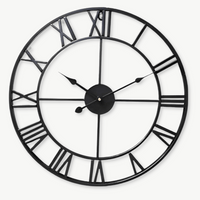


Picture this: you've spent weeks getting the nursery just right. The crib is perfect. The lighting is soft. The color palette is exactly what you imagined. Then you hang a clock, and it ticks. Loudly. Right through nap time.
A wall clock for a nursery that is safe and stylish isn't a luxury add-on. It's a practical decision with real consequences, both for your baby's sleep and for the room's overall feel. The wrong clock wakes a sleeping newborn every hour. The right one sits quietly on the wall, looking beautiful, telling you exactly how long that nap has lasted.
Here's what actually matters when you're choosing one, and the styles worth considering in 2026. (Spoiler: the answer almost always starts with the word "silent.")
⭐ Key takeaways
- Silent (sweep) quartz movement is non-negotiable in a nursery setting.
- Lightweight materials, wood and acrylic, reduce risk if mounting fails.
- Size sweet spot for a nursery wall clock: 25 cm to 35 cm in diameter.
- Non-toxic finishes matter as much as the design, especially for babies under 18 months.
- A clock can double as a focal point in the room if placed thoughtfully above a shelf or dresser.
Why "Silent" Is the First Filter, Not an Optional Feature
A silent sweep quartz movement is the single most important feature in a nursery clock: it eliminates the tick-tock click entirely, protecting light sleep cycles and keeping feeding sessions calm without creating extra stimulus to undo. Most standard wall clocks use a quartz step movement. That's the mechanism responsible for the familiar tick-tock. Each second, a tiny gear advances with a small mechanical click. In a quiet adult bedroom, it fades into the background. In a nursery at 2 a.m., it might as well be a metronome.
Silent clocks use a sweep quartz movement instead. The second hand rotates in one continuous, smooth motion rather than stepping forward. No audible click. Zero ticking. The difference in a nursery environment is significant, particularly during light sleep cycles when babies are most responsive to ambient noise.

Beyond sleep, there's another reason parents appreciate silence: feeding sessions. Whether you're nursing or bottle-feeding in a dark room at 3 a.m., you want to glance at the clock without disrupting the calm. A silent clock lets you do exactly that without creating a stimulus-rich environment you'll then need to undo.
💡 Did you know?
The sweep movement was widely adopted in high-end European watchmaking before becoming standard in home clocks. The Germans called it schleichender Sekunden (creeping seconds) because the hand appears to glide rather than step. Today it's the mark of any wall clock for a nursery worth hanging in a sleep-sensitive room.
Safe Materials: What to Look For (and What to Avoid)
The safest nursery clock materials are lightweight natural wood or acrylic with a non-toxic water-based finish: they won't shatter if a mount fails, won't off-gas VOCs in a closed room, and stay well under the 600 g safe-hanging threshold. Safety in a nursery clock comes down to two things: what it's made of, and how it's attached to the wall.
The best nursery-safe clock materials are:
- Natural wood (birch, bamboo, MDF with water-based lacquer): lightweight, warm, and non-toxic when finished properly. A 30 cm wooden clock typically weighs under 400 grams, well within safe hanging range for a standard wall anchor.
- Acrylic faces with wooden frames: a popular combination because acrylic won't shatter the way glass does if a clock falls. Much safer over a crib or changing table.
- Solid plastic with ABS casing: budget-friendly and shatter-resistant, though less aesthetically refined. Fine for a playroom, slightly less elegant for a carefully styled nursery.
What to avoid: heavy cast iron or thick glass-faced clocks, especially anything over 1.5 kg. Also worth skipping: anything with small decorative elements that could detach and become a choking hazard. If a clock has painted wooden figurines or loose 3D accents, check that they're firmly bonded, not just glued on.
One more thing. Verify the finish is non-toxic. Babies rub their faces on things. Toddlers chew things. A clock mounted at adult-reachable height in a few years should have a finish that won't off-gas VOCs (volatile organic compounds) in an enclosed room. Water-based lacquers and natural oil finishes are the safest bets. If a product listing doesn't mention the finish type, ask before buying.
⚠️ Important
Never mount a clock directly above a crib or bassinet, regardless of weight. Place it on an adjacent wall or above a dresser where a fall poses no risk to a sleeping child. Even a light clock can cause injury if the mounting gives way at the wrong moment.
The Right Size for a Nursery Wall
For most nurseries, a clock between 25 cm and 35 cm in diameter is the right size: large enough to read across the room during a night feed, small enough to fit a gallery wall or shelf arrangement without overwhelming a compact space. Nursery rooms are often smaller than other rooms in the house, and their walls fill up fast: a crib, a dresser, a changing station, soft art prints. A clock that looks proportionate in a living room can feel overwhelming in a compact nursery.
The sweet spot sits between 25 cm and 35 cm (roughly 10 to 14 inches) in diameter. Large enough to read from across the room during a feeding, small enough to integrate cleanly into a gallery wall or sit above a shelf without dominating the space.
If the nursery has genuinely high ceilings (above 2.7 meters) and generous wall space, a 40 cm clock can work beautifully as a focal point. But that's the upper limit. Anything above 45 cm starts to pull focus in a way that fights with the softness most nursery aesthetics rely on.
| Room Size | Recommended Clock Diameter | Best Placement |
|---|---|---|
| Small nursery (under 10 m²) | 25 - 30 cm | Above dresser or in gallery wall |
| Medium nursery (10 - 15 m²) | 30 - 35 cm | Feature wall opposite the door |
| Large nursery / shared room | 35 - 40 cm | Solo statement piece, centered on a large wall |
Style Directions That Work in a Nursery (and Actually Grow With the Child)
The nursery clock styles that age best are minimalist Scandinavian, subtle boho, and classic white wood: each works for a newborn, holds up through toddler years, and still looks right on the wall when the room becomes a school-age child's bedroom. Here's something most nursery guides won't tell you: the majority of nursery decor gets replaced within two years. The room that works for a newborn doesn't work for a three-year-old, and the room that works for a three-year-old doesn't work for a seven-year-old. A clock is genuinely different. Choose the right style now and it'll still make sense on that wall a decade later. That's a rare thing in a space that evolves so fast.
Here's how each major style plays out in practice:
Minimalist and Scandinavian
White or natural wood faces, clean numerals (or no numerals at all, just markers), slim hands. These clocks fit a neutral nursery palette effortlessly and look just as good in a toddler's room or a primary school child's bedroom. They pair well with sage green, warm white, oat, and dusty pink walls. The Scandinavian approach to clock design specifically prioritizes legibility, which becomes increasingly useful as the child starts learning to tell time. A birch frame with a white dial and matte black hands is the kind of piece that photographs beautifully at every age milestone.
Boho and Nature-Inspired
Wooden cutout designs, sunburst shapes, botanical or animal motifs. These work beautifully in earthy nurseries built around natural textures, rattan furniture, macrame, and linen. The risk is that heavily decorative styles can feel "too young" faster than you'd expect. A subtle boho piece, think a simple carved wood frame with a clean dial, threads the needle between charming now and appropriate later.

Celestial and Sun-Moon Themes
A category that's quietly had a moment in nursery design over the past few years. Sun and moon imagery reads as both mystical and childlike without being saccharine. These clocks tend to work especially well in gender-neutral nurseries and in rooms with deeper, richer color schemes, navy, forest green, terracotta, where the celestial motif feels intentional rather than decorative filler. If you're going this route, a laser-cut birch frame with a brushed dial and contrasting hands hits exactly the right balance of whimsy and restraint.

Classic White Wood
Often underrated in nursery planning, a clean white wooden clock is arguably the most versatile option in the room. It functions as a visual neutral, fitting any wall color and any evolving style direction. It photographs beautifully for those early baby milestone photos, and it still looks sharp when the room becomes a 10-year-old's bedroom. This is the "never regret it" choice, and at 30 cm it sits perfectly in the nursery size sweet spot: readable from the glider, light enough to hang safely on plaster or drywall alike.

Where to Hang It: Placement That Serves You at 3 a.m.
The best placement for a nursery clock is above the dresser or on the wall directly opposite the nursing chair: both positions let you read the time with a single glance, in low light, without shifting the baby you just settled. Clock placement in a nursery is a functional problem, not just an aesthetic one. You need to read it quickly, in low light, without turning your head so far that you disturb the baby you just spent 40 minutes settling.
Here's what works:
- Above the dresser or changing table: you're already standing there. The clock is at natural eye level, you glance up, you know the time. This is arguably the most practical position in any nursery.
- On the wall opposite the nursing chair or glider: if you spend long stretches sitting in one place, you want the clock in your sightline. Across the room, slightly above head height, gives you the most comfortable viewing angle without straining your neck.
- As part of a gallery wall: this works well in larger nurseries. The clock becomes one element in a curated arrangement with art prints or botanical illustrations. Keep it at the center or slightly above center of the arrangement so it remains readable at a glance.

The Color Question: Neutral, Playful, or Something In Between?
A nursery clock's color works best when it speaks the same visual language as the room: neutral clocks anchor any palette quietly, while a single saturated accent color can tie a carefully considered scheme together without clashing. This one gets personal fast. The nursery clock market skews heavily toward pastels and primary colors, which makes sense for some spaces and not at all for others.
If the nursery has a strong, considered palette (think: dusty sage, warm terracotta, deep navy), a clock that matches in saturation can look intentional and beautiful. A burnt orange clock in a terracotta nursery, for instance, creates a cohesive moment rather than a random accent.
If the palette is neutral (whites, creams, natural woods), the clock can afford to stay neutral too, or introduce a single quiet accent color through the hands or numerals. Black hands on a white face. Brass hands on natural wood. These small details do a lot of quiet work in a room.
Where color goes wrong: when a nursery that's been carefully kept to three tones suddenly has a bright red and yellow plastic clock on the wall. It doesn't have to match perfectly. It does need to speak the same visual language as the rest of the room.
"A clock should feel like it belongs in the room, not like it was an afterthought once everything else was hung."
A recurring theme in nursery design feedback from parents who renovated twice.
Learning to Tell Time: When the Clock Becomes a Teaching Tool
A nursery clock with Arabic numerals, a light dial, and high-contrast hands in two distinct colors will serve as an effective time-learning tool from around age 5 or 6, making it worth choosing that dial now rather than replacing the clock later. Most babies will be around 5 or 6 before they start making sense of analog clock faces. But that doesn't mean the clock you choose now can't serve that purpose later. Clocks with clearly marked numerals (Arabic, not Roman, for younger children) and contrasting hands in two distinct colors actually become valuable learning tools when the time comes.
A clock with no numerals at all, just minimalist markers, can still work for learning if the hands are high-contrast and easy to distinguish. The harder cases are clocks with decorative elements that obscure the dial, or unusual hand shapes that make minute and hour hands harder to tell apart at a glance.
If you're picking a clock that you genuinely want to use as a teaching aid in three or four years, look for: Arabic numerals, a white or very light dial background, a red second hand (or a distinctly different color from the hour and minute hands), and a diameter of at least 30 cm so the numbers remain readable from across the room.
Explore our wooden wall clock collection for styles that cover everything from clean Scandinavian dials to boho-inspired nature motifs, with most options under 500 grams and finished with non-toxic lacquer.
Silent Wall Clocks
Every clock in this collection uses sweep quartz movement, the only type genuinely suitable for a nursery where quiet counts as much as design.
179 references
Browse the collection →Mounting It Right: The Step Most Guides Skip
Safe mounting matters as much as the clock itself: use a wall anchor rated to at least 5 kg for any wooden clock under 600 g, always check for a stud behind drywall, and never rely on a plain nail in plaster. A lightweight clock is only safe if it's mounted properly. This part gets glossed over constantly, but it matters, especially in a room where a child will eventually be pulling themselves up on furniture and reaching for things on walls.
For wooden clocks under 600 grams, a single wall anchor rated to 5 kg or more gives ample margin. Plaster walls need a hollow-wall anchor, not a simple nail. Drywall with a stud behind it is the most secure option; always check with a stud finder before drilling. If you're renting and can't drill at all, adhesive wall hooks rated to at least 3 kg (Command Large Picture Hanging Strips, for example) handle lightweight wooden clocks reliably, though you'll want to re-check the grip every few months in humid climates.
A few practical checks before final installation:
- Tug the hanging bracket firmly after mounting. It should not move at all.
- Check that the clock face is level using a spirit level, not just your eye.
- Make sure the battery compartment is accessible without needing to unmount the clock. You'll be changing that AA battery roughly once a year with a quality sweep movement, but you don't want to be retrieving a drill at midnight to find out the time is off.
- If the clock has a glass or acrylic front, confirm there's no glare from the window opposite. Glare makes reading the time harder in the exact moments you need it most.
For a broader look at clock styles that work across every room in the house, the unique wall clocks collection covers designs from compact Scandinavian pieces to statement-level 60 cm formats.
FAQ
What is the best wall clock for a nursery?+
The best nursery clock has three things: a silent (sweep) quartz movement so it won't tick during naps, a lightweight frame (natural wood or acrylic work well) that's safe if the mounting ever shifts, and a dial that's readable in low light. A 30 cm white wooden clock hits all three criteria without much compromise. Avoid anything with glass faces or heavy cast materials mounted near the crib area.
How do you style a wall with a clock in a nursery?+
Three approaches work consistently. First, hang the clock solo above a dresser or shelf where it becomes a natural focal point. Second, incorporate it into a gallery wall with art prints and a botanical illustration, keeping the clock slightly above center so it stays readable. Third, pair it with a shelf below and a single framed print to its side for a clean, minimal arrangement. In all cases, hang the clock at adult eye level (around 150-160 cm from the floor) on a wall you face from the nursing chair or standing position.
What battery does a nursery wall clock use, and how often does it need replacing?+
Most sweep quartz clocks in this size range run on a single AA battery. With a quality movement (look for Seiko or Quartz Miyota mechanisms), you can expect 12 to 18 months between changes, sometimes longer if the clock is in a room with stable temperature. A good habit: change the battery when you change the clocks for daylight saving time. That way you're never squinting at a clock that's stopped at 3 a.m. and wondering whether it's actually 3 a.m.
Can I hang a wall clock on a plaster wall in a nursery?+
Yes, but you need the right anchor. Plaster walls (common in older homes and many European apartments) won't grip a regular nail reliably, especially for anything that gets bumped or vibrated. Use a hollow-wall anchor or a toggle bolt rated to at least 5 kg for a clock under 600 g. Drill slowly (plaster cracks easily at speed) and use a 6 mm bit for most standard anchors. If you're unsure about the wall construction, a wall-mounting specialist or handyman can check it in under 10 minutes. It's worth it for peace of mind in a baby's room.
Are color-changing clocks a good choice for toddlers?+
Color-changing clocks (sometimes marketed as "ok-to-wake" clocks or sleep training clocks) use LED light to signal to toddlers whether it's time to stay in bed or get up. They're a different category from decorative wall clocks. They work well as a sleep training tool for children between 18 months and 4 years, but they're not really a design piece. Many parents use both: a color-changing clock near the crib for functional sleep cues, and a styled wall clock on another wall for the room's aesthetic. They serve different purposes and don't compete.
What size clock works best in a small nursery?+
For rooms under 10 square meters, stay between 25 cm and 30 cm in diameter. Smaller rooms have walls that fill up fast between the crib, art, and shelving. A 30 cm clock stays present and readable without dominating the space. If the nursery is on the larger side or has high ceilings, you can push to 35 or even 40 cm, but that's the practical upper limit for a children's room where softness and calm are the design goals.
Which clock materials are non-toxic and safe for a nursery?+
Natural wood with water-based lacquer is the safest and most aesthetically pleasing option. Bamboo and birch are particularly popular because they're lightweight and sustainably sourced. Acrylic faces are shatter-resistant, a real advantage over glass. What to avoid: solvent-based paints and varnishes (check the product description for "non-toxic" or "water-based finish"), clocks with small decorative accents that could detach, and anything with exposed battery compartments a toddler could access. If a listing doesn't specify the finish type, it's worth asking before buying.